
- Home
- Services
- Portfolio
- About
- Service AreasFort Lauderdale, FL
- Web Design
- Redesign
- WordPress
- Ecommerce
- Landing Pages
- SEO Services
- Local SEO
- GBP
- Google Ads
- PPC
- Digital Marketing
- Internet Marketing
- Advertising
- Tracking
- Dental Marketing
- Medical Marketing
- HVAC Marketing
- Roofing Marketing
- Pest Control Marketing
- Home Services Marketing
- Plumbing Marketing
- Electrical Marketing
- Landscaping Marketing
- Remodeling Marketing
Pembroke Pines, FL- Web Design
- Redesign
- WordPress
- Ecommerce
- Landing Pages
- SEO Services
- Local SEO
- GBP
- Google Ads
- PPC
- Digital Marketing
- Internet Marketing
- Advertising
- Tracking
- Dental Marketing
- Medical Marketing
- HVAC Marketing
- Roofing Marketing
- Pest Control Marketing
- Home Services Marketing
- Plumbing Marketing
- Electrical Marketing
- Landscaping Marketing
- Remodeling Marketing
Hialeah, FL- Web Design
- Redesign
- WordPress
- Ecommerce
- Landing Pages
- SEO Services
- Local SEO
- GBP
- Google Ads
- PPC
- Digital Marketing
- Internet Marketing
- Advertising
- Tracking
- Dental Marketing
- Medical Marketing
- HVAC Marketing
- Roofing Marketing
- Pest Control Marketing
- Home Services Marketing
- Plumbing Marketing
- Electrical Marketing
- Landscaping Marketing
- Remodeling Marketing
Hollywood, FL- Web Design
- Redesign
- WordPress
- Ecommerce
- Landing Pages
- SEO Services
- Local SEO
- GBP
- Google Ads
- PPC
- Digital Marketing
- Internet Marketing
- Advertising
- Tracking
- Dental Marketing
- Medical Marketing
- HVAC Marketing
- Roofing Marketing
- Pest Control Marketing
- Home Services Marketing
- Plumbing Marketing
- Electrical Marketing
- Landscaping Marketing
- Remodeling Marketing
Miramar, FL- Web Design
- Redesign
- WordPress
- Ecommerce
- Landing Pages
- SEO Services
- Local SEO
- GBP
- Google Ads
- PPC
- Digital Marketing
- Internet Marketing
- Advertising
- Tracking
- Dental Marketing
- Medical Marketing
- HVAC Marketing
- Roofing Marketing
- Pest Control Marketing
- Home Services Marketing
- Plumbing Marketing
- Electrical Marketing
- Landscaping Marketing
- Remodeling Marketing
Coral Springs, FL- Web Design
- Redesign
- WordPress
- Ecommerce
- Landing Pages
- SEO Services
- Local SEO
- GBP
- Google Ads
- PPC
- Digital Marketing
- Internet Marketing
- Advertising
- Tracking
- Dental Marketing
- Medical Marketing
- HVAC Marketing
- Roofing Marketing
- Pest Control Marketing
- Home Services Marketing
- Plumbing Marketing
- Electrical Marketing
- Landscaping Marketing
- Remodeling Marketing
Pompano Beach, FL- Web Design
- Redesign
- WordPress
- Ecommerce
- Landing Pages
- SEO Services
- Local SEO
- GBP
- Google Ads
- PPC
- Digital Marketing
- Internet Marketing
- Advertising
- Tracking
- Dental Marketing
- Medical Marketing
- HVAC Marketing
- Roofing Marketing
- Pest Control Marketing
- Home Services Marketing
- Plumbing Marketing
- Electrical Marketing
- Landscaping Marketing
- Remodeling Marketing
Davie, FL- Web Design
- Redesign
- WordPress
- Ecommerce
- Landing Pages
- SEO Services
- Local SEO
- GBP
- Google Ads
- PPC
- Digital Marketing
- Internet Marketing
- Advertising
- Tracking
- Dental Marketing
- Medical Marketing
- HVAC Marketing
- Roofing Marketing
- Pest Control Marketing
- Home Services Marketing
- Plumbing Marketing
- Electrical Marketing
- Landscaping Marketing
- Remodeling Marketing
Sunrise, FL- Web Design
- Redesign
- WordPress
- Ecommerce
- Landing Pages
- SEO Services
- Local SEO
- GBP
- Google Ads
- PPC
- Digital Marketing
- Internet Marketing
- Advertising
- Tracking
- Dental Marketing
- Medical Marketing
- HVAC Marketing
- Roofing Marketing
- Pest Control Marketing
- Home Services Marketing
- Plumbing Marketing
- Electrical Marketing
- Landscaping Marketing
- Remodeling Marketing
Plantation, FL- Web Design
- Redesign
- WordPress
- Ecommerce
- Landing Pages
- SEO Services
- Local SEO
- GBP
- Google Ads
- PPC
- Digital Marketing
- Internet Marketing
- Advertising
- Tracking
- Dental Marketing
- Medical Marketing
- HVAC Marketing
- Roofing Marketing
- Pest Control Marketing
- Home Services Marketing
- Plumbing Marketing
- Electrical Marketing
- Landscaping Marketing
- Remodeling Marketing
Deerfield Beach, FL- Web Design
- Redesign
- WordPress
- Ecommerce
- Landing Pages
- SEO Services
- Local SEO
- GBP
- Google Ads
- PPC
- Digital Marketing
- Internet Marketing
- Advertising
- Tracking
- Dental Marketing
- Medical Marketing
- HVAC Marketing
- Roofing Marketing
- Pest Control Marketing
- Home Services Marketing
- Plumbing Marketing
- Electrical Marketing
- Landscaping Marketing
- Remodeling Marketing
Miami Gardens, FL- Web Design
- Redesign
- WordPress
- Ecommerce
- Landing Pages
- SEO Services
- Local SEO
- GBP
- Google Ads
- PPC
- Digital Marketing
- Internet Marketing
- Advertising
- Tracking
- Dental Marketing
- Medical Marketing
- HVAC Marketing
- Roofing Marketing
- Pest Control Marketing
- Home Services Marketing
- Plumbing Marketing
- Electrical Marketing
- Landscaping Marketing
- Remodeling Marketing
Lauderhill, FL- Web Design
- Redesign
- WordPress
- Ecommerce
- Landing Pages
- SEO Services
- Local SEO
- GBP
- Google Ads
- PPC
- Digital Marketing
- Internet Marketing
- Advertising
- Tracking
- Dental Marketing
- Medical Marketing
- HVAC Marketing
- Roofing Marketing
- Pest Control Marketing
- Home Services Marketing
- Plumbing Marketing
- Electrical Marketing
- Landscaping Marketing
- Remodeling Marketing
West Palm Beach, FL- Web Design
- Redesign
- WordPress
- Ecommerce
- Landing Pages
- SEO Services
- Local SEO
- GBP
- Google Ads
- PPC
- Digital Marketing
- Internet Marketing
- Advertising
- Tracking
- Dental Marketing
- Medical Marketing
- HVAC Marketing
- Roofing Marketing
- Pest Control Marketing
- Home Services Marketing
- Plumbing Marketing
- Electrical Marketing
- Landscaping Marketing
- Remodeling Marketing
Tamarac, FL- Web Design
- Redesign
- WordPress
- Ecommerce
- Landing Pages
- SEO Services
- Local SEO
- GBP
- Google Ads
- PPC
- Digital Marketing
- Internet Marketing
- Advertising
- Tracking
- Dental Marketing
- Medical Marketing
- HVAC Marketing
- Roofing Marketing
- Pest Control Marketing
- Home Services Marketing
- Plumbing Marketing
- Electrical Marketing
- Landscaping Marketing
- Remodeling Marketing
Weston, FL- Web Design
- Redesign
- WordPress
- Ecommerce
- Landing Pages
- SEO Services
- Local SEO
- GBP
- Google Ads
- PPC
- Digital Marketing
- Internet Marketing
- Advertising
- Tracking
- Dental Marketing
- Medical Marketing
- HVAC Marketing
- Roofing Marketing
- Pest Control Marketing
- Home Services Marketing
- Plumbing Marketing
- Electrical Marketing
- Landscaping Marketing
- Remodeling Marketing
Boca Raton, FLMargate, FLCoconut Creek, FLMiami Beach, FLHomestead, FLKendall, FLDoral, FLBoynton Beach, FLThe Hammocks, FLNorth Lauderdale, FLOakland Park, FLDelray Beach, FLNorth Miami, FLHallandale Beach, FLFontainebleau, FLKendale Lakes, FLWellington, FLJupiter, FLTamiami, FLPalm Beach Gardens, FLLauderdale Lakes, FLCooper City, FLCountry Club, FLParkland, FLCoral Gables, FLDania Beach, FLCutler Bay, FLNorth Miami Beach, FLGreenacres, FLLake Worth Beach, FLPrinceton, FLRoyal Palm Beach, FLSouth Miami Heights, FLRichmond West, FLRiviera Beach, FLWest Little River, FLGolden Glades, FLAventura, FLMiami Lakes, FLWestchester, FLLeisure City, FLCoral Terrace, FLPalm Springs, FLPalmetto Bay, FLHialeah Gardens, FLSunny Isles Beach, FLIves Estates, FLWest Park, FLSweetwater, FLPinecrest, FLSunset, FLPinewood, FLWilton Manors, FLOpa-locka, FLLighthouse Point, FLBelle Glade, FLNaranja, FLPalmetto Estates, FLBrownsville, FLKey Biscayne, FLOlympia Heights, FLMiami Springs, FLFlorida City, FLSouth Miami, FLThree Lakes, FLGladeview, FLNorth Palm Beach, FLMiami Shores, FLSouthwest Ranches, FLKings Point, FLLauderdale-by-the-Sea, FLHillsboro Beach, FLSea Ranch Lakes, FLLazy Lake, FL - Blog
- Contact
Website Design for Pest Control Companies

Why Pest Control Companies needs Website Design handled differently
- Recurring revenue. A one-time visit pays once. A quarterly plan pays for years. The site has to sell the plan, with a page that says what each visit covers and a sign-up path that does not require a phone call. If the site only sells the single visit, you are paying to acquire the least valuable customer.
- Species-specific search. Nobody types “pest control” when the problem is drywood termites, German roaches or a rat in the attic. They type the pest. One services page cannot rank for all of those, so each species you want calls for needs its own page.
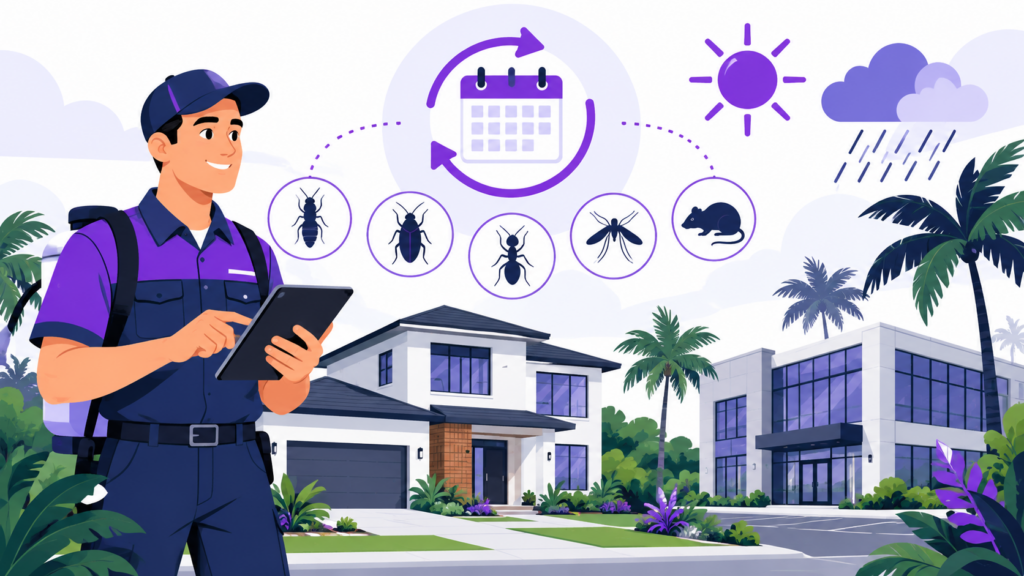
- Year-round demand in a subtropical market. South Florida has no dormant season. Demand moves between species instead of stopping: mosquitoes follow the rainy months, termite swarms appear in spring, and roaches and ants never fully leave. Pest pages stay live and current all year, and the homepage is not built around a winter lull that does not exist here.
What we build
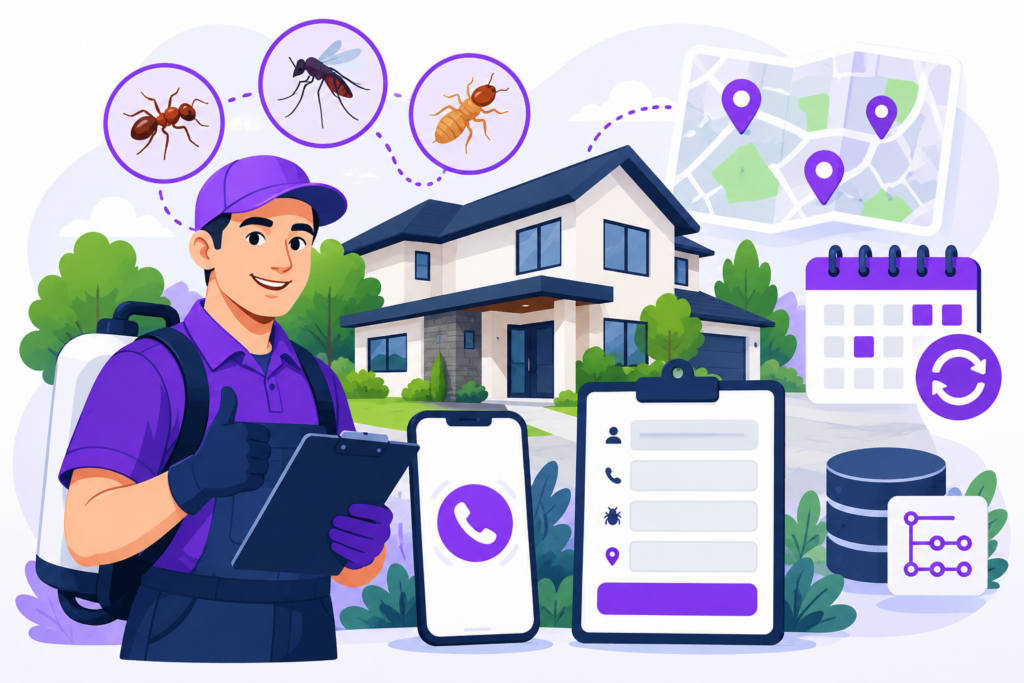
- A page per pest. Each has identification photos, signs of an infestation, what treatment involves and one clear action: call or request a quote.
- A page per recurring plan. Quarterly general pest, mosquito service and termite monitoring each get their own page showing what is included.
- Service-area pages, kept separate from pest pages. “Ants” and “Fort Lauderdale” answer different searches. We combine them only where you serve the area and we can write something specific to it.
- A tap-to-call button for, fixed on screen on mobile. Most urgent pest searches happen on a phone, so the button stays visible however far the visitor scrolls.
- A short quote form. Name, phone, pest and address. Every extra field costs you completed forms.
- Local Business structured data, so search engines can read your name, service area and hours as data instead of guessing.
The part Most Agencies skip
Most agencies stop at “the form works.” The harder part is knowing which calls turned into plans.
A site that brings in many one-time wasp calls and a site that brings in fewer quarterly sign-ups look identical in a call count. We separate them in three steps:
Call tracking numbers by source, so each call is tied to the page or ad that produced it.
Form submissions logged with the page and the search that led to them.
A match between leads and your scheduling or billing software, so you can see which leads became recurring customers and which were one-offs.
How long it takes and what happens first
A build typically takes 4 to 8 weeks. That is a range, and it depends on how many pest and area pages you need and whether you supply photos and service details or we source them.
Before any design starts:
We audit your current site and search presence
That means which species and cities already have pages, what tracking exists and where calls come from now.
We agree on the page map
You tell us which pests and areas you want, and which you decline.
We get access
to your analytics, Search Console, Google Business Profile and scheduling software.
The page map is signed off before design starts, so we are not redrawing the structure halfway through. We do not give a date for rankings. Search results depend on competition in your market, and nobody controls that.

What It Costs
Published 2026 cost guides vary widely. One puts pest control websites at roughly $1,800 to $9,500 with a freelancer and $4,500 to $22,000 with an agency, and names service-area page count as the biggest budget driver. Treat those as market ranges, not our quote. projectcostestimator
What moves the price:
- Number of pest pages and area pages
- Whether plan sign-up or online booking connects to your scheduling software
- Whether you provide the written content and photos or we do
- Whether you need ads landing pages in the same build
You get a written quote after the audit, showing the page count it is based on.

How We Report
You get a monthly report that shows:
- Calls and forms by tracked source
- Which pest pages produced enquiries, and which produced plan enquiries
- Where the lead outcome is logged, how many became recurring customers
We use multi-touchpoint attribution. A customer who first finds a termite page, returns through a Google Ads click and then calls is not credited only to the last click. Credit is shared across the visits we can see.
Attribution has limits. It only sees visits where tracking is installed and calls that come through tracked numbers. The report says what happened. It does not predict what will happen.

Working with us remotely
- Onboarding. We start with a video call covering your services, your service area and what you decline. You then share access to your accounts by invitation, with no one needing to be in the room. You send your logo, a list of licences you can legally display, and phone photos of your trucks and team.
- Communication. Day to day runs by email or a shared message channel. Reports and page-map reviews happen by video.
- Done by video: the kickoff, the page-map walkthrough and the monthly report review.
- Needs no one in the room: the build, content, tracking setup, domain changes, launch and reporting.
- What remote cannot do: photograph your actual team and vehicles. Phone photos from you work fine. See our page for how we handle clients outside Florida.
FAQ's
Do I need a separate page for every pest?
For every pest you want to call for, yes. A page that mentions ten species gives search engines no reason to treat it as the answer for any one of them.
Can the site connect to my scheduling software?
If your software accepts leads by email, form post or API, we can usually connect it. We check this in the audit, before you commit to anything.
Will this put me at the top of Google?
We do not guarantee a position, and anyone who does is guessing. We build pages that can compete. Where they land depends on your market and your competitors.
My site already has pest pages. What happens to them?
We audit them. Pages that earn traffic or calls stay. Pages that do not get rewritten. Any URL we change gets a redirect, so existing links do not break.
Get an audit
The audit looks at which species and cities your site covers, whether your calls are tracked back to a page, and whether your leads are matched to recurring customers. You get a written summary of what we found and what we would change first.