
- Home
- Services
- Portfolio
- About
- Service AreasFort Lauderdale, FL
- Web Design
- Redesign
- WordPress
- Ecommerce
- Landing Pages
- SEO Services
- Local SEO
- GBP
- Google Ads
- PPC
- Digital Marketing
- Internet Marketing
- Advertising
- Tracking
- Dental Marketing
- Medical Marketing
- HVAC Marketing
- Roofing Marketing
- Pest Control Marketing
- Home Services Marketing
- Plumbing Marketing
- Electrical Marketing
- Landscaping Marketing
- Remodeling Marketing
Pembroke Pines, FL- Web Design
- Redesign
- WordPress
- Ecommerce
- Landing Pages
- SEO Services
- Local SEO
- GBP
- Google Ads
- PPC
- Digital Marketing
- Internet Marketing
- Advertising
- Tracking
- Dental Marketing
- Medical Marketing
- HVAC Marketing
- Roofing Marketing
- Pest Control Marketing
- Home Services Marketing
- Plumbing Marketing
- Electrical Marketing
- Landscaping Marketing
- Remodeling Marketing
Hialeah, FL- Web Design
- Redesign
- WordPress
- Ecommerce
- Landing Pages
- SEO Services
- Local SEO
- GBP
- Google Ads
- PPC
- Digital Marketing
- Internet Marketing
- Advertising
- Tracking
- Dental Marketing
- Medical Marketing
- HVAC Marketing
- Roofing Marketing
- Pest Control Marketing
- Home Services Marketing
- Plumbing Marketing
- Electrical Marketing
- Landscaping Marketing
- Remodeling Marketing
Hollywood, FL- Web Design
- Redesign
- WordPress
- Ecommerce
- Landing Pages
- SEO Services
- Local SEO
- GBP
- Google Ads
- PPC
- Digital Marketing
- Internet Marketing
- Advertising
- Tracking
- Dental Marketing
- Medical Marketing
- HVAC Marketing
- Roofing Marketing
- Pest Control Marketing
- Home Services Marketing
- Plumbing Marketing
- Electrical Marketing
- Landscaping Marketing
- Remodeling Marketing
Miramar, FL- Web Design
- Redesign
- WordPress
- Ecommerce
- Landing Pages
- SEO Services
- Local SEO
- GBP
- Google Ads
- PPC
- Digital Marketing
- Internet Marketing
- Advertising
- Tracking
- Dental Marketing
- Medical Marketing
- HVAC Marketing
- Roofing Marketing
- Pest Control Marketing
- Home Services Marketing
- Plumbing Marketing
- Electrical Marketing
- Landscaping Marketing
- Remodeling Marketing
Coral Springs, FL- Web Design
- Redesign
- WordPress
- Ecommerce
- Landing Pages
- SEO Services
- Local SEO
- GBP
- Google Ads
- PPC
- Digital Marketing
- Internet Marketing
- Advertising
- Tracking
- Dental Marketing
- Medical Marketing
- HVAC Marketing
- Roofing Marketing
- Pest Control Marketing
- Home Services Marketing
- Plumbing Marketing
- Electrical Marketing
- Landscaping Marketing
- Remodeling Marketing
Pompano Beach, FL- Web Design
- Redesign
- WordPress
- Ecommerce
- Landing Pages
- SEO Services
- Local SEO
- GBP
- Google Ads
- PPC
- Digital Marketing
- Internet Marketing
- Advertising
- Tracking
- Dental Marketing
- Medical Marketing
- HVAC Marketing
- Roofing Marketing
- Pest Control Marketing
- Home Services Marketing
- Plumbing Marketing
- Electrical Marketing
- Landscaping Marketing
- Remodeling Marketing
Davie, FL- Web Design
- Redesign
- WordPress
- Ecommerce
- Landing Pages
- SEO Services
- Local SEO
- GBP
- Google Ads
- PPC
- Digital Marketing
- Internet Marketing
- Advertising
- Tracking
- Dental Marketing
- Medical Marketing
- HVAC Marketing
- Roofing Marketing
- Pest Control Marketing
- Home Services Marketing
- Plumbing Marketing
- Electrical Marketing
- Landscaping Marketing
- Remodeling Marketing
Sunrise, FL- Web Design
- Redesign
- WordPress
- Ecommerce
- Landing Pages
- SEO Services
- Local SEO
- GBP
- Google Ads
- PPC
- Digital Marketing
- Internet Marketing
- Advertising
- Tracking
- Dental Marketing
- Medical Marketing
- HVAC Marketing
- Roofing Marketing
- Pest Control Marketing
- Home Services Marketing
- Plumbing Marketing
- Electrical Marketing
- Landscaping Marketing
- Remodeling Marketing
Plantation, FL- Web Design
- Redesign
- WordPress
- Ecommerce
- Landing Pages
- SEO Services
- Local SEO
- GBP
- Google Ads
- PPC
- Digital Marketing
- Internet Marketing
- Advertising
- Tracking
- Dental Marketing
- Medical Marketing
- HVAC Marketing
- Roofing Marketing
- Pest Control Marketing
- Home Services Marketing
- Plumbing Marketing
- Electrical Marketing
- Landscaping Marketing
- Remodeling Marketing
Deerfield Beach, FL- Web Design
- Redesign
- WordPress
- Ecommerce
- Landing Pages
- SEO Services
- Local SEO
- GBP
- Google Ads
- PPC
- Digital Marketing
- Internet Marketing
- Advertising
- Tracking
- Dental Marketing
- Medical Marketing
- HVAC Marketing
- Roofing Marketing
- Pest Control Marketing
- Home Services Marketing
- Plumbing Marketing
- Electrical Marketing
- Landscaping Marketing
- Remodeling Marketing
Miami Gardens, FL- Web Design
- Redesign
- WordPress
- Ecommerce
- Landing Pages
- SEO Services
- Local SEO
- GBP
- Google Ads
- PPC
- Digital Marketing
- Internet Marketing
- Advertising
- Tracking
- Dental Marketing
- Medical Marketing
- HVAC Marketing
- Roofing Marketing
- Pest Control Marketing
- Home Services Marketing
- Plumbing Marketing
- Electrical Marketing
- Landscaping Marketing
- Remodeling Marketing
Lauderhill, FL- Web Design
- Redesign
- WordPress
- Ecommerce
- Landing Pages
- SEO Services
- Local SEO
- GBP
- Google Ads
- PPC
- Digital Marketing
- Internet Marketing
- Advertising
- Tracking
- Dental Marketing
- Medical Marketing
- HVAC Marketing
- Roofing Marketing
- Pest Control Marketing
- Home Services Marketing
- Plumbing Marketing
- Electrical Marketing
- Landscaping Marketing
- Remodeling Marketing
West Palm Beach, FL- Web Design
- Redesign
- WordPress
- Ecommerce
- Landing Pages
- SEO Services
- Local SEO
- GBP
- Google Ads
- PPC
- Digital Marketing
- Internet Marketing
- Advertising
- Tracking
- Dental Marketing
- Medical Marketing
- HVAC Marketing
- Roofing Marketing
- Pest Control Marketing
- Home Services Marketing
- Plumbing Marketing
- Electrical Marketing
- Landscaping Marketing
- Remodeling Marketing
Tamarac, FL- Web Design
- Redesign
- WordPress
- Ecommerce
- Landing Pages
- SEO Services
- Local SEO
- GBP
- Google Ads
- PPC
- Digital Marketing
- Internet Marketing
- Advertising
- Tracking
- Dental Marketing
- Medical Marketing
- HVAC Marketing
- Roofing Marketing
- Pest Control Marketing
- Home Services Marketing
- Plumbing Marketing
- Electrical Marketing
- Landscaping Marketing
- Remodeling Marketing
Weston, FL- Web Design
- Redesign
- WordPress
- Ecommerce
- Landing Pages
- SEO Services
- Local SEO
- GBP
- Google Ads
- PPC
- Digital Marketing
- Internet Marketing
- Advertising
- Tracking
- Dental Marketing
- Medical Marketing
- HVAC Marketing
- Roofing Marketing
- Pest Control Marketing
- Home Services Marketing
- Plumbing Marketing
- Electrical Marketing
- Landscaping Marketing
- Remodeling Marketing
Boca Raton, FLMargate, FLCoconut Creek, FLMiami Beach, FLHomestead, FLKendall, FLDoral, FLBoynton Beach, FLThe Hammocks, FLNorth Lauderdale, FLOakland Park, FLDelray Beach, FLNorth Miami, FLHallandale Beach, FLFontainebleau, FLKendale Lakes, FLWellington, FLJupiter, FLTamiami, FLPalm Beach Gardens, FLLauderdale Lakes, FLCooper City, FLCountry Club, FLParkland, FLCoral Gables, FLDania Beach, FLCutler Bay, FLNorth Miami Beach, FLGreenacres, FLLake Worth Beach, FLPrinceton, FLRoyal Palm Beach, FLSouth Miami Heights, FLRichmond West, FLRiviera Beach, FLWest Little River, FLGolden Glades, FLAventura, FLMiami Lakes, FLWestchester, FLLeisure City, FLCoral Terrace, FLPalm Springs, FLPalmetto Bay, FLHialeah Gardens, FLSunny Isles Beach, FLIves Estates, FLWest Park, FLSweetwater, FLPinecrest, FLSunset, FLPinewood, FLWilton Manors, FLOpa-locka, FLLighthouse Point, FLBelle Glade, FLNaranja, FLPalmetto Estates, FLBrownsville, FLKey Biscayne, FLOlympia Heights, FLMiami Springs, FLFlorida City, FLSouth Miami, FLThree Lakes, FLGladeview, FLNorth Palm Beach, FLMiami Shores, FLSouthwest Ranches, FLKings Point, FLLauderdale-by-the-Sea, FLHillsboro Beach, FLSea Ranch Lakes, FLLazy Lake, FL - Blog
- Contact
Marketing for Pest Control Companies in Fort Lauderdale, Florida
Pest control in Fort Lauderdale does not slow down in November. Humidity stays high, ghost ants and German roaches breed year-round, and termite swarm season brings a second spike every spring, right alongside mosquito calls off the canals and seasonal rodent pushes when inland properties cool. That changes how you should market here. A company in Ohio can build a campaign around April through September. You cannot. Your marketing has to assume twelve months of demand, with different search terms leading each month, different pests trending by zip code, and a recurring-revenue base of quarterly and bi-monthly contracts sitting underneath the one-time jobs.
How Fort Lauderdale Pest Control Companies buyers search
Search behavior here splits into two buyer types, and they do not type the same words. Homeowners in neighborhoods like Victoria Park, Rio Vista, and the streets west of US-1 search by species: “get rid of ghost ants Fort Lauderdale,” “termite inspection before closing,” “rat in attic Broward,” “bed bugs treatment cost.” They search on phones, often in the evening after they have already seen the problem, which means the ad copy and landing page need to answer the panic immediately — same-day availability, a clear next step, no forms that ask for ten fields before showing a phone number.
Property managers and commercial accounts downtown, around Las Olas and the Himmarshee business core, search differently: “commercial pest control contract Fort Lauderdale,” “restaurant pest compliance,” “office building rodent exclusion,” “HOA pest service bid.” That search happens on desktop, during business hours, because the person searching is an operations manager or building owner handling it as part of a checklist, not a homeowner reacting to a sighting. They want proof of licensing, documentation for health inspectors, and a quote process that does not require a same-day decision.
Both groups matter, but they need separate pages. A single “Pest Control Services” page trying to rank for ant removal, termite inspection, rodent exclusion, bed bug treatment, and commercial pest contracts at once will struggle against companies that built one page per service. Google ranks specificity, and so do buyers skimming results for the exact phrase that matches their situation. We write pages around individual species and individual buyer types because that is how the search terms themselves are organized, not because it looks thorough on a sitemap.
Downtown office density also means a meaningful share of your commercial search volume happens during the 9-to-5 window on desktop, which should shape how your Google Ads budget is distributed across the day and week. A campaign that spends evenly around the clock is burning money against intent that simply is not there at 2 a.m. for a property manager, even though it is very much there for a homeowner who just found droppings in the pantry.
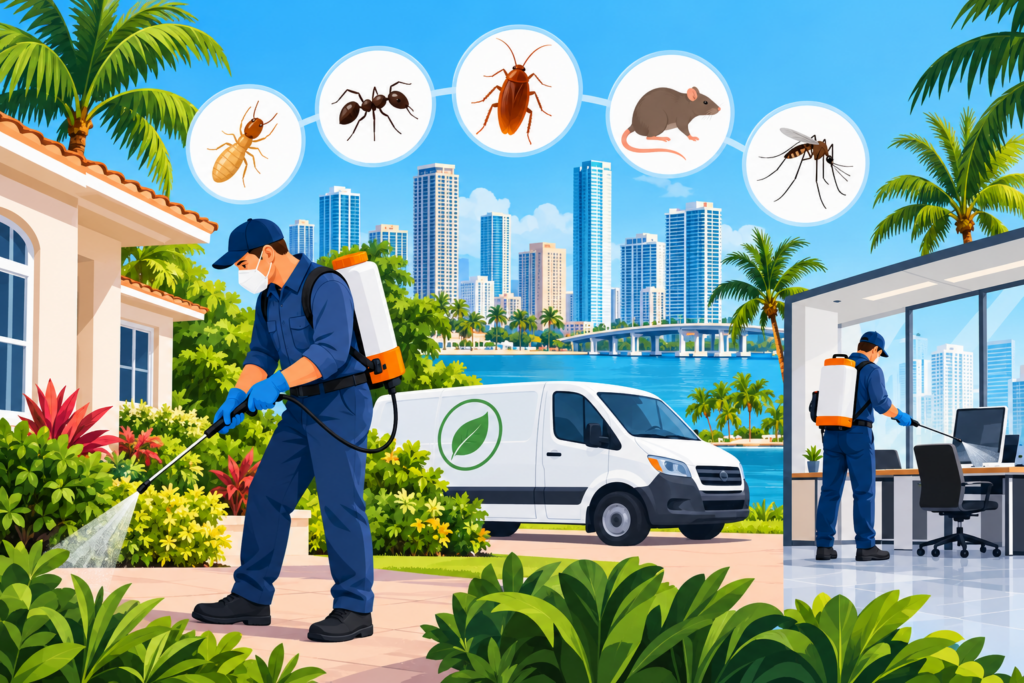
The competition here
Fort Lauderdale is not an easy pest control market to enter from a cold start. The national brands have maintained local listings for years, several of them backed by private equity rollups with marketing budgets that outsize most independent operators many times over. Local independents who have been here a decade or more often have the map pack covered through sheer review volume and service-area history, even if their websites are dated and their content hasn’t been touched since the listing was first claimed. That depth of entrenchment matters, and pretending otherwise does nobody any favors.
That reality means two things for anyone trying to grow a pest control business here. First, ranking organically for broad head terms like “pest control Fort Lauderdale” or “exterminator Fort Lauderdale” against that entrenched field is a long, incremental fight, not a quick win, and anyone who promises page-one rankings in sixty days is selling you something that will not hold up. Second, the real opening is in the specific terms the big players and the long-settled independents tend to treat as an afterthought: species-specific pages for the pests that actually drive calls here, such as drywood termites, German cockroaches in multifamily buildings, rodents moving in during the cooler months, and the ghost ants that show up in nearly every coastal neighborhood. Neighborhood-level pages for areas like Victoria Park, Rio Vista, and the beachside condo corridor matter too, along with commercial compliance language for restaurants and HOAs, and bilingual content for the large Spanish-speaking population across Broward County.
- Species and problem-specific pages that match how residents actually search
- Neighborhood and condo-association pages built for local relevance
- Commercial and compliance-focused content for restaurants, HOAs, and property managers
- Bilingual pages that reach Spanish-speaking households and business owners
We will not promise to outrank the rollups on the single broadest term in a fixed number of months. What we can do is tell you honestly where the gaps in that competitive field actually sit, and build a plan that compounds toward them rather than wasting budget chasing a ranking that was never realistic to begin with.
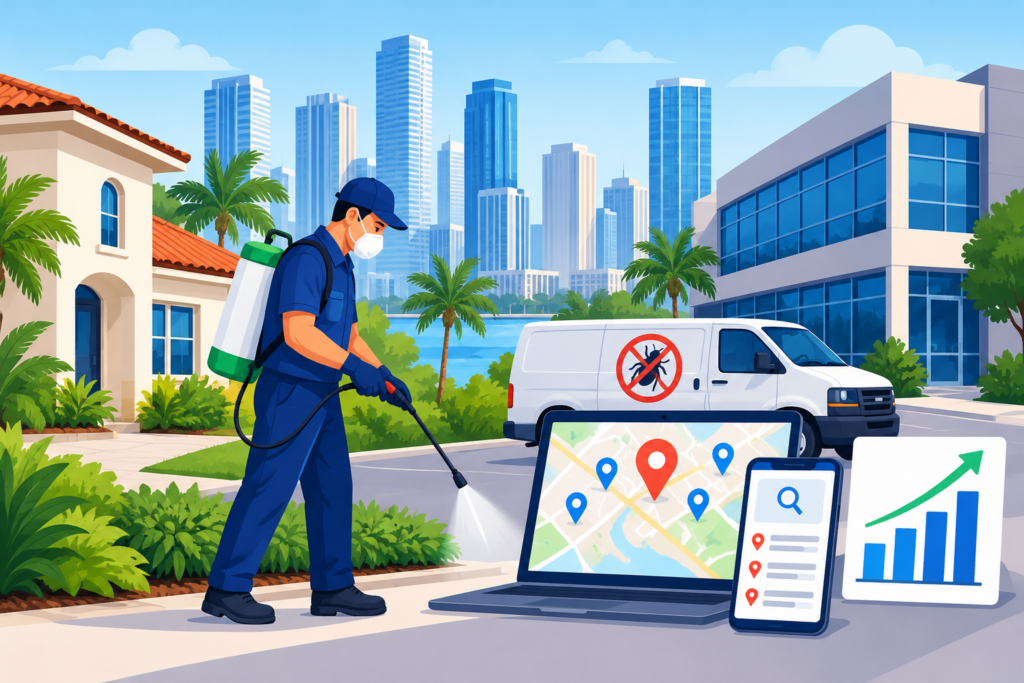
What we build for Pest Control Companies in this market
Local SEO
Review business details, service categories, service areas, and profile information to help customers find and contact your company.
Species-specific service pages
Create focused pages for services such as termite treatment, ant control, rodent control, cockroach treatment, and mosquito management. Each page should explain the service and provide a clear next step.
Recurring-service content
Explain preventive plans, included services, and how customers can request an assessment. Clear information helps potential customers compare ongoing services with one-time treatments.
Commercial pest control pages
Address the needs of offices, property managers, and other commercial clients by outlining your available services, scheduling options, and relevant documentation.
Paid search campaigns
Target relevant, high-intent searches with suitable geographic settings and landing pages. Review spending alongside enquiry quality and cost.
Conversion improvements
Make phone details, estimate forms, service information, and contact options easy to find. A straightforward website helps visitors take the next step.
We build a website structured by service and by area, because one page cannot hold rankings for forty different search terms. A termite page, a rodent exclusion page, a commercial contract page, and separate pages for the neighborhoods and cities you actually service around Fort Lauderdale. Each one is written for the person searching it, not reused copy with the city name swapped in.
On top of that we run Google Ads aimed at the terms with real buying intent: emergency infestations, termite inspections tied to real estate closings, and commercial contract inquiries, with ad scheduling that matches when downtown businesses and homeowners actually search. Call tracking numbers are set on every campaign and every page so you know which keyword, which ad, and which page produced each call, not just that a call happened.

What we measure
We track calls, form submissions, and source down to page and keyword — plus whether a lead became a one-time job or a service contract, since those differ in value. You get cost-per-lead and cost-per-contract reporting, not blended numbers.
- Organic search: Search visibility, relevant landing-page traffic, and changes in keyword performance.
- Local search: Google Business Profile interactions and available calls, website visits, or direction requests.
- Paid advertising: Spend, clicks, search terms, conversions, and cost per tracked enquiry.
- Website conversions: Phone calls, form submissions, and the pages that generate them.
- Lead quality: Where customer records are available, compare tracked enquiries with qualified opportunities and booked work.
What it costs
Cost depends on how many service and area pages you need, how competitive your target terms are in Broward County, and your ad budget alongside SEO.

Get an audit
Before you commit a dollar to a new campaign, get a clear-eyed read on where your pest control business actually stands online against competitors working Fort Lauderdale, from the coastal neighborhoods down through the commercial and downtown corridor. Send us your website and we’ll walk through it the way a homeowner searching “exterminator near me” or a property manager comparing bids would: your Google Business Profile strength, how you rank for termite, rodent, and general pest terms in local map results, site speed on mobile, review volume and response, and whether your calls-to-action actually convert a worried caller into a booked job.
We’ll point out what’s working, what’s quietly costing you leads, and where the fastest wins are, no sales pitch attached. You’ll walk away with a specific list of gaps and priorities, not vague advice, so you can decide whether to fix it yourself or bring us in.
FAQ's
These are the 5 questions Fort Lauderdale homeowners ask us most about pest control company marketing, answered plainly so you know what to expect before any work starts. If yours isn't covered here, get in touch and we'll walk you through it.
Do you only work with residential pest control companies, or commercial too?
We build for both, and usually separately, because the search terms, the buyer, and even the time of day the searches happen differ between a homeowner with ants and a property manager sourcing a commercial contract.
How long does it take to see movement in rankings for pest control terms in Fort Lauderdale?
It depends on the term. Species-specific and neighborhood pages tend to gain traction faster than broad citywide terms, which are held by national brands and long-established local companies. We do not quote a fixed timeline because it varies by how competitive your specific target terms are.
Can you help with Spanish-language search for pest control in Broward County?
Yes. We build Spanish-language pages where search volume supports it, rather than running one page through automatic translation, since Broward has a large Spanish-speaking homeowner and business base searching in Spanish directly.
Do you handle Google Ads for emergency pest situations?
Yes. Emergency searches (a rodent in an attic, a wasp nest, a sudden roach sighting) are high-intent and time-sensitive, so we structure ad scheduling and bidding around when those searches actually spike rather than running a flat budget all day.
How is this different from a national pest control marketing package?
A national package is usually built once and reused across every city. We build pages and campaigns around what Fort Lauderdale buyers specifically search, including the downtown commercial segment, rather than applying a template with the city name swapped in.