
- Home
- Services
- Portfolio
- About
- Service AreasFort Lauderdale, FL
- Web Design
- Redesign
- WordPress
- Ecommerce
- Landing Pages
- SEO Services
- Local SEO
- GBP
- Google Ads
- PPC
- Digital Marketing
- Internet Marketing
- Advertising
- Tracking
- Dental Marketing
- Medical Marketing
- HVAC Marketing
- Roofing Marketing
- Pest Control Marketing
- Home Services Marketing
- Plumbing Marketing
- Electrical Marketing
- Landscaping Marketing
- Remodeling Marketing
Pembroke Pines, FL- Web Design
- Redesign
- WordPress
- Ecommerce
- Landing Pages
- SEO Services
- Local SEO
- GBP
- Google Ads
- PPC
- Digital Marketing
- Internet Marketing
- Advertising
- Tracking
- Dental Marketing
- Medical Marketing
- HVAC Marketing
- Roofing Marketing
- Pest Control Marketing
- Home Services Marketing
- Plumbing Marketing
- Electrical Marketing
- Landscaping Marketing
- Remodeling Marketing
Hialeah, FL- Web Design
- Redesign
- WordPress
- Ecommerce
- Landing Pages
- SEO Services
- Local SEO
- GBP
- Google Ads
- PPC
- Digital Marketing
- Internet Marketing
- Advertising
- Tracking
- Dental Marketing
- Medical Marketing
- HVAC Marketing
- Roofing Marketing
- Pest Control Marketing
- Home Services Marketing
- Plumbing Marketing
- Electrical Marketing
- Landscaping Marketing
- Remodeling Marketing
Hollywood, FL- Web Design
- Redesign
- WordPress
- Ecommerce
- Landing Pages
- SEO Services
- Local SEO
- GBP
- Google Ads
- PPC
- Digital Marketing
- Internet Marketing
- Advertising
- Tracking
- Dental Marketing
- Medical Marketing
- HVAC Marketing
- Roofing Marketing
- Pest Control Marketing
- Home Services Marketing
- Plumbing Marketing
- Electrical Marketing
- Landscaping Marketing
- Remodeling Marketing
Miramar, FL- Web Design
- Redesign
- WordPress
- Ecommerce
- Landing Pages
- SEO Services
- Local SEO
- GBP
- Google Ads
- PPC
- Digital Marketing
- Internet Marketing
- Advertising
- Tracking
- Dental Marketing
- Medical Marketing
- HVAC Marketing
- Roofing Marketing
- Pest Control Marketing
- Home Services Marketing
- Plumbing Marketing
- Electrical Marketing
- Landscaping Marketing
- Remodeling Marketing
Coral Springs, FL- Web Design
- Redesign
- WordPress
- Ecommerce
- Landing Pages
- SEO Services
- Local SEO
- GBP
- Google Ads
- PPC
- Digital Marketing
- Internet Marketing
- Advertising
- Tracking
- Dental Marketing
- Medical Marketing
- HVAC Marketing
- Roofing Marketing
- Pest Control Marketing
- Home Services Marketing
- Plumbing Marketing
- Electrical Marketing
- Landscaping Marketing
- Remodeling Marketing
Pompano Beach, FL- Web Design
- Redesign
- WordPress
- Ecommerce
- Landing Pages
- SEO Services
- Local SEO
- GBP
- Google Ads
- PPC
- Digital Marketing
- Internet Marketing
- Advertising
- Tracking
- Dental Marketing
- Medical Marketing
- HVAC Marketing
- Roofing Marketing
- Pest Control Marketing
- Home Services Marketing
- Plumbing Marketing
- Electrical Marketing
- Landscaping Marketing
- Remodeling Marketing
Davie, FL- Web Design
- Redesign
- WordPress
- Ecommerce
- Landing Pages
- SEO Services
- Local SEO
- GBP
- Google Ads
- PPC
- Digital Marketing
- Internet Marketing
- Advertising
- Tracking
- Dental Marketing
- Medical Marketing
- HVAC Marketing
- Roofing Marketing
- Pest Control Marketing
- Home Services Marketing
- Plumbing Marketing
- Electrical Marketing
- Landscaping Marketing
- Remodeling Marketing
Sunrise, FL- Web Design
- Redesign
- WordPress
- Ecommerce
- Landing Pages
- SEO Services
- Local SEO
- GBP
- Google Ads
- PPC
- Digital Marketing
- Internet Marketing
- Advertising
- Tracking
- Dental Marketing
- Medical Marketing
- HVAC Marketing
- Roofing Marketing
- Pest Control Marketing
- Home Services Marketing
- Plumbing Marketing
- Electrical Marketing
- Landscaping Marketing
- Remodeling Marketing
Plantation, FL- Web Design
- Redesign
- WordPress
- Ecommerce
- Landing Pages
- SEO Services
- Local SEO
- GBP
- Google Ads
- PPC
- Digital Marketing
- Internet Marketing
- Advertising
- Tracking
- Dental Marketing
- Medical Marketing
- HVAC Marketing
- Roofing Marketing
- Pest Control Marketing
- Home Services Marketing
- Plumbing Marketing
- Electrical Marketing
- Landscaping Marketing
- Remodeling Marketing
Deerfield Beach, FL- Web Design
- Redesign
- WordPress
- Ecommerce
- Landing Pages
- SEO Services
- Local SEO
- GBP
- Google Ads
- PPC
- Digital Marketing
- Internet Marketing
- Advertising
- Tracking
- Dental Marketing
- Medical Marketing
- HVAC Marketing
- Roofing Marketing
- Pest Control Marketing
- Home Services Marketing
- Plumbing Marketing
- Electrical Marketing
- Landscaping Marketing
- Remodeling Marketing
Miami Gardens, FL- Web Design
- Redesign
- WordPress
- Ecommerce
- Landing Pages
- SEO Services
- Local SEO
- GBP
- Google Ads
- PPC
- Digital Marketing
- Internet Marketing
- Advertising
- Tracking
- Dental Marketing
- Medical Marketing
- HVAC Marketing
- Roofing Marketing
- Pest Control Marketing
- Home Services Marketing
- Plumbing Marketing
- Electrical Marketing
- Landscaping Marketing
- Remodeling Marketing
Lauderhill, FL- Web Design
- Redesign
- WordPress
- Ecommerce
- Landing Pages
- SEO Services
- Local SEO
- GBP
- Google Ads
- PPC
- Digital Marketing
- Internet Marketing
- Advertising
- Tracking
- Dental Marketing
- Medical Marketing
- HVAC Marketing
- Roofing Marketing
- Pest Control Marketing
- Home Services Marketing
- Plumbing Marketing
- Electrical Marketing
- Landscaping Marketing
- Remodeling Marketing
West Palm Beach, FL- Web Design
- Redesign
- WordPress
- Ecommerce
- Landing Pages
- SEO Services
- Local SEO
- GBP
- Google Ads
- PPC
- Digital Marketing
- Internet Marketing
- Advertising
- Tracking
- Dental Marketing
- Medical Marketing
- HVAC Marketing
- Roofing Marketing
- Pest Control Marketing
- Home Services Marketing
- Plumbing Marketing
- Electrical Marketing
- Landscaping Marketing
- Remodeling Marketing
Tamarac, FL- Web Design
- Redesign
- WordPress
- Ecommerce
- Landing Pages
- SEO Services
- Local SEO
- GBP
- Google Ads
- PPC
- Digital Marketing
- Internet Marketing
- Advertising
- Tracking
- Dental Marketing
- Medical Marketing
- HVAC Marketing
- Roofing Marketing
- Pest Control Marketing
- Home Services Marketing
- Plumbing Marketing
- Electrical Marketing
- Landscaping Marketing
- Remodeling Marketing
Weston, FL- Web Design
- Redesign
- WordPress
- Ecommerce
- Landing Pages
- SEO Services
- Local SEO
- GBP
- Google Ads
- PPC
- Digital Marketing
- Internet Marketing
- Advertising
- Tracking
- Dental Marketing
- Medical Marketing
- HVAC Marketing
- Roofing Marketing
- Pest Control Marketing
- Home Services Marketing
- Plumbing Marketing
- Electrical Marketing
- Landscaping Marketing
- Remodeling Marketing
Boca Raton, FLMargate, FLCoconut Creek, FLMiami Beach, FLHomestead, FLKendall, FLDoral, FLBoynton Beach, FLThe Hammocks, FLNorth Lauderdale, FLOakland Park, FLDelray Beach, FLNorth Miami, FLHallandale Beach, FLFontainebleau, FLKendale Lakes, FLWellington, FLJupiter, FLTamiami, FLPalm Beach Gardens, FLLauderdale Lakes, FLCooper City, FLCountry Club, FLParkland, FLCoral Gables, FLDania Beach, FLCutler Bay, FLNorth Miami Beach, FLGreenacres, FLLake Worth Beach, FLPrinceton, FLRoyal Palm Beach, FLSouth Miami Heights, FLRichmond West, FLRiviera Beach, FLWest Little River, FLGolden Glades, FLAventura, FLMiami Lakes, FLWestchester, FLLeisure City, FLCoral Terrace, FLPalm Springs, FLPalmetto Bay, FLHialeah Gardens, FLSunny Isles Beach, FLIves Estates, FLWest Park, FLSweetwater, FLPinecrest, FLSunset, FLPinewood, FLWilton Manors, FLOpa-locka, FLLighthouse Point, FLBelle Glade, FLNaranja, FLPalmetto Estates, FLBrownsville, FLKey Biscayne, FLOlympia Heights, FLMiami Springs, FLFlorida City, FLSouth Miami, FLThree Lakes, FLGladeview, FLNorth Palm Beach, FLMiami Shores, FLSouthwest Ranches, FLKings Point, FLLauderdale-by-the-Sea, FLHillsboro Beach, FLSea Ranch Lakes, FLLazy Lake, FL - Blog
- Contact
WordPress Web Design in West Palm Beach, Florida
WordPress Web Design for West Palm Beach businesses
Clematis Street and the office towers along Flagler Drive are full of law firms, medical practices and financial advisors running a first site built on Wix or Squarespace because someone on staff could drag the boxes around. It worked fine until a competitor three floors down started outranking it for the same search terms. The fix isn’t a prettier template — it’s the platform underneath, and whether it can hold a dedicated page for every service you offer.
Wix and Squarespace are page builders. They are built to get a site live, not to get a site to rank against established competition. Both platforms limit how much you can control the actual HTML output, which matters once you need structured data for a legal services page, a medical practice schema, or a review markup block. WordPress gives you that control natively, down to the template level, so the code search engines actually crawl matches what your business needs rather than whatever the builder decided to generate.
The bigger issue we see in West Palm Beach specifically is site architecture. A law firm with five practice areas and three office locations, a Clematis Street restaurant group with multiple kitchens, a CityPlace retail brand with seasonal promotions — each needs a dozen or more distinct pages, every one built to answer a single search, not one page that tries to mention everything at once. Wix and Squarespace make that structure painful to build and worse to maintain as the business grows. WordPress, with the right setup, handles it without a fight, and it scales as you add locations or services without forcing a rebuild.
Migration without the SEO reset
If you’re moving off a builder, the risk is losing whatever rankings and link equity that old site already earned. We map every existing URL to its new WordPress equivalent, set up 301 redirects for each one, and rebuild your metadata before the old site goes dark. We also audit your existing page titles, header structure, and internal linking so nothing that was already working gets flattened in the rebuild. Done wrong, a migration can cost you traffic for months while Google re-indexes a site it no longer recognizes. Done right, it’s close to invisible to anyone searching for you — your rankings hold, your forms keep converting, and your team barely notices the switch happened.
What is different about this market
West Palm Beach is not a quiet suburb where a decent site and a Google Business listing is enough. The downtown core, from Clematis west to Dixie Highway, is dense with professional services firms competing on the same twelve or fifteen keywords: personal injury attorney, family law, wealth management, cosmetic dermatology. Several of those competitors are already working with agencies, including national chains and private-equity-rolled-up marketing shops that sell the same templated package to every client regardless of city or industry. If you’ve already been pitched by one of those firms, you know the pitch. It’s long on adjectives and short on specifics about what they’ll actually build.
That competition changes what counts as good work here. A generic five-page site with a contact form is not going to compete for a term like “commercial litigation attorney West Palm Beach” when three other firms have invested in dedicated, well-structured pages for that exact phrase. The buyers in this market are also largely trust-led rather than price-led. A law firm or a medical group choosing a web partner is not shopping for the cheapest build, they’re trying to find the agency that won’t disappear after the invoice clears or hand them a cookie-cutter site that looks like everyone else’s. That’s the gap we’re building into, with pages built around what the firm actually does rather than what a template allows.
Search behavior here skews more desktop than you’d expect in a residential market, because a large share of the buying research for legal, medical and financial services happens during the workday from an office computer, not on a phone on a lunch break. That affects page layout decisions: desktop users scroll less aggressively and expect to see credentials, not just a call-to-action, above the fold. Spanish-language search also has real weight in Palm Beach County given the demographic mix, and firms that serve a bilingual client base see measurable search volume on Spanish-language variants of their core service terms, something a single-language Wix template can’t address without a workaround.

Website planning and design
Organize service pages, navigation, calls to action, and contact information around visitor needs.
Theme and plugin setup
Select and configure suitable tools while avoiding unnecessary features that add maintenance or performance overhead.
Responsive layouts
Ensure the site works across desktop computers, tablets, and mobile devices.
Speed optimization
Review image sizes, caching, scripts, hosting configuration, and other factors that affect performance.
Conversion features
Set up enquiry forms, phone links, appointment pathways, and other relevant actions.
SEO foundations
Configure page titles, headings, internal links, indexability, and other relevant on-page and technical elements.
Testing and launch
Check forms, navigation, mobile layouts, redirects where needed, and important user journeys.
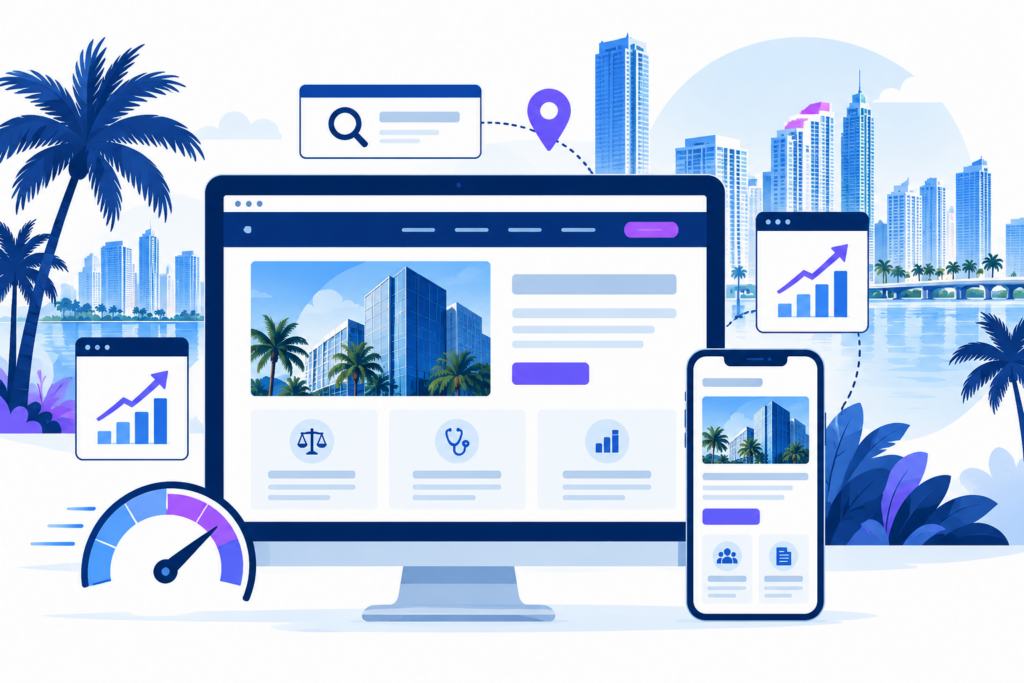

- Review: Assess the existing site, content, performance, and available analytics.
- Plan: Define the page structure, design requirements, functionality, and SEO priorities.
- Build or migrate: Develop the WordPress site or transfer suitable content and functionality from your current platform.
- Test: Check navigation, forms, responsive layouts, indexing settings, and required redirects before launch.
- Monitor: Review technical health, search visibility, and enquiries after the site goes live.

FAQ's
These are the 5 questions West Palm Beach homeowners ask us most about wordpress web design, answered plainly so you know what to expect before any work starts. If yours isn't covered here, get in touch and we'll walk you through it.
Can you migrate my site from Wix or Squarespace without losing my current rankings?
In most cases yes, if we map and redirect every URL before the old site goes offline. We also rebuild your page titles, meta descriptions and any schema markup that was already in place. There's always some risk in a platform change, but a planned migration carries far less risk than an unplanned one.
Why not just stay on Wix if my site already works?
If you're not trying to rank for new terms or compete with other firms in West Palm Beach for search visibility, Wix can be fine. The moment you need a dedicated page for each service and location, or structured data for reviews and schema, you hit a ceiling Wix is not built to remove.
Do you only build for law firms and medical practices?
No, those are common in this specific downtown market, but we build WordPress sites for any business in West Palm Beach that needs more structure than a page builder allows. The build process is the same regardless of industry.
How long does a WordPress build or migration take?
It depends on how many pages, how much content needs to be migrated, and how many integrations like scheduling or payment tools are involved. We'll give you a specific timeline after reviewing your current site, not before.
Will I be able to edit the site myself after launch?
Yes. WordPress's editor is built for non-developers to update text, images and blog posts without touching code. We set the structure up so that day-to-day edits don't require calling us.