
- Home
- Services
- Portfolio
- About
- Service AreasFort Lauderdale, FL
- Web Design
- Redesign
- WordPress
- Ecommerce
- Landing Pages
- SEO Services
- Local SEO
- GBP
- Google Ads
- PPC
- Digital Marketing
- Internet Marketing
- Advertising
- Tracking
- Dental Marketing
- Medical Marketing
- HVAC Marketing
- Roofing Marketing
- Pest Control Marketing
- Home Services Marketing
- Plumbing Marketing
- Electrical Marketing
- Landscaping Marketing
- Remodeling Marketing
Pembroke Pines, FL- Web Design
- Redesign
- WordPress
- Ecommerce
- Landing Pages
- SEO Services
- Local SEO
- GBP
- Google Ads
- PPC
- Digital Marketing
- Internet Marketing
- Advertising
- Tracking
- Dental Marketing
- Medical Marketing
- HVAC Marketing
- Roofing Marketing
- Pest Control Marketing
- Home Services Marketing
- Plumbing Marketing
- Electrical Marketing
- Landscaping Marketing
- Remodeling Marketing
Hialeah, FL- Web Design
- Redesign
- WordPress
- Ecommerce
- Landing Pages
- SEO Services
- Local SEO
- GBP
- Google Ads
- PPC
- Digital Marketing
- Internet Marketing
- Advertising
- Tracking
- Dental Marketing
- Medical Marketing
- HVAC Marketing
- Roofing Marketing
- Pest Control Marketing
- Home Services Marketing
- Plumbing Marketing
- Electrical Marketing
- Landscaping Marketing
- Remodeling Marketing
Hollywood, FL- Web Design
- Redesign
- WordPress
- Ecommerce
- Landing Pages
- SEO Services
- Local SEO
- GBP
- Google Ads
- PPC
- Digital Marketing
- Internet Marketing
- Advertising
- Tracking
- Dental Marketing
- Medical Marketing
- HVAC Marketing
- Roofing Marketing
- Pest Control Marketing
- Home Services Marketing
- Plumbing Marketing
- Electrical Marketing
- Landscaping Marketing
- Remodeling Marketing
Miramar, FL- Web Design
- Redesign
- WordPress
- Ecommerce
- Landing Pages
- SEO Services
- Local SEO
- GBP
- Google Ads
- PPC
- Digital Marketing
- Internet Marketing
- Advertising
- Tracking
- Dental Marketing
- Medical Marketing
- HVAC Marketing
- Roofing Marketing
- Pest Control Marketing
- Home Services Marketing
- Plumbing Marketing
- Electrical Marketing
- Landscaping Marketing
- Remodeling Marketing
Coral Springs, FL- Web Design
- Redesign
- WordPress
- Ecommerce
- Landing Pages
- SEO Services
- Local SEO
- GBP
- Google Ads
- PPC
- Digital Marketing
- Internet Marketing
- Advertising
- Tracking
- Dental Marketing
- Medical Marketing
- HVAC Marketing
- Roofing Marketing
- Pest Control Marketing
- Home Services Marketing
- Plumbing Marketing
- Electrical Marketing
- Landscaping Marketing
- Remodeling Marketing
Pompano Beach, FL- Web Design
- Redesign
- WordPress
- Ecommerce
- Landing Pages
- SEO Services
- Local SEO
- GBP
- Google Ads
- PPC
- Digital Marketing
- Internet Marketing
- Advertising
- Tracking
- Dental Marketing
- Medical Marketing
- HVAC Marketing
- Roofing Marketing
- Pest Control Marketing
- Home Services Marketing
- Plumbing Marketing
- Electrical Marketing
- Landscaping Marketing
- Remodeling Marketing
Davie, FL- Web Design
- Redesign
- WordPress
- Ecommerce
- Landing Pages
- SEO Services
- Local SEO
- GBP
- Google Ads
- PPC
- Digital Marketing
- Internet Marketing
- Advertising
- Tracking
- Dental Marketing
- Medical Marketing
- HVAC Marketing
- Roofing Marketing
- Pest Control Marketing
- Home Services Marketing
- Plumbing Marketing
- Electrical Marketing
- Landscaping Marketing
- Remodeling Marketing
Sunrise, FL- Web Design
- Redesign
- WordPress
- Ecommerce
- Landing Pages
- SEO Services
- Local SEO
- GBP
- Google Ads
- PPC
- Digital Marketing
- Internet Marketing
- Advertising
- Tracking
- Dental Marketing
- Medical Marketing
- HVAC Marketing
- Roofing Marketing
- Pest Control Marketing
- Home Services Marketing
- Plumbing Marketing
- Electrical Marketing
- Landscaping Marketing
- Remodeling Marketing
Plantation, FL- Web Design
- Redesign
- WordPress
- Ecommerce
- Landing Pages
- SEO Services
- Local SEO
- GBP
- Google Ads
- PPC
- Digital Marketing
- Internet Marketing
- Advertising
- Tracking
- Dental Marketing
- Medical Marketing
- HVAC Marketing
- Roofing Marketing
- Pest Control Marketing
- Home Services Marketing
- Plumbing Marketing
- Electrical Marketing
- Landscaping Marketing
- Remodeling Marketing
Deerfield Beach, FL- Web Design
- Redesign
- WordPress
- Ecommerce
- Landing Pages
- SEO Services
- Local SEO
- GBP
- Google Ads
- PPC
- Digital Marketing
- Internet Marketing
- Advertising
- Tracking
- Dental Marketing
- Medical Marketing
- HVAC Marketing
- Roofing Marketing
- Pest Control Marketing
- Home Services Marketing
- Plumbing Marketing
- Electrical Marketing
- Landscaping Marketing
- Remodeling Marketing
Miami Gardens, FL- Web Design
- Redesign
- WordPress
- Ecommerce
- Landing Pages
- SEO Services
- Local SEO
- GBP
- Google Ads
- PPC
- Digital Marketing
- Internet Marketing
- Advertising
- Tracking
- Dental Marketing
- Medical Marketing
- HVAC Marketing
- Roofing Marketing
- Pest Control Marketing
- Home Services Marketing
- Plumbing Marketing
- Electrical Marketing
- Landscaping Marketing
- Remodeling Marketing
Lauderhill, FL- Web Design
- Redesign
- WordPress
- Ecommerce
- Landing Pages
- SEO Services
- Local SEO
- GBP
- Google Ads
- PPC
- Digital Marketing
- Internet Marketing
- Advertising
- Tracking
- Dental Marketing
- Medical Marketing
- HVAC Marketing
- Roofing Marketing
- Pest Control Marketing
- Home Services Marketing
- Plumbing Marketing
- Electrical Marketing
- Landscaping Marketing
- Remodeling Marketing
West Palm Beach, FL- Web Design
- Redesign
- WordPress
- Ecommerce
- Landing Pages
- SEO Services
- Local SEO
- GBP
- Google Ads
- PPC
- Digital Marketing
- Internet Marketing
- Advertising
- Tracking
- Dental Marketing
- Medical Marketing
- HVAC Marketing
- Roofing Marketing
- Pest Control Marketing
- Home Services Marketing
- Plumbing Marketing
- Electrical Marketing
- Landscaping Marketing
- Remodeling Marketing
Tamarac, FL- Web Design
- Redesign
- WordPress
- Ecommerce
- Landing Pages
- SEO Services
- Local SEO
- GBP
- Google Ads
- PPC
- Digital Marketing
- Internet Marketing
- Advertising
- Tracking
- Dental Marketing
- Medical Marketing
- HVAC Marketing
- Roofing Marketing
- Pest Control Marketing
- Home Services Marketing
- Plumbing Marketing
- Electrical Marketing
- Landscaping Marketing
- Remodeling Marketing
Weston, FL- Web Design
- Redesign
- WordPress
- Ecommerce
- Landing Pages
- SEO Services
- Local SEO
- GBP
- Google Ads
- PPC
- Digital Marketing
- Internet Marketing
- Advertising
- Tracking
- Dental Marketing
- Medical Marketing
- HVAC Marketing
- Roofing Marketing
- Pest Control Marketing
- Home Services Marketing
- Plumbing Marketing
- Electrical Marketing
- Landscaping Marketing
- Remodeling Marketing
Boca Raton, FLMargate, FLCoconut Creek, FLMiami Beach, FLHomestead, FLKendall, FLDoral, FLBoynton Beach, FLThe Hammocks, FLNorth Lauderdale, FLOakland Park, FLDelray Beach, FLNorth Miami, FLHallandale Beach, FLFontainebleau, FLKendale Lakes, FLWellington, FLJupiter, FLTamiami, FLPalm Beach Gardens, FLLauderdale Lakes, FLCooper City, FLCountry Club, FLParkland, FLCoral Gables, FLDania Beach, FLCutler Bay, FLNorth Miami Beach, FLGreenacres, FLLake Worth Beach, FLPrinceton, FLRoyal Palm Beach, FLSouth Miami Heights, FLRichmond West, FLRiviera Beach, FLWest Little River, FLGolden Glades, FLAventura, FLMiami Lakes, FLWestchester, FLLeisure City, FLCoral Terrace, FLPalm Springs, FLPalmetto Bay, FLHialeah Gardens, FLSunny Isles Beach, FLIves Estates, FLWest Park, FLSweetwater, FLPinecrest, FLSunset, FLPinewood, FLWilton Manors, FLOpa-locka, FLLighthouse Point, FLBelle Glade, FLNaranja, FLPalmetto Estates, FLBrownsville, FLKey Biscayne, FLOlympia Heights, FLMiami Springs, FLFlorida City, FLSouth Miami, FLThree Lakes, FLGladeview, FLNorth Palm Beach, FLMiami Shores, FLSouthwest Ranches, FLKings Point, FLLauderdale-by-the-Sea, FLHillsboro Beach, FLSea Ranch Lakes, FLLazy Lake, FL - Blog
- Contact
Marketing for Medical Practices in Fort Lauderdale, Florida
Fort Lauderdale patients search differently depending on what they need. Someone with a torn ACL searches at night from their phone, wants the next available appointment, and clicks the first result that answers that question. Someone picking a new primary care doctor searches at a desk on a Tuesday afternoon, often from an office tower along Las Olas or in the Cypress Creek corridor, comparing two or three practices in open tabs before calling anyone. A patient near Holiday Park or Victoria Park may be choosing based on drive time alone. All of these searches end up in the same map pack and the same ad auction, but they do not behave the same way, and a campaign built for one will waste money on the other.

How Fort Lauderdale Medical Practices buyers search
Most medical searches here split into two patterns. The first is symptom or specialty driven – “knee pain doctor Fort Lauderdale,” “dermatologist Las Olas,” “pediatrician near me.” These are map pack searches, and Google weights proximity heavily, so a practice in Victoria Park competes directly with one three miles south in a way it would not in a more spread-out county. Ranking in that map pack depends on consistent name, address, and phone data across directories, a steady flow of recent reviews, and category selections that match what the searcher actually typed. The second pattern is credential driven – the searcher already knows the specialty and is now typing a doctor’s name, a practice name, or “is Dr. [name] accepting new patients.” That second pattern only works if the provider has an indexed, detailed bio page, because Google has nothing else to show. Practices that bury physician credentials inside a PDF or a slow-loading staff carousel lose that search entirely.
Desktop share matters more here than in residential suburbs. Fort Lauderdale’s downtown core is full of office workers who research medical decisions during business hours on a laptop, not between errands on a phone. That changes page design: larger comparison tables, visible insurance and credential information above the fold, and contact forms that do not assume a thumb is doing the tapping. Pages built mobile-first can still underperform here if the desktop experience feels like an afterthought.
Seasonally, the snowbird population shifts demand from November through April, particularly for specialties like cardiology, orthopedics, and dermatology, where temporary residents are establishing care for the winter months. A practice that does not plan ad spend and content around that window is competing at full price during the slow months and under-resourced during the busy ones. Content built for that audience should speak directly to transferring records, finding in-network coverage away from a home state, and getting an appointment quickly before snowbirds head north again. Practices that time their budget and messaging to that rhythm, rather than running flat spend year-round, tend to capture new-patient volume competitors miss during the shoulder months.

The competition here
Fort Lauderdale is not an easy market, and we are not going to pretend otherwise. Broward General, Holy Cross, and Cleveland Clinic Florida all run marketing operations with budgets no independent practice will match, and their domain authority means a solo physician’s new website is starting several steps behind just on raw search weight. Add to that the private-equity-backed multi-location groups that have bought up dermatology, dental, and urgent care brands across South Florida in the last several years, and the downtown core has genuine, well-funded competition on the ground, not hypothetical competition.
What that means practically: a general “we treat patients” page will not rank for anything competitive. The practices winning map pack and organic positions here are the ones with specific, separate pages for each condition or service, consistent name-address-phone data across directories, and review volume that outpaces nearby competitors. None of that is a secret, and none of it is fast. It is also not optional if the plan is to compete against a hospital system’s SEO budget with a smaller one.
Paid search is where a smaller practice can compete on more even footing, because budget and bid strategy matter more than domain age. That is also where the cost per click runs higher than almost any other local industry, because hospital systems and PE-backed groups are bidding against you for the same terms. We tell clients this before we spend their first dollar, not after.
What we do see work consistently in this market: niche specificity. A general practice competing on “doctor Fort Lauderdale” loses. A practice competing on “Medicare annual wellness visit Fort Lauderdale” or “pediatric ear infection same day Fort Lauderdale” has a shot, because the hospital systems are not building pages that specific, and the PE-backed groups are often running one templated site across twenty locations with no city-specific detail at all.
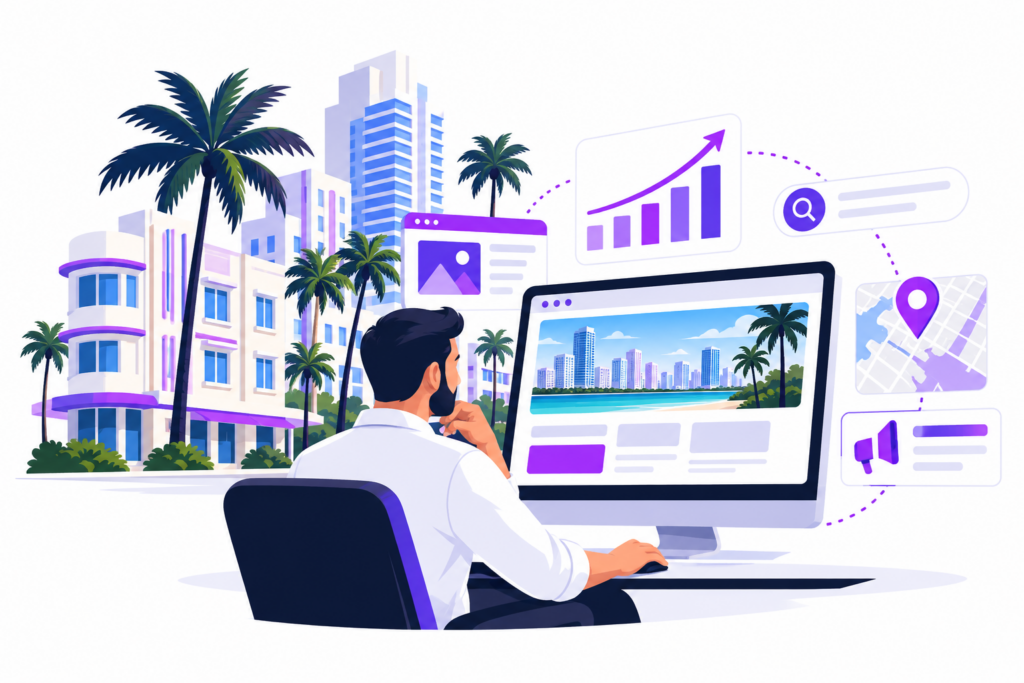
What we build for Medical Practices in this market
A medical practice website has constraints a retail or home services site does not. Every claim is potentially regulated, every page can be read as health information, and every form that collects a patient’s name alongside a symptom description touches HIPAA even if no diagnosis is stored. We build inside those constraints instead of around them.
Provider bio pages, built for the credential search. Each physician, nurse practitioner, or specialist gets a dedicated page: board certifications, medical school, residency, hospital affiliations, languages spoken, and a photo. This is not a design preference, it is a ranking mechanism. Google’s own guidance on medical content treats author and provider expertise as a direct quality signal, and a one-paragraph bio buried on an “our team” page does not carry the same weight as a standalone, detailed page Google can match to a name search. [EXTERNAL LINK: Google Search’s guidance on E-E-A-T and YMYL content quality, to show how provider credentials map to ranking signals]
Service pages split by condition, not by department. “Orthopedics” is a department. “Rotator cuff repair,” “ACL reconstruction,” and “knee replacement recovery” are searches. One page cannot rank for all three, because each has a different intent, different competing pages, and a different reader. We build the page structure around what people actually type, then group related pages under the department for navigation, not for ranking.
Multi-location handling done correctly. If the practice has more than one Fort Lauderdale-area office, or locations across Broward and into Palm Beach or Fort Lauderdale-Dade, each location needs its own page with its own address, hours, phone tracking number, and locally relevant content. A single “locations” page with an embedded map is not enough for any of those pages to rank individually in their own neighborhood’s map pack. We have seen practices lose visibility in a second location simply because the website treated it as an afterthought to the first.
Forms that collect intake information without creating HIPAA exposure. A contact form that asks “what are you being treated for” and stores the answer in a standard web form plugin is a liability most practices do not realize they are carrying. We build intake forms that either avoid collecting protected health information entirely, routing detailed intake to a secure patient portal instead, or that run through a hosting and storage setup with a signed Business Associate Agreement in place. The form on the website should generate a lead and a tracked phone call. The actual health conversation happens on the phone or in the portal, not in a web form log file.
Review generation that matches how patients actually choose. In a market this competitive, review count and recency are a tiebreaker as often as content is. We set up automated review requests tied to appointment completion, not blanket email blasts, because the request has to arrive when the experience is still fresh and relevant.
Call tracking on every entry point. Every phone number on the site, in Google Business Profile, and in ad campaigns gets a unique tracked line, so a call from the “knee pain” page is attributed separately from a call from the Google Ads campaign for the same term. Without that split, there is no way to know which page or which dollar actually produced the patient.
None of this is a template applied to a medical practice. It is the same handful of mechanical problems – credential visibility, page-to-search matching, location accuracy, form compliance, review timing, call attribution – solved for the specific way Fort Lauderdale searches and the specific competitors already occupying the results.
Legal and professional services
Explain practice areas, relevant experience, service locations, and consultation options. Organize pages around the specific services potential clients search for.
Medical and healthcare practices
Make treatment information, provider details, location information, and appointment options easy to find. Review health-related claims carefully.
Financial services
Present services, qualifications, and contact pathways clearly while respecting applicable advertising and compliance requirements.
Technology and business services
Explain complex offerings in plain language, demonstrate practical value, and create landing pages for distinct solutions.
Local service businesses
Build relevant service and location pages, improve Google Business Profile information, and make calls and enquiry forms easy to use.
What we measure
We report on what a practice can act on: calls by tracked number and by source, form submissions by page, new patient appointment requests where the practice can confirm them against its own scheduling system, map pack position for the specific terms we targeted, and cost per call from paid campaigns broken out by specialty or location. We do not report vanity traffic numbers without tying them to one of those outcomes, because traffic without attribution does not tell a practice administrator anything they can use in a budget meeting.

What it costs
Cost depends on a handful of factors we walk through before quoting anything: how many locations and providers need dedicated bio pages, how competitive the specific specialty is within Fort Lauderdale and Broward County, whether HIPAA-conscious intake forms and patient portals are part of the build, and whether paid search belongs in the plan. Medical paid search is expensive here — hospital systems and PE-backed groups bid aggressively on primary care, dermatology, orthopedics, and dental implant terms, which pushes cost-per-click well above most other local industries. Some practices do better putting that budget into local SEO and reputation management instead, especially for Medicare-heavy or referral-based specialties where ranking in map results matters more than ad spend.
We give a specific number after a short audit of the current site, current rankings, and the actual competitive set — not before. Call (754) 704-4727 if you want that conversation to start this week.


FAQ's
These are the 5 questions Fort Lauderdale homeowners ask us most about medical practice marketing, answered plainly so you know what to expect before any work starts. If yours isn't covered here, get in touch and we'll walk you through it.
Will you guarantee a ranking for our practice?
No. Anyone who guarantees a specific ranking, position, or timeline is telling you something they cannot control, because Google's algorithm is not something an outside agency sets. We will tell you what we are targeting, why, and how we will know if it worked.
How do you handle HIPAA on the website itself?
We avoid collecting protected health information through standard web forms. Intake questions that touch symptoms or treatment route to a secure patient portal or a tracked phone call instead of a plugin-based contact form, and any system that does store patient data runs under a signed Business Associate Agreement.
We already have a website. Do you rebuild it or work with what exists?
Depends on the audit. If the structure can support separate provider and service pages without a full rebuild, we build on top of it. If the platform cannot support that structure technically, a rebuild is the honest recommendation, and we will show you why before we charge for one.
Do you work with multi-location practices outside Fort Lauderdale too?
Yes. We are a South Florida agency and we work with practices across Broward, Palm Beach, and Fort Lauderdale-Dade, including groups with locations in more than one of those counties, and with clients outside Florida as well.
How long before we see a change in patient calls?
We will not put a number on that, because it depends on the specialty's competition level, your starting point, and whether paid search is running alongside SEO. We set expectations case by case during the audit, not with a blanket promise.