
- Home
- Services
- Portfolio
- About
- Service AreasFort Lauderdale, FL
- Web Design
- Redesign
- WordPress
- Ecommerce
- Landing Pages
- SEO Services
- Local SEO
- GBP
- Google Ads
- PPC
- Digital Marketing
- Internet Marketing
- Advertising
- Tracking
- Dental Marketing
- Medical Marketing
- HVAC Marketing
- Roofing Marketing
- Pest Control Marketing
- Home Services Marketing
- Plumbing Marketing
- Electrical Marketing
- Landscaping Marketing
- Remodeling Marketing
Pembroke Pines, FL- Web Design
- Redesign
- WordPress
- Ecommerce
- Landing Pages
- SEO Services
- Local SEO
- GBP
- Google Ads
- PPC
- Digital Marketing
- Internet Marketing
- Advertising
- Tracking
- Dental Marketing
- Medical Marketing
- HVAC Marketing
- Roofing Marketing
- Pest Control Marketing
- Home Services Marketing
- Plumbing Marketing
- Electrical Marketing
- Landscaping Marketing
- Remodeling Marketing
Hialeah, FL- Web Design
- Redesign
- WordPress
- Ecommerce
- Landing Pages
- SEO Services
- Local SEO
- GBP
- Google Ads
- PPC
- Digital Marketing
- Internet Marketing
- Advertising
- Tracking
- Dental Marketing
- Medical Marketing
- HVAC Marketing
- Roofing Marketing
- Pest Control Marketing
- Home Services Marketing
- Plumbing Marketing
- Electrical Marketing
- Landscaping Marketing
- Remodeling Marketing
Hollywood, FL- Web Design
- Redesign
- WordPress
- Ecommerce
- Landing Pages
- SEO Services
- Local SEO
- GBP
- Google Ads
- PPC
- Digital Marketing
- Internet Marketing
- Advertising
- Tracking
- Dental Marketing
- Medical Marketing
- HVAC Marketing
- Roofing Marketing
- Pest Control Marketing
- Home Services Marketing
- Plumbing Marketing
- Electrical Marketing
- Landscaping Marketing
- Remodeling Marketing
Miramar, FL- Web Design
- Redesign
- WordPress
- Ecommerce
- Landing Pages
- SEO Services
- Local SEO
- GBP
- Google Ads
- PPC
- Digital Marketing
- Internet Marketing
- Advertising
- Tracking
- Dental Marketing
- Medical Marketing
- HVAC Marketing
- Roofing Marketing
- Pest Control Marketing
- Home Services Marketing
- Plumbing Marketing
- Electrical Marketing
- Landscaping Marketing
- Remodeling Marketing
Coral Springs, FL- Web Design
- Redesign
- WordPress
- Ecommerce
- Landing Pages
- SEO Services
- Local SEO
- GBP
- Google Ads
- PPC
- Digital Marketing
- Internet Marketing
- Advertising
- Tracking
- Dental Marketing
- Medical Marketing
- HVAC Marketing
- Roofing Marketing
- Pest Control Marketing
- Home Services Marketing
- Plumbing Marketing
- Electrical Marketing
- Landscaping Marketing
- Remodeling Marketing
Pompano Beach, FL- Web Design
- Redesign
- WordPress
- Ecommerce
- Landing Pages
- SEO Services
- Local SEO
- GBP
- Google Ads
- PPC
- Digital Marketing
- Internet Marketing
- Advertising
- Tracking
- Dental Marketing
- Medical Marketing
- HVAC Marketing
- Roofing Marketing
- Pest Control Marketing
- Home Services Marketing
- Plumbing Marketing
- Electrical Marketing
- Landscaping Marketing
- Remodeling Marketing
Davie, FL- Web Design
- Redesign
- WordPress
- Ecommerce
- Landing Pages
- SEO Services
- Local SEO
- GBP
- Google Ads
- PPC
- Digital Marketing
- Internet Marketing
- Advertising
- Tracking
- Dental Marketing
- Medical Marketing
- HVAC Marketing
- Roofing Marketing
- Pest Control Marketing
- Home Services Marketing
- Plumbing Marketing
- Electrical Marketing
- Landscaping Marketing
- Remodeling Marketing
Sunrise, FL- Web Design
- Redesign
- WordPress
- Ecommerce
- Landing Pages
- SEO Services
- Local SEO
- GBP
- Google Ads
- PPC
- Digital Marketing
- Internet Marketing
- Advertising
- Tracking
- Dental Marketing
- Medical Marketing
- HVAC Marketing
- Roofing Marketing
- Pest Control Marketing
- Home Services Marketing
- Plumbing Marketing
- Electrical Marketing
- Landscaping Marketing
- Remodeling Marketing
Plantation, FL- Web Design
- Redesign
- WordPress
- Ecommerce
- Landing Pages
- SEO Services
- Local SEO
- GBP
- Google Ads
- PPC
- Digital Marketing
- Internet Marketing
- Advertising
- Tracking
- Dental Marketing
- Medical Marketing
- HVAC Marketing
- Roofing Marketing
- Pest Control Marketing
- Home Services Marketing
- Plumbing Marketing
- Electrical Marketing
- Landscaping Marketing
- Remodeling Marketing
Deerfield Beach, FL- Web Design
- Redesign
- WordPress
- Ecommerce
- Landing Pages
- SEO Services
- Local SEO
- GBP
- Google Ads
- PPC
- Digital Marketing
- Internet Marketing
- Advertising
- Tracking
- Dental Marketing
- Medical Marketing
- HVAC Marketing
- Roofing Marketing
- Pest Control Marketing
- Home Services Marketing
- Plumbing Marketing
- Electrical Marketing
- Landscaping Marketing
- Remodeling Marketing
Miami Gardens, FL- Web Design
- Redesign
- WordPress
- Ecommerce
- Landing Pages
- SEO Services
- Local SEO
- GBP
- Google Ads
- PPC
- Digital Marketing
- Internet Marketing
- Advertising
- Tracking
- Dental Marketing
- Medical Marketing
- HVAC Marketing
- Roofing Marketing
- Pest Control Marketing
- Home Services Marketing
- Plumbing Marketing
- Electrical Marketing
- Landscaping Marketing
- Remodeling Marketing
Lauderhill, FL- Web Design
- Redesign
- WordPress
- Ecommerce
- Landing Pages
- SEO Services
- Local SEO
- GBP
- Google Ads
- PPC
- Digital Marketing
- Internet Marketing
- Advertising
- Tracking
- Dental Marketing
- Medical Marketing
- HVAC Marketing
- Roofing Marketing
- Pest Control Marketing
- Home Services Marketing
- Plumbing Marketing
- Electrical Marketing
- Landscaping Marketing
- Remodeling Marketing
West Palm Beach, FL- Web Design
- Redesign
- WordPress
- Ecommerce
- Landing Pages
- SEO Services
- Local SEO
- GBP
- Google Ads
- PPC
- Digital Marketing
- Internet Marketing
- Advertising
- Tracking
- Dental Marketing
- Medical Marketing
- HVAC Marketing
- Roofing Marketing
- Pest Control Marketing
- Home Services Marketing
- Plumbing Marketing
- Electrical Marketing
- Landscaping Marketing
- Remodeling Marketing
Tamarac, FL- Web Design
- Redesign
- WordPress
- Ecommerce
- Landing Pages
- SEO Services
- Local SEO
- GBP
- Google Ads
- PPC
- Digital Marketing
- Internet Marketing
- Advertising
- Tracking
- Dental Marketing
- Medical Marketing
- HVAC Marketing
- Roofing Marketing
- Pest Control Marketing
- Home Services Marketing
- Plumbing Marketing
- Electrical Marketing
- Landscaping Marketing
- Remodeling Marketing
Weston, FL- Web Design
- Redesign
- WordPress
- Ecommerce
- Landing Pages
- SEO Services
- Local SEO
- GBP
- Google Ads
- PPC
- Digital Marketing
- Internet Marketing
- Advertising
- Tracking
- Dental Marketing
- Medical Marketing
- HVAC Marketing
- Roofing Marketing
- Pest Control Marketing
- Home Services Marketing
- Plumbing Marketing
- Electrical Marketing
- Landscaping Marketing
- Remodeling Marketing
Boca Raton, FLMargate, FLCoconut Creek, FLMiami Beach, FLHomestead, FLKendall, FLDoral, FLBoynton Beach, FLThe Hammocks, FLNorth Lauderdale, FLOakland Park, FLDelray Beach, FLNorth Miami, FLHallandale Beach, FLFontainebleau, FLKendale Lakes, FLWellington, FLJupiter, FLTamiami, FLPalm Beach Gardens, FLLauderdale Lakes, FLCooper City, FLCountry Club, FLParkland, FLCoral Gables, FLDania Beach, FLCutler Bay, FLNorth Miami Beach, FLGreenacres, FLLake Worth Beach, FLPrinceton, FLRoyal Palm Beach, FLSouth Miami Heights, FLRichmond West, FLRiviera Beach, FLWest Little River, FLGolden Glades, FLAventura, FLMiami Lakes, FLWestchester, FLLeisure City, FLCoral Terrace, FLPalm Springs, FLPalmetto Bay, FLHialeah Gardens, FLSunny Isles Beach, FLIves Estates, FLWest Park, FLSweetwater, FLPinecrest, FLSunset, FLPinewood, FLWilton Manors, FLOpa-locka, FLLighthouse Point, FLBelle Glade, FLNaranja, FLPalmetto Estates, FLBrownsville, FLKey Biscayne, FLOlympia Heights, FLMiami Springs, FLFlorida City, FLSouth Miami, FLThree Lakes, FLGladeview, FLNorth Palm Beach, FLMiami Shores, FLSouthwest Ranches, FLKings Point, FLLauderdale-by-the-Sea, FLHillsboro Beach, FLSea Ranch Lakes, FLLazy Lake, FL - Blog
- Contact
Marketing for Medical Practices in Margate, Florida
Margate is a dense, working city. Most of the drive down 441 or Coconut Creek Parkway passes trade shops, auto repair bays, diners, and independent retail, not hospital campuses. A family practice, urgent care, or specialist clinic here competes for attention against every other local business asking for the same phone to be picked up, not just against other doctors.
That changes how medical marketing has to work. Patients here search on a phone, often between work shifts or while sitting in a parking lot, and they decide fast. If your site takes four seconds to load, buries your new-patient phone number below a slideshow, or makes someone pinch-zoom to find your hours, they call the next result instead. Insurance questions, same-day availability, and bilingual service often matter more here than brand polish.

How Margate Medical Practices buyers search
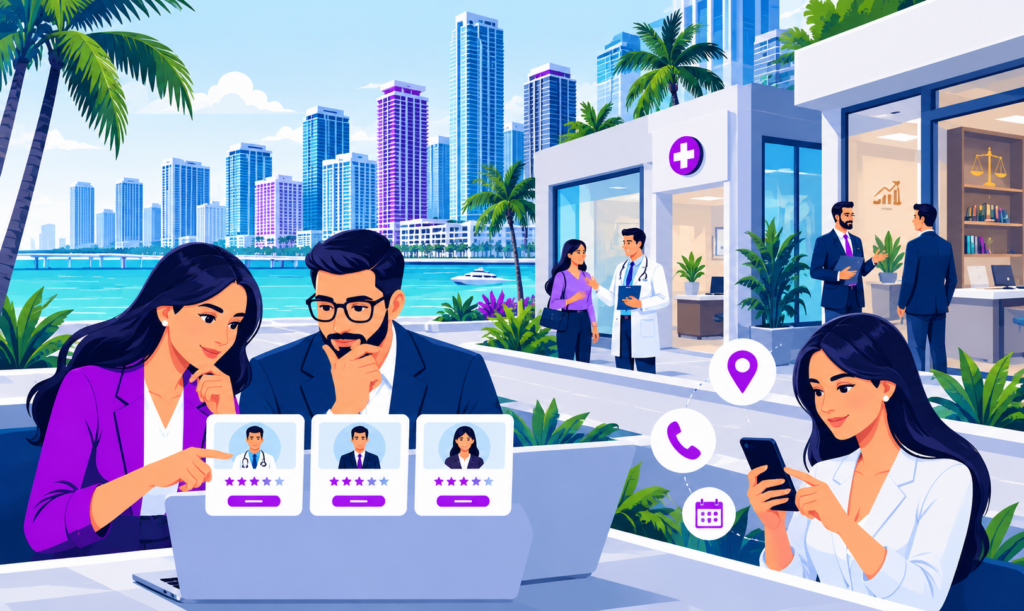
Searches from Margate addresses lean short and local: “doctor near me,” “urgent care Margate,” “pediatrician 33063 accepting new patients.” Few people type a practice name unless they were referred by a neighbor or a sibling at the same apartment complex. That means your ranking depends on matching intent, not brand recognition, and it means a practice with five years of goodwill in the community can still lose the click if its site doesn’t speak the patient’s exact language.
Mobile share of this traffic runs high, higher than in newer, car-dependent parts of Broward County. Margate’s older housing stock and dense apartment and condo clusters along Margate Boulevard and State Road 7 mean shorter trips and more on-the-go searching between errands. A page that renders slowly on a mid-range Android phone loses patients before it ever gets to say anything about your practice, your hours, or your providers.
Insurance comes up early too. Searchers add plan names, “sliding scale,” or “no insurance” to their query more often in Margate than in higher-income zip codes nearby. If that information is missing or buried in a PDF, you lose the click to a competitor who put it on the page in plain text. The same goes for Spanish and Creole language searches, which show up consistently given the city’s demographics and rarely get a dedicated landing page.
Timing also matters. Searches spike on Monday mornings and right after school drop-off, and again in late afternoon when people realize they cannot wait until next week. A practice that answers its phone and its site at those hours captures volume that a slower competitor misses entirely. Weekend searches for urgent, same-day visits also run higher here than the county average.
We map these patterns before writing a word of copy, because guessing at intent is how budgets get wasted on keywords nobody in Margate actually types. That research shapes page titles, FAQ content, and even which insurance logos go above the fold.
- Short, symptom- and insurance-driven mobile searches dominate
- Multilingual intent is common and under-served by most local sites
- Monday mornings, after-school hours, and weekends drive urgent-need traffic
The competition here | What we build for Medical Practices in this market
Margate’s medical search results are a mix. For broad terms like “doctor near me,” the map pack dominates and three to five local listings take almost all the clicks, usually practices with consistent reviews and complete, accurate profiles. For narrower terms, a specialty paired with a condition or an age group, organic results still carry real weight, and a well-built service page can outrank a Google Business Profile that has no supporting website content behind it.
Competition density is moderate. You are not fighting fifty cardiologists for the same search the way you might in Fort Lauderdale or Boca Raton, but you are fighting multi-location groups that have more review volume and bigger marketing budgets than a solo or two-provider practice. The honest read: you can compete on specificity and speed even without outspending a larger group, but you cannot win on a generic homepage with no location pages and a contact form from 2015.
Here is what that means in practice for what we build.
Provider pages with real credentials. Medical content falls under Google’s higher scrutiny for pages that affect a person’s health or finances (YMYL). That means a provider bio needs a real name, license type, school, years in practice, and a photo, not a stock headshot and a one-line title. We build a dedicated page per provider rather than a shared “our doctors” paragraph, because a page with no author credentials behind it struggles to earn trust signals from Google or from patients reading it on a phone before deciding whether to book.
A page per condition or service, not one page trying to cover everything. A practice offering primary care, pediatrics, and minor urgent care cannot rank one homepage for all three. We build separate pages so each one can be specific: symptoms treated, what a visit looks like, what to bring, which insurance plans are accepted. A page written for “sick visit same day Margate” converts differently than one written for “annual physical exam.” Mixing them into one page dilutes both.
HIPAA-aware form handling. New patient intake forms, appointment requests, and “ask a question” fields all touch protected health information the moment a patient types a symptom or a date of birth into them. We build forms that limit what gets collected on the public site, route anything sensitive through a secure, access-controlled path, and avoid sending patient details through plain email or storing them in a marketing tool that was never meant to hold health data. This is a build decision, not an afterthought bolted on later.
Multi-location structure for practices with more than one Margate-area office. If you operate in Margate and also Coral Springs or North Lauderdale, each location needs its own page with its own address, hours, phone extension, and provider list. One shared “locations” page with a map embed does not give Google or a patient enough to confirm which office is closest, and it suppresses your map pack visibility at both addresses instead of helping either one.
Speed, because Margate is a mobile-heavy market. We compress images, cut unnecessary scripts, and test load time on real mid-range phones, not just a fast office laptop. For a market this dense and this mobile, a one-second delay in load time is the difference between a call and a bounce.
Reviews built into the operational flow, not chased after the fact. We set up a simple, HIPAA-conscious way to ask satisfied patients for a review after a visit, without referencing their diagnosis or treatment in the request. Review volume and recency are one of the stronger map pack ranking factors in a market where most practices already have a Google profile.
None of this is exotic. It is the specific, unglamorous work that a template medical website skips, and it is exactly the work that shows up in how a Margate patient experiences your site between finishing the search and deciding whether to pick up the phone.
What we measure
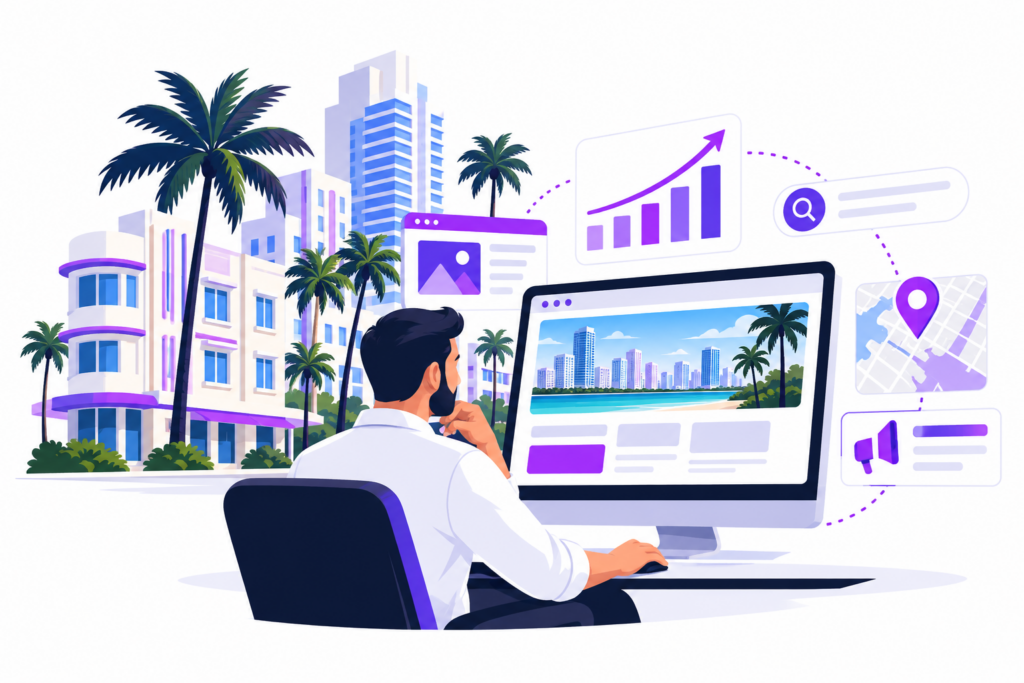
We track calls, form submissions, and booking clicks back to the specific page, keyword, and device that produced them, using call tracking numbers and attribution rather than guessing from a monthly traffic graph. If a provider page for pediatric sick visits generates calls and your urgent care page does not, you should know that, and you should know it by channel and by device, not just by total.
We report what moved and what did not. We do not promise a ranking position or a patient volume, because no one honestly can. What we can show you is which pages are producing contact, which ones are being viewed but not converting, and what we changed in response.
Legal and professional services
Explain practice areas, relevant experience, service locations, and consultation options. Organize pages around the specific services potential clients search for.
Medical and healthcare practices
Make treatment information, provider details, location information, and appointment options easy to find. Review health-related claims carefully.
Financial services
Present services, qualifications, and contact pathways clearly while respecting applicable advertising and compliance requirements.
Technology and business services
Explain complex offerings in plain language, demonstrate practical value, and create landing pages for distinct solutions.
Local service businesses
Build relevant service and location pages, improve Google Business Profile information, and make calls and enquiry forms easy to use.
What it costs
Cost is a real question in Margate, and we would rather answer it here than make you book a call to find out. Medical marketing pricing depends on scope: a single-location practice needing provider pages, local SEO, and HIPAA-safe forms costs less to build and run than a multi-location group needing separate location pages, more content, and ongoing ad management across several zip codes.
We price in ranges tied to scope, not a flat rate pulled from a brochure, because a two-provider family practice and a five-location urgent care group are not the same project. Ask us for a written range based on your specific location count and goals, and we will give you one before any work starts, not after.
Get an audit
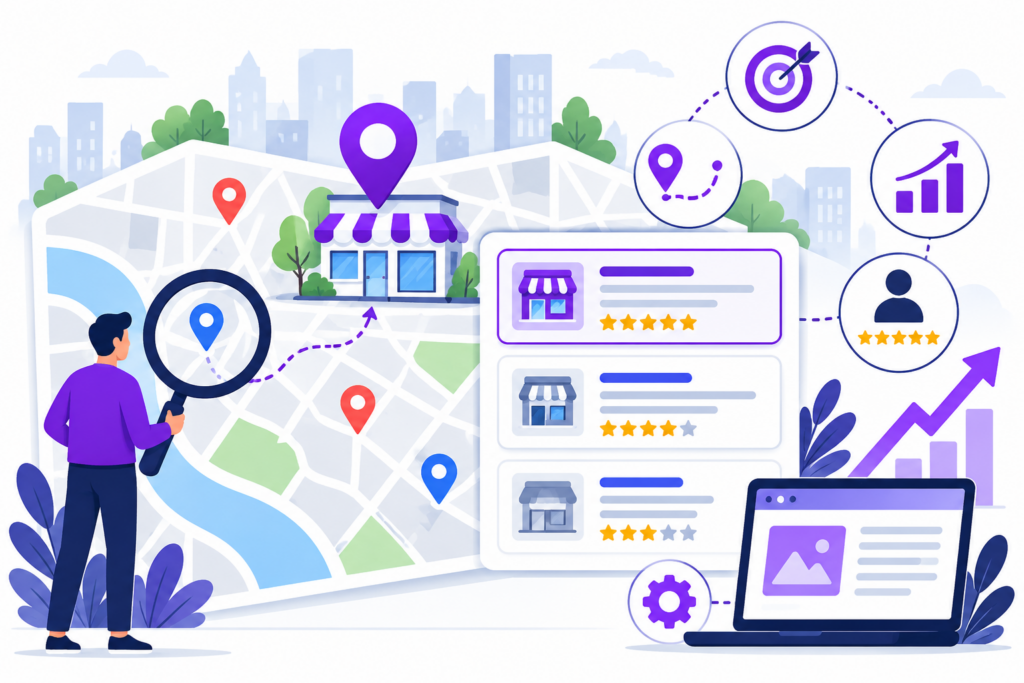
If you want a plain look at where your medical practice’s website and local listings stand in Margate searches right now, before you spend a penny on anything, we can run that review. We will check how you show up for the searches patients actually use, how your site performs against other local practices, and how your Google Business Profile and directory listings are holding up. You will get a clear picture of what is working, what is not, and what it would take to fix the gaps, including any mess a previous agency may have left behind.
Request an audit through the site or get in touch directly. There is no pressure script and no sign-up required to get the results. You will simply get a straight look at your current numbers, how they compare locally, and an honest answer about what is realistic for your practice to achieve.

Questions
Margate practice owners ask us about timelines, HIPAA risk, and whether a smaller budget can still compete against bigger groups with more locations. Fair questions, and worth answering plainly instead of waving away.
We also get asked how we handle patient data during the build itself, since a lot of medical sites get rebuilt by people who have never thought about where a form submission actually goes once a patient hits submit.
Can a small, single-location practice in Margate actually compete against multi-location groups?
Yes, on specific, well-built pages, though it depends on execution and ad spend rather than size alone. A focused provider and service page often beats a generic page from a larger competitor on narrower searches, even without a bigger budget.
How do you keep patient intake forms HIPAA-safe on the public website?
We limit what the public form collects, route anything sensitive through a secure, access-controlled process rather than plain email, and avoid storing health details in tools not built to hold them. It is a build decision made up front, not a setting toggled later.
Does the map pack or organic search matter more for a Margate medical practice?
Both, depending on the search. Broad terms like "doctor near me" are usually won in the map pack by profiles with strong, recent reviews. Narrower terms pairing a specialty with a condition or age group are often won by a dedicated service page in organic results.
How long does it take to see a change in calls or bookings?
It varies by competition, starting condition of the site, and budget, so we will not give you a fixed timeline. What we can tell you is what we are measuring and show you the data as it moves, month over month.
Do you handle multi-location practices that serve Margate and nearby cities?
Yes. Each location gets its own page with its own address, hours, and provider list, because a single shared locations page tends to suppress visibility at every address instead of helping any one of them.