
- Home
- Services
- Portfolio
- About
- Service AreasFort Lauderdale, FL
- Web Design
- Redesign
- WordPress
- Ecommerce
- Landing Pages
- SEO Services
- Local SEO
- GBP
- Google Ads
- PPC
- Digital Marketing
- Internet Marketing
- Advertising
- Tracking
- Dental Marketing
- Medical Marketing
- HVAC Marketing
- Roofing Marketing
- Pest Control Marketing
- Home Services Marketing
- Plumbing Marketing
- Electrical Marketing
- Landscaping Marketing
- Remodeling Marketing
Pembroke Pines, FL- Web Design
- Redesign
- WordPress
- Ecommerce
- Landing Pages
- SEO Services
- Local SEO
- GBP
- Google Ads
- PPC
- Digital Marketing
- Internet Marketing
- Advertising
- Tracking
- Dental Marketing
- Medical Marketing
- HVAC Marketing
- Roofing Marketing
- Pest Control Marketing
- Home Services Marketing
- Plumbing Marketing
- Electrical Marketing
- Landscaping Marketing
- Remodeling Marketing
Hialeah, FL- Web Design
- Redesign
- WordPress
- Ecommerce
- Landing Pages
- SEO Services
- Local SEO
- GBP
- Google Ads
- PPC
- Digital Marketing
- Internet Marketing
- Advertising
- Tracking
- Dental Marketing
- Medical Marketing
- HVAC Marketing
- Roofing Marketing
- Pest Control Marketing
- Home Services Marketing
- Plumbing Marketing
- Electrical Marketing
- Landscaping Marketing
- Remodeling Marketing
Hollywood, FL- Web Design
- Redesign
- WordPress
- Ecommerce
- Landing Pages
- SEO Services
- Local SEO
- GBP
- Google Ads
- PPC
- Digital Marketing
- Internet Marketing
- Advertising
- Tracking
- Dental Marketing
- Medical Marketing
- HVAC Marketing
- Roofing Marketing
- Pest Control Marketing
- Home Services Marketing
- Plumbing Marketing
- Electrical Marketing
- Landscaping Marketing
- Remodeling Marketing
Miramar, FL- Web Design
- Redesign
- WordPress
- Ecommerce
- Landing Pages
- SEO Services
- Local SEO
- GBP
- Google Ads
- PPC
- Digital Marketing
- Internet Marketing
- Advertising
- Tracking
- Dental Marketing
- Medical Marketing
- HVAC Marketing
- Roofing Marketing
- Pest Control Marketing
- Home Services Marketing
- Plumbing Marketing
- Electrical Marketing
- Landscaping Marketing
- Remodeling Marketing
Coral Springs, FL- Web Design
- Redesign
- WordPress
- Ecommerce
- Landing Pages
- SEO Services
- Local SEO
- GBP
- Google Ads
- PPC
- Digital Marketing
- Internet Marketing
- Advertising
- Tracking
- Dental Marketing
- Medical Marketing
- HVAC Marketing
- Roofing Marketing
- Pest Control Marketing
- Home Services Marketing
- Plumbing Marketing
- Electrical Marketing
- Landscaping Marketing
- Remodeling Marketing
Pompano Beach, FL- Web Design
- Redesign
- WordPress
- Ecommerce
- Landing Pages
- SEO Services
- Local SEO
- GBP
- Google Ads
- PPC
- Digital Marketing
- Internet Marketing
- Advertising
- Tracking
- Dental Marketing
- Medical Marketing
- HVAC Marketing
- Roofing Marketing
- Pest Control Marketing
- Home Services Marketing
- Plumbing Marketing
- Electrical Marketing
- Landscaping Marketing
- Remodeling Marketing
Davie, FL- Web Design
- Redesign
- WordPress
- Ecommerce
- Landing Pages
- SEO Services
- Local SEO
- GBP
- Google Ads
- PPC
- Digital Marketing
- Internet Marketing
- Advertising
- Tracking
- Dental Marketing
- Medical Marketing
- HVAC Marketing
- Roofing Marketing
- Pest Control Marketing
- Home Services Marketing
- Plumbing Marketing
- Electrical Marketing
- Landscaping Marketing
- Remodeling Marketing
Sunrise, FL- Web Design
- Redesign
- WordPress
- Ecommerce
- Landing Pages
- SEO Services
- Local SEO
- GBP
- Google Ads
- PPC
- Digital Marketing
- Internet Marketing
- Advertising
- Tracking
- Dental Marketing
- Medical Marketing
- HVAC Marketing
- Roofing Marketing
- Pest Control Marketing
- Home Services Marketing
- Plumbing Marketing
- Electrical Marketing
- Landscaping Marketing
- Remodeling Marketing
Plantation, FL- Web Design
- Redesign
- WordPress
- Ecommerce
- Landing Pages
- SEO Services
- Local SEO
- GBP
- Google Ads
- PPC
- Digital Marketing
- Internet Marketing
- Advertising
- Tracking
- Dental Marketing
- Medical Marketing
- HVAC Marketing
- Roofing Marketing
- Pest Control Marketing
- Home Services Marketing
- Plumbing Marketing
- Electrical Marketing
- Landscaping Marketing
- Remodeling Marketing
Deerfield Beach, FL- Web Design
- Redesign
- WordPress
- Ecommerce
- Landing Pages
- SEO Services
- Local SEO
- GBP
- Google Ads
- PPC
- Digital Marketing
- Internet Marketing
- Advertising
- Tracking
- Dental Marketing
- Medical Marketing
- HVAC Marketing
- Roofing Marketing
- Pest Control Marketing
- Home Services Marketing
- Plumbing Marketing
- Electrical Marketing
- Landscaping Marketing
- Remodeling Marketing
Miami Gardens, FL- Web Design
- Redesign
- WordPress
- Ecommerce
- Landing Pages
- SEO Services
- Local SEO
- GBP
- Google Ads
- PPC
- Digital Marketing
- Internet Marketing
- Advertising
- Tracking
- Dental Marketing
- Medical Marketing
- HVAC Marketing
- Roofing Marketing
- Pest Control Marketing
- Home Services Marketing
- Plumbing Marketing
- Electrical Marketing
- Landscaping Marketing
- Remodeling Marketing
Lauderhill, FL- Web Design
- Redesign
- WordPress
- Ecommerce
- Landing Pages
- SEO Services
- Local SEO
- GBP
- Google Ads
- PPC
- Digital Marketing
- Internet Marketing
- Advertising
- Tracking
- Dental Marketing
- Medical Marketing
- HVAC Marketing
- Roofing Marketing
- Pest Control Marketing
- Home Services Marketing
- Plumbing Marketing
- Electrical Marketing
- Landscaping Marketing
- Remodeling Marketing
West Palm Beach, FL- Web Design
- Redesign
- WordPress
- Ecommerce
- Landing Pages
- SEO Services
- Local SEO
- GBP
- Google Ads
- PPC
- Digital Marketing
- Internet Marketing
- Advertising
- Tracking
- Dental Marketing
- Medical Marketing
- HVAC Marketing
- Roofing Marketing
- Pest Control Marketing
- Home Services Marketing
- Plumbing Marketing
- Electrical Marketing
- Landscaping Marketing
- Remodeling Marketing
Tamarac, FL- Web Design
- Redesign
- WordPress
- Ecommerce
- Landing Pages
- SEO Services
- Local SEO
- GBP
- Google Ads
- PPC
- Digital Marketing
- Internet Marketing
- Advertising
- Tracking
- Dental Marketing
- Medical Marketing
- HVAC Marketing
- Roofing Marketing
- Pest Control Marketing
- Home Services Marketing
- Plumbing Marketing
- Electrical Marketing
- Landscaping Marketing
- Remodeling Marketing
Weston, FL- Web Design
- Redesign
- WordPress
- Ecommerce
- Landing Pages
- SEO Services
- Local SEO
- GBP
- Google Ads
- PPC
- Digital Marketing
- Internet Marketing
- Advertising
- Tracking
- Dental Marketing
- Medical Marketing
- HVAC Marketing
- Roofing Marketing
- Pest Control Marketing
- Home Services Marketing
- Plumbing Marketing
- Electrical Marketing
- Landscaping Marketing
- Remodeling Marketing
Boca Raton, FLMargate, FLCoconut Creek, FLMiami Beach, FLHomestead, FLKendall, FLDoral, FLBoynton Beach, FLThe Hammocks, FLNorth Lauderdale, FLOakland Park, FLDelray Beach, FLNorth Miami, FLHallandale Beach, FLFontainebleau, FLKendale Lakes, FLWellington, FLJupiter, FLTamiami, FLPalm Beach Gardens, FLLauderdale Lakes, FLCooper City, FLCountry Club, FLParkland, FLCoral Gables, FLDania Beach, FLCutler Bay, FLNorth Miami Beach, FLGreenacres, FLLake Worth Beach, FLPrinceton, FLRoyal Palm Beach, FLSouth Miami Heights, FLRichmond West, FLRiviera Beach, FLWest Little River, FLGolden Glades, FLAventura, FLMiami Lakes, FLWestchester, FLLeisure City, FLCoral Terrace, FLPalm Springs, FLPalmetto Bay, FLHialeah Gardens, FLSunny Isles Beach, FLIves Estates, FLWest Park, FLSweetwater, FLPinecrest, FLSunset, FLPinewood, FLWilton Manors, FLOpa-locka, FLLighthouse Point, FLBelle Glade, FLNaranja, FLPalmetto Estates, FLBrownsville, FLKey Biscayne, FLOlympia Heights, FLMiami Springs, FLFlorida City, FLSouth Miami, FLThree Lakes, FLGladeview, FLNorth Palm Beach, FLMiami Shores, FLSouthwest Ranches, FLKings Point, FLLauderdale-by-the-Sea, FLHillsboro Beach, FLSea Ranch Lakes, FLLazy Lake, FL - Blog
- Contact
Marketing for Medical Practices in Country Club, Florida
Country Club is a small residential community inside the larger Hialeah and Country Club-Dade healthcare market. There is no cluster of hospitals or specialty centers inside the town itself. Patients who live here drive to Hialeah, Country Club Lakes, or greater Country Club for most care, and the practices that win their business are competing across that wider radius, not just within Country Club’s borders.
That changes how marketing has to work. A medical practice marketing plan built only around the town’s name will miss almost every real search. We build around how patients in this zip code actually search, which means targeting Country Club alongside the neighboring cities where the same household already shops, works, and picks a doctor. That includes structuring location pages, Google Business Profile categories, and review generation so your practice surfaces for the “near me” and neighboring-city searches patients actually type, not just the town name on your letterhead.

How Country Club Medical Practices buyers search
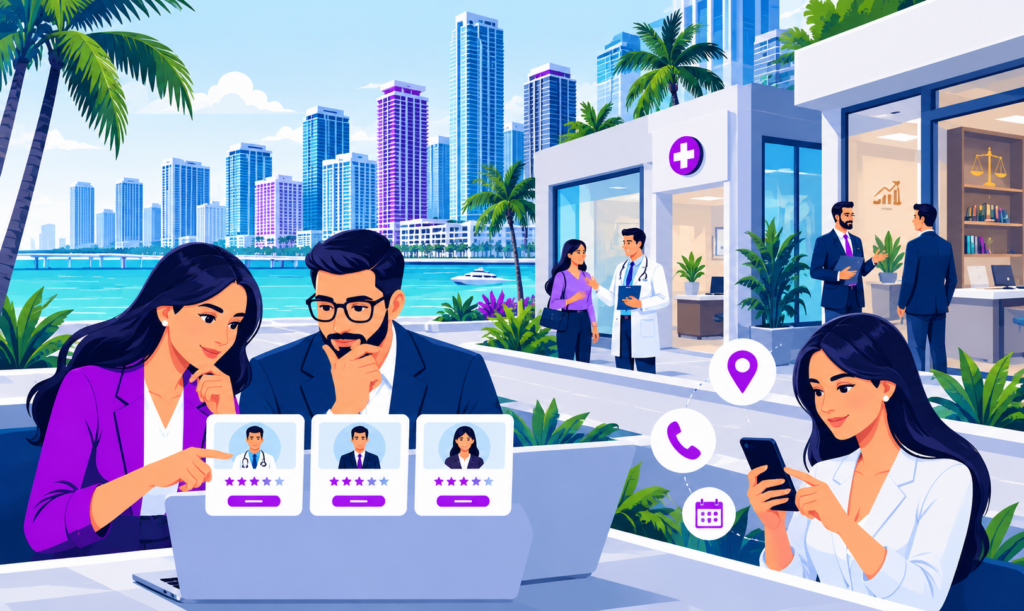
Patients searching for a doctor rarely type a neighborhood name first. They search by specialty and symptom: “pediatrician near me,” “urgent care Hialeah,” “dermatologist accepting new patients Country Club-Dade.” Google then matches that query to location using the searcher’s device, not the practice’s marketing copy. This matters for Country Club because the town’s population base is small, so almost none of your real search volume contains the words “Country Club” at all. It contains the specialty, sometimes an insurance term, and the surrounding city names: Hialeah, Country Club Lakes, Opa-locka.
A second pattern is specific to healthcare: patients search for a named provider almost as often as they search for a service. “Dr. [Name] reviews,” “Dr. [Name] accepting patients,” and similar queries show up constantly in practice analytics. That means a provider’s individual page, with real credentials, a real headshot, and specifics on training and years in practice, carries ranking weight that a generic “Our Doctors” page does not. Practices that bury providers in a single staff list miss this traffic entirely.
Insurance and language also shape the query. Searches that include “Medicaid,” “Spanish speaking,” or a specific insurance carrier name are common in this part of Country Club-Dade, and a site that does not mention accepted plans or language capability on the page itself is invisible to those searches, even if the practice does accept them. The same logic applies to appointment type: “same day appointment,” “walk-in,” and “telehealth visit” are increasingly common modifiers, and pages that never use that language won’t surface for patients who search it.
The competition here
Being honest about this market means starting with the obvious: Country Club itself does not support a meaningful concentration of medical practices. It is a small, largely residential community, and most of the providers patients here actually choose are headquartered in Hialeah, Country Club Lakes, or elsewhere in Country Club-Dade. That is not a weakness in the market, it is just the shape of it, and any plan that pretends otherwise is wasting budget on a search volume that does not exist at the town level.
The real competitive set is the primary care practices, urgent cares, pediatricians, dental offices, and specialty clinics that already rank for “near me” and city-name searches across that wider Hialeah/Country Club Lakes corridor. Several of them are multi-location groups with marketing staff or agencies behind them, and a number have been collecting Google reviews for years. That is the bar.
In the map pack specifically, proximity, category accuracy, review volume, and review recency all weigh heavily. A single-location independent practice can still outrank a bigger group for a given query if its Google Business Profile is more complete and its reviews are more current, but it has to be managed as its own ongoing task, not set up once and left alone.
In organic search, the field is less crowded but not empty. Specialty-specific terms (“pediatric dentist,” “dermatologist for acne,” “physical therapy after surgery”) tend to have a handful of established sites competing for the Hialeah and Country Club Lakes area, and most of them have not built a true page for each service they offer. That gap, a shallow or outdated website even from an established competitor, is where a newer or smaller practice can realistically compete.
What we build for Medical Practices in this market
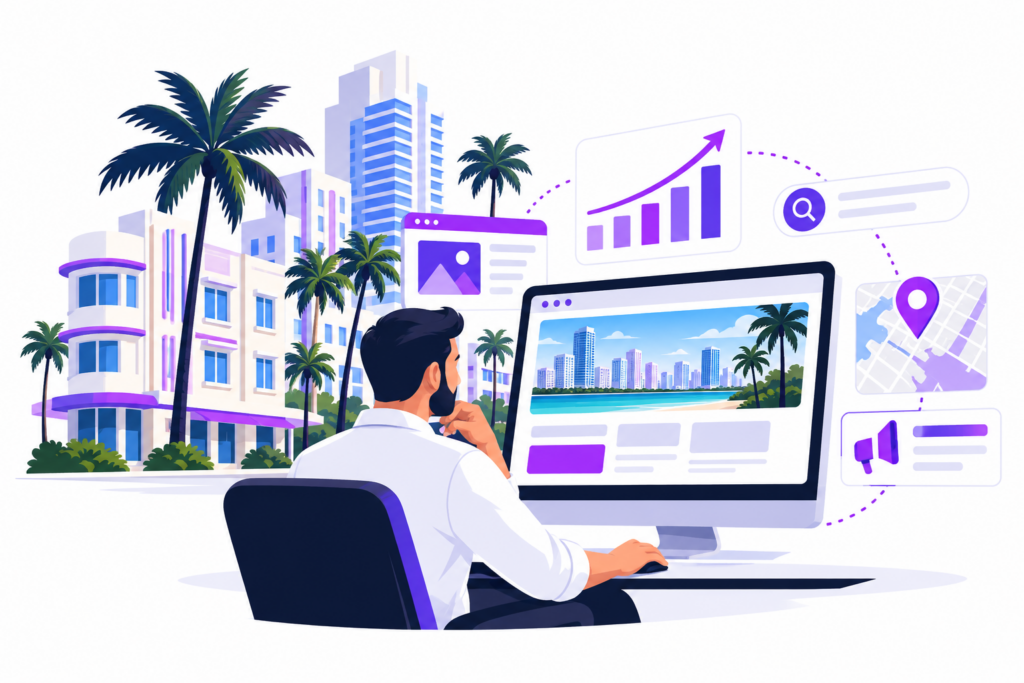
A medical practice website has constraints a typical local business site does not. Health content falls under what Google calls YMYL, Your Money or Your Life, meaning pages that could affect a person’s health, safety, or finances get more scrutiny in how they are evaluated for ranking and trust. In practice, that means provider credentials, accurate claims, and clear sourcing matter more here than on a typical contractor or retail site, and a thin or generic page is less likely to perform no matter how well it is optimized technically.
Here is what that translates to for a practice serving Country Club and the surrounding Hialeah/Country Club Lakes market.
Provider pages built around real credentials
Every provider gets an individual page: full name, license and board certification where applicable, education, years practicing, languages spoken, and specialties. This is not a biography exercise. It is what YMYL review looks for, and it is also what patients search for by name once they have a referral or a recommendation. A shared “Meet Our Doctors” page with a paragraph per provider does neither job well.
Service pages that match how patients actually search
Instead of one “Services” page listing fifteen things a practice does, each service, condition, or procedure gets its own page: its own content, its own set of questions a patient actually asks, its own path to booking. One page cannot reasonably rank for forty different search terms, so we do not ask it to.
City and insurance coverage built into the structure
Because so little of the real search volume contains the word “Country Club,” the site structure accounts for Hialeah, Country Club Lakes, and the other cities and zip codes where your actual patients live. Insurance plans accepted, whether Medicaid is taken, and language capability (particularly Spanish, which matters across a large share of this Country Club-Dade market) are stated plainly on the pages where patients are deciding, not buried in a PDF.
HIPAA-safe forms and intake
Any contact form, appointment request, or patient inquiry form on the site is built to avoid capturing protected health information in a way that would trigger HIPAA handling requirements for the form itself. That means asking for name, phone, insurance carrier, and reason for visit at a general level, not symptoms, diagnosis, or medical history, and routing submissions to a secure destination rather than an open inbox. Getting this wrong is a liability issue, not just a marketing one, so it is built in from the start rather than patched later.
Multi-location structure, if it applies
If a practice operates more than one location, each location gets its own page with its own address, hours, provider list, and Google Business Profile, rather than one page trying to represent several offices. Google treats each location as a distinct entity for map pack purposes, and a combined page dilutes all of them.
Reviews and reputation as an ongoing task
Because map pack ranking depends partly on review volume and recency, we set up a simple, compliant way to request reviews after a visit, something patients can act on from a phone in under a minute, and we monitor what comes in so a practice is not caught off guard by a negative review sitting unanswered for months.
Search campaigns for the terms that convert
Where paid search makes sense, campaigns are built around the specialty and city terms that actually convert for medical practices, not broad brand terms, with call tracking attached so the practice can see which search actually produced a phone call or form submission, not just a click.
Legal and professional services
Explain practice areas, relevant experience, service locations, and consultation options. Organize pages around the specific services potential clients search for.
Medical and healthcare practices
Make treatment information, provider details, location information, and appointment options easy to find. Review health-related claims carefully.
Financial services
Present services, qualifications, and contact pathways clearly while respecting applicable advertising and compliance requirements.
Technology and business services
Explain complex offerings in plain language, demonstrate practical value, and create landing pages for distinct solutions.
Local service businesses
Build relevant service and location pages, improve Google Business Profile information, and make calls and enquiry forms easy to use.
What we measure
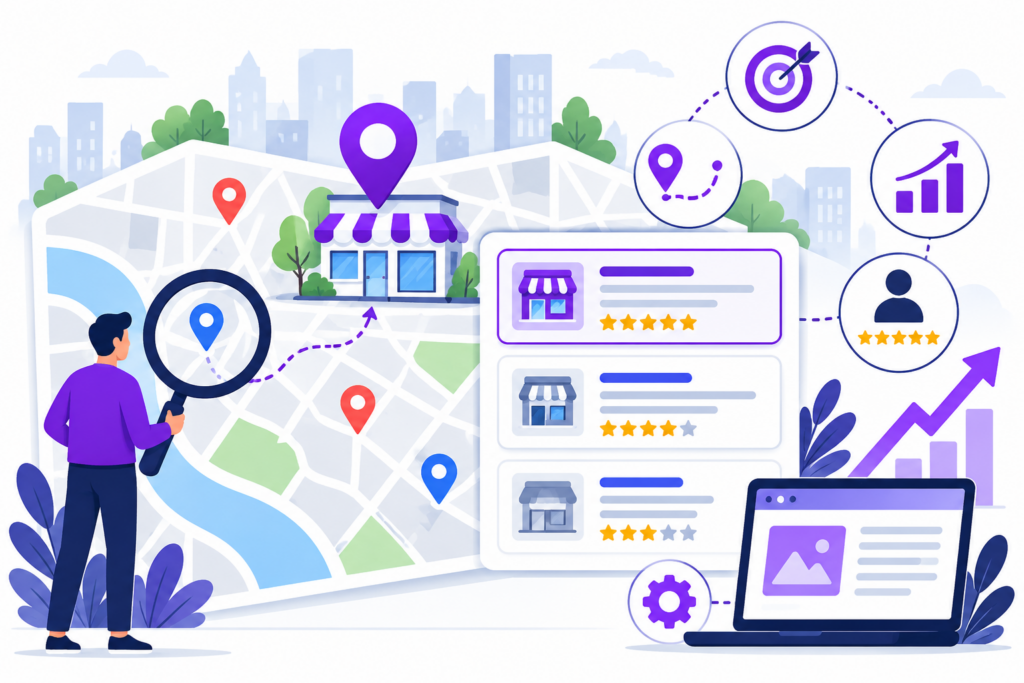
We track organic ranking for the specific service and city-name terms a practice is built around, Google Business Profile performance (calls, direction requests, and profile views) separately from the website, and, where call tracking is in place, which pages and which search terms produced an actual phone call versus a form fill. For paid campaigns, we report cost per call and cost per booked appointment where that data is available, not just click volume. None of this is a promise about where a practice will rank or how many patients a given month will bring. It is a description of what gets measured and reported, month over month, so a practice can see what is actually happening rather than taking it on faith.
What it costs
Medical practice marketing costs vary by scope: a single-provider site with a handful of service pages costs less to build and maintain than a multi-location practice near Country Club with ten providers and a paid search campaign running alongside it. Ongoing SEO and ad management are typically billed monthly, and the right starting budget depends on how many locations, providers, and services need to be represented, whether you're competing for patients across a wider service area, and whether paid search is part of the plan from day one or added later. Specialty matters too — a dermatology or dental practice often needs different keyword and content investment than a family medicine group. Website build costs also shift based on whether you need online scheduling, patient forms, or insurance and provider directories integrated. We can give a specific number once we understand your scope and goals.

Get an audit
If you run a medical practice serving Country Club, Hialeah, or Country Club Lakes and want a plain look at how your site and Google Business Profile currently show up for the searches your patients actually run, ask for an audit. This is not a generic checklist pulled from a template. You will get a specific read on your provider pages, your service pages, your map pack standing against other practices in the area, and your appointment and intake form handling from first click to confirmation.

Questions
Before signing on with a marketing company, most practices want to know how patient privacy is handled on a website form, how a small town like Country Club fits into a search strategy that has to cover a much larger area, and how progress actually gets reported. These are fair questions, and the answers below are specific rather than general, because a practice evaluating YMYL-sensitive marketing should not have to take anything on faith.
Why do you recommend targeting Hialeah and Country Club Lakes along with Country Club?
Country Club is a small residential community without enough search volume on its own to justify a standalone campaign. Most patients who live here search using nearby city names or no city name at all, so a plan limited to "Country Club" misses almost all of the real demand. We build the site and campaigns around the actual search area.
How do you keep patient intake forms HIPAA-safe?
Forms are built to collect general contact and insurance information only, not symptoms or medical history, and submissions route to a secure destination rather than a shared inbox. If a practice needs full patient portal functionality, that is handled through a dedicated HIPAA-compliant platform, not a standard contact form.
Will my practice show up in the Google map pack?
Map pack ranking depends on proximity to the searcher, category accuracy, and review volume and recency, among other factors Google does not fully disclose. We manage the Google Business Profile actively and set up a review request process, but no one can guarantee a map pack position.
Do you write the provider bios or do I?
We draft them from information you provide (education, board certification, years practicing, specialties, languages) and send them back for your review and sign-off before anything goes live. Accuracy on credentials is non-negotiable in healthcare content, so nothing is published without your confirmation.
What if my practice has multiple locations across Country Club-Dade?
Each location gets its own page with its own address, hours, and Google Business Profile. Combining multiple locations onto one page works against you in local search, since Google evaluates each location separately for map pack results.
How long does it take to see movement in rankings?
Mobile and map pack behavior
Most of this searching happens on a phone, often close to the decision to book, which means thumb-typed, shorter, more urgent queries than a desktop search. That pushes the Google Business Profile and map pack results ahead of organic listings for many of these queries, which is a separate ranking track from your website and needs its own ongoing attention. Profile categories, posted hours, photos of the actual office, and recent reviews mentioning the provider by name all factor into whether a Country Club-area practice shows up in that map pack for a nearby Hialeah or Country Club Lakes search, independent of how strong the website itself is.