
- Home
- Services
- Portfolio
- About
- Service AreasFort Lauderdale, FL
- Web Design
- Redesign
- WordPress
- Ecommerce
- Landing Pages
- SEO Services
- Local SEO
- GBP
- Google Ads
- PPC
- Digital Marketing
- Internet Marketing
- Advertising
- Tracking
- Dental Marketing
- Medical Marketing
- HVAC Marketing
- Roofing Marketing
- Pest Control Marketing
- Home Services Marketing
- Plumbing Marketing
- Electrical Marketing
- Landscaping Marketing
- Remodeling Marketing
Pembroke Pines, FL- Web Design
- Redesign
- WordPress
- Ecommerce
- Landing Pages
- SEO Services
- Local SEO
- GBP
- Google Ads
- PPC
- Digital Marketing
- Internet Marketing
- Advertising
- Tracking
- Dental Marketing
- Medical Marketing
- HVAC Marketing
- Roofing Marketing
- Pest Control Marketing
- Home Services Marketing
- Plumbing Marketing
- Electrical Marketing
- Landscaping Marketing
- Remodeling Marketing
Hialeah, FL- Web Design
- Redesign
- WordPress
- Ecommerce
- Landing Pages
- SEO Services
- Local SEO
- GBP
- Google Ads
- PPC
- Digital Marketing
- Internet Marketing
- Advertising
- Tracking
- Dental Marketing
- Medical Marketing
- HVAC Marketing
- Roofing Marketing
- Pest Control Marketing
- Home Services Marketing
- Plumbing Marketing
- Electrical Marketing
- Landscaping Marketing
- Remodeling Marketing
Hollywood, FL- Web Design
- Redesign
- WordPress
- Ecommerce
- Landing Pages
- SEO Services
- Local SEO
- GBP
- Google Ads
- PPC
- Digital Marketing
- Internet Marketing
- Advertising
- Tracking
- Dental Marketing
- Medical Marketing
- HVAC Marketing
- Roofing Marketing
- Pest Control Marketing
- Home Services Marketing
- Plumbing Marketing
- Electrical Marketing
- Landscaping Marketing
- Remodeling Marketing
Miramar, FL- Web Design
- Redesign
- WordPress
- Ecommerce
- Landing Pages
- SEO Services
- Local SEO
- GBP
- Google Ads
- PPC
- Digital Marketing
- Internet Marketing
- Advertising
- Tracking
- Dental Marketing
- Medical Marketing
- HVAC Marketing
- Roofing Marketing
- Pest Control Marketing
- Home Services Marketing
- Plumbing Marketing
- Electrical Marketing
- Landscaping Marketing
- Remodeling Marketing
Coral Springs, FL- Web Design
- Redesign
- WordPress
- Ecommerce
- Landing Pages
- SEO Services
- Local SEO
- GBP
- Google Ads
- PPC
- Digital Marketing
- Internet Marketing
- Advertising
- Tracking
- Dental Marketing
- Medical Marketing
- HVAC Marketing
- Roofing Marketing
- Pest Control Marketing
- Home Services Marketing
- Plumbing Marketing
- Electrical Marketing
- Landscaping Marketing
- Remodeling Marketing
Pompano Beach, FL- Web Design
- Redesign
- WordPress
- Ecommerce
- Landing Pages
- SEO Services
- Local SEO
- GBP
- Google Ads
- PPC
- Digital Marketing
- Internet Marketing
- Advertising
- Tracking
- Dental Marketing
- Medical Marketing
- HVAC Marketing
- Roofing Marketing
- Pest Control Marketing
- Home Services Marketing
- Plumbing Marketing
- Electrical Marketing
- Landscaping Marketing
- Remodeling Marketing
Davie, FL- Web Design
- Redesign
- WordPress
- Ecommerce
- Landing Pages
- SEO Services
- Local SEO
- GBP
- Google Ads
- PPC
- Digital Marketing
- Internet Marketing
- Advertising
- Tracking
- Dental Marketing
- Medical Marketing
- HVAC Marketing
- Roofing Marketing
- Pest Control Marketing
- Home Services Marketing
- Plumbing Marketing
- Electrical Marketing
- Landscaping Marketing
- Remodeling Marketing
Sunrise, FL- Web Design
- Redesign
- WordPress
- Ecommerce
- Landing Pages
- SEO Services
- Local SEO
- GBP
- Google Ads
- PPC
- Digital Marketing
- Internet Marketing
- Advertising
- Tracking
- Dental Marketing
- Medical Marketing
- HVAC Marketing
- Roofing Marketing
- Pest Control Marketing
- Home Services Marketing
- Plumbing Marketing
- Electrical Marketing
- Landscaping Marketing
- Remodeling Marketing
Plantation, FL- Web Design
- Redesign
- WordPress
- Ecommerce
- Landing Pages
- SEO Services
- Local SEO
- GBP
- Google Ads
- PPC
- Digital Marketing
- Internet Marketing
- Advertising
- Tracking
- Dental Marketing
- Medical Marketing
- HVAC Marketing
- Roofing Marketing
- Pest Control Marketing
- Home Services Marketing
- Plumbing Marketing
- Electrical Marketing
- Landscaping Marketing
- Remodeling Marketing
Deerfield Beach, FL- Web Design
- Redesign
- WordPress
- Ecommerce
- Landing Pages
- SEO Services
- Local SEO
- GBP
- Google Ads
- PPC
- Digital Marketing
- Internet Marketing
- Advertising
- Tracking
- Dental Marketing
- Medical Marketing
- HVAC Marketing
- Roofing Marketing
- Pest Control Marketing
- Home Services Marketing
- Plumbing Marketing
- Electrical Marketing
- Landscaping Marketing
- Remodeling Marketing
Miami Gardens, FL- Web Design
- Redesign
- WordPress
- Ecommerce
- Landing Pages
- SEO Services
- Local SEO
- GBP
- Google Ads
- PPC
- Digital Marketing
- Internet Marketing
- Advertising
- Tracking
- Dental Marketing
- Medical Marketing
- HVAC Marketing
- Roofing Marketing
- Pest Control Marketing
- Home Services Marketing
- Plumbing Marketing
- Electrical Marketing
- Landscaping Marketing
- Remodeling Marketing
Lauderhill, FL- Web Design
- Redesign
- WordPress
- Ecommerce
- Landing Pages
- SEO Services
- Local SEO
- GBP
- Google Ads
- PPC
- Digital Marketing
- Internet Marketing
- Advertising
- Tracking
- Dental Marketing
- Medical Marketing
- HVAC Marketing
- Roofing Marketing
- Pest Control Marketing
- Home Services Marketing
- Plumbing Marketing
- Electrical Marketing
- Landscaping Marketing
- Remodeling Marketing
West Palm Beach, FL- Web Design
- Redesign
- WordPress
- Ecommerce
- Landing Pages
- SEO Services
- Local SEO
- GBP
- Google Ads
- PPC
- Digital Marketing
- Internet Marketing
- Advertising
- Tracking
- Dental Marketing
- Medical Marketing
- HVAC Marketing
- Roofing Marketing
- Pest Control Marketing
- Home Services Marketing
- Plumbing Marketing
- Electrical Marketing
- Landscaping Marketing
- Remodeling Marketing
Tamarac, FL- Web Design
- Redesign
- WordPress
- Ecommerce
- Landing Pages
- SEO Services
- Local SEO
- GBP
- Google Ads
- PPC
- Digital Marketing
- Internet Marketing
- Advertising
- Tracking
- Dental Marketing
- Medical Marketing
- HVAC Marketing
- Roofing Marketing
- Pest Control Marketing
- Home Services Marketing
- Plumbing Marketing
- Electrical Marketing
- Landscaping Marketing
- Remodeling Marketing
Weston, FL- Web Design
- Redesign
- WordPress
- Ecommerce
- Landing Pages
- SEO Services
- Local SEO
- GBP
- Google Ads
- PPC
- Digital Marketing
- Internet Marketing
- Advertising
- Tracking
- Dental Marketing
- Medical Marketing
- HVAC Marketing
- Roofing Marketing
- Pest Control Marketing
- Home Services Marketing
- Plumbing Marketing
- Electrical Marketing
- Landscaping Marketing
- Remodeling Marketing
Boca Raton, FLMargate, FLCoconut Creek, FLMiami Beach, FLHomestead, FLKendall, FLDoral, FLBoynton Beach, FLThe Hammocks, FLNorth Lauderdale, FLOakland Park, FLDelray Beach, FLNorth Miami, FLHallandale Beach, FLFontainebleau, FLKendale Lakes, FLWellington, FLJupiter, FLTamiami, FLPalm Beach Gardens, FLLauderdale Lakes, FLCooper City, FLCountry Club, FLParkland, FLCoral Gables, FLDania Beach, FLCutler Bay, FLNorth Miami Beach, FLGreenacres, FLLake Worth Beach, FLPrinceton, FLRoyal Palm Beach, FLSouth Miami Heights, FLRichmond West, FLRiviera Beach, FLWest Little River, FLGolden Glades, FLAventura, FLMiami Lakes, FLWestchester, FLLeisure City, FLCoral Terrace, FLPalm Springs, FLPalmetto Bay, FLHialeah Gardens, FLSunny Isles Beach, FLIves Estates, FLWest Park, FLSweetwater, FLPinecrest, FLSunset, FLPinewood, FLWilton Manors, FLOpa-locka, FLLighthouse Point, FLBelle Glade, FLNaranja, FLPalmetto Estates, FLBrownsville, FLKey Biscayne, FLOlympia Heights, FLMiami Springs, FLFlorida City, FLSouth Miami, FLThree Lakes, FLGladeview, FLNorth Palm Beach, FLMiami Shores, FLSouthwest Ranches, FLKings Point, FLLauderdale-by-the-Sea, FLHillsboro Beach, FLSea Ranch Lakes, FLLazy Lake, FL - Blog
- Contact
Marketing for Medical Practices in Miami Gardens, Florida
Miami Gardens is a dense, working city. Most of the medical searches we see here come from a phone, often on a lunch break or after a shift, and the person searching wants an answer fast: is this provider taking new patients, do they take my insurance, how far is the drive. If your site takes four or five seconds to load on a mid-range Android phone, you have already lost a share of that traffic before anyone reads a word of your bio.
We build for that reality. A fast, clear site that loads quickly on a phone, states insurance and cost up front, and gets a patient to a form or a call without ten taps. That is the baseline for medical marketing in this city, not an upgrade.

How Miami Gardens Medical Practices buyers search
Searches here skew practical. People search by condition or symptom more than by specialty name, and they search close to home: “doctor near me open now,” “pediatrician Miami Gardens accepting new patients,” “urgent care Miami Gardens insurance.” A meaningful share of the city is bilingual, and Spanish-language queries for the same services exist alongside the English ones. If your practice serves both, and your site only answers in English, you are splitting your own visibility in half, and losing patients to the first competitor who shows up in both languages.
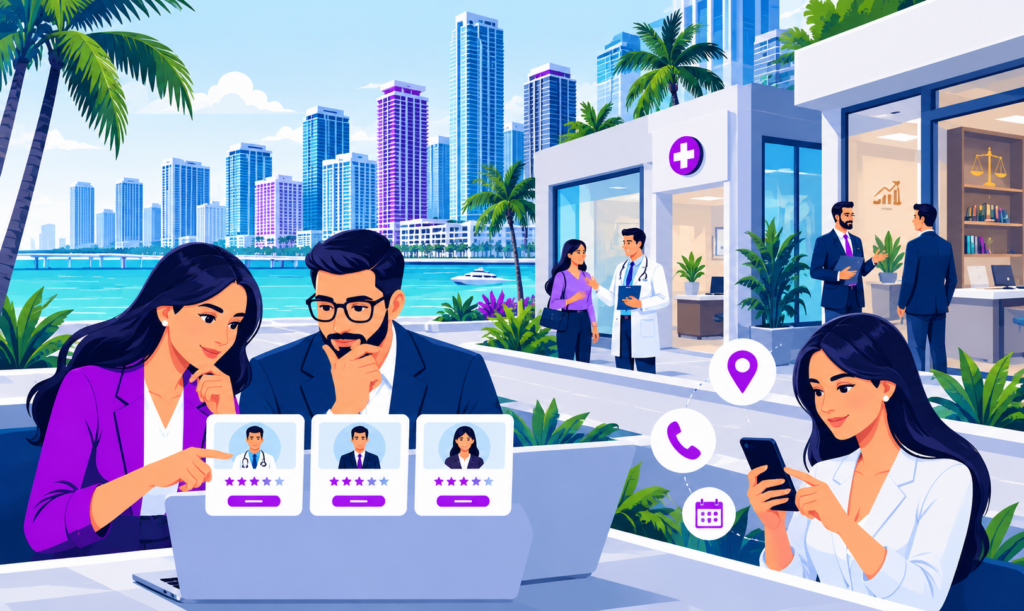
Review reading is heavy here before a call is made. People check the map pack listing, read a handful of reviews, and look for a named provider photo before they trust an unfamiliar name. Trades, auto shops, and food service businesses in this city already compete hard on Google Business Profile, so patients are used to checking reviews before they walk in anywhere, medical included. A thin profile with a handful of generic reviews reads as a practice that is new, inattentive, or simply not paying attention to how it looks to the public.
Price and insurance questions come early in the search, not after a consult. Searchers type “affordable,” “sliding scale,” or a specific insurance name directly into the query. A practice site that hides pricing and insurance behind a “contact us for details” page is answering a question nobody asked and skipping the one that was actually typed. Appointment availability language matters too: “accepting new patients,” “same-day,” and “walk-in” are searched almost as often as the specialty itself, and pages that never mention availability quietly lose that traffic.
What this means for page structure:
- State accepted insurance plainly on the page, not behind a form or call
- Name each provider with a real photo and credential, not a stock image
- Mirror key pages in Spanish rather than relying on browser translation
- Keep load times fast on mobile, where most of this searching happens
- Say directly whether you’re taking new patients and how soon
Anything that requires a phone call just to find out basic eligibility costs you the visit before it starts.
The competition here
Miami Gardens does not have the density of specialist practices you see in Aventura or Coral Gables, but it is not empty either. Primary care, pediatrics, urgent care, and a growing number of walk-in and multi-location clinics compete for the same map pack real estate, and several of them are chains with marketing budgets larger than a single independent practice. That is the honest shape of the market: you are not fighting a handful of solo practitioners, you are fighting local independents and regional groups at the same time, often on the same search results page.
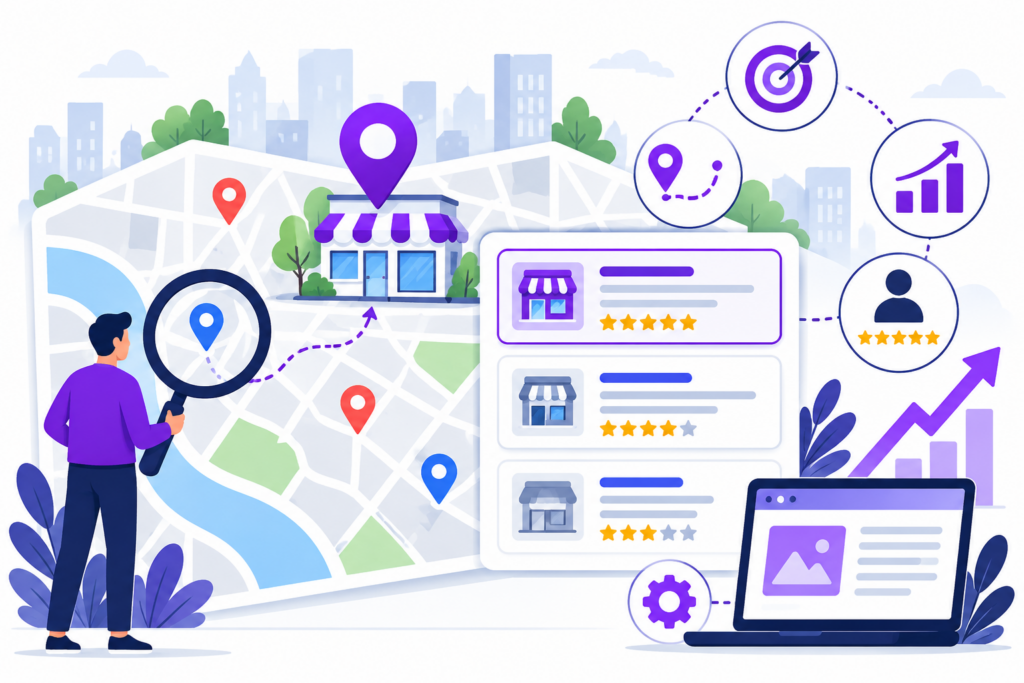
The map pack matters more than organic rankings for most of these searches, because “doctor near me” and “urgent care Miami Gardens” trigger map results first. Getting into that three-pack takes a complete, consistently updated Google Business Profile, a cluster of real reviews, and a physical presence that matches what is listed online. Organic content still matters for condition and service pages that patients research before they ever search by location, things like “what does a sliding scale clinic mean” or “pediatric urgent care vs ER.”
Where independent practices actually win is specificity. A chain’s website says “compassionate care for the whole family” on every location page with the city name swapped out. An independent practice can name its actual providers, list the actual languages spoken in-office, and answer the actual insurance and cost questions a Miami Gardens patient is typing. That is a real, structural advantage if the site is built to use it, and most chain sites are not built that way because it does not scale across hundreds of locations.
Seasonality
Expect predictable spikes around school physical and vaccination season, back-to-school in late summer, and flu and respiratory illness season from fall through winter. Urgent care and pediatric search volume moves with these cycles more than with anything an agency does, and campaign budgets should flex with them rather than stay flat all year.
What we build for Medical Practices in this market
We start with the structure a medical site in this market actually needs, not a generic template with your logo dropped in. That means a dedicated page for each provider, a dedicated page for each core service or condition you treat, and a location page if you operate more than one site in or around Miami Gardens. One page cannot rank for “pediatrician,” “sports physical,” and “vaccinations” all at once, and trying to make it do so usually means it ranks for none of them well.
Provider and credential pages. Each provider gets a real bio: license type, board certification if applicable, languages spoken, and years in the specific specialty. This is not decoration. Google treats medical content as YMYL, Your Money or Your Life, and pages that make health claims without a named, credentialed author are at a structural disadvantage in how they get evaluated and, often, in how patients perceive trust when they land on the page. A bio with a real name, a real credential, and a real photo reads as more trustworthy than an unattributed paragraph, both to a patient and to the systems ranking the page.
Insurance and cost pages written for this city. We build a page that states which insurance plans you take, what a self-pay visit costs if you disclose that, and whether sliding scale or payment plans exist. Price is a live objection in Miami Gardens specifically. Hiding it does not protect your margin, it just moves the patient to the next search result that answers the question. If the real number cannot be published, the page says exactly what determines the price and how to find out before the visit, rather than staying silent.
HIPAA-safe form handling. Any form that collects patient information, appointment requests, symptom descriptions, insurance details, has to be built so that data is not stored or transmitted in a way that creates HIPAA exposure. That means the right hosting setup, the right form vendor, and language on the page that tells a patient what happens to what they submit. We set this up correctly from the build, not as a patch after a complaint.
Multi-location structure, if it applies. If you run more than one location in or near Miami Gardens, each location gets its own page with its own address, hours, phone, and provider list, feeding its own Google Business Profile. Combining locations onto one page is one of the more common reasons a multi-site practice disappears from local map results for its second or third location.
Local Google Business Profile management. For the map pack specifically, that means complete category selection, accurate hours including holiday hours, photos of the actual location and staff, and a process for asking patients to leave reviews after a visit rather than hoping it happens on its own. We also monitor for and address inaccurate listings elsewhere online that can confuse the local signals Google uses.
Paid search for the moments organic cannot reach fast enough. A new practice, a new location, or a seasonal push, flu season, back-to-school physicals, does not have time to wait on organic growth. We run Google Ads campaigns aimed at the specific high-intent searches, “urgent care Miami Gardens open now,” “pediatrician accepting new patients,” with call tracking on every number so you can hear which campaign generated which phone call.
Bilingual pages where the search volume supports it. If a meaningful share of your patients search in Spanish, and in Miami Gardens that is common, we build the Spanish-language version as a real, separately optimized page rather than a machine translation plugin bolted onto the English site. The two versions get indexed and found independently.
None of this is generic. The pages, the forms, and the ad targeting are built around what people in this specific city are actually typing into Google, which is different from what someone in Coral Gables or Hialeah types for the same service.
Legal and professional services
Explain practice areas, relevant experience, service locations, and consultation options. Organize pages around the specific services potential clients search for.
Medical and healthcare practices
Make treatment information, provider details, location information, and appointment options easy to find. Review health-related claims carefully.
Financial services
Present services, qualifications, and contact pathways clearly while respecting applicable advertising and compliance requirements.
Technology and business services
Explain complex offerings in plain language, demonstrate practical value, and create landing pages for distinct solutions.
Local service businesses
Build relevant service and location pages, improve Google Business Profile information, and make calls and enquiry forms easy to use.
What we measure
We set up call tracking so you know which number rang because of organic search, which because of a Google Ads click, and which because of a Google Business Profile view. Every call gets a source. Without that, you are guessing which part of the spend is doing anything.
We track multi-touchpoint attribution where it is practical, meaning we look at the path a patient took before converting, not just the last click. A patient might find you first through an organic search two weeks earlier, then click a Google Ad for the exact service they decided on. Crediting only the last click would hide the organic page that actually started the decision.
We report on rankings for the specific terms we targeted, on Google Business Profile views and calls, on form submissions, and on page load speed on mobile specifically, since that is the device most of this city’s searches happen on. We do not report vanity metrics that do not connect to a call or a form.
What it costs
Cost depends on how many providers, locations, and services you need pages for, and whether you want organic SEO, paid search, or both running at once. A single-provider practice with one location needs a smaller build than a three-location group with bilingual pages, insurance-specific landing pages, and ongoing ad management across several zip codes in and around Miami Gardens.

Get an audit
Before we talk strategy, we look at where your practice actually stands. That means your website speed and mobile experience, your Google Business Profile and how complete it is, your review volume and response history, and your rankings for the real searches Miami Gardens patients type in, things like “pediatrician near me” or “urgent care Miami Gardens.” We also check your citation consistency across directories and how your competitors in the 441 and Red Road corridors are showing up for those same terms.
- What is working and should stay as-is
- What is actively costing you patients
- What it would realistically take to fix the gaps, with rough priority and effort
No generic template, no scare tactics, just a clear picture of your digital presence. Call (754) 704-4727 or request the audit online. We are a South Florida agency working with medical practices throughout Miami-Dade, including right here in Miami Gardens.

Questions worth asking before you hire anyone
A few questions separate agencies that understand medical marketing from agencies that are applying a generic local-business template to a healthcare site. Ask how they handle YMYL content requirements, ask how they structure provider bio pages, and ask directly how patient form data is handled on the backend.
If an agency cannot explain, specifically, what happens to a HIPAA-relevant form submission from your website, past clicking submit, that is worth stopping on before you sign anything.
How is marketing for a medical practice different from marketing a regular local business?
Medical content falls under what Google calls YMYL, Your Money or Your Life. Pages that make health claims or give medical guidance are evaluated more strictly, and they rank better when a credentialed, named provider is attached to the content. A general local-business SEO approach, built for a retail shop or a trades business, does not account for that and tends to underperform on medical sites.
Do you handle HIPAA requirements for website forms?
We build intake and appointment forms using hosting and form-vendor setups designed to avoid creating HIPAA exposure, and we disclose on the page what happens to submitted information. We are not your compliance attorney, and if your practice has specific compliance requirements beyond the website layer, we coordinate with whoever handles that for you.
We have more than one location near Miami Gardens. Do we need separate pages?
Yes. Each location needs its own page with its own address, hours, phone number, and provider list, tied to its own Google Business Profile. Combining locations onto a single page is a common reason a second or third location fails to show up in local map results at all.
Is the map pack or organic search more important for a medical practice here?
For near-me and urgent searches, the map pack usually wins because Google surfaces it first. For condition and service research done before a patient picks a provider, organic content still matters. Most practices in Miami Gardens need both working, not one instead of the other.
Can you show accepted insurance and pricing on our site without hurting our margins?
Stating accepted insurance and giving a clear answer on cost, even a general one if an exact price cannot be published, tends to produce more qualified calls, not fewer. Patients searching in this city look for price and insurance information early, and a site that hides it loses them to a competitor's listing that answers the question.