
- Home
- Services
- Portfolio
- About
- Service AreasFort Lauderdale, FL
- Web Design
- Redesign
- WordPress
- Ecommerce
- Landing Pages
- SEO Services
- Local SEO
- GBP
- Google Ads
- PPC
- Digital Marketing
- Internet Marketing
- Advertising
- Tracking
- Dental Marketing
- Medical Marketing
- HVAC Marketing
- Roofing Marketing
- Pest Control Marketing
- Home Services Marketing
- Plumbing Marketing
- Electrical Marketing
- Landscaping Marketing
- Remodeling Marketing
Pembroke Pines, FL- Web Design
- Redesign
- WordPress
- Ecommerce
- Landing Pages
- SEO Services
- Local SEO
- GBP
- Google Ads
- PPC
- Digital Marketing
- Internet Marketing
- Advertising
- Tracking
- Dental Marketing
- Medical Marketing
- HVAC Marketing
- Roofing Marketing
- Pest Control Marketing
- Home Services Marketing
- Plumbing Marketing
- Electrical Marketing
- Landscaping Marketing
- Remodeling Marketing
Hialeah, FL- Web Design
- Redesign
- WordPress
- Ecommerce
- Landing Pages
- SEO Services
- Local SEO
- GBP
- Google Ads
- PPC
- Digital Marketing
- Internet Marketing
- Advertising
- Tracking
- Dental Marketing
- Medical Marketing
- HVAC Marketing
- Roofing Marketing
- Pest Control Marketing
- Home Services Marketing
- Plumbing Marketing
- Electrical Marketing
- Landscaping Marketing
- Remodeling Marketing
Hollywood, FL- Web Design
- Redesign
- WordPress
- Ecommerce
- Landing Pages
- SEO Services
- Local SEO
- GBP
- Google Ads
- PPC
- Digital Marketing
- Internet Marketing
- Advertising
- Tracking
- Dental Marketing
- Medical Marketing
- HVAC Marketing
- Roofing Marketing
- Pest Control Marketing
- Home Services Marketing
- Plumbing Marketing
- Electrical Marketing
- Landscaping Marketing
- Remodeling Marketing
Miramar, FL- Web Design
- Redesign
- WordPress
- Ecommerce
- Landing Pages
- SEO Services
- Local SEO
- GBP
- Google Ads
- PPC
- Digital Marketing
- Internet Marketing
- Advertising
- Tracking
- Dental Marketing
- Medical Marketing
- HVAC Marketing
- Roofing Marketing
- Pest Control Marketing
- Home Services Marketing
- Plumbing Marketing
- Electrical Marketing
- Landscaping Marketing
- Remodeling Marketing
Coral Springs, FL- Web Design
- Redesign
- WordPress
- Ecommerce
- Landing Pages
- SEO Services
- Local SEO
- GBP
- Google Ads
- PPC
- Digital Marketing
- Internet Marketing
- Advertising
- Tracking
- Dental Marketing
- Medical Marketing
- HVAC Marketing
- Roofing Marketing
- Pest Control Marketing
- Home Services Marketing
- Plumbing Marketing
- Electrical Marketing
- Landscaping Marketing
- Remodeling Marketing
Pompano Beach, FL- Web Design
- Redesign
- WordPress
- Ecommerce
- Landing Pages
- SEO Services
- Local SEO
- GBP
- Google Ads
- PPC
- Digital Marketing
- Internet Marketing
- Advertising
- Tracking
- Dental Marketing
- Medical Marketing
- HVAC Marketing
- Roofing Marketing
- Pest Control Marketing
- Home Services Marketing
- Plumbing Marketing
- Electrical Marketing
- Landscaping Marketing
- Remodeling Marketing
Davie, FL- Web Design
- Redesign
- WordPress
- Ecommerce
- Landing Pages
- SEO Services
- Local SEO
- GBP
- Google Ads
- PPC
- Digital Marketing
- Internet Marketing
- Advertising
- Tracking
- Dental Marketing
- Medical Marketing
- HVAC Marketing
- Roofing Marketing
- Pest Control Marketing
- Home Services Marketing
- Plumbing Marketing
- Electrical Marketing
- Landscaping Marketing
- Remodeling Marketing
Sunrise, FL- Web Design
- Redesign
- WordPress
- Ecommerce
- Landing Pages
- SEO Services
- Local SEO
- GBP
- Google Ads
- PPC
- Digital Marketing
- Internet Marketing
- Advertising
- Tracking
- Dental Marketing
- Medical Marketing
- HVAC Marketing
- Roofing Marketing
- Pest Control Marketing
- Home Services Marketing
- Plumbing Marketing
- Electrical Marketing
- Landscaping Marketing
- Remodeling Marketing
Plantation, FL- Web Design
- Redesign
- WordPress
- Ecommerce
- Landing Pages
- SEO Services
- Local SEO
- GBP
- Google Ads
- PPC
- Digital Marketing
- Internet Marketing
- Advertising
- Tracking
- Dental Marketing
- Medical Marketing
- HVAC Marketing
- Roofing Marketing
- Pest Control Marketing
- Home Services Marketing
- Plumbing Marketing
- Electrical Marketing
- Landscaping Marketing
- Remodeling Marketing
Deerfield Beach, FL- Web Design
- Redesign
- WordPress
- Ecommerce
- Landing Pages
- SEO Services
- Local SEO
- GBP
- Google Ads
- PPC
- Digital Marketing
- Internet Marketing
- Advertising
- Tracking
- Dental Marketing
- Medical Marketing
- HVAC Marketing
- Roofing Marketing
- Pest Control Marketing
- Home Services Marketing
- Plumbing Marketing
- Electrical Marketing
- Landscaping Marketing
- Remodeling Marketing
Miami Gardens, FL- Web Design
- Redesign
- WordPress
- Ecommerce
- Landing Pages
- SEO Services
- Local SEO
- GBP
- Google Ads
- PPC
- Digital Marketing
- Internet Marketing
- Advertising
- Tracking
- Dental Marketing
- Medical Marketing
- HVAC Marketing
- Roofing Marketing
- Pest Control Marketing
- Home Services Marketing
- Plumbing Marketing
- Electrical Marketing
- Landscaping Marketing
- Remodeling Marketing
Lauderhill, FL- Web Design
- Redesign
- WordPress
- Ecommerce
- Landing Pages
- SEO Services
- Local SEO
- GBP
- Google Ads
- PPC
- Digital Marketing
- Internet Marketing
- Advertising
- Tracking
- Dental Marketing
- Medical Marketing
- HVAC Marketing
- Roofing Marketing
- Pest Control Marketing
- Home Services Marketing
- Plumbing Marketing
- Electrical Marketing
- Landscaping Marketing
- Remodeling Marketing
West Palm Beach, FL- Web Design
- Redesign
- WordPress
- Ecommerce
- Landing Pages
- SEO Services
- Local SEO
- GBP
- Google Ads
- PPC
- Digital Marketing
- Internet Marketing
- Advertising
- Tracking
- Dental Marketing
- Medical Marketing
- HVAC Marketing
- Roofing Marketing
- Pest Control Marketing
- Home Services Marketing
- Plumbing Marketing
- Electrical Marketing
- Landscaping Marketing
- Remodeling Marketing
Tamarac, FL- Web Design
- Redesign
- WordPress
- Ecommerce
- Landing Pages
- SEO Services
- Local SEO
- GBP
- Google Ads
- PPC
- Digital Marketing
- Internet Marketing
- Advertising
- Tracking
- Dental Marketing
- Medical Marketing
- HVAC Marketing
- Roofing Marketing
- Pest Control Marketing
- Home Services Marketing
- Plumbing Marketing
- Electrical Marketing
- Landscaping Marketing
- Remodeling Marketing
Weston, FL- Web Design
- Redesign
- WordPress
- Ecommerce
- Landing Pages
- SEO Services
- Local SEO
- GBP
- Google Ads
- PPC
- Digital Marketing
- Internet Marketing
- Advertising
- Tracking
- Dental Marketing
- Medical Marketing
- HVAC Marketing
- Roofing Marketing
- Pest Control Marketing
- Home Services Marketing
- Plumbing Marketing
- Electrical Marketing
- Landscaping Marketing
- Remodeling Marketing
Boca Raton, FLMargate, FLCoconut Creek, FLMiami Beach, FLHomestead, FLKendall, FLDoral, FLBoynton Beach, FLThe Hammocks, FLNorth Lauderdale, FLOakland Park, FLDelray Beach, FLNorth Miami, FLHallandale Beach, FLFontainebleau, FLKendale Lakes, FLWellington, FLJupiter, FLTamiami, FLPalm Beach Gardens, FLLauderdale Lakes, FLCooper City, FLCountry Club, FLParkland, FLCoral Gables, FLDania Beach, FLCutler Bay, FLNorth Miami Beach, FLGreenacres, FLLake Worth Beach, FLPrinceton, FLRoyal Palm Beach, FLSouth Miami Heights, FLRichmond West, FLRiviera Beach, FLWest Little River, FLGolden Glades, FLAventura, FLMiami Lakes, FLWestchester, FLLeisure City, FLCoral Terrace, FLPalm Springs, FLPalmetto Bay, FLHialeah Gardens, FLSunny Isles Beach, FLIves Estates, FLWest Park, FLSweetwater, FLPinecrest, FLSunset, FLPinewood, FLWilton Manors, FLOpa-locka, FLLighthouse Point, FLBelle Glade, FLNaranja, FLPalmetto Estates, FLBrownsville, FLKey Biscayne, FLOlympia Heights, FLMiami Springs, FLFlorida City, FLSouth Miami, FLThree Lakes, FLGladeview, FLNorth Palm Beach, FLMiami Shores, FLSouthwest Ranches, FLKings Point, FLLauderdale-by-the-Sea, FLHillsboro Beach, FLSea Ranch Lakes, FLLazy Lake, FL - Blog
- Contact
Marketing for Landscaping Companies in Hollywood, Florida
Hollywood landscaping jobs fall into two different businesses that happen to share a truck. One is the recurring mowing and maintenance route: the same property, every one or two weeks, twelve months a year because South Florida grass and hedges do not stop growing in January. The other is the one-off job: a redesign, a sod replacement after a storm, a new irrigation system for a property manager who just took over a building. These two jobs are sold differently, found differently, and should not be marketed with the same page.
A maintenance customer wants reliability and a fast quote. A design customer wants photos of finished work and a reason to trust someone with a bigger budget. If your site treats both the same way, you are asking one page to do two jobs, and it will do neither one well.

How Hollywood Landscaping Companies buyers search
Searches split by intent more than by wording. Someone typing “lawn maintenance Hollywood FL” on a phone, usually at night or on a weekend, is a homeowner or small HOA board member comparing two or three options and picking based on who answers first and who has decent reviews. That search leans heavily on the Google Map Pack, the three local results shown above the organic list, because it is a near-me, trust-driven decision. They are not reading paragraphs of copy; they want a phone number, a service radius, and proof that a real crew shows up on schedule.
A search like “commercial landscaping company Hollywood” or “landscape design for restaurant patio” behaves differently. The person searching is often a property manager, a hotel or restaurant operations lead, or someone managing a short-term rental portfolio with outdoor space that guests actually see in photos. They click through to a website, look for commercial references, look for whether you handle multiple properties, and they are far less likely to call from the map pack alone. This buyer reads more of the site before contacting anyone, often comparing two or three landscaping companies’ service pages side by side before requesting a quote.
Hollywood’s mix of beachfront hospitality, marina-adjacent properties, and a heavy short-term rental market means a meaningful share of your commercial inquiries come from people managing curb appeal for guests, not for themselves. A rental host whose listing photos show patchy grass loses bookings. A restaurant with a dead hedge out front loses walk-ins. A condo association near the Intracoastal fields complaints from owners if the common grounds look neglected. That urgency is different from a homeowner’s, and the page that talks to a property manager needs to say so directly instead of using the same copy written for a residential customer. Common search patterns worth planning content around include:
- “lawn care near me” and “landscaping company Hollywood FL” – near-me, map-pack driven
- “commercial landscaping Hollywood” and “property management landscaping services” – research-heavy, multi-page visits
- “landscape design” and “irrigation repair Hollywood” – mixed intent, often seasonal

The competition here
Hollywood sits between Fort Lauderdale and Hollywood, and landscaping search results reflect that. The map pack for general maintenance terms is dense, often a mix of operations based in Hollywood itself and companies headquartered in neighboring cities that serve Hollywood as part of a wider Broward route. That makes the three-pack competitive on proximity signals and review volume, not just on who has the nicest site. A business physically located near Young Circle or along Hollywood Boulevard has a built-in edge on “near me” searches that a Dania Beach or Pembroke Park crew has to work harder to overcome.
Where it opens up is the commercial and hospitality-adjacent searches. Hollywood’s stretch of beachfront hotels, condo associations, and vacation rental inventory near the Broadwalk creates landscaping demand that looks nothing like a residential mowing contract. Fewer landscaping companies build out pages specifically for property managers, hotel groups, or vacation rental owners, which means the organic results for those terms are thinner and less fought over than the residential mowing terms. A company that writes directly to that buyer, with a page that names the problem (guest-facing curb appeal, fast turnover between bookings, multi-property billing, irrigation that survives salt air) instead of generic “professional landscaping services” copy, has a real opening here.
Reviews matter more in this market than in most B2B categories because landscaping is visual and local trust runs on word of mouth and star ratings. A thin review profile, or one that has not been touched in a year, reads as a red flag to both a homeowner and a property manager comparing three companies on a Friday night. Review volume and recency are part of the local search picture here, not a separate activity from marketing, and they compound: a crew with fifty recent, detailed reviews mentioning specific Hollywood neighborhoods will consistently outrank a competitor with twelve generic ones, regardless of site quality.
Seasonality adds another layer. Snowbird-driven demand spikes each winter, and search interest for lawn renovation and tropical landscaping climbs ahead of it. Companies that time content and review requests around that calendar, rather than running flat campaigns year-round, tend to capture more of that seasonal surge.

What We Build for Landscaping Companies in This Market
Service pages built around customer intent
Separate pages can explain recurring landscape maintenance, lawn care, landscape design, planting, cleanups, and commercial landscaping when those services are genuinely offered. Each page should describe the work, intended customer, service area, and next step. This helps visitors find relevant information without forcing every enquiry through a generic homepage.
Local SEO and Google Business Profile improvements
We review business information, service categories, service areas, photos, and profile content for accuracy and consistency. The profile should reflect the services actually provided and follow Google’s eligibility and representation guidelines. Learn more in Google’s guidelines for representing your business.
Location and commercial-intent content
Pages should name the areas and property types a company can realistically serve. For businesses targeting office buildings, condominium associations, retail properties, or other commercial sites, dedicated content can explain relevant maintenance capabilities and how property managers can request information. Avoid creating thin location pages that simply swap neighbourhood names.
Clear evidence and useful website content
Explain your process, service options, and what customers should prepare before requesting an estimate. Use genuine project photos and accurate descriptions where available. Do not publish fabricated testimonials, certifications, client logos, or guarantees. If Spanish-language enquiries are accepted, make the relevant information accessible and ensure the business can respond appropriately.
Paid campaigns and enquiry paths
Google Ads may be worth testing for selected services when the budget, targeting, and follow-up process are in place. Separate campaigns or landing pages can help distinguish recurring maintenance enquiries from design projects or commercial requests. The page should make the next step clear, whether that is calling, submitting a form, or requesting an estimate.
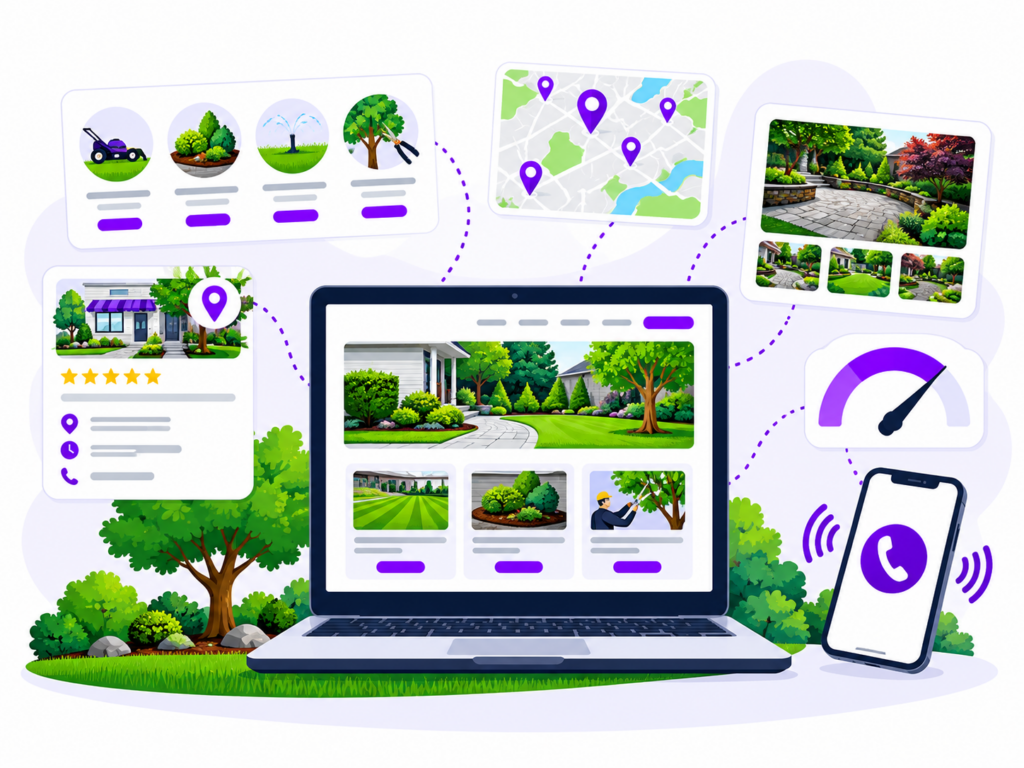
What we build for Landscaping Companies in this market
We split your site by service and by buyer, so a maintenance page talks to the Hollywood homeowner while a commercial, HOA, or hospitality page speaks to the property manager, each with its own language, photos, and call to action.
- Organic search impressions, clicks, and landing-page activity.
- Google Business Profile visibility and available interaction data.
- Paid campaign spend, search terms, calls, and form submissions.
- Enquiry type, such as recurring maintenance, design work, or commercial service.
- Whether enquiries match the company’s service area and capacity.
What we measure
Call tracking tells you which page and which keyword produced the call, not just that the phone rang.

What it costs
Landscaping marketing budgets in Hollywood depend on how many service lines you promote (lawn maintenance, hardscaping, irrigation, design-build), how many surrounding cities you want to reach, and whether you’re layering paid ads on top of SEO and content. A company competing only in Hollywood proper with a focused service list will need a lighter investment than one targeting Broward-wide commercial accounts alongside residential work. Seasonal demand matters too — South Florida’s year-round growing season means search volume stays steadier than in markets with a true off-season, but snowbird traffic each winter still creates a spike worth budgeting ads around.
We scope every engagement individually rather than quoting a flat rate, because a crew running three trucks has very different needs than a 20-person operation bidding on HOA and property management contracts. Before we propose numbers, we look at your current website performance, existing ad spend if any, your service radius, and your growth targets for the next 12 months. That lets us build a plan with pricing tied to real outcomes instead of guesswork.
FAQ's
These are the 5 questions Hollywood homeowners ask us most about landscaping company marketing, answered plainly so you know what to expect before any work starts. If yours isn't covered here, get in touch and we'll walk you through it.
Do you work with both residential and commercial landscaping companies in Hollywood?
Yes. We build and market both sides, but we treat them as separate audiences with separate pages, because a homeowner comparing mowing quotes and a property manager vetting a vendor for a hotel or rental portfolio make decisions differently.
How important are Google reviews for a landscaping company in Hollywood?
Very. Landscaping is a visual, trust-based local service, and in a competitive map pack like Hollywood's, review count and recency are part of what Google and buyers weigh alongside your website and ads. We help you build a system to request and respond to reviews consistently.
Does the recurring maintenance side of my business need different marketing than design or install jobs?
Generally yes. Maintenance customers want speed, reliability, and a clear quote process. Design and install customers want to see finished work and understand pricing for a bigger one-time project. We write and structure pages around that difference instead of one generic services page.
Can you help us reach hotels, restaurants, and short-term rental owners in Hollywood?
We build pages and campaigns aimed at that buyer specifically, since they search and decide differently than a homeowner does. We cannot promise a volume of commercial leads, but we can build the pages and tracking to see what that effort produces.
How long does it take to see movement in search results?
It depends on your current site, your review profile, and how competitive the specific terms are in Hollywood. We do not promise a timeline or a ranking position, but we will tell you honestly what we see as we go.
Get an audit
We look at your current site, your map pack listing, and your review profile, and tell you plainly what is working and what is not before you spend anything with us. No case studies pulled from other markets, no promised numbers. Just a read of where you stand in Hollywood today and what a fix would involve.