
- Home
- Services
- Portfolio
- About
- Service AreasFort Lauderdale, FL
- Web Design
- Redesign
- WordPress
- Ecommerce
- Landing Pages
- SEO Services
- Local SEO
- GBP
- Google Ads
- PPC
- Digital Marketing
- Internet Marketing
- Advertising
- Tracking
- Dental Marketing
- Medical Marketing
- HVAC Marketing
- Roofing Marketing
- Pest Control Marketing
- Home Services Marketing
- Plumbing Marketing
- Electrical Marketing
- Landscaping Marketing
- Remodeling Marketing
Pembroke Pines, FL- Web Design
- Redesign
- WordPress
- Ecommerce
- Landing Pages
- SEO Services
- Local SEO
- GBP
- Google Ads
- PPC
- Digital Marketing
- Internet Marketing
- Advertising
- Tracking
- Dental Marketing
- Medical Marketing
- HVAC Marketing
- Roofing Marketing
- Pest Control Marketing
- Home Services Marketing
- Plumbing Marketing
- Electrical Marketing
- Landscaping Marketing
- Remodeling Marketing
Hialeah, FL- Web Design
- Redesign
- WordPress
- Ecommerce
- Landing Pages
- SEO Services
- Local SEO
- GBP
- Google Ads
- PPC
- Digital Marketing
- Internet Marketing
- Advertising
- Tracking
- Dental Marketing
- Medical Marketing
- HVAC Marketing
- Roofing Marketing
- Pest Control Marketing
- Home Services Marketing
- Plumbing Marketing
- Electrical Marketing
- Landscaping Marketing
- Remodeling Marketing
Hollywood, FL- Web Design
- Redesign
- WordPress
- Ecommerce
- Landing Pages
- SEO Services
- Local SEO
- GBP
- Google Ads
- PPC
- Digital Marketing
- Internet Marketing
- Advertising
- Tracking
- Dental Marketing
- Medical Marketing
- HVAC Marketing
- Roofing Marketing
- Pest Control Marketing
- Home Services Marketing
- Plumbing Marketing
- Electrical Marketing
- Landscaping Marketing
- Remodeling Marketing
Miramar, FL- Web Design
- Redesign
- WordPress
- Ecommerce
- Landing Pages
- SEO Services
- Local SEO
- GBP
- Google Ads
- PPC
- Digital Marketing
- Internet Marketing
- Advertising
- Tracking
- Dental Marketing
- Medical Marketing
- HVAC Marketing
- Roofing Marketing
- Pest Control Marketing
- Home Services Marketing
- Plumbing Marketing
- Electrical Marketing
- Landscaping Marketing
- Remodeling Marketing
Coral Springs, FL- Web Design
- Redesign
- WordPress
- Ecommerce
- Landing Pages
- SEO Services
- Local SEO
- GBP
- Google Ads
- PPC
- Digital Marketing
- Internet Marketing
- Advertising
- Tracking
- Dental Marketing
- Medical Marketing
- HVAC Marketing
- Roofing Marketing
- Pest Control Marketing
- Home Services Marketing
- Plumbing Marketing
- Electrical Marketing
- Landscaping Marketing
- Remodeling Marketing
Pompano Beach, FL- Web Design
- Redesign
- WordPress
- Ecommerce
- Landing Pages
- SEO Services
- Local SEO
- GBP
- Google Ads
- PPC
- Digital Marketing
- Internet Marketing
- Advertising
- Tracking
- Dental Marketing
- Medical Marketing
- HVAC Marketing
- Roofing Marketing
- Pest Control Marketing
- Home Services Marketing
- Plumbing Marketing
- Electrical Marketing
- Landscaping Marketing
- Remodeling Marketing
Davie, FL- Web Design
- Redesign
- WordPress
- Ecommerce
- Landing Pages
- SEO Services
- Local SEO
- GBP
- Google Ads
- PPC
- Digital Marketing
- Internet Marketing
- Advertising
- Tracking
- Dental Marketing
- Medical Marketing
- HVAC Marketing
- Roofing Marketing
- Pest Control Marketing
- Home Services Marketing
- Plumbing Marketing
- Electrical Marketing
- Landscaping Marketing
- Remodeling Marketing
Sunrise, FL- Web Design
- Redesign
- WordPress
- Ecommerce
- Landing Pages
- SEO Services
- Local SEO
- GBP
- Google Ads
- PPC
- Digital Marketing
- Internet Marketing
- Advertising
- Tracking
- Dental Marketing
- Medical Marketing
- HVAC Marketing
- Roofing Marketing
- Pest Control Marketing
- Home Services Marketing
- Plumbing Marketing
- Electrical Marketing
- Landscaping Marketing
- Remodeling Marketing
Plantation, FL- Web Design
- Redesign
- WordPress
- Ecommerce
- Landing Pages
- SEO Services
- Local SEO
- GBP
- Google Ads
- PPC
- Digital Marketing
- Internet Marketing
- Advertising
- Tracking
- Dental Marketing
- Medical Marketing
- HVAC Marketing
- Roofing Marketing
- Pest Control Marketing
- Home Services Marketing
- Plumbing Marketing
- Electrical Marketing
- Landscaping Marketing
- Remodeling Marketing
Deerfield Beach, FL- Web Design
- Redesign
- WordPress
- Ecommerce
- Landing Pages
- SEO Services
- Local SEO
- GBP
- Google Ads
- PPC
- Digital Marketing
- Internet Marketing
- Advertising
- Tracking
- Dental Marketing
- Medical Marketing
- HVAC Marketing
- Roofing Marketing
- Pest Control Marketing
- Home Services Marketing
- Plumbing Marketing
- Electrical Marketing
- Landscaping Marketing
- Remodeling Marketing
Miami Gardens, FL- Web Design
- Redesign
- WordPress
- Ecommerce
- Landing Pages
- SEO Services
- Local SEO
- GBP
- Google Ads
- PPC
- Digital Marketing
- Internet Marketing
- Advertising
- Tracking
- Dental Marketing
- Medical Marketing
- HVAC Marketing
- Roofing Marketing
- Pest Control Marketing
- Home Services Marketing
- Plumbing Marketing
- Electrical Marketing
- Landscaping Marketing
- Remodeling Marketing
Lauderhill, FL- Web Design
- Redesign
- WordPress
- Ecommerce
- Landing Pages
- SEO Services
- Local SEO
- GBP
- Google Ads
- PPC
- Digital Marketing
- Internet Marketing
- Advertising
- Tracking
- Dental Marketing
- Medical Marketing
- HVAC Marketing
- Roofing Marketing
- Pest Control Marketing
- Home Services Marketing
- Plumbing Marketing
- Electrical Marketing
- Landscaping Marketing
- Remodeling Marketing
West Palm Beach, FL- Web Design
- Redesign
- WordPress
- Ecommerce
- Landing Pages
- SEO Services
- Local SEO
- GBP
- Google Ads
- PPC
- Digital Marketing
- Internet Marketing
- Advertising
- Tracking
- Dental Marketing
- Medical Marketing
- HVAC Marketing
- Roofing Marketing
- Pest Control Marketing
- Home Services Marketing
- Plumbing Marketing
- Electrical Marketing
- Landscaping Marketing
- Remodeling Marketing
Tamarac, FL- Web Design
- Redesign
- WordPress
- Ecommerce
- Landing Pages
- SEO Services
- Local SEO
- GBP
- Google Ads
- PPC
- Digital Marketing
- Internet Marketing
- Advertising
- Tracking
- Dental Marketing
- Medical Marketing
- HVAC Marketing
- Roofing Marketing
- Pest Control Marketing
- Home Services Marketing
- Plumbing Marketing
- Electrical Marketing
- Landscaping Marketing
- Remodeling Marketing
Weston, FL- Web Design
- Redesign
- WordPress
- Ecommerce
- Landing Pages
- SEO Services
- Local SEO
- GBP
- Google Ads
- PPC
- Digital Marketing
- Internet Marketing
- Advertising
- Tracking
- Dental Marketing
- Medical Marketing
- HVAC Marketing
- Roofing Marketing
- Pest Control Marketing
- Home Services Marketing
- Plumbing Marketing
- Electrical Marketing
- Landscaping Marketing
- Remodeling Marketing
Boca Raton, FLMargate, FLCoconut Creek, FLMiami Beach, FLHomestead, FLKendall, FLDoral, FLBoynton Beach, FLThe Hammocks, FLNorth Lauderdale, FLOakland Park, FLDelray Beach, FLNorth Miami, FLHallandale Beach, FLFontainebleau, FLKendale Lakes, FLWellington, FLJupiter, FLTamiami, FLPalm Beach Gardens, FLLauderdale Lakes, FLCooper City, FLCountry Club, FLParkland, FLCoral Gables, FLDania Beach, FLCutler Bay, FLNorth Miami Beach, FLGreenacres, FLLake Worth Beach, FLPrinceton, FLRoyal Palm Beach, FLSouth Miami Heights, FLRichmond West, FLRiviera Beach, FLWest Little River, FLGolden Glades, FLAventura, FLMiami Lakes, FLWestchester, FLLeisure City, FLCoral Terrace, FLPalm Springs, FLPalmetto Bay, FLHialeah Gardens, FLSunny Isles Beach, FLIves Estates, FLWest Park, FLSweetwater, FLPinecrest, FLSunset, FLPinewood, FLWilton Manors, FLOpa-locka, FLLighthouse Point, FLBelle Glade, FLNaranja, FLPalmetto Estates, FLBrownsville, FLKey Biscayne, FLOlympia Heights, FLMiami Springs, FLFlorida City, FLSouth Miami, FLThree Lakes, FLGladeview, FLNorth Palm Beach, FLMiami Shores, FLSouthwest Ranches, FLKings Point, FLLauderdale-by-the-Sea, FLHillsboro Beach, FLSea Ranch Lakes, FLLazy Lake, FL - Blog
- Contact
Local SEO in Wellington, Florida
Local SEO for Wellington businesses
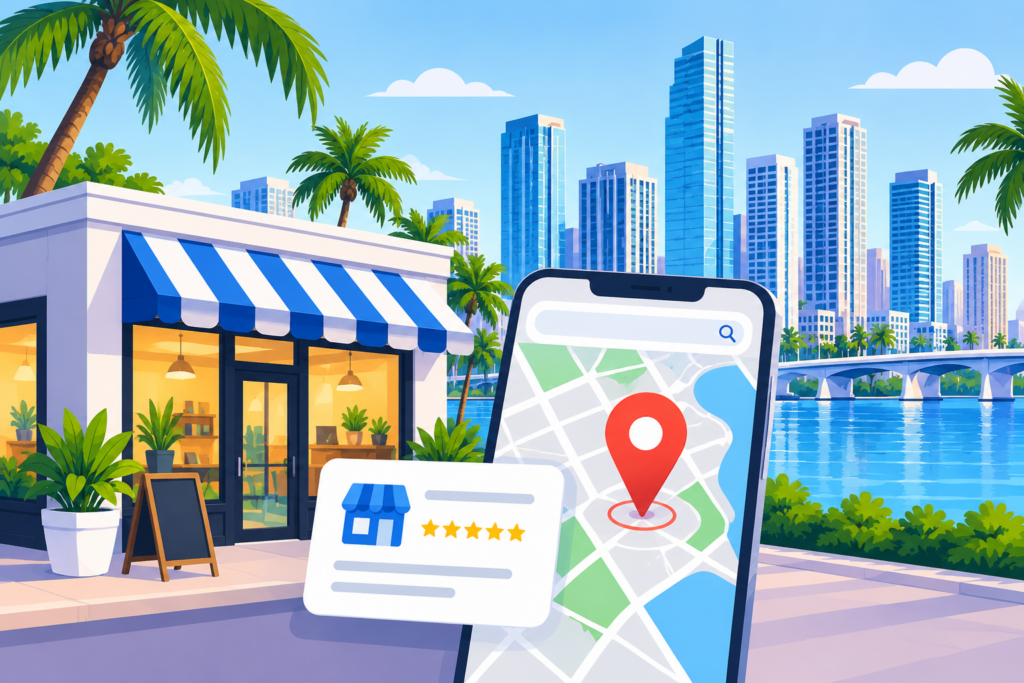
A homeowner in a gated section off Greenview Shores doesn’t search for “plumber near me” and scroll ten pages of results. They open the map, look at the three listings Google shows, and call one. If your business isn’t one of those three, the search barely happened for you. That’s the mechanic behind Local SEO, and it’s a different job than ranking a website in the regular organic results below it.
What the work covers
The work starts with the Google Business Profile itself, because for a service area business, the profile carries more weight than the website does. That means the category selection, the service list, the service area radius, the photos, and the Q&A section all get set up correctly instead of left on defaults. Most profiles we audit have at least one of these wrong, and a wrong primary category alone can keep a business out of the map pack for its main service in a market like Wellington, where the competition for trades and home service terms is dense enough that a single misconfigured field is the difference between showing up and not.
From there it’s citation consistency (your name, address format, and phone number matching across the directories Google checks against), a review generation process that doesn’t violate Google’s guidelines, and on-page work on your site tied to the specific services and the specific suburbs you cover, from the central city out through the wider Wellington region. We also build location and service pages rather than one page trying to rank for everything, because a single page cannot realistically compete for forty different search terms at once. Call tracking gets layered in so you can see which searches actually turned into phone calls, not just impressions.
None of this is a one-time setup. Google re-crawls profiles, competitors add reviews, and citation data drifts out of sync over time. The ongoing part of the work is catching that drift before it costs you a ranking position, whether that’s a competitor overtaking you on reviews or an old citation quietly listing the wrong phone number.
We also track branded versus non-branded search volume, because a jump in branded searches after a review campaign tells you the campaign is working even before rankings move. Taken together, this is less a single task than a maintained system, and treating it that way is usually what separates a profile that holds its position from one that slowly slides down the map pack over a few months.

What is different about this market
Wellington’s housing stock skews newer. Most of the planned communities west of 441, from Olympia to the areas around Southfields and Greenview, were built or substantially expanded within the last twenty years, and many sit under active HOA governance. That matters for Local SEO in a direct way: a large share of residents are still in the “who do I call” phase for basic home services, because they haven’t lived in the house long enough to have a trusted plumber, landscaper, or AC company yet. They search, they look at the map pack, and they pick from what’s in front of them. There’s less brand loyalty to overcome than in an older, more settled market, which means a well-run profile has a real opening.
The business mix reinforces this. Wellington has very few retail storefronts relative to its population. It’s dominated by service area businesses: HVAC, landscaping and lawn care, pool service, pest control, garage doors, equestrian-adjacent trades given the horse country to the south and west, and general contractors doing the kind of renovation work that follows a home purchase. Almost none of these businesses have walk-in traffic, so the Google Business Profile isn’t a supplement to foot traffic. It functions as the storefront.
Search here leans mobile and leans local-intent. People are searching from inside the neighborhood, often from a phone, often with urgency (an AC that failed, a sprinkler head that broke before an HOA inspection). That urgency makes proximity and responsiveness-to-reviews more important than it would be in a market where people shop around for weeks. Competition for the common trade categories is moderate to high given how many service businesses are chasing the same HOA-governed zip codes, so a profile that’s only half set up tends to lose ground quickly to one that isn’t. [EXTERNAL LINK: Google’s official guidelines on representing your business on Google Business Profile, to show the standard we’re building against]
Google Business Profile
We review your business categories, services, description, hours, contact details, photos, and other relevant profile information. Accurate, complete details help potential customers understand what you offer and how to contact you.
Local website pages
We review service and location pages to make sure they answer local customers’ questions and explain the services available. Each page should have a clear purpose, useful content, and relevant contact options not repeated city keywords.
Business information consistency
We check key business details across relevant directories and listings. Inaccurate names, phone numbers, or other information can confuse customers and make local visibility harder to assess.
Reviews and reputation
We can review how your business requests and responds to customer feedback. Reviews should be genuine, and responses should be professional. No agency can guarantee a specific rating or review volume.
Local links and relevance
We assess relevant local organizations, directories, and other credible link opportunities. The focus is on useful connections and genuine relevance rather than collecting links from unrelated websites.
Tracking and reporting
We monitor available local search visibility, website traffic, calls, form submissions, and other agreed measures where tracking is configured. Reports should show completed work, observed changes, and the next priorities.

How we start
We start with an audit of your current Google Business Profile and a look at who's actually ranking in the map pack for your main service terms across Wellington suburbs right now. That tells us whether the gap is the profile itself, thin reviews, inconsistent citations, or weak on-site signals. We also check your category selection, service area settings, and how your listing compares against the top three competitors already ranking locally.

How We Start
- First, we review the current position. We assess your Google Business Profile, website, key local pages, business listings, and available performance data.
- Next, we set priorities. The plan identifies profile corrections, website improvements, local content needs, and tracking gaps. Work is based on your current situation rather than a fixed checklist applied to every business.
- Then, we implement and measure. We address the agreed priorities, review the data, and refine the plan as new information becomes available. Early work may focus on correcting information and technical issues before longer-term visibility changes can be assessed.

What it costs
Local SEO pricing in Wellington varies with how competitive your service categories are, how many locations you’re ranking for, and how much cleanup your existing Google Business Profile and citations need before growth work can start. A business with a clean profile and a handful of close competitors costs less to move up the map pack than one with duplicate listings, inconsistent NAP details across directories, or a crowded niche near the CBD. Rather than quote a generic monthly figure that ignores your starting point, we run an audit first, show you exactly what’s holding your rankings back, and give you a specific price range based on real findings. That typically covers profile optimisation, citation cleanup, review strategy and ongoing ranking work. Ask us for that range when you request the audit below, and we’ll walk through the numbers with you directly.
FAQ's
These are the 5 questions Wellington homeowners ask us most about local seo, answered plainly so you know what to expect before any work starts. If yours isn't covered here, get in touch and we'll walk you through it.
How is Local SEO different from the SEO work on my website?
Organic SEO targets the regular search results list. Local SEO targets the map pack, the three listings with the pins that show above or beside that list for searches with local intent. They share some tactics but the profile, not just the website, is the main lever for the map pack.
Do I need a physical address in Wellington to rank in the Wellington map pack?
Not necessarily. Google allows service area businesses to hide their address and set a service radius instead. What matters more is that your profile, citations, and service area settings are accurate and consistent.
How long does it take to see movement in the map pack?
It varies by category, competition, and how much work the profile needs, so we won't give you a fixed timeline. What we can tell you is what we're changing each month and why, so you can judge progress against the reporting rather than a guess.
Can you guarantee a top 3 map pack position?
No. No one honestly can, since Google's ranking factors change and competitors are doing the same work. We can tell you what we're doing and show you the data each month, but we won't promise a specific rank.
Does review volume actually affect map pack ranking?
Review count, review recency, and review content (including whether keywords show up naturally in them) are generally understood to factor into local ranking, alongside proximity and profile completeness. We build a review process around that, within Google's guidelines.
What you get each month
Each month you get a report tied to call tracking, so you can see which calls came from the map pack listing versus the website versus paid search, not just a ranking spreadsheet. That includes review counts and response rates, citation consistency checks, any profile edits made that month, and the specific search terms gaining or losing position. If something drops, we tell you why we think it dropped, not just that it did.