
- Home
- Services
- Portfolio
- About
- Service AreasFort Lauderdale, FL
- Web Design
- Redesign
- WordPress
- Ecommerce
- Landing Pages
- SEO Services
- Local SEO
- GBP
- Google Ads
- PPC
- Digital Marketing
- Internet Marketing
- Advertising
- Tracking
- Dental Marketing
- Medical Marketing
- HVAC Marketing
- Roofing Marketing
- Pest Control Marketing
- Home Services Marketing
- Plumbing Marketing
- Electrical Marketing
- Landscaping Marketing
- Remodeling Marketing
Pembroke Pines, FL- Web Design
- Redesign
- WordPress
- Ecommerce
- Landing Pages
- SEO Services
- Local SEO
- GBP
- Google Ads
- PPC
- Digital Marketing
- Internet Marketing
- Advertising
- Tracking
- Dental Marketing
- Medical Marketing
- HVAC Marketing
- Roofing Marketing
- Pest Control Marketing
- Home Services Marketing
- Plumbing Marketing
- Electrical Marketing
- Landscaping Marketing
- Remodeling Marketing
Hialeah, FL- Web Design
- Redesign
- WordPress
- Ecommerce
- Landing Pages
- SEO Services
- Local SEO
- GBP
- Google Ads
- PPC
- Digital Marketing
- Internet Marketing
- Advertising
- Tracking
- Dental Marketing
- Medical Marketing
- HVAC Marketing
- Roofing Marketing
- Pest Control Marketing
- Home Services Marketing
- Plumbing Marketing
- Electrical Marketing
- Landscaping Marketing
- Remodeling Marketing
Hollywood, FL- Web Design
- Redesign
- WordPress
- Ecommerce
- Landing Pages
- SEO Services
- Local SEO
- GBP
- Google Ads
- PPC
- Digital Marketing
- Internet Marketing
- Advertising
- Tracking
- Dental Marketing
- Medical Marketing
- HVAC Marketing
- Roofing Marketing
- Pest Control Marketing
- Home Services Marketing
- Plumbing Marketing
- Electrical Marketing
- Landscaping Marketing
- Remodeling Marketing
Miramar, FL- Web Design
- Redesign
- WordPress
- Ecommerce
- Landing Pages
- SEO Services
- Local SEO
- GBP
- Google Ads
- PPC
- Digital Marketing
- Internet Marketing
- Advertising
- Tracking
- Dental Marketing
- Medical Marketing
- HVAC Marketing
- Roofing Marketing
- Pest Control Marketing
- Home Services Marketing
- Plumbing Marketing
- Electrical Marketing
- Landscaping Marketing
- Remodeling Marketing
Coral Springs, FL- Web Design
- Redesign
- WordPress
- Ecommerce
- Landing Pages
- SEO Services
- Local SEO
- GBP
- Google Ads
- PPC
- Digital Marketing
- Internet Marketing
- Advertising
- Tracking
- Dental Marketing
- Medical Marketing
- HVAC Marketing
- Roofing Marketing
- Pest Control Marketing
- Home Services Marketing
- Plumbing Marketing
- Electrical Marketing
- Landscaping Marketing
- Remodeling Marketing
Pompano Beach, FL- Web Design
- Redesign
- WordPress
- Ecommerce
- Landing Pages
- SEO Services
- Local SEO
- GBP
- Google Ads
- PPC
- Digital Marketing
- Internet Marketing
- Advertising
- Tracking
- Dental Marketing
- Medical Marketing
- HVAC Marketing
- Roofing Marketing
- Pest Control Marketing
- Home Services Marketing
- Plumbing Marketing
- Electrical Marketing
- Landscaping Marketing
- Remodeling Marketing
Davie, FL- Web Design
- Redesign
- WordPress
- Ecommerce
- Landing Pages
- SEO Services
- Local SEO
- GBP
- Google Ads
- PPC
- Digital Marketing
- Internet Marketing
- Advertising
- Tracking
- Dental Marketing
- Medical Marketing
- HVAC Marketing
- Roofing Marketing
- Pest Control Marketing
- Home Services Marketing
- Plumbing Marketing
- Electrical Marketing
- Landscaping Marketing
- Remodeling Marketing
Sunrise, FL- Web Design
- Redesign
- WordPress
- Ecommerce
- Landing Pages
- SEO Services
- Local SEO
- GBP
- Google Ads
- PPC
- Digital Marketing
- Internet Marketing
- Advertising
- Tracking
- Dental Marketing
- Medical Marketing
- HVAC Marketing
- Roofing Marketing
- Pest Control Marketing
- Home Services Marketing
- Plumbing Marketing
- Electrical Marketing
- Landscaping Marketing
- Remodeling Marketing
Plantation, FL- Web Design
- Redesign
- WordPress
- Ecommerce
- Landing Pages
- SEO Services
- Local SEO
- GBP
- Google Ads
- PPC
- Digital Marketing
- Internet Marketing
- Advertising
- Tracking
- Dental Marketing
- Medical Marketing
- HVAC Marketing
- Roofing Marketing
- Pest Control Marketing
- Home Services Marketing
- Plumbing Marketing
- Electrical Marketing
- Landscaping Marketing
- Remodeling Marketing
Deerfield Beach, FL- Web Design
- Redesign
- WordPress
- Ecommerce
- Landing Pages
- SEO Services
- Local SEO
- GBP
- Google Ads
- PPC
- Digital Marketing
- Internet Marketing
- Advertising
- Tracking
- Dental Marketing
- Medical Marketing
- HVAC Marketing
- Roofing Marketing
- Pest Control Marketing
- Home Services Marketing
- Plumbing Marketing
- Electrical Marketing
- Landscaping Marketing
- Remodeling Marketing
Miami Gardens, FL- Web Design
- Redesign
- WordPress
- Ecommerce
- Landing Pages
- SEO Services
- Local SEO
- GBP
- Google Ads
- PPC
- Digital Marketing
- Internet Marketing
- Advertising
- Tracking
- Dental Marketing
- Medical Marketing
- HVAC Marketing
- Roofing Marketing
- Pest Control Marketing
- Home Services Marketing
- Plumbing Marketing
- Electrical Marketing
- Landscaping Marketing
- Remodeling Marketing
Lauderhill, FL- Web Design
- Redesign
- WordPress
- Ecommerce
- Landing Pages
- SEO Services
- Local SEO
- GBP
- Google Ads
- PPC
- Digital Marketing
- Internet Marketing
- Advertising
- Tracking
- Dental Marketing
- Medical Marketing
- HVAC Marketing
- Roofing Marketing
- Pest Control Marketing
- Home Services Marketing
- Plumbing Marketing
- Electrical Marketing
- Landscaping Marketing
- Remodeling Marketing
West Palm Beach, FL- Web Design
- Redesign
- WordPress
- Ecommerce
- Landing Pages
- SEO Services
- Local SEO
- GBP
- Google Ads
- PPC
- Digital Marketing
- Internet Marketing
- Advertising
- Tracking
- Dental Marketing
- Medical Marketing
- HVAC Marketing
- Roofing Marketing
- Pest Control Marketing
- Home Services Marketing
- Plumbing Marketing
- Electrical Marketing
- Landscaping Marketing
- Remodeling Marketing
Tamarac, FL- Web Design
- Redesign
- WordPress
- Ecommerce
- Landing Pages
- SEO Services
- Local SEO
- GBP
- Google Ads
- PPC
- Digital Marketing
- Internet Marketing
- Advertising
- Tracking
- Dental Marketing
- Medical Marketing
- HVAC Marketing
- Roofing Marketing
- Pest Control Marketing
- Home Services Marketing
- Plumbing Marketing
- Electrical Marketing
- Landscaping Marketing
- Remodeling Marketing
Weston, FL- Web Design
- Redesign
- WordPress
- Ecommerce
- Landing Pages
- SEO Services
- Local SEO
- GBP
- Google Ads
- PPC
- Digital Marketing
- Internet Marketing
- Advertising
- Tracking
- Dental Marketing
- Medical Marketing
- HVAC Marketing
- Roofing Marketing
- Pest Control Marketing
- Home Services Marketing
- Plumbing Marketing
- Electrical Marketing
- Landscaping Marketing
- Remodeling Marketing
Boca Raton, FLMargate, FLCoconut Creek, FLMiami Beach, FLHomestead, FLKendall, FLDoral, FLBoynton Beach, FLThe Hammocks, FLNorth Lauderdale, FLOakland Park, FLDelray Beach, FLNorth Miami, FLHallandale Beach, FLFontainebleau, FLKendale Lakes, FLWellington, FLJupiter, FLTamiami, FLPalm Beach Gardens, FLLauderdale Lakes, FLCooper City, FLCountry Club, FLParkland, FLCoral Gables, FLDania Beach, FLCutler Bay, FLNorth Miami Beach, FLGreenacres, FLLake Worth Beach, FLPrinceton, FLRoyal Palm Beach, FLSouth Miami Heights, FLRichmond West, FLRiviera Beach, FLWest Little River, FLGolden Glades, FLAventura, FLMiami Lakes, FLWestchester, FLLeisure City, FLCoral Terrace, FLPalm Springs, FLPalmetto Bay, FLHialeah Gardens, FLSunny Isles Beach, FLIves Estates, FLWest Park, FLSweetwater, FLPinecrest, FLSunset, FLPinewood, FLWilton Manors, FLOpa-locka, FLLighthouse Point, FLBelle Glade, FLNaranja, FLPalmetto Estates, FLBrownsville, FLKey Biscayne, FLOlympia Heights, FLMiami Springs, FLFlorida City, FLSouth Miami, FLThree Lakes, FLGladeview, FLNorth Palm Beach, FLMiami Shores, FLSouthwest Ranches, FLKings Point, FLLauderdale-by-the-Sea, FLHillsboro Beach, FLSea Ranch Lakes, FLLazy Lake, FL - Blog
- Contact
Local SEO in West Palm Beach, Florida
Local SEO for West Palm Beach businesses
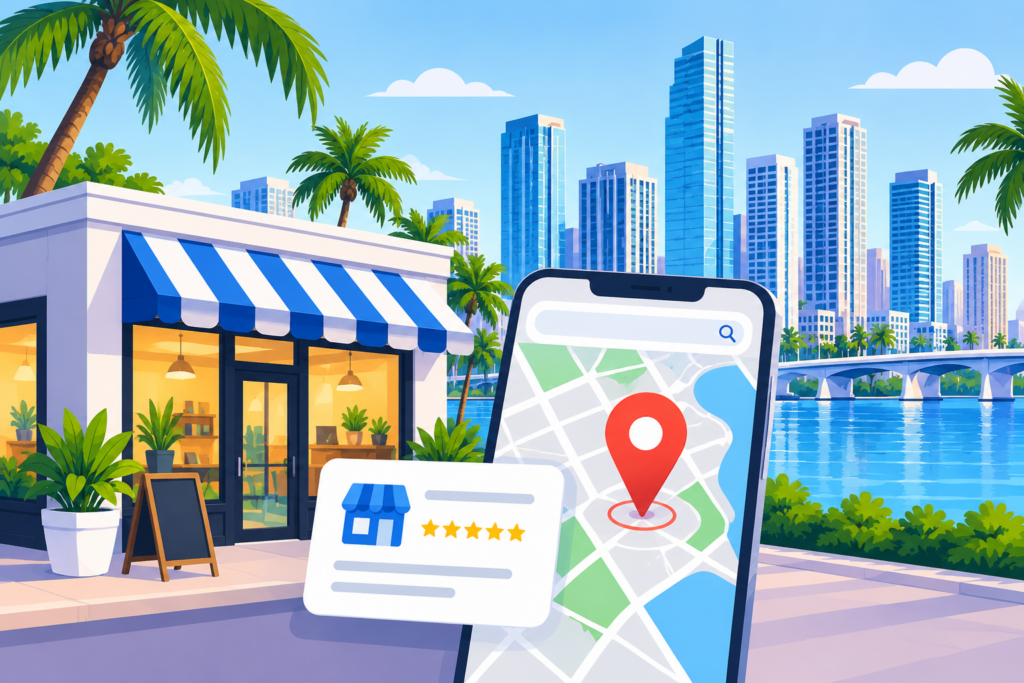
A law firm on Clematis Street and one in a strip plaza off Okeechobee Boulevard aren’t competing for the same search result, even if they offer identical services. One shows up in the map pack because someone typed “attorney near me” three blocks away. The other has to win on distance it cannot change. That’s the real difference between Local SEO and organic SEO, even though agencies sell them as a bundle.
What the work covers
The starting point is always the Google Business Profile, because it is the single biggest lever in map pack ranking. That means the primary and secondary categories are set correctly (not just “lawyer” when you do family law and nothing else), the service list matches what you actually sell, the business description avoids keyword stuffing that gets profiles suppressed, and photos get added on a schedule instead of once and forgotten.
From there, citation work: your business name, address, and phone number need to match exactly across the directories that matter, Google, Apple Maps, Bing Places, Yelp, and the industry-specific directories a law firm or medical practice shows up in that a retail shop does not. Inconsistent NAP data is one of the quieter reasons a profile stalls in rankings, and it is one of the most tedious to fix, which is why it gets skipped by agencies that bill by the hour instead of the outcome.
Review strategy comes next: a system for asking at the right moment, a process for responding to every review, and a way to flag reviews that violate Google’s policies instead of just hoping they age off. Reviews are a ranking factor and a conversion factor at the same time, so this piece gets measured both ways.
For a service-area business with no public storefront, the profile needs to be configured to hide the address and define a service radius, and the website needs location pages that match where you actually send trucks or staff, not a list of every city in the county. For a business with a real office in a tower downtown, the opposite problem shows up: multiple tenants at the same address can confuse Google’s matching, and the profile has to be built to stand apart from the building itself.
None of this replaces a website. It runs alongside one, because the map pack sends a click to your profile, but the call or the form still has to convert once someone lands on your site.
What is different about this market
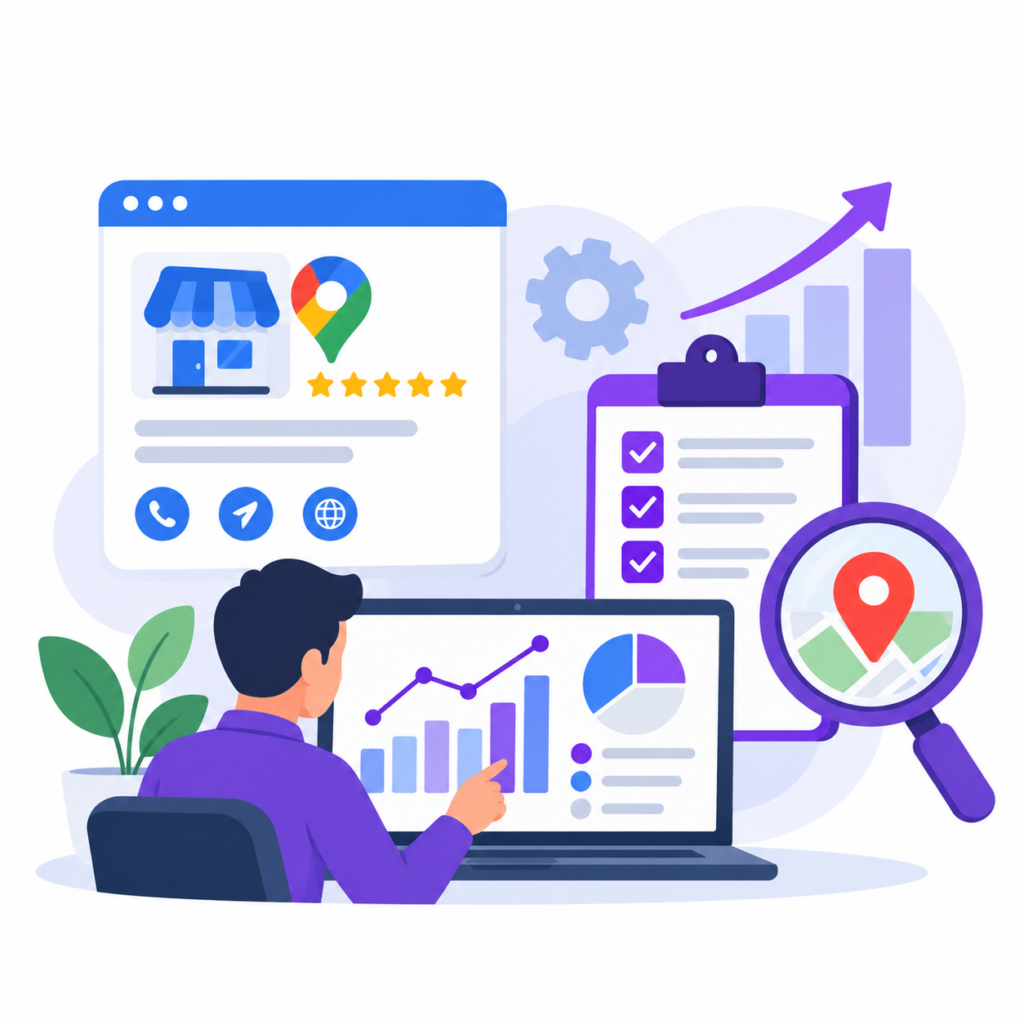
Downtown West Palm Beach is not an easy map pack to break into. Clematis Street, Olive Avenue, and the corridor around CityPlace hold a dense concentration of law firms, wealth management offices, and medical practices, many of which have already paid an agency, sometimes a large national one, to build out their profile and citation base. That means the baseline competition here is higher than in a smaller Palm Beach County city, and a thin or neglected profile will not place against firms that have been doing this work for a while, regardless of how good the underlying business is.
The buyer in this market is trust-led more often than price-led. Someone searching for a personal injury attorney or a wealth manager near the Flagler Drive office corridor is not comparing three quotes on price. They are scanning review volume, review recency, and whether the business looks established, which is why review velocity and response quality matter more here than in a retail or restaurant category where price comparison drives the click. Professional services, legal, medical, and finance make up a large share of the West Palm Beach business mix, and all three of those categories are judged on trust signals before anything else.
Search behavior skews toward desktop here more than in most of our other South Florida markets, because a meaningful share of the searching happens from office towers during the business day rather than from a phone in a parking lot. That changes how a profile and a landing page need to perform: a desktop searcher reads more before clicking, compares more listings side by side, and is less likely to call impulsively from a sidewalk the way a mobile searcher might. Demand does not swing much with season downtown the way it does in beach-adjacent retail areas, since professional services get searched for year-round, though the snowbird population bump from roughly November through April does add volume for medical and financial services specifically.
Google Business Profile
We review your business categories, services, description, hours, contact details, photos, and other relevant profile information. Accurate, complete details help potential customers understand what you offer and how to contact you.
Local website pages
We review service and location pages to make sure they answer local customers’ questions and explain the services available. Each page should have a clear purpose, useful content, and relevant contact options not repeated city keywords.
Business information consistency
We check key business details across relevant directories and listings. Inaccurate names, phone numbers, or other information can confuse customers and make local visibility harder to assess.
Reviews and reputation
We can review how your business requests and responds to customer feedback. Reviews should be genuine, and responses should be professional. No agency can guarantee a specific rating or review volume.
Local links and relevance
We assess relevant local organizations, directories, and other credible link opportunities. The focus is on useful connections and genuine relevance rather than collecting links from unrelated websites.
Tracking and reporting
We monitor available local search visibility, website traffic, calls, form submissions, and other agreed measures where tracking is configured. Reports should show completed work, observed changes, and the next priorities.

How we start
We start with an audit of your current Google Business Profile, your citation consistency across directories, and your review history, then check where you actually rank for the terms that matter, not just your business name. We give you that audit before anything else, because it tells us whether the problem is the profile, the website, or both, and that changes what gets worked on first. For a West Palm Beach business, that often means checking visibility against competitors in Clematis Street, CityPlace, and the surrounding ZIP codes, since rankings shift block by block, not just citywide.

How We Start
- First, we review the current position. We assess your Google Business Profile, website, key local pages, business listings, and available performance data.
- Next, we set priorities. The plan identifies profile corrections, website improvements, local content needs, and tracking gaps. Work is based on your current situation rather than a fixed checklist applied to every business.
- Then, we implement and measure. We address the agreed priorities, review the data, and refine the plan as new information becomes available. Early work may focus on correcting information and technical issues before longer-term visibility changes can be assessed.

What it costs
Local SEO pricing in West Palm Beach depends on a handful of real variables: how many locations or service areas you cover, how competitive your category is around downtown, Clematis Street, and CityPlace, and how much citation cleanup, duplicate listing removal, or old agency damage needs fixing before new work can even begin. A single-location service business starting from a clean profile costs very differently than a multi-location brand competing with established players across Palm Beach County. We quote after the audit, not before, because pricing blind in a market this competitive usually means underselling the work or overselling a promise we cannot back up.
- Audit first: citations, reviews, and Google Business Profile health
- Scope based on locations, service areas, and competition
- Clear range before any work begins
Ask us for a range once we have looked at your profile.
FAQ's
These are the 5 questions West Palm Beach homeowners ask us most about local seo, answered plainly so you know what to expect before any work starts. If yours isn't covered here, get in touch and we'll walk you through it.
Is Local SEO the same thing as SEO for my website?
No. Local SEO is specifically about your Google Business Profile and map pack visibility, which is driven by proximity, categories, citations, and reviews. Organic SEO is about your website ranking in the regular search results. A business needs both, but they are built differently and measured differently.
How long does it take to see movement in the map pack?
It varies by category and by how established your competitors already are, which in downtown West Palm Beach can be a lot. We will not give you a timeframe before we have audited your profile, because a profile with years of citation errors moves differently than a clean one with no history.
I don't have a public office, just a service area. Can you still do this?
Yes. Service-area businesses get a different profile setup, with the address hidden and a defined service radius, plus location pages on the website that match where you actually operate. This is a different build than a storefront profile and it needs to be set up that way from the start.
Do reviews actually affect ranking, or is that just for show?
Review count, recency, and your response rate are factored into map pack ranking, and they also affect whether someone clicks your listing once they see it. We treat review strategy as part of the ranking work, not a separate reputation task.
What if I've already paid another agency for this and it didn't work?
That is common enough downtown that we build the audit around finding exactly what was done before, what is still live, and what was left half-finished. Citation cleanup from a previous vendor's inconsistent work is one of the most frequent fixes we make.
What you get each month
Every month includes a report showing your map pack position for your tracked terms, your Google Business Profile insights (views, calls, direction requests), new and total reviews, and citation status. We use call tracking so you can see which calls came from your Google profile versus your website versus other channels, because a report that just says “traffic went up” does not tell you whether the phone rang because of this work or because of something else entirely.