
- Home
- Services
- Portfolio
- About
- Service AreasFort Lauderdale, FL
- Web Design
- Redesign
- WordPress
- Ecommerce
- Landing Pages
- SEO Services
- Local SEO
- GBP
- Google Ads
- PPC
- Digital Marketing
- Internet Marketing
- Advertising
- Tracking
- Dental Marketing
- Medical Marketing
- HVAC Marketing
- Roofing Marketing
- Pest Control Marketing
- Home Services Marketing
- Plumbing Marketing
- Electrical Marketing
- Landscaping Marketing
- Remodeling Marketing
Pembroke Pines, FL- Web Design
- Redesign
- WordPress
- Ecommerce
- Landing Pages
- SEO Services
- Local SEO
- GBP
- Google Ads
- PPC
- Digital Marketing
- Internet Marketing
- Advertising
- Tracking
- Dental Marketing
- Medical Marketing
- HVAC Marketing
- Roofing Marketing
- Pest Control Marketing
- Home Services Marketing
- Plumbing Marketing
- Electrical Marketing
- Landscaping Marketing
- Remodeling Marketing
Hialeah, FL- Web Design
- Redesign
- WordPress
- Ecommerce
- Landing Pages
- SEO Services
- Local SEO
- GBP
- Google Ads
- PPC
- Digital Marketing
- Internet Marketing
- Advertising
- Tracking
- Dental Marketing
- Medical Marketing
- HVAC Marketing
- Roofing Marketing
- Pest Control Marketing
- Home Services Marketing
- Plumbing Marketing
- Electrical Marketing
- Landscaping Marketing
- Remodeling Marketing
Hollywood, FL- Web Design
- Redesign
- WordPress
- Ecommerce
- Landing Pages
- SEO Services
- Local SEO
- GBP
- Google Ads
- PPC
- Digital Marketing
- Internet Marketing
- Advertising
- Tracking
- Dental Marketing
- Medical Marketing
- HVAC Marketing
- Roofing Marketing
- Pest Control Marketing
- Home Services Marketing
- Plumbing Marketing
- Electrical Marketing
- Landscaping Marketing
- Remodeling Marketing
Miramar, FL- Web Design
- Redesign
- WordPress
- Ecommerce
- Landing Pages
- SEO Services
- Local SEO
- GBP
- Google Ads
- PPC
- Digital Marketing
- Internet Marketing
- Advertising
- Tracking
- Dental Marketing
- Medical Marketing
- HVAC Marketing
- Roofing Marketing
- Pest Control Marketing
- Home Services Marketing
- Plumbing Marketing
- Electrical Marketing
- Landscaping Marketing
- Remodeling Marketing
Coral Springs, FL- Web Design
- Redesign
- WordPress
- Ecommerce
- Landing Pages
- SEO Services
- Local SEO
- GBP
- Google Ads
- PPC
- Digital Marketing
- Internet Marketing
- Advertising
- Tracking
- Dental Marketing
- Medical Marketing
- HVAC Marketing
- Roofing Marketing
- Pest Control Marketing
- Home Services Marketing
- Plumbing Marketing
- Electrical Marketing
- Landscaping Marketing
- Remodeling Marketing
Pompano Beach, FL- Web Design
- Redesign
- WordPress
- Ecommerce
- Landing Pages
- SEO Services
- Local SEO
- GBP
- Google Ads
- PPC
- Digital Marketing
- Internet Marketing
- Advertising
- Tracking
- Dental Marketing
- Medical Marketing
- HVAC Marketing
- Roofing Marketing
- Pest Control Marketing
- Home Services Marketing
- Plumbing Marketing
- Electrical Marketing
- Landscaping Marketing
- Remodeling Marketing
Davie, FL- Web Design
- Redesign
- WordPress
- Ecommerce
- Landing Pages
- SEO Services
- Local SEO
- GBP
- Google Ads
- PPC
- Digital Marketing
- Internet Marketing
- Advertising
- Tracking
- Dental Marketing
- Medical Marketing
- HVAC Marketing
- Roofing Marketing
- Pest Control Marketing
- Home Services Marketing
- Plumbing Marketing
- Electrical Marketing
- Landscaping Marketing
- Remodeling Marketing
Sunrise, FL- Web Design
- Redesign
- WordPress
- Ecommerce
- Landing Pages
- SEO Services
- Local SEO
- GBP
- Google Ads
- PPC
- Digital Marketing
- Internet Marketing
- Advertising
- Tracking
- Dental Marketing
- Medical Marketing
- HVAC Marketing
- Roofing Marketing
- Pest Control Marketing
- Home Services Marketing
- Plumbing Marketing
- Electrical Marketing
- Landscaping Marketing
- Remodeling Marketing
Plantation, FL- Web Design
- Redesign
- WordPress
- Ecommerce
- Landing Pages
- SEO Services
- Local SEO
- GBP
- Google Ads
- PPC
- Digital Marketing
- Internet Marketing
- Advertising
- Tracking
- Dental Marketing
- Medical Marketing
- HVAC Marketing
- Roofing Marketing
- Pest Control Marketing
- Home Services Marketing
- Plumbing Marketing
- Electrical Marketing
- Landscaping Marketing
- Remodeling Marketing
Deerfield Beach, FL- Web Design
- Redesign
- WordPress
- Ecommerce
- Landing Pages
- SEO Services
- Local SEO
- GBP
- Google Ads
- PPC
- Digital Marketing
- Internet Marketing
- Advertising
- Tracking
- Dental Marketing
- Medical Marketing
- HVAC Marketing
- Roofing Marketing
- Pest Control Marketing
- Home Services Marketing
- Plumbing Marketing
- Electrical Marketing
- Landscaping Marketing
- Remodeling Marketing
Miami Gardens, FL- Web Design
- Redesign
- WordPress
- Ecommerce
- Landing Pages
- SEO Services
- Local SEO
- GBP
- Google Ads
- PPC
- Digital Marketing
- Internet Marketing
- Advertising
- Tracking
- Dental Marketing
- Medical Marketing
- HVAC Marketing
- Roofing Marketing
- Pest Control Marketing
- Home Services Marketing
- Plumbing Marketing
- Electrical Marketing
- Landscaping Marketing
- Remodeling Marketing
Lauderhill, FL- Web Design
- Redesign
- WordPress
- Ecommerce
- Landing Pages
- SEO Services
- Local SEO
- GBP
- Google Ads
- PPC
- Digital Marketing
- Internet Marketing
- Advertising
- Tracking
- Dental Marketing
- Medical Marketing
- HVAC Marketing
- Roofing Marketing
- Pest Control Marketing
- Home Services Marketing
- Plumbing Marketing
- Electrical Marketing
- Landscaping Marketing
- Remodeling Marketing
West Palm Beach, FL- Web Design
- Redesign
- WordPress
- Ecommerce
- Landing Pages
- SEO Services
- Local SEO
- GBP
- Google Ads
- PPC
- Digital Marketing
- Internet Marketing
- Advertising
- Tracking
- Dental Marketing
- Medical Marketing
- HVAC Marketing
- Roofing Marketing
- Pest Control Marketing
- Home Services Marketing
- Plumbing Marketing
- Electrical Marketing
- Landscaping Marketing
- Remodeling Marketing
Tamarac, FL- Web Design
- Redesign
- WordPress
- Ecommerce
- Landing Pages
- SEO Services
- Local SEO
- GBP
- Google Ads
- PPC
- Digital Marketing
- Internet Marketing
- Advertising
- Tracking
- Dental Marketing
- Medical Marketing
- HVAC Marketing
- Roofing Marketing
- Pest Control Marketing
- Home Services Marketing
- Plumbing Marketing
- Electrical Marketing
- Landscaping Marketing
- Remodeling Marketing
Weston, FL- Web Design
- Redesign
- WordPress
- Ecommerce
- Landing Pages
- SEO Services
- Local SEO
- GBP
- Google Ads
- PPC
- Digital Marketing
- Internet Marketing
- Advertising
- Tracking
- Dental Marketing
- Medical Marketing
- HVAC Marketing
- Roofing Marketing
- Pest Control Marketing
- Home Services Marketing
- Plumbing Marketing
- Electrical Marketing
- Landscaping Marketing
- Remodeling Marketing
Boca Raton, FLMargate, FLCoconut Creek, FLMiami Beach, FLHomestead, FLKendall, FLDoral, FLBoynton Beach, FLThe Hammocks, FLNorth Lauderdale, FLOakland Park, FLDelray Beach, FLNorth Miami, FLHallandale Beach, FLFontainebleau, FLKendale Lakes, FLWellington, FLJupiter, FLTamiami, FLPalm Beach Gardens, FLLauderdale Lakes, FLCooper City, FLCountry Club, FLParkland, FLCoral Gables, FLDania Beach, FLCutler Bay, FLNorth Miami Beach, FLGreenacres, FLLake Worth Beach, FLPrinceton, FLRoyal Palm Beach, FLSouth Miami Heights, FLRichmond West, FLRiviera Beach, FLWest Little River, FLGolden Glades, FLAventura, FLMiami Lakes, FLWestchester, FLLeisure City, FLCoral Terrace, FLPalm Springs, FLPalmetto Bay, FLHialeah Gardens, FLSunny Isles Beach, FLIves Estates, FLWest Park, FLSweetwater, FLPinecrest, FLSunset, FLPinewood, FLWilton Manors, FLOpa-locka, FLLighthouse Point, FLBelle Glade, FLNaranja, FLPalmetto Estates, FLBrownsville, FLKey Biscayne, FLOlympia Heights, FLMiami Springs, FLFlorida City, FLSouth Miami, FLThree Lakes, FLGladeview, FLNorth Palm Beach, FLMiami Shores, FLSouthwest Ranches, FLKings Point, FLLauderdale-by-the-Sea, FLHillsboro Beach, FLSea Ranch Lakes, FLLazy Lake, FL - Blog
- Contact
Call Tracking and Reporting in Sunrise, Florida
Call Tracking and Reporting for Sunrise businesses
A plumber working out of Sunrise Golf Village gets calls from three different sources in one afternoon: a Google ad, an old Yelp listing, and someone who saw his truck on Oakland Park Boulevard. If every one of those calls rings the same number with no tag attached, there is no way to tell the ad from the truck wrap. That is the problem this page is about.

What the work covers
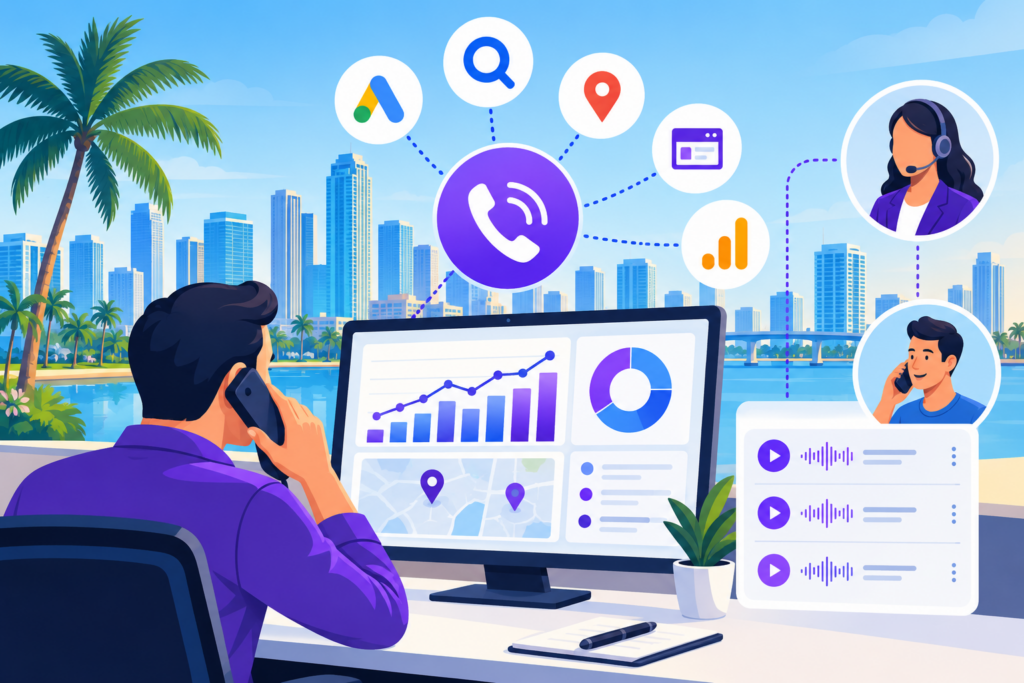
Call tracking starts with a pool of phone numbers. Each number gets assigned to a specific channel: one for Google Ads, one for organic search, one for a Facebook campaign, one for the number printed on a van. When someone calls, the system logs which number they dialed and matches it back to the source that led them there. Nothing about the customer’s experience changes. They see one business, one number on the page they’re viewing, and the routing happens behind the scenes.
Recording is layered on top of that, where allowed and disclosed. A recorded call tells you things a click report never will. Did the front desk pick up on the second ring or the eighth? Did they quote a price or deflect to a text message? Did the caller hang up mid-sentence because the hold music ran long? We have listened to calls where the ad worked perfectly and the booking still fell apart on the phone. That is not a marketing problem. It is an operations problem, and you cannot fix what you cannot hear.
Multi-touchpoint attribution is the piece most agencies skip because it is harder to build and harder to explain in a sales meeting. Instead of crediting the last click before a call, we map the path: the search three weeks ago, the retargeting ad last Tuesday, the direct visit the day of the call. A single-touch report will tell a Sunrise auto shop that direct traffic drove the sale. Multi-touch attribution tells them the ad campaign is what started the search in the first place, even though it never got the final click.
Every tracked call, form fill, and chat gets logged against the channel and the keyword that produced it, and that data rolls into a monthly report broken down by source, not just by total volume.
What the Work Covers
Call tracking setup
We review how your business receives calls and identify which marketing sources need to be measured. Depending on the system and agreed scope, tracking numbers or other attribution methods can help distinguish calls associated with different campaigns, pages, or channels.
Multi-touchpoint attribution
Customers may interact with several marketing touchpoints before contacting a business. Reporting can bring together available data from paid ads, organic search, local listings, and website visits to show the paths associated with enquiries. Attribution has limitations, especially when people switch devices or contact a business through untracked channels.
Campaign and source reporting
We review available call data alongside advertising and website metrics. This can help identify which sources generate calls, whether campaigns attract relevant enquiries, and where additional investigation may be needed.
Lead quality and outcomes
Call volume alone does not show whether marketing is generating valuable opportunities. Where the business records outcomes, reporting can distinguish qualified enquiries from irrelevant calls, existing-customer requests, or other calls that do not match the campaign goal.
Tracking quality checks
Incorrect number placement, broken integrations, duplicate conversions, or missing records can distort reports. We review the available setup and identify issues that may affect the reliability of results.
Reporting and recommendations
Findings are organized into a clear view of performance, changes, limitations, and possible next steps. Recommendations should explain the evidence behind them rather than relying on unexplained scores or raw call totals.

What is different about this market
Sunrise is dense and built out, with little greenfield commercial space between Sunrise Boulevard and Oakland Park. That means a new trades business, auto shop, or independent restaurant is almost always competing against an established one a mile away, not against open ground. Tracking here has to show which of three or four competing options a caller actually chose.

How we start
We start by auditing what you already have. Most businesses we talk to in Sunrise have a Google Ads account, maybe a Facebook pixel, and one phone number that everything funnels into. We map your current channels, figure out where a tracking number needs to sit, and set up call routing that does not disrupt the number already printed on your signage or your invoices.

What it costs
Call tracking and reporting is usually priced as part of a broader search or ad management engagement for Sunrise businesses rather than sold alone, because the tracking only matters if there is campaign activity worth attributing. Costs scale with the number of tracking lines you need, monthly call volume, and whether recording, transcription, and keyword-level attribution are included on top of basic source reporting. We will not quote a flat number here because a two-line setup for a single-location Sunrise auto shop and a multi-channel setup spanning Google Ads, organic search, and referral partners for a restaurant group with catering and delivery are simply not the same job, in cost or in complexity.
FAQ's
These are the 5 questions Sunrise homeowners ask us most about call tracking and reporting, answered plainly so you know what to expect before any work starts. If yours isn't covered here, get in touch and we'll walk you through it.
Can you track calls without changing our main business phone number?
Yes. The number printed on your signage, invoices, and vehicles stays the same. Tracking numbers are assigned to specific channels like Google Ads or a landing page and forward to your existing line, so customers never see a difference.
Is call recording legal in Florida?
Florida is a two-party consent state, which means both sides of a call generally need to be notified that it is being recorded. We set up disclosure messages as part of the setup so the recording complies with that requirement.
How is multi-touchpoint attribution different from what Google Ads already shows me?
Google Ads reporting mostly credits the last click. Multi-touch attribution maps the earlier searches, ads, and visits that led up to that click, so you can see what actually started the customer's decision, not just what ended it.
Do I need a big ad budget for call tracking to be worth it?
No. Even a single-location business with modest ad spend benefits from knowing which of two or three channels is producing calls that convert, since that is usually what decides where the next dollar should go.
How long does setup take?
Setup timing depends on how many channels and numbers you need tracked and how your current site and ad accounts are structured. We will give you a specific timeline after the audit rather than a generic estimate.
What you get each month
Each month you get a report broken down by channel: how many calls came from paid search, how many from organic, how many from a specific landing page. You get call recordings tied to those numbers, so you can hear how your staff actually handles a lead rather than guessing. You get attribution that credits the full path a customer took, not just the last click before they dialed. And you get a running comparison month to month, so you can see whether a change to an ad or a page actually moved the number of calls that turned into booked work, not just the number of clicks.