
- Home
- Services
- Portfolio
- About
- Service AreasFort Lauderdale, FL
- Web Design
- Redesign
- WordPress
- Ecommerce
- Landing Pages
- SEO Services
- Local SEO
- GBP
- Google Ads
- PPC
- Digital Marketing
- Internet Marketing
- Advertising
- Tracking
- Dental Marketing
- Medical Marketing
- HVAC Marketing
- Roofing Marketing
- Pest Control Marketing
- Home Services Marketing
- Plumbing Marketing
- Electrical Marketing
- Landscaping Marketing
- Remodeling Marketing
Pembroke Pines, FL- Web Design
- Redesign
- WordPress
- Ecommerce
- Landing Pages
- SEO Services
- Local SEO
- GBP
- Google Ads
- PPC
- Digital Marketing
- Internet Marketing
- Advertising
- Tracking
- Dental Marketing
- Medical Marketing
- HVAC Marketing
- Roofing Marketing
- Pest Control Marketing
- Home Services Marketing
- Plumbing Marketing
- Electrical Marketing
- Landscaping Marketing
- Remodeling Marketing
Hialeah, FL- Web Design
- Redesign
- WordPress
- Ecommerce
- Landing Pages
- SEO Services
- Local SEO
- GBP
- Google Ads
- PPC
- Digital Marketing
- Internet Marketing
- Advertising
- Tracking
- Dental Marketing
- Medical Marketing
- HVAC Marketing
- Roofing Marketing
- Pest Control Marketing
- Home Services Marketing
- Plumbing Marketing
- Electrical Marketing
- Landscaping Marketing
- Remodeling Marketing
Hollywood, FL- Web Design
- Redesign
- WordPress
- Ecommerce
- Landing Pages
- SEO Services
- Local SEO
- GBP
- Google Ads
- PPC
- Digital Marketing
- Internet Marketing
- Advertising
- Tracking
- Dental Marketing
- Medical Marketing
- HVAC Marketing
- Roofing Marketing
- Pest Control Marketing
- Home Services Marketing
- Plumbing Marketing
- Electrical Marketing
- Landscaping Marketing
- Remodeling Marketing
Miramar, FL- Web Design
- Redesign
- WordPress
- Ecommerce
- Landing Pages
- SEO Services
- Local SEO
- GBP
- Google Ads
- PPC
- Digital Marketing
- Internet Marketing
- Advertising
- Tracking
- Dental Marketing
- Medical Marketing
- HVAC Marketing
- Roofing Marketing
- Pest Control Marketing
- Home Services Marketing
- Plumbing Marketing
- Electrical Marketing
- Landscaping Marketing
- Remodeling Marketing
Coral Springs, FL- Web Design
- Redesign
- WordPress
- Ecommerce
- Landing Pages
- SEO Services
- Local SEO
- GBP
- Google Ads
- PPC
- Digital Marketing
- Internet Marketing
- Advertising
- Tracking
- Dental Marketing
- Medical Marketing
- HVAC Marketing
- Roofing Marketing
- Pest Control Marketing
- Home Services Marketing
- Plumbing Marketing
- Electrical Marketing
- Landscaping Marketing
- Remodeling Marketing
Pompano Beach, FL- Web Design
- Redesign
- WordPress
- Ecommerce
- Landing Pages
- SEO Services
- Local SEO
- GBP
- Google Ads
- PPC
- Digital Marketing
- Internet Marketing
- Advertising
- Tracking
- Dental Marketing
- Medical Marketing
- HVAC Marketing
- Roofing Marketing
- Pest Control Marketing
- Home Services Marketing
- Plumbing Marketing
- Electrical Marketing
- Landscaping Marketing
- Remodeling Marketing
Davie, FL- Web Design
- Redesign
- WordPress
- Ecommerce
- Landing Pages
- SEO Services
- Local SEO
- GBP
- Google Ads
- PPC
- Digital Marketing
- Internet Marketing
- Advertising
- Tracking
- Dental Marketing
- Medical Marketing
- HVAC Marketing
- Roofing Marketing
- Pest Control Marketing
- Home Services Marketing
- Plumbing Marketing
- Electrical Marketing
- Landscaping Marketing
- Remodeling Marketing
Sunrise, FL- Web Design
- Redesign
- WordPress
- Ecommerce
- Landing Pages
- SEO Services
- Local SEO
- GBP
- Google Ads
- PPC
- Digital Marketing
- Internet Marketing
- Advertising
- Tracking
- Dental Marketing
- Medical Marketing
- HVAC Marketing
- Roofing Marketing
- Pest Control Marketing
- Home Services Marketing
- Plumbing Marketing
- Electrical Marketing
- Landscaping Marketing
- Remodeling Marketing
Plantation, FL- Web Design
- Redesign
- WordPress
- Ecommerce
- Landing Pages
- SEO Services
- Local SEO
- GBP
- Google Ads
- PPC
- Digital Marketing
- Internet Marketing
- Advertising
- Tracking
- Dental Marketing
- Medical Marketing
- HVAC Marketing
- Roofing Marketing
- Pest Control Marketing
- Home Services Marketing
- Plumbing Marketing
- Electrical Marketing
- Landscaping Marketing
- Remodeling Marketing
Deerfield Beach, FL- Web Design
- Redesign
- WordPress
- Ecommerce
- Landing Pages
- SEO Services
- Local SEO
- GBP
- Google Ads
- PPC
- Digital Marketing
- Internet Marketing
- Advertising
- Tracking
- Dental Marketing
- Medical Marketing
- HVAC Marketing
- Roofing Marketing
- Pest Control Marketing
- Home Services Marketing
- Plumbing Marketing
- Electrical Marketing
- Landscaping Marketing
- Remodeling Marketing
Miami Gardens, FL- Web Design
- Redesign
- WordPress
- Ecommerce
- Landing Pages
- SEO Services
- Local SEO
- GBP
- Google Ads
- PPC
- Digital Marketing
- Internet Marketing
- Advertising
- Tracking
- Dental Marketing
- Medical Marketing
- HVAC Marketing
- Roofing Marketing
- Pest Control Marketing
- Home Services Marketing
- Plumbing Marketing
- Electrical Marketing
- Landscaping Marketing
- Remodeling Marketing
Lauderhill, FL- Web Design
- Redesign
- WordPress
- Ecommerce
- Landing Pages
- SEO Services
- Local SEO
- GBP
- Google Ads
- PPC
- Digital Marketing
- Internet Marketing
- Advertising
- Tracking
- Dental Marketing
- Medical Marketing
- HVAC Marketing
- Roofing Marketing
- Pest Control Marketing
- Home Services Marketing
- Plumbing Marketing
- Electrical Marketing
- Landscaping Marketing
- Remodeling Marketing
West Palm Beach, FL- Web Design
- Redesign
- WordPress
- Ecommerce
- Landing Pages
- SEO Services
- Local SEO
- GBP
- Google Ads
- PPC
- Digital Marketing
- Internet Marketing
- Advertising
- Tracking
- Dental Marketing
- Medical Marketing
- HVAC Marketing
- Roofing Marketing
- Pest Control Marketing
- Home Services Marketing
- Plumbing Marketing
- Electrical Marketing
- Landscaping Marketing
- Remodeling Marketing
Tamarac, FL- Web Design
- Redesign
- WordPress
- Ecommerce
- Landing Pages
- SEO Services
- Local SEO
- GBP
- Google Ads
- PPC
- Digital Marketing
- Internet Marketing
- Advertising
- Tracking
- Dental Marketing
- Medical Marketing
- HVAC Marketing
- Roofing Marketing
- Pest Control Marketing
- Home Services Marketing
- Plumbing Marketing
- Electrical Marketing
- Landscaping Marketing
- Remodeling Marketing
Weston, FL- Web Design
- Redesign
- WordPress
- Ecommerce
- Landing Pages
- SEO Services
- Local SEO
- GBP
- Google Ads
- PPC
- Digital Marketing
- Internet Marketing
- Advertising
- Tracking
- Dental Marketing
- Medical Marketing
- HVAC Marketing
- Roofing Marketing
- Pest Control Marketing
- Home Services Marketing
- Plumbing Marketing
- Electrical Marketing
- Landscaping Marketing
- Remodeling Marketing
Boca Raton, FLMargate, FLCoconut Creek, FLMiami Beach, FLHomestead, FLKendall, FLDoral, FLBoynton Beach, FLThe Hammocks, FLNorth Lauderdale, FLOakland Park, FLDelray Beach, FLNorth Miami, FLHallandale Beach, FLFontainebleau, FLKendale Lakes, FLWellington, FLJupiter, FLTamiami, FLPalm Beach Gardens, FLLauderdale Lakes, FLCooper City, FLCountry Club, FLParkland, FLCoral Gables, FLDania Beach, FLCutler Bay, FLNorth Miami Beach, FLGreenacres, FLLake Worth Beach, FLPrinceton, FLRoyal Palm Beach, FLSouth Miami Heights, FLRichmond West, FLRiviera Beach, FLWest Little River, FLGolden Glades, FLAventura, FLMiami Lakes, FLWestchester, FLLeisure City, FLCoral Terrace, FLPalm Springs, FLPalmetto Bay, FLHialeah Gardens, FLSunny Isles Beach, FLIves Estates, FLWest Park, FLSweetwater, FLPinecrest, FLSunset, FLPinewood, FLWilton Manors, FLOpa-locka, FLLighthouse Point, FLBelle Glade, FLNaranja, FLPalmetto Estates, FLBrownsville, FLKey Biscayne, FLOlympia Heights, FLMiami Springs, FLFlorida City, FLSouth Miami, FLThree Lakes, FLGladeview, FLNorth Palm Beach, FLMiami Shores, FLSouthwest Ranches, FLKings Point, FLLauderdale-by-the-Sea, FLHillsboro Beach, FLSea Ranch Lakes, FLLazy Lake, FL - Blog
- Contact
Marketing for Pest Control Companies in Pembroke Pines, Florida
Pembroke Pines is a city of planned communities, HOAs, and homes mostly built or sold within the last twenty years. That matters for pest control marketing because the buyer isn't walking past a storefront. They're searching on a phone at 9pm after seeing something crawl across the kitchen floor, or they're a property manager at an HOA-governed community looking for a vendor who already knows the neighborhood. Your marketing has to meet that search, not a generic one.
How Pembroke Pines Pest Control Companies buyers search
Searches here split into three clear groups, and each one needs its own landing page if you want to rank and convert. The first is species-specific and urgent: “ghost ants in house,” “drywood termite treatment Pembroke Pines,” “rats in attic,” “wasp nest removal near me,” “German roaches in kitchen.” South Florida’s subtropical climate means this demand doesn’t dip in winter the way it does up north. Ants, roaches, termites, and rodents stay active year-round, and that keeps search volume steadier across the calendar than in most of the country. These searchers want same-day or next-day availability above everything else, so your page needs to answer “can you come today” before it talks about anything else.
The second group is recurring-service language: “monthly pest control,” “quarterly termite bond,” “pest control plans Pembroke Pines,” “best pest control company near me.” These searchers already understand pest control is a subscription, not a one-time fix, and they’re comparing plan structure, treatment frequency, and price rather than just availability. They’re also reading reviews more carefully, since they’re committing to an ongoing relationship, not a single visit.
Because so many neighborhoods here are governed by HOAs, there’s also a real segment searching for vendors already approved for community-wide contracts or familiar with specific developments like those near Pembroke Pines’ western planned subdivisions and gated communities closer to Flamingo Road. That’s a different sales conversation than a one-off homeowner call, often involving a board decision rather than an individual, and it should be a dedicated landing page rather than a footnote on your homepage.
A smaller but valuable fourth segment searches for termite-specific concerns tied to home sales and refinancing, like “WDO inspection Pembroke Pines” or “termite letter for closing.” These buyers are often on a deadline set by a lender or realtor, which makes response speed and clear scheduling language especially persuasive on that page.
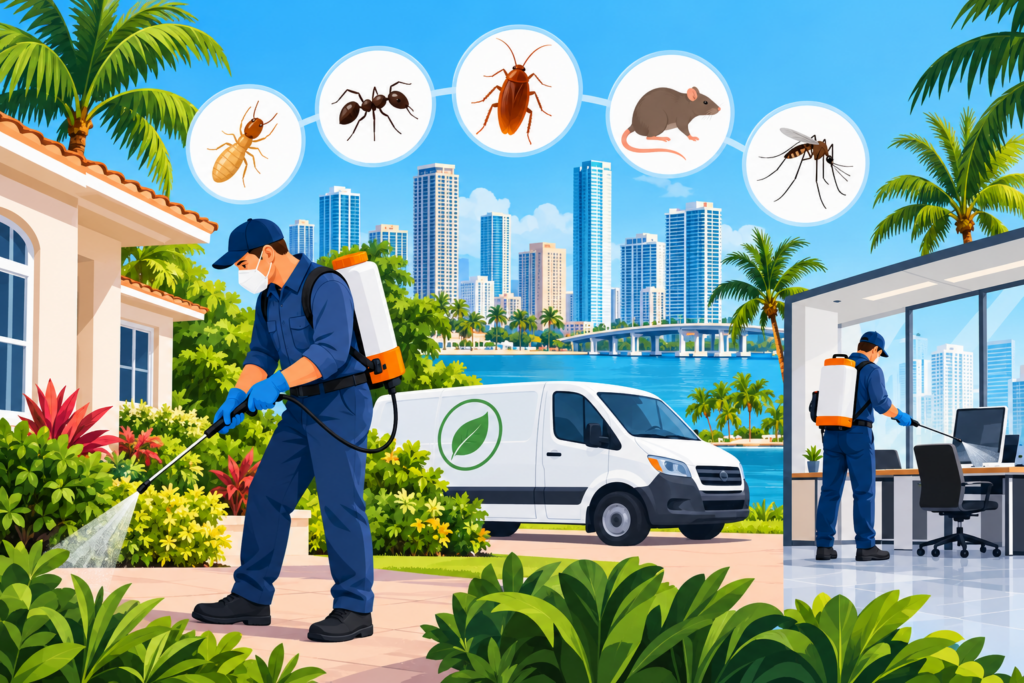
The competition here
Pembroke Pines sits inside a Broward County pest control market that includes national franchises, regional multi-location operators, and independent owner-operators, all bidding for the same map pack real estate. Because almost every pest control business here is a service-area business with no public storefront, the Google Business Profile does more work than it would for a retail location. Service-area radius, category selection, review volume, and how often the profile is updated all factor into whether you show up in the three-pack for a given zip code. Add in the fact that South Florida’s climate keeps call volume high year-round for ants, termites, and rodents, and you get a market where review count alone can separate the top three listings from everyone else on page one.
Organic search is crowded but not impossible. Franchise brands with national domain authority tend to hold the generic terms like “pest control Pembroke Pines.” Where independent and regional companies win is species-specific and neighborhood-specific pages: a dedicated page for drywood termite inspections, a separate one for rodent exclusion, a separate one for HOA and commercial contracts, and another for seasonal issues like post-storm mosquito surges. Few local competitors bother building that out, which leaves room, but it also means you’re competing against companies that simply spend more on ads, not fewer that compete well organically. Pembroke Pines also has a dense mix of single-family HOAs and multi-family communities, and a company that writes directly to those audiences, separate pages, separate messaging, separate calls to action, tends to outperform a single generic homepage trying to speak to everyone at once.
This is an honest read, not a guarantee:
- The map pack is winnable with disciplined profile and review work
- Organic rank for broad terms takes longer and competes against bigger budgets
- Paid search can fill the gap while that organic work matures
- Niche, service-specific pages are the clearest opening against larger competitors
What we build for Pest Control Companies in this market
Local SEO
Review business details, service categories, service areas, and profile information to help customers find and contact your company.
Species-specific service pages
Create focused pages for services such as termite treatment, ant control, rodent control, cockroach treatment, and mosquito management. Each page should explain the service and provide a clear next step.
Recurring-service content
Explain preventive plans, included services, and how customers can request an assessment. Clear information helps potential customers compare ongoing services with one-time treatments.
Commercial pest control pages
Address the needs of offices, property managers, and other commercial clients by outlining your available services, scheduling options, and relevant documentation.
Paid search campaigns
Target relevant, high-intent searches with suitable geographic settings and landing pages. Review spending alongside enquiry quality and cost.
Conversion improvements
Make phone details, estimate forms, service information, and contact options easy to find. A straightforward website helps visitors take the next step.
We start with the Google Business Profile because of how service-area businesses rank here. That means accurate service-area settings, the right primary and secondary categories, regular photo and post updates, and a review request system built into your technician’s close-out process rather than a once-a-year email blast.
Next is the site itself. One page cannot rank for “termite treatment,” “ant control,” “rodent removal,” and “mosquito spraying” at the same time, so we build a page per service, written around how people actually phrase the problem (“carpenter ants in walls” gets written differently than “ant extermination”). For a city like Pembroke Pines, we also build out plan-comparison content, since so much of the search intent here is about recurring service tiers rather than a single visit.
For paid search, we set call tracking on every campaign and every landing page, so you can see which keyword, ad, and page produced an actual phone call or booked job, not just a form fill. Multi-touchpoint attribution matters more for pest control than most trades because the buying path is rarely one search and one click. A homeowner might see a Nextdoor post, search a species name three days later, and finally convert on a retargeting ad for the maintenance plan. We set up tracking to show that full path, not just the last click.

What we measure
We report on calls, not just clicks. That means call tracking numbers tied to each channel and page, so you know whether a service call came from Google Business Profile, organic search, or a paid ad.
- Organic search: Search visibility, relevant landing-page traffic, and changes in keyword performance.
- Local search: Google Business Profile interactions and available calls, website visits, or direction requests.
- Paid advertising: Spend, clicks, search terms, conversions, and cost per tracked enquiry.
- Website conversions: Phone calls, form submissions, and the pages that generate them.
- Lead quality: Where customer records are available, compare tracked enquiries with qualified opportunities and booked work.
What it costs
Pricing depends on how many service pages, how many zip codes, and whether paid search is part of the plan.

Get an audit
Before we talk strategy, we look at what’s actually happening in your market. We’ll review your Google Business Profile for category accuracy, review velocity, and photo quality, check your site’s structure and page speed, and pull your top three competitors ranking in Pembroke Pines and surrounding areas like Pines Boulevard, Flamingo Road, and the Hollywood border. From there, we tell you exactly what’s costing you calls: missing service pages, thin location content, slow load times, or a profile that’s losing the map pack to a competitor with fewer reviews but better signals.
No generic checklist, no templated PDF. Just a direct breakdown of what’s working, what’s not, and what to fix first if you want more jobs booked this month. Send over your website and Google listing and we’ll walk through the findings with you, no obligation to hire us afterward.
Questions
Pest control owners in Pembroke Pines tend to ask about the same handful of things before they commit to any marketing spend: how long organic work takes against a crowded franchise market, whether paid search is worth it for a recurring-revenue model, how HOA and commercial contract work fits into a residential marketing plan, and how review volume actually affects map pack placement. We answer these in plain terms, with no promise about rankings or lead counts, because those depend on budget, competition, and how fast the work gets implemented.
How long does it take to rank for pest control terms in Pembroke Pines?
It depends on the term. Map pack visibility can shift faster when profile and review work is done consistently, often within a few months. Organic rank for competitive terms against national franchise domains takes longer and depends on how much content and link-building effort goes in. We don't promise a timeline because it's not ours to promise; it's a function of competition and budget.
Is paid search worth it for a recurring-service business like pest control?
Often yes, especially while organic work is maturing. The key is call tracking on every ad and landing page, so you can see the actual cost per booked job, not just cost per click, and decide if the math works for your plan pricing.
Do you handle HOA and commercial pest control contracts differently from residential marketing?
Yes. HOA and property-manager buyers search and decide differently than a homeowner with ants in the kitchen. We build separate pages and separate messaging for that audience rather than folding it into general residential content.
Why does my Google Business Profile matter so much if I don't have a storefront?
Most pest control companies in Pembroke Pines are service-area businesses with no public address. Google leans more heavily on your service-area settings, category choices, and review activity to decide where you show up, since there's no storefront signal to lean on instead.
What do you actually report on each month?
Calls and bookings tied to source, not just traffic or impressions. We set up call tracking so you can see whether a job came from Google Business Profile, organic search, or a paid campaign, and which specific page or keyword it came through.