
- Home
- Services
- Portfolio
- About
- Service AreasFort Lauderdale, FL
- Web Design
- Redesign
- WordPress
- Ecommerce
- Landing Pages
- SEO Services
- Local SEO
- GBP
- Google Ads
- PPC
- Digital Marketing
- Internet Marketing
- Advertising
- Tracking
- Dental Marketing
- Medical Marketing
- HVAC Marketing
- Roofing Marketing
- Pest Control Marketing
- Home Services Marketing
- Plumbing Marketing
- Electrical Marketing
- Landscaping Marketing
- Remodeling Marketing
Pembroke Pines, FL- Web Design
- Redesign
- WordPress
- Ecommerce
- Landing Pages
- SEO Services
- Local SEO
- GBP
- Google Ads
- PPC
- Digital Marketing
- Internet Marketing
- Advertising
- Tracking
- Dental Marketing
- Medical Marketing
- HVAC Marketing
- Roofing Marketing
- Pest Control Marketing
- Home Services Marketing
- Plumbing Marketing
- Electrical Marketing
- Landscaping Marketing
- Remodeling Marketing
Hialeah, FL- Web Design
- Redesign
- WordPress
- Ecommerce
- Landing Pages
- SEO Services
- Local SEO
- GBP
- Google Ads
- PPC
- Digital Marketing
- Internet Marketing
- Advertising
- Tracking
- Dental Marketing
- Medical Marketing
- HVAC Marketing
- Roofing Marketing
- Pest Control Marketing
- Home Services Marketing
- Plumbing Marketing
- Electrical Marketing
- Landscaping Marketing
- Remodeling Marketing
Hollywood, FL- Web Design
- Redesign
- WordPress
- Ecommerce
- Landing Pages
- SEO Services
- Local SEO
- GBP
- Google Ads
- PPC
- Digital Marketing
- Internet Marketing
- Advertising
- Tracking
- Dental Marketing
- Medical Marketing
- HVAC Marketing
- Roofing Marketing
- Pest Control Marketing
- Home Services Marketing
- Plumbing Marketing
- Electrical Marketing
- Landscaping Marketing
- Remodeling Marketing
Miramar, FL- Web Design
- Redesign
- WordPress
- Ecommerce
- Landing Pages
- SEO Services
- Local SEO
- GBP
- Google Ads
- PPC
- Digital Marketing
- Internet Marketing
- Advertising
- Tracking
- Dental Marketing
- Medical Marketing
- HVAC Marketing
- Roofing Marketing
- Pest Control Marketing
- Home Services Marketing
- Plumbing Marketing
- Electrical Marketing
- Landscaping Marketing
- Remodeling Marketing
Coral Springs, FL- Web Design
- Redesign
- WordPress
- Ecommerce
- Landing Pages
- SEO Services
- Local SEO
- GBP
- Google Ads
- PPC
- Digital Marketing
- Internet Marketing
- Advertising
- Tracking
- Dental Marketing
- Medical Marketing
- HVAC Marketing
- Roofing Marketing
- Pest Control Marketing
- Home Services Marketing
- Plumbing Marketing
- Electrical Marketing
- Landscaping Marketing
- Remodeling Marketing
Pompano Beach, FL- Web Design
- Redesign
- WordPress
- Ecommerce
- Landing Pages
- SEO Services
- Local SEO
- GBP
- Google Ads
- PPC
- Digital Marketing
- Internet Marketing
- Advertising
- Tracking
- Dental Marketing
- Medical Marketing
- HVAC Marketing
- Roofing Marketing
- Pest Control Marketing
- Home Services Marketing
- Plumbing Marketing
- Electrical Marketing
- Landscaping Marketing
- Remodeling Marketing
Davie, FL- Web Design
- Redesign
- WordPress
- Ecommerce
- Landing Pages
- SEO Services
- Local SEO
- GBP
- Google Ads
- PPC
- Digital Marketing
- Internet Marketing
- Advertising
- Tracking
- Dental Marketing
- Medical Marketing
- HVAC Marketing
- Roofing Marketing
- Pest Control Marketing
- Home Services Marketing
- Plumbing Marketing
- Electrical Marketing
- Landscaping Marketing
- Remodeling Marketing
Sunrise, FL- Web Design
- Redesign
- WordPress
- Ecommerce
- Landing Pages
- SEO Services
- Local SEO
- GBP
- Google Ads
- PPC
- Digital Marketing
- Internet Marketing
- Advertising
- Tracking
- Dental Marketing
- Medical Marketing
- HVAC Marketing
- Roofing Marketing
- Pest Control Marketing
- Home Services Marketing
- Plumbing Marketing
- Electrical Marketing
- Landscaping Marketing
- Remodeling Marketing
Plantation, FL- Web Design
- Redesign
- WordPress
- Ecommerce
- Landing Pages
- SEO Services
- Local SEO
- GBP
- Google Ads
- PPC
- Digital Marketing
- Internet Marketing
- Advertising
- Tracking
- Dental Marketing
- Medical Marketing
- HVAC Marketing
- Roofing Marketing
- Pest Control Marketing
- Home Services Marketing
- Plumbing Marketing
- Electrical Marketing
- Landscaping Marketing
- Remodeling Marketing
Deerfield Beach, FL- Web Design
- Redesign
- WordPress
- Ecommerce
- Landing Pages
- SEO Services
- Local SEO
- GBP
- Google Ads
- PPC
- Digital Marketing
- Internet Marketing
- Advertising
- Tracking
- Dental Marketing
- Medical Marketing
- HVAC Marketing
- Roofing Marketing
- Pest Control Marketing
- Home Services Marketing
- Plumbing Marketing
- Electrical Marketing
- Landscaping Marketing
- Remodeling Marketing
Miami Gardens, FL- Web Design
- Redesign
- WordPress
- Ecommerce
- Landing Pages
- SEO Services
- Local SEO
- GBP
- Google Ads
- PPC
- Digital Marketing
- Internet Marketing
- Advertising
- Tracking
- Dental Marketing
- Medical Marketing
- HVAC Marketing
- Roofing Marketing
- Pest Control Marketing
- Home Services Marketing
- Plumbing Marketing
- Electrical Marketing
- Landscaping Marketing
- Remodeling Marketing
Lauderhill, FL- Web Design
- Redesign
- WordPress
- Ecommerce
- Landing Pages
- SEO Services
- Local SEO
- GBP
- Google Ads
- PPC
- Digital Marketing
- Internet Marketing
- Advertising
- Tracking
- Dental Marketing
- Medical Marketing
- HVAC Marketing
- Roofing Marketing
- Pest Control Marketing
- Home Services Marketing
- Plumbing Marketing
- Electrical Marketing
- Landscaping Marketing
- Remodeling Marketing
West Palm Beach, FL- Web Design
- Redesign
- WordPress
- Ecommerce
- Landing Pages
- SEO Services
- Local SEO
- GBP
- Google Ads
- PPC
- Digital Marketing
- Internet Marketing
- Advertising
- Tracking
- Dental Marketing
- Medical Marketing
- HVAC Marketing
- Roofing Marketing
- Pest Control Marketing
- Home Services Marketing
- Plumbing Marketing
- Electrical Marketing
- Landscaping Marketing
- Remodeling Marketing
Tamarac, FL- Web Design
- Redesign
- WordPress
- Ecommerce
- Landing Pages
- SEO Services
- Local SEO
- GBP
- Google Ads
- PPC
- Digital Marketing
- Internet Marketing
- Advertising
- Tracking
- Dental Marketing
- Medical Marketing
- HVAC Marketing
- Roofing Marketing
- Pest Control Marketing
- Home Services Marketing
- Plumbing Marketing
- Electrical Marketing
- Landscaping Marketing
- Remodeling Marketing
Weston, FL- Web Design
- Redesign
- WordPress
- Ecommerce
- Landing Pages
- SEO Services
- Local SEO
- GBP
- Google Ads
- PPC
- Digital Marketing
- Internet Marketing
- Advertising
- Tracking
- Dental Marketing
- Medical Marketing
- HVAC Marketing
- Roofing Marketing
- Pest Control Marketing
- Home Services Marketing
- Plumbing Marketing
- Electrical Marketing
- Landscaping Marketing
- Remodeling Marketing
Boca Raton, FLMargate, FLCoconut Creek, FLMiami Beach, FLHomestead, FLKendall, FLDoral, FLBoynton Beach, FLThe Hammocks, FLNorth Lauderdale, FLOakland Park, FLDelray Beach, FLNorth Miami, FLHallandale Beach, FLFontainebleau, FLKendale Lakes, FLWellington, FLJupiter, FLTamiami, FLPalm Beach Gardens, FLLauderdale Lakes, FLCooper City, FLCountry Club, FLParkland, FLCoral Gables, FLDania Beach, FLCutler Bay, FLNorth Miami Beach, FLGreenacres, FLLake Worth Beach, FLPrinceton, FLRoyal Palm Beach, FLSouth Miami Heights, FLRichmond West, FLRiviera Beach, FLWest Little River, FLGolden Glades, FLAventura, FLMiami Lakes, FLWestchester, FLLeisure City, FLCoral Terrace, FLPalm Springs, FLPalmetto Bay, FLHialeah Gardens, FLSunny Isles Beach, FLIves Estates, FLWest Park, FLSweetwater, FLPinecrest, FLSunset, FLPinewood, FLWilton Manors, FLOpa-locka, FLLighthouse Point, FLBelle Glade, FLNaranja, FLPalmetto Estates, FLBrownsville, FLKey Biscayne, FLOlympia Heights, FLMiami Springs, FLFlorida City, FLSouth Miami, FLThree Lakes, FLGladeview, FLNorth Palm Beach, FLMiami Shores, FLSouthwest Ranches, FLKings Point, FLLauderdale-by-the-Sea, FLHillsboro Beach, FLSea Ranch Lakes, FLLazy Lake, FL - Blog
- Contact
WordPress Web Design in Wellington, Florida
WordPress Web Design for Wellington businesses
Most of Wellington was horse pasture or open land thirty years ago. Now it is Binks Forest, Olympia, South Shore, and a dozen other planned communities with HOA rules thicker than some city codes, and a resident base that moved in recent enough to still be searching for every service they need: vets, pool cleaners, electricians, equestrian suppliers. They search on a phone, in the car, between errands.
WordPress is not the only platform that can produce a decent-looking site. Wix and Squarespace do that fine for a single-location business with a short list of services. The difference shows up a year in, when a Wellington business needs a page for every service it offers in every suburb it covers, from Te Aro to Lower Hutt, when a review widget needs schema markup to earn stars in search results, or when an SEO person wants to edit a title tag without opening a support ticket and waiting on a platform’s queue. Builder platforms cap what you can touch under the hood. WordPress does not, because the code is yours and the plugin ecosystem is not gatekept by one company’s roadmap or pricing tier.
That openness matters more once a site has real traffic and real revenue riding on it. Wellington businesses competing for visibility against national chains and nearby competitors need the flexibility to add booking systems, membership areas, custom product filtering, or integrations with local tools without hitting a wall. WordPress supports all of it through established plugins rather than custom development billed by the hour every time a new feature is needed. That keeps ongoing costs predictable and keeps the site able to grow alongside the business rather than needing a rebuild every few years.
If you are currently on Wix or Squarespace and thinking about switching, you are not rebuilding from zero. We migrate the content, the pages that already rank in search, and the site structure that is working, then rebuild the parts that were holding you back, whether that is page speed, design flexibility, or a lack of control over technical SEO. That migration is scoped and handled as a defined project with a clear beginning and end, not an afterthought bolted onto a new build and figured out as we go. The result is a WordPress site built for a Wellington business that actually needs room to grow: more service pages, more locations, more functionality, without hitting the ceiling a builder platform eventually imposes.

What the work covers
A WordPress build from us starts with a site map, not a theme. Before anyone touches design, we lay out every page the business actually needs: a homepage built to convert, a dedicated service page per offering instead of one page trying to cover everything, a location page if you cover more than one town or suburb around Wellington, and the supporting pages (about, contact, reviews, FAQs) that build trust with someone who has never heard of you before. This structure matters more than most business owners realise, because a site with one page per service and per location gives Google far more to rank than a single generic page ever will. Once the map is agreed, we build on a current, supported theme framework and set it up so a non-developer can edit text, swap images, change opening hours, or add a blog post without breaking the layout or needing to call us every time.
Technical SEO is part of the build, not an add-on sold separately after the fact. That means clean URL structure, one H1 per page, properly structured headings underneath it, image compression so pages load fast on a phone on a weak connection (which is how most local searches happen), schema markup so Google understands exactly what the business does and where it operates, and an XML sitemap submitted through Search Console from day one. We also set up call tracking so you can see which page, which keyword, and which ad actually produced a phone call, not just a form fill that might be spam or a tyre-kicker. Without that tracking, most businesses are guessing which part of their marketing spend is actually working, and guessing is an expensive habit.
Security and maintenance are not glamorous but they are where cheap builds fall apart within a year or two. WordPress runs a huge share of the web, which makes it a constant target for automated attacks, so we apply a security layer, keep the core software and every plugin patched, and run regular backups so a bad update or a hack is a non-event instead of a multi-day outage that costs you leads while it’s down. We also review plugin lists periodically, because every extra plugin is another thing that can break, slow the site down, or introduce a vulnerability, and a lean, well-maintained site is far easier to keep fast and secure than one stacked with tools nobody remembers installing. None of this is unique to Wellington. It is the baseline for any WordPress site that is supposed to generate business instead of just existing as a digital brochure nobody finds.
Where Wellington does matter is in how the site is written and structured for search. A plumber or physio competing for attention in Wellington is not competing on the same terms as one in Auckland or Christchurch; the search volume is smaller, the competition is often less sophisticated, and a well-built, properly optimised site can realistically outrank bigger-budget competitors if the fundamentals are right. We bake local references into page content, metadata, and schema where they genuinely help, rather than stuffing suburb names in unnaturally just to tick a box.
Once the site is live, the work shifts from building to maintaining visibility, and this is the part a lot of agencies quietly drop after launch:
- Google Business Profile management, including photos, posts, and review responses
- Local link building from relevant, legitimate sources rather than spammy directories
- Ongoing on-page adjustments based on what Search Console and ranking data actually show
- Regular reporting so you can see traffic, rankings, and enquiries moving over time, not just a vague promise that “SEO takes time”
That last point matters most. A site that launches well and then gets left alone tends to drift backwards as competitors update their own content and Google’s algorithm shifts. The businesses that keep climbing are the ones where someone is still watching the data months after launch, not just at the start.

What is different about this market
Wellington is almost entirely a service-area economy. Equestrian trainers, home remodelers, pool contractors, pediatric dentists, landscapers, HVAC companies: nearly none of them are a storefront a resident drives past and notices. That changes how people find you. Nobody is walking in off Forest Hill Boulevard. They are searching on a phone, usually after dinner or during a work break, typing something like “pool resurfacing Wellington FL” or “equestrian property fencing near me,” and the map pack that shows up is built on Google Business Profile signals as much as on the website itself. An address alone does not win that pack. Review volume, category accuracy, and a website that supports the claims on the profile all factor in, and for a service-area business with no public storefront, the profile does more of the work than it would for a retail shop on Southern Boulevard.
Wellington residents are also, on average, trust-led rather than price-led buyers. This is a community built around horses, golf, and planned neighborhoods with HOA oversight on everything from fence color to lawn height. People who moved here in the last decade or two are used to vetting contractors against HOA-approved vendor lists and neighborhood Facebook groups before they call anyone. A site that looks unfinished, has a stock photo of a generic house, or has no reviews visible is a fast disqualifier here, more than it might be in a market where buyers are shopping on price alone. Competition for the common trades (pool service, landscaping, home remodeling) is real but not saturated the way it is in Boca Raton or West Palm Beach proper, which means a well-built site with accurate service pages and a maintained profile can still move up without an enormous budget behind it. Search here skews heavily mobile, consistent with South Florida generally, and while Wellington has a meaningful Spanish-speaking population, most service businesses we see competing here are running English-only sites, which is itself a gap worth considering if your trade serves both languages. Demand for outdoor-trade services (landscaping, pool, pest control) also has a seasonal rhythm tied to South Florida’s wet and dry seasons, which is worth planning content and ad spend around rather than treating every month as identical.
Website planning and design
Organize service pages, navigation, calls to action, and contact information around visitor needs.
Theme and plugin setup
Select and configure suitable tools while avoiding unnecessary features that add maintenance or performance overhead.
Responsive layouts
Ensure the site works across desktop computers, tablets, and mobile devices.
Speed optimization
Review image sizes, caching, scripts, hosting configuration, and other factors that affect performance.
Conversion features
Set up enquiry forms, phone links, appointment pathways, and other relevant actions.
SEO foundations
Configure page titles, headings, internal links, indexability, and other relevant on-page and technical elements.
Testing and launch
Check forms, navigation, mobile layouts, redirects where needed, and important user journeys.
How we start
We start with a short conversation about what the site needs to do: generate calls, book appointments, support an ad campaign, or all three. Then we look at what you have now, if anything, and tell you honestly whether it is salvageable or whether a rebuild is the faster path. No platform gets picked before we know that.
What it costs
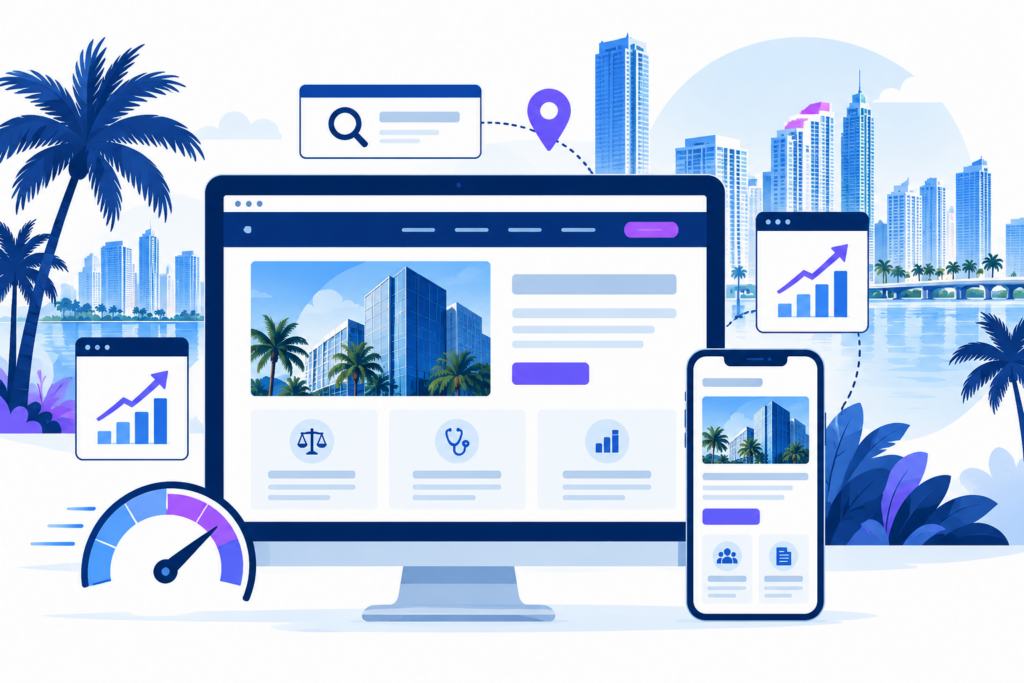
Pricing for a WordPress build in Wellington depends on the number of pages, whether you need a migration off an existing platform, and whether ongoing SEO or ad management is part of the scope. We quote per project after the initial conversation rather than publishing a flat rate, because a five-page site for a single-location trade business and a twenty-page site for a multi-service company with several service areas across the wider Wellington region are not the same job. Factors that typically move the number include:
- Custom functionality such as booking forms, quote calculators, or membership areas
- Content and copywriting support versus pages you supply yourself
- Integration with existing tools like CRMs, payment gateways, or email platforms
- Ongoing maintenance, hosting, and update plans once the site launches
Ask us directly and we will walk through what drives the number for your situation.

What you get each month
With ongoing management, you get a patched, backed-up WordPress site, a monitored Google Business Profile, and a monthly report linking calls and form submissions to the page or keyword behind them—not vanity metrics, but proof of what’s actually working.
- Review: Assess the existing site, content, performance, and available analytics.
- Plan: Define the page structure, design requirements, functionality, and SEO priorities.
- Build or migrate: Develop the WordPress site or transfer suitable content and functionality from your current platform.
- Test: Check navigation, forms, responsive layouts, indexing settings, and required redirects before launch.
- Monitor: Review technical health, search visibility, and enquiries after the site goes live.
Get a free audit
We'll review your current WordPress site or Google Business Profile and tell you, in plain terms, what's working, what's holding back Wellington traffic and rankings, and what to fix first.

Why this matters for a growing community
Wellington keeps adding rooftops in its planned sections, which means a steady stream of new residents who have no existing loyalty to a contractor, clinic, or local shop. That is an opening for a business with a WordPress site built to be found, not just built to exist. It closes slowly for whoever waits, as neighbors already up and running claim the search results and the referrals that follow.
A WordPress build gives a growing community business room to keep pace with that growth instead of falling behind it. Pages can be added as new services or neighborhoods come online, staff can update content without waiting on a developer, and the site can carry the local details that actually help people choose: service areas, hours, reviews from nearby clients, and clear paths to call or book. That groundwork matters more here than in a built-out market, because so many searchers are deciding for the first time who they trust.
- Flexible pages that grow with new services or locations
- Easy in-house updates without developer delays
- Room for local proof: reviews, service areas, and credentials
FAQ's
These are the 5 questions Wellington homeowners ask us most about wordpress web design, answered plainly so you know what to expect before any work starts. If yours isn't covered here, get in touch and we'll walk you through it.
Why switch from Wix or Squarespace to WordPress if my current site looks fine?
Looking fine and ranking are different problems. Builder platforms limit how deep you can go on technical SEO, schema markup, and page structure once you need more than a handful of pages. If your site is working and you have no plans to add service pages, location pages, or ongoing SEO, you may not need to switch. If you are trying to compete in search results, the platform ceiling becomes the issue.
Do you need a Wellington address to work on my site?
No. We work with businesses in Wellington and across South Florida without needing a local office presence for the work itself. What matters for your visibility is your Google Business Profile service area and listed address, not ours.
How long does a WordPress migration from a builder platform take?
It depends on how many pages exist and how much content needs to be rebuilt versus moved as-is. We scope this after reviewing your current site so the timeline reflects your actual site, not a generic estimate.
Will a new website guarantee more calls from Wellington residents?
No one can honestly promise that, and we will not. What a properly built site does is remove the reasons a visitor leaves before calling: slow load time, no visible trust signals, no clear service area. What happens after that depends on your market, your pricing, and your follow-up.
Does my site need to support Spanish for the Wellington market?
It depends on your trade and your existing client base. Wellington has a meaningful Spanish-speaking population, and most competing service sites we see here are English-only, so it can be a point of differentiation worth discussing during the planning conversation.