
- Home
- Services
- Portfolio
- About
- Service AreasFort Lauderdale, FL
- Web Design
- Redesign
- WordPress
- Ecommerce
- Landing Pages
- SEO Services
- Local SEO
- GBP
- Google Ads
- PPC
- Digital Marketing
- Internet Marketing
- Advertising
- Tracking
- Dental Marketing
- Medical Marketing
- HVAC Marketing
- Roofing Marketing
- Pest Control Marketing
- Home Services Marketing
- Plumbing Marketing
- Electrical Marketing
- Landscaping Marketing
- Remodeling Marketing
Pembroke Pines, FL- Web Design
- Redesign
- WordPress
- Ecommerce
- Landing Pages
- SEO Services
- Local SEO
- GBP
- Google Ads
- PPC
- Digital Marketing
- Internet Marketing
- Advertising
- Tracking
- Dental Marketing
- Medical Marketing
- HVAC Marketing
- Roofing Marketing
- Pest Control Marketing
- Home Services Marketing
- Plumbing Marketing
- Electrical Marketing
- Landscaping Marketing
- Remodeling Marketing
Hialeah, FL- Web Design
- Redesign
- WordPress
- Ecommerce
- Landing Pages
- SEO Services
- Local SEO
- GBP
- Google Ads
- PPC
- Digital Marketing
- Internet Marketing
- Advertising
- Tracking
- Dental Marketing
- Medical Marketing
- HVAC Marketing
- Roofing Marketing
- Pest Control Marketing
- Home Services Marketing
- Plumbing Marketing
- Electrical Marketing
- Landscaping Marketing
- Remodeling Marketing
Hollywood, FL- Web Design
- Redesign
- WordPress
- Ecommerce
- Landing Pages
- SEO Services
- Local SEO
- GBP
- Google Ads
- PPC
- Digital Marketing
- Internet Marketing
- Advertising
- Tracking
- Dental Marketing
- Medical Marketing
- HVAC Marketing
- Roofing Marketing
- Pest Control Marketing
- Home Services Marketing
- Plumbing Marketing
- Electrical Marketing
- Landscaping Marketing
- Remodeling Marketing
Miramar, FL- Web Design
- Redesign
- WordPress
- Ecommerce
- Landing Pages
- SEO Services
- Local SEO
- GBP
- Google Ads
- PPC
- Digital Marketing
- Internet Marketing
- Advertising
- Tracking
- Dental Marketing
- Medical Marketing
- HVAC Marketing
- Roofing Marketing
- Pest Control Marketing
- Home Services Marketing
- Plumbing Marketing
- Electrical Marketing
- Landscaping Marketing
- Remodeling Marketing
Coral Springs, FL- Web Design
- Redesign
- WordPress
- Ecommerce
- Landing Pages
- SEO Services
- Local SEO
- GBP
- Google Ads
- PPC
- Digital Marketing
- Internet Marketing
- Advertising
- Tracking
- Dental Marketing
- Medical Marketing
- HVAC Marketing
- Roofing Marketing
- Pest Control Marketing
- Home Services Marketing
- Plumbing Marketing
- Electrical Marketing
- Landscaping Marketing
- Remodeling Marketing
Pompano Beach, FL- Web Design
- Redesign
- WordPress
- Ecommerce
- Landing Pages
- SEO Services
- Local SEO
- GBP
- Google Ads
- PPC
- Digital Marketing
- Internet Marketing
- Advertising
- Tracking
- Dental Marketing
- Medical Marketing
- HVAC Marketing
- Roofing Marketing
- Pest Control Marketing
- Home Services Marketing
- Plumbing Marketing
- Electrical Marketing
- Landscaping Marketing
- Remodeling Marketing
Davie, FL- Web Design
- Redesign
- WordPress
- Ecommerce
- Landing Pages
- SEO Services
- Local SEO
- GBP
- Google Ads
- PPC
- Digital Marketing
- Internet Marketing
- Advertising
- Tracking
- Dental Marketing
- Medical Marketing
- HVAC Marketing
- Roofing Marketing
- Pest Control Marketing
- Home Services Marketing
- Plumbing Marketing
- Electrical Marketing
- Landscaping Marketing
- Remodeling Marketing
Sunrise, FL- Web Design
- Redesign
- WordPress
- Ecommerce
- Landing Pages
- SEO Services
- Local SEO
- GBP
- Google Ads
- PPC
- Digital Marketing
- Internet Marketing
- Advertising
- Tracking
- Dental Marketing
- Medical Marketing
- HVAC Marketing
- Roofing Marketing
- Pest Control Marketing
- Home Services Marketing
- Plumbing Marketing
- Electrical Marketing
- Landscaping Marketing
- Remodeling Marketing
Plantation, FL- Web Design
- Redesign
- WordPress
- Ecommerce
- Landing Pages
- SEO Services
- Local SEO
- GBP
- Google Ads
- PPC
- Digital Marketing
- Internet Marketing
- Advertising
- Tracking
- Dental Marketing
- Medical Marketing
- HVAC Marketing
- Roofing Marketing
- Pest Control Marketing
- Home Services Marketing
- Plumbing Marketing
- Electrical Marketing
- Landscaping Marketing
- Remodeling Marketing
Deerfield Beach, FL- Web Design
- Redesign
- WordPress
- Ecommerce
- Landing Pages
- SEO Services
- Local SEO
- GBP
- Google Ads
- PPC
- Digital Marketing
- Internet Marketing
- Advertising
- Tracking
- Dental Marketing
- Medical Marketing
- HVAC Marketing
- Roofing Marketing
- Pest Control Marketing
- Home Services Marketing
- Plumbing Marketing
- Electrical Marketing
- Landscaping Marketing
- Remodeling Marketing
Miami Gardens, FL- Web Design
- Redesign
- WordPress
- Ecommerce
- Landing Pages
- SEO Services
- Local SEO
- GBP
- Google Ads
- PPC
- Digital Marketing
- Internet Marketing
- Advertising
- Tracking
- Dental Marketing
- Medical Marketing
- HVAC Marketing
- Roofing Marketing
- Pest Control Marketing
- Home Services Marketing
- Plumbing Marketing
- Electrical Marketing
- Landscaping Marketing
- Remodeling Marketing
Lauderhill, FL- Web Design
- Redesign
- WordPress
- Ecommerce
- Landing Pages
- SEO Services
- Local SEO
- GBP
- Google Ads
- PPC
- Digital Marketing
- Internet Marketing
- Advertising
- Tracking
- Dental Marketing
- Medical Marketing
- HVAC Marketing
- Roofing Marketing
- Pest Control Marketing
- Home Services Marketing
- Plumbing Marketing
- Electrical Marketing
- Landscaping Marketing
- Remodeling Marketing
West Palm Beach, FL- Web Design
- Redesign
- WordPress
- Ecommerce
- Landing Pages
- SEO Services
- Local SEO
- GBP
- Google Ads
- PPC
- Digital Marketing
- Internet Marketing
- Advertising
- Tracking
- Dental Marketing
- Medical Marketing
- HVAC Marketing
- Roofing Marketing
- Pest Control Marketing
- Home Services Marketing
- Plumbing Marketing
- Electrical Marketing
- Landscaping Marketing
- Remodeling Marketing
Tamarac, FL- Web Design
- Redesign
- WordPress
- Ecommerce
- Landing Pages
- SEO Services
- Local SEO
- GBP
- Google Ads
- PPC
- Digital Marketing
- Internet Marketing
- Advertising
- Tracking
- Dental Marketing
- Medical Marketing
- HVAC Marketing
- Roofing Marketing
- Pest Control Marketing
- Home Services Marketing
- Plumbing Marketing
- Electrical Marketing
- Landscaping Marketing
- Remodeling Marketing
Weston, FL- Web Design
- Redesign
- WordPress
- Ecommerce
- Landing Pages
- SEO Services
- Local SEO
- GBP
- Google Ads
- PPC
- Digital Marketing
- Internet Marketing
- Advertising
- Tracking
- Dental Marketing
- Medical Marketing
- HVAC Marketing
- Roofing Marketing
- Pest Control Marketing
- Home Services Marketing
- Plumbing Marketing
- Electrical Marketing
- Landscaping Marketing
- Remodeling Marketing
Boca Raton, FLMargate, FLCoconut Creek, FLMiami Beach, FLHomestead, FLKendall, FLDoral, FLBoynton Beach, FLThe Hammocks, FLNorth Lauderdale, FLOakland Park, FLDelray Beach, FLNorth Miami, FLHallandale Beach, FLFontainebleau, FLKendale Lakes, FLWellington, FLJupiter, FLTamiami, FLPalm Beach Gardens, FLLauderdale Lakes, FLCooper City, FLCountry Club, FLParkland, FLCoral Gables, FLDania Beach, FLCutler Bay, FLNorth Miami Beach, FLGreenacres, FLLake Worth Beach, FLPrinceton, FLRoyal Palm Beach, FLSouth Miami Heights, FLRichmond West, FLRiviera Beach, FLWest Little River, FLGolden Glades, FLAventura, FLMiami Lakes, FLWestchester, FLLeisure City, FLCoral Terrace, FLPalm Springs, FLPalmetto Bay, FLHialeah Gardens, FLSunny Isles Beach, FLIves Estates, FLWest Park, FLSweetwater, FLPinecrest, FLSunset, FLPinewood, FLWilton Manors, FLOpa-locka, FLLighthouse Point, FLBelle Glade, FLNaranja, FLPalmetto Estates, FLBrownsville, FLKey Biscayne, FLOlympia Heights, FLMiami Springs, FLFlorida City, FLSouth Miami, FLThree Lakes, FLGladeview, FLNorth Palm Beach, FLMiami Shores, FLSouthwest Ranches, FLKings Point, FLLauderdale-by-the-Sea, FLHillsboro Beach, FLSea Ranch Lakes, FLLazy Lake, FL - Blog
- Contact
Marketing for Pest Control Companies in Princeton, Florida
How Princeton Pest Control Companies buyers search
Princeton is still part agricultural, part new subdivision, and pest pressure reflects that mix. Searches split between homeowners with a specific invader and growers or packing houses fighting a crop pest. Nobody types “pest control company.” They search “whitefly treatment Princeton FL,” “get rid of German roaches,” “iguana removal South Dade,” or “termite inspection before closing.” Each of those deserves its own page.

The competition here
Princeton is one of the fastest-growing residential pockets in Princeton-Dade County, and the pest control supply has not caught up with the rooftop demand. Walk the newer subdivisions off 184th Street or Krome Avenue and you will find young businesses, some run by a single licensed operator with a truck and a phone number, many with no website at all or a Facebook page as their only digital presence. Search “pest control Princeton FL” and the results thin out fast compared to what you would see searching the same phrase for Kendall or Cutler Bay.
That is not a knock on those businesses. It is the reality of a market still forming. Compared to Kendall, Homestead’s commercial core, or Cutler Bay, Princeton has fewer established pest control brands fighting over the same map pack spots. The companies currently ranking locally are often ranking by default, not by strategy, because there simply isn’t much to beat yet. A handful of basic citations and a thin service page can be enough to hold a top-three map spot here, which tells you how little real optimization has happened.
That changes. New rooftops attract new competitors, and the agricultural edge of Princeton means commercial accounts (groves, nurseries, packing operations) are also up for grabs with almost no one marketing to them specifically. Termite and rodent pressure tied to that agricultural land is a year-round concern homeowners search for, yet almost no local operator is building content around it. The honest read: this is a market where showing up with an actual strategy, before more competitors figure that out, buys you more room than the same effort would buy in a saturated city ten minutes north.
We are not going to tell you Princeton has zero competition. It has some, and a few operators do decent local SEO, with real reviews and consistent posting. But relative to the tri-county area, it is the easiest place we work in to get a new or underserved pest control brand visible, because the bar is simply lower, and it won’t stay that low for long.

What we build for Pest Control Companies in this market
Pest control runs on recurring revenue. A one-time termite job matters, but the quarterly general pest contract is what pays your bills in month fourteen. Your marketing needs to sell both, and they are not the same sale with the same page.
We start by mapping the actual species and problems Princeton deals with. Whitefly and other grove-related pests near the agricultural parcels. Rodents moving into new construction before landscaping fills in. Roaches and ants in the established neighborhoods. Mosquitoes everywhere, every wet season. Each of those becomes its own page with its own title, its own content, and its own path to a call or a form. One generic “pest control services” page cannot rank for all of that, because Google treats a page about roaches and a page about termite bonds as different intents, and it ranks them accordingly — and because the customer searching each of those terms wants a different answer, not the same paragraph with a different headline swapped in.
From there, the build depends on what you already have:
- Website structure: service pages by pest, not just by category, plus a dedicated recurring-service or maintenance-plan page since that is your actual business model, not the one-off job. We also build out a termite/WDO page separately, since that search has its own urgency and its own real-estate-closing deadline pressure.
- Local SEO: a Google Business Profile built around the service area you actually run trucks in, with Princeton treated as a real target, not an afterthought folded into Homestead, plus review generation tied to the technician who actually did the job.
- Google Ads: campaigns split by urgency. Someone with roaches in the kitchen right now searches differently than someone comparing quarterly plans, and someone with a closing date tied to a termite inspection searches differently than both. We do not run one ad group for any two of those.
- Call tracking: a number on the site that tells you which page, which keyword, and which campaign the phone call came from, so you know whether the whitefly page or the general pest page is actually generating the recurring contracts, not just the one-time jobs.
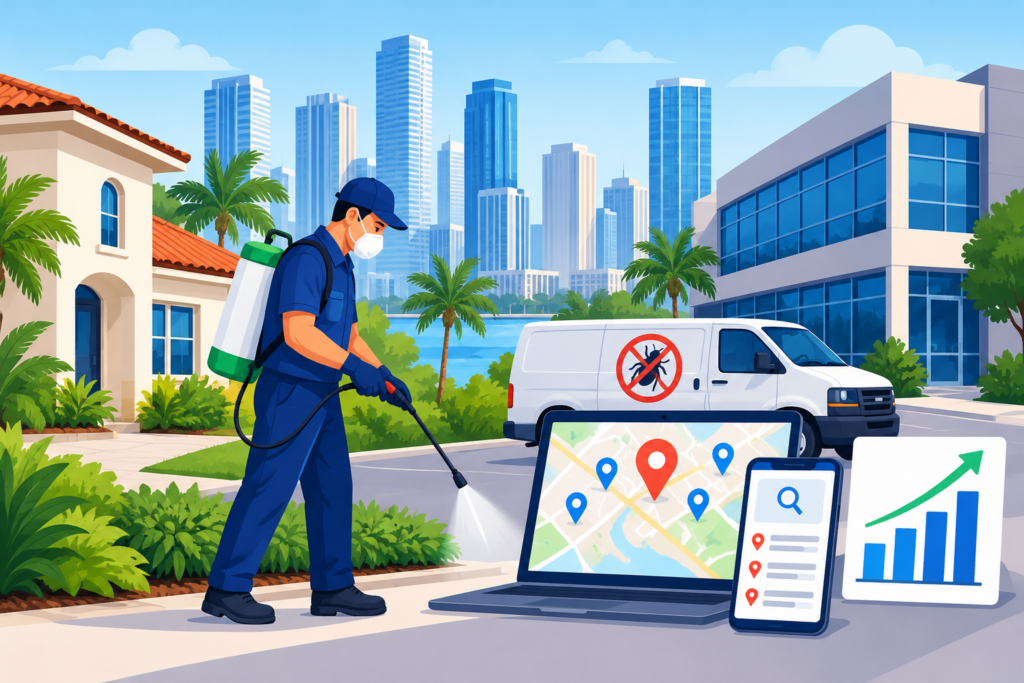
What we measure
Local SEO
Review business details, service categories, service areas, and profile information to help customers find and contact your company.
Species-specific service pages
Create focused pages for services such as termite treatment, ant control, rodent control, cockroach treatment, and mosquito management. Each page should explain the service and provide a clear next step.
Recurring-service content
Explain preventive plans, included services, and how customers can request an assessment. Clear information helps potential customers compare ongoing services with one-time treatments.
Commercial pest control pages
Address the needs of offices, property managers, and other commercial clients by outlining your available services, scheduling options, and relevant documentation.
Paid search campaigns
Target relevant, high-intent searches with suitable geographic settings and landing pages. Review spending alongside enquiry quality and cost.
Conversion improvements
Make phone details, estimate forms, service information, and contact options easy to find. A straightforward website helps visitors take the next step.
Rankings are a leading indicator, not the goal. For a Princeton pest control company, we track the numbers that actually affect your schedule: calls and form submissions from Princeton, Lawrenceville, West Windsor, and Hamilton searches, cost per lead by channel, and how many of those leads become booked inspections or signed contracts. We separate residential inquiries from commercial and termite/WDI requests, since each has different close rates and value. You’ll also see seasonal trends around termite swarm season, ant and mosquito calls in warmer months, and rodent activity in fall, so budget and messaging can shift accordingly. Every report ties back to jobs scheduled and revenue, not just traffic or position.

Calls and form submissions tied to source, tracked separately for one-time jobs versus recurring plan sign-ups, since those two numbers tell a different story about your Princeton pest control business and which campaigns actually deserve more budget.
- Organic search: Search visibility, relevant landing-page traffic, and changes in keyword performance.
- Local search: Google Business Profile interactions and available calls, website visits, or direction requests.
- Paid advertising: Spend, clicks, search terms, conversions, and cost per tracked enquiry.
- Website conversions: Phone calls, form submissions, and the pages that generate them.
- Lead quality: Where customer records are available, compare tracked enquiries with qualified opportunities and booked work.
Cost per lead by campaign and by service page, so you can see which pest pages and which ad groups—termite, bed bug, rodent, mosquito—are worth the spend across Princeton and nearby Mercer County neighborhoods, helping you shift budget toward what actually books jobs.

What it costs
Pricing for pest control marketing in Princeton depends on where you’re starting. A company with no website and no Google Business Profile needs a different scope than one with both but no tracking. We won’t quote a number here that has nothing to do with your actual situation.
The structure is simple: a one-time build cost for the site and local SEO foundation, then a monthly fee for ongoing SEO, ad management, and reporting. If you run Google Ads, that spend is separate from our management fee and goes directly to Google, not us. You’ll see that split on every invoice.
We don’t lock clients into long contracts as a retention strategy. If the reporting doesn’t show calls and leads moving, you should be able to leave.
FAQ's
These are the 5 questions Princeton homeowners ask us most about pest control company marketing, answered plainly so you know what to expect before any work starts. If yours isn't covered here, get in touch and we'll walk you through it.
Is Princeton really less competitive than nearby cities for pest control marketing?
By most measures yes. Princeton has fewer established pest control brands actively doing SEO or paid search compared to Kendall, Homestead, or Cutler Bay, mostly because the area's rapid residential growth has outpaced the number of businesses marketing into it. That gap closes over time, which is why acting early matters more here than in a saturated market.
Do you only work with residential pest control, or commercial accounts too?
Both, and we treat them as separate campaigns. Princeton's agricultural edge means grove owners, nurseries, and packing operations are real commercial prospects with different search behavior and decision cycles than a homeowner with an ant problem.
How long before a new pest control site ranks in Princeton?
We will not give you a timeframe, because it depends on your starting point, your service area, and how fast new competitors move in. What we can say is that a market with less existing competition generally requires less work to gain visibility than a saturated one.
We already have a website. Do we need a new one?
Not necessarily. We audit what exists first. If your current site has the right bones, we may just restructure content, add species-specific pages, and fix tracking. A full rebuild is only recommended when the existing site is actually holding you back.
Can you set up call tracking so we know which ads are working?
Yes. We assign tracking numbers by page and campaign so you can see which keyword or ad actually produced a call, and whether that call turned into a one-time job or a recurring contract.
Get an audit
We will look at your current site, your Google Business Profile if you have one, and what the top few results for your key pest terms in Princeton actually look like. You will get a plain answer on what is missing and what it would take to fix it. No pressure to sign anything to get that answer.
Call (754) 704-4727 or send us your site and we will walk through it with you directly, not through a sales script.
[EXTERNAL LINK: Princeton-Dade County’s business licensing and permitting page for pest control operators, as a reference for local licensing requirements]