
- Home
- Services
- Portfolio
- About
- Service AreasFort Lauderdale, FL
- Web Design
- Redesign
- WordPress
- Ecommerce
- Landing Pages
- SEO Services
- Local SEO
- GBP
- Google Ads
- PPC
- Digital Marketing
- Internet Marketing
- Advertising
- Tracking
- Dental Marketing
- Medical Marketing
- HVAC Marketing
- Roofing Marketing
- Pest Control Marketing
- Home Services Marketing
- Plumbing Marketing
- Electrical Marketing
- Landscaping Marketing
- Remodeling Marketing
Pembroke Pines, FL- Web Design
- Redesign
- WordPress
- Ecommerce
- Landing Pages
- SEO Services
- Local SEO
- GBP
- Google Ads
- PPC
- Digital Marketing
- Internet Marketing
- Advertising
- Tracking
- Dental Marketing
- Medical Marketing
- HVAC Marketing
- Roofing Marketing
- Pest Control Marketing
- Home Services Marketing
- Plumbing Marketing
- Electrical Marketing
- Landscaping Marketing
- Remodeling Marketing
Hialeah, FL- Web Design
- Redesign
- WordPress
- Ecommerce
- Landing Pages
- SEO Services
- Local SEO
- GBP
- Google Ads
- PPC
- Digital Marketing
- Internet Marketing
- Advertising
- Tracking
- Dental Marketing
- Medical Marketing
- HVAC Marketing
- Roofing Marketing
- Pest Control Marketing
- Home Services Marketing
- Plumbing Marketing
- Electrical Marketing
- Landscaping Marketing
- Remodeling Marketing
Hollywood, FL- Web Design
- Redesign
- WordPress
- Ecommerce
- Landing Pages
- SEO Services
- Local SEO
- GBP
- Google Ads
- PPC
- Digital Marketing
- Internet Marketing
- Advertising
- Tracking
- Dental Marketing
- Medical Marketing
- HVAC Marketing
- Roofing Marketing
- Pest Control Marketing
- Home Services Marketing
- Plumbing Marketing
- Electrical Marketing
- Landscaping Marketing
- Remodeling Marketing
Miramar, FL- Web Design
- Redesign
- WordPress
- Ecommerce
- Landing Pages
- SEO Services
- Local SEO
- GBP
- Google Ads
- PPC
- Digital Marketing
- Internet Marketing
- Advertising
- Tracking
- Dental Marketing
- Medical Marketing
- HVAC Marketing
- Roofing Marketing
- Pest Control Marketing
- Home Services Marketing
- Plumbing Marketing
- Electrical Marketing
- Landscaping Marketing
- Remodeling Marketing
Coral Springs, FL- Web Design
- Redesign
- WordPress
- Ecommerce
- Landing Pages
- SEO Services
- Local SEO
- GBP
- Google Ads
- PPC
- Digital Marketing
- Internet Marketing
- Advertising
- Tracking
- Dental Marketing
- Medical Marketing
- HVAC Marketing
- Roofing Marketing
- Pest Control Marketing
- Home Services Marketing
- Plumbing Marketing
- Electrical Marketing
- Landscaping Marketing
- Remodeling Marketing
Pompano Beach, FL- Web Design
- Redesign
- WordPress
- Ecommerce
- Landing Pages
- SEO Services
- Local SEO
- GBP
- Google Ads
- PPC
- Digital Marketing
- Internet Marketing
- Advertising
- Tracking
- Dental Marketing
- Medical Marketing
- HVAC Marketing
- Roofing Marketing
- Pest Control Marketing
- Home Services Marketing
- Plumbing Marketing
- Electrical Marketing
- Landscaping Marketing
- Remodeling Marketing
Davie, FL- Web Design
- Redesign
- WordPress
- Ecommerce
- Landing Pages
- SEO Services
- Local SEO
- GBP
- Google Ads
- PPC
- Digital Marketing
- Internet Marketing
- Advertising
- Tracking
- Dental Marketing
- Medical Marketing
- HVAC Marketing
- Roofing Marketing
- Pest Control Marketing
- Home Services Marketing
- Plumbing Marketing
- Electrical Marketing
- Landscaping Marketing
- Remodeling Marketing
Sunrise, FL- Web Design
- Redesign
- WordPress
- Ecommerce
- Landing Pages
- SEO Services
- Local SEO
- GBP
- Google Ads
- PPC
- Digital Marketing
- Internet Marketing
- Advertising
- Tracking
- Dental Marketing
- Medical Marketing
- HVAC Marketing
- Roofing Marketing
- Pest Control Marketing
- Home Services Marketing
- Plumbing Marketing
- Electrical Marketing
- Landscaping Marketing
- Remodeling Marketing
Plantation, FL- Web Design
- Redesign
- WordPress
- Ecommerce
- Landing Pages
- SEO Services
- Local SEO
- GBP
- Google Ads
- PPC
- Digital Marketing
- Internet Marketing
- Advertising
- Tracking
- Dental Marketing
- Medical Marketing
- HVAC Marketing
- Roofing Marketing
- Pest Control Marketing
- Home Services Marketing
- Plumbing Marketing
- Electrical Marketing
- Landscaping Marketing
- Remodeling Marketing
Deerfield Beach, FL- Web Design
- Redesign
- WordPress
- Ecommerce
- Landing Pages
- SEO Services
- Local SEO
- GBP
- Google Ads
- PPC
- Digital Marketing
- Internet Marketing
- Advertising
- Tracking
- Dental Marketing
- Medical Marketing
- HVAC Marketing
- Roofing Marketing
- Pest Control Marketing
- Home Services Marketing
- Plumbing Marketing
- Electrical Marketing
- Landscaping Marketing
- Remodeling Marketing
Miami Gardens, FL- Web Design
- Redesign
- WordPress
- Ecommerce
- Landing Pages
- SEO Services
- Local SEO
- GBP
- Google Ads
- PPC
- Digital Marketing
- Internet Marketing
- Advertising
- Tracking
- Dental Marketing
- Medical Marketing
- HVAC Marketing
- Roofing Marketing
- Pest Control Marketing
- Home Services Marketing
- Plumbing Marketing
- Electrical Marketing
- Landscaping Marketing
- Remodeling Marketing
Lauderhill, FL- Web Design
- Redesign
- WordPress
- Ecommerce
- Landing Pages
- SEO Services
- Local SEO
- GBP
- Google Ads
- PPC
- Digital Marketing
- Internet Marketing
- Advertising
- Tracking
- Dental Marketing
- Medical Marketing
- HVAC Marketing
- Roofing Marketing
- Pest Control Marketing
- Home Services Marketing
- Plumbing Marketing
- Electrical Marketing
- Landscaping Marketing
- Remodeling Marketing
West Palm Beach, FL- Web Design
- Redesign
- WordPress
- Ecommerce
- Landing Pages
- SEO Services
- Local SEO
- GBP
- Google Ads
- PPC
- Digital Marketing
- Internet Marketing
- Advertising
- Tracking
- Dental Marketing
- Medical Marketing
- HVAC Marketing
- Roofing Marketing
- Pest Control Marketing
- Home Services Marketing
- Plumbing Marketing
- Electrical Marketing
- Landscaping Marketing
- Remodeling Marketing
Tamarac, FL- Web Design
- Redesign
- WordPress
- Ecommerce
- Landing Pages
- SEO Services
- Local SEO
- GBP
- Google Ads
- PPC
- Digital Marketing
- Internet Marketing
- Advertising
- Tracking
- Dental Marketing
- Medical Marketing
- HVAC Marketing
- Roofing Marketing
- Pest Control Marketing
- Home Services Marketing
- Plumbing Marketing
- Electrical Marketing
- Landscaping Marketing
- Remodeling Marketing
Weston, FL- Web Design
- Redesign
- WordPress
- Ecommerce
- Landing Pages
- SEO Services
- Local SEO
- GBP
- Google Ads
- PPC
- Digital Marketing
- Internet Marketing
- Advertising
- Tracking
- Dental Marketing
- Medical Marketing
- HVAC Marketing
- Roofing Marketing
- Pest Control Marketing
- Home Services Marketing
- Plumbing Marketing
- Electrical Marketing
- Landscaping Marketing
- Remodeling Marketing
Boca Raton, FLMargate, FLCoconut Creek, FLMiami Beach, FLHomestead, FLKendall, FLDoral, FLBoynton Beach, FLThe Hammocks, FLNorth Lauderdale, FLOakland Park, FLDelray Beach, FLNorth Miami, FLHallandale Beach, FLFontainebleau, FLKendale Lakes, FLWellington, FLJupiter, FLTamiami, FLPalm Beach Gardens, FLLauderdale Lakes, FLCooper City, FLCountry Club, FLParkland, FLCoral Gables, FLDania Beach, FLCutler Bay, FLNorth Miami Beach, FLGreenacres, FLLake Worth Beach, FLPrinceton, FLRoyal Palm Beach, FLSouth Miami Heights, FLRichmond West, FLRiviera Beach, FLWest Little River, FLGolden Glades, FLAventura, FLMiami Lakes, FLWestchester, FLLeisure City, FLCoral Terrace, FLPalm Springs, FLPalmetto Bay, FLHialeah Gardens, FLSunny Isles Beach, FLIves Estates, FLWest Park, FLSweetwater, FLPinecrest, FLSunset, FLPinewood, FLWilton Manors, FLOpa-locka, FLLighthouse Point, FLBelle Glade, FLNaranja, FLPalmetto Estates, FLBrownsville, FLKey Biscayne, FLOlympia Heights, FLMiami Springs, FLFlorida City, FLSouth Miami, FLThree Lakes, FLGladeview, FLNorth Palm Beach, FLMiami Shores, FLSouthwest Ranches, FLKings Point, FLLauderdale-by-the-Sea, FLHillsboro Beach, FLSea Ranch Lakes, FLLazy Lake, FL - Blog
- Contact
Marketing for Dental Practices in Princeton, Florida
Princeton is still half farmland and half new subdivision, and that matters more to your patient schedule than your choice of dental software. Families are moving into new rooftops off Krome Avenue and South Dixie Highway faster than almost anywhere else in Princeton-Dade County, and most of them don’t have a dentist yet. They will pick one the way everyone does now: search on a phone, look at the map, call two or three offices, and go with whoever answers first and takes their insurance. We build the pages, listings, and tracking that put your practice in that short list.

How Princeton Dental Practices buyers search
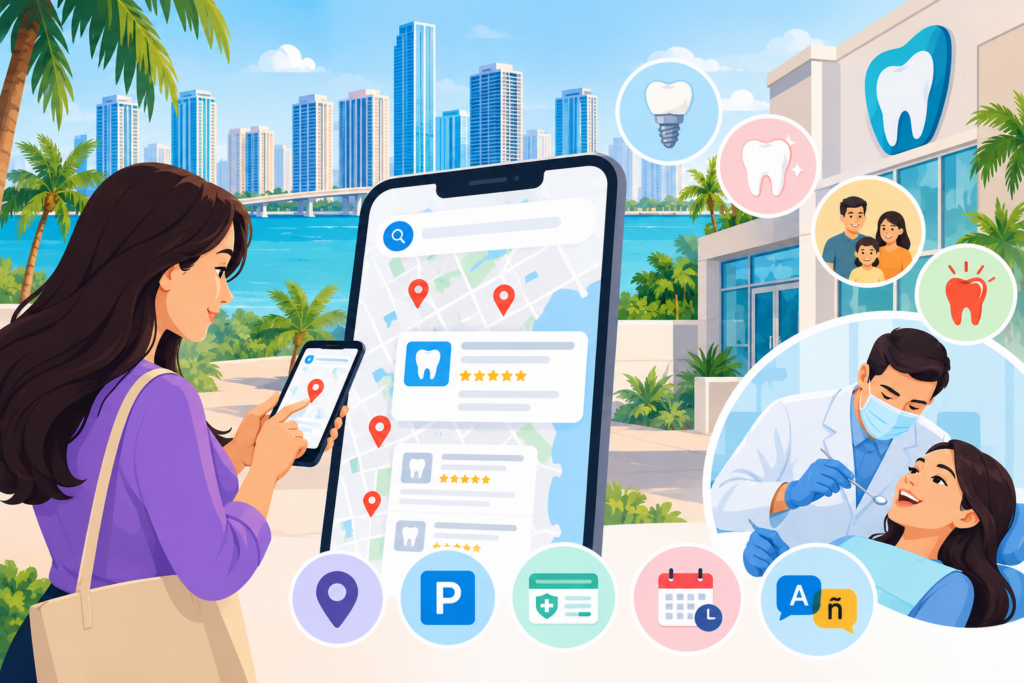
Almost nobody searches “dentist Princeton FL” and reads ten websites before deciding. They search on a phone, usually after a tooth hurts or a kid’s checkup is overdue, and they look at the map results first. Three practices show up with a star rating, a distance, and a phone number. They call the first one that looks legitimate and picks up. That is the entire decision process for most new patients, and it happens in under a minute.
That means two things have to be true before any ad campaign or blog post matters. First, your Google Business Profile has to be complete, verified, and current, with the right category, hours, and photos, because that is what populates the map pack for searches anywhere near Princeton, Goulds, or South Princeton-Dade generally. Second, someone has to answer the phone or the lead goes to the next listing down. We’ve watched practices lose patients to a competitor two minutes away simply because the call rang out during lunch or after 5pm, which is exactly when a lot of these searches happen.
Insurance is the other filter. A large share of Princeton searches include a plan name or “accepts Medicaid” or “PPO dental near me.” If your website doesn’t say which plans you take, in plain text a search engine can read rather than buried in a PDF or an image, you get filtered out before the patient ever calls. This isn’t a nice-to-have page, it’s a qualifying question your site has to answer in the first few seconds, the same way hours and address do.
Spanish-language search also matters here. A meaningful share of Princeton and nearby Naranja and Leisure City households search in Spanish first, whether that’s “dentista cerca de mi” or a specific procedure name. A practice with no Spanish content is invisible to that half of the market, not ranked lower, invisible, because the algorithm simply never matches the query to the page.
Review volume and recency round this out. A profile with three-year-old reviews reads as closed or struggling, even if neither is true.
The competition here
Here’s an honest read of the market: Princeton has far fewer dental practices per resident than Homestead, Cutler Bay, or anywhere closer to Kendall. Some of the practices that do exist have a bare-bones website or none at all, no Google Business Profile claimed, and no reviews to speak of. That’s not a knock on those practices, it’s just where the market is, because the area has grown faster than the local business infrastructure around it. Drive down South Dixie Highway or into the newer residential pockets off Eureka Drive and you’ll see the gap firsthand: new rooftops, new families, and a noticeable shortage of dental signage to match.
That combination, new residents with no established dentist and existing practices with a thin digital footprint, is unusual. In most of South Florida, you’re competing against ten established practices with years of reviews and paid ads. In Princeton, you’re often competing against two or three, and at least one of them hasn’t touched their listing in a year. It is a genuinely easier place to build visibility than Pinecrest, Doral, or almost anywhere inside the urban core.
What this means in practice:
- A claimed, fully built-out Google Business Profile can outrank a competitor’s neglected listing within weeks, not years.
- A handful of recent, specific reviews mentioning Princeton by name often carries more weight here than a decade-old review count elsewhere in Princeton-Dade.
- Basic on-page SEO targeting Princeton and the surrounding ZIP codes faces far less entrenched competition in the search results than you’d find closer to the urban core.
This won’t last. As rooftops keep coming, more practices will open and more of them will figure out their Google listing, hire a marketing company, or start running ads. The practices that move now, claiming their profile, collecting reviews consistently, and building even a modest local SEO presence, will be the ones new residents find first and keep finding for years after the competition catches up. The window where a new or under-marketed practice can move to the top of the map pack without outspending anyone is open right now, not indefinitely.

What we build for Dental Practices in this market
The build starts with the Google Business Profile, because in a market this size the map pack decides who gets the call before the website even loads. We verify the listing, set the correct primary and secondary categories, load service-specific photos, and keep hours and holiday closures current, because a profile that looks abandoned reads as closed even when it isn’t.
Next is the website itself. We build separate pages for the services that actually drive new-patient calls in this market: emergency extractions, same-day crowns, pediatric visits, dentures, and whatever your practice leads with. Each page names the insurance plans you accept, because that’s the filter question described above, and each page is written to answer it in the first paragraph, not buried in a PDF.
We also build in Spanish where the practice’s patient base calls for it, as a full version of the site rather than a machine-translated afterthought, because a thin translated page doesn’t rank and doesn’t read as trustworthy to a bilingual reader.
Review generation is part of the build, not an extra. A simple text-after-visit system asking satisfied patients for a review does more for a Princeton practice’s map ranking than almost any other single tactic, because so few competitors are doing it consistently.
Finally, for practices ready to move faster than organic growth allows, we run targeted Google Ads against the insurance and procedure terms specific to this ZIP code, with call tracking on every number so you know which keyword actually produced the phone call, not just the click.
Local SEO
Improve relevant website content, location signals, internal links, and service information to support local search visibility.
Google Business Profile
Review profile accuracy, categories, services, contact details, and other eligible information. Changes should follow Google's Business Profile guidelines.
Treatment pages
Build or improve pages for services such as general dentistry, cosmetic treatments, implants, or emergency appointments when those services are offered.
Paid search campaigns
Target relevant searches, refine location settings, and review search terms to reduce spend on enquiries that do not match the practice.
Conversion tracking
Measure available actions such as appointment-form submissions, calls, and clicks on booking links.
Website improvements
Make service information, insurance details, contact options, and booking steps easier to find on desktop and mobile.
What we measure
- Which search terms and keywords are generating calls, tracked by call tracking numbers unique to each campaign and page, not just form submissions
- Map pack position for your core service terms, checked from a Princeton location rather than wherever our office happens to be
- New patient calls versus existing patient calls, so you know what new marketing spend is actually producing
- Website conversion points: calls, form fills, and appointment-request clicks, attributed back to the specific page and channel that produced them
- Review volume and rating trend over time, since this moves map ranking directly in a market this size
We report on what moved and what didn’t, in plain numbers, not a vague summary of “improved visibility.” If something isn’t working, we say so and change it.

What it costs
Cost depends on where your Princeton practice is starting from. A practice with no claimed Google listing and no website needs a different scope than one with a dated site that just needs new service pages and review generation. We quote based on what’s actually missing, not a flat package, because a practice that only needs its Google profile fixed and local citations cleaned up shouldn’t pay for a full rebuild competitors in the area are investing in.
- Organic search visibility and relevant website visits.
- Google Business Profile interactions and available performance data.
- Paid campaign clicks, search terms, and advertising costs.
- Tracked calls, appointment-form submissions, and booking actions.
- Enquiry quality, where the practice can reliably share and categorize that information.
- Changes made, issues identified, and recommended next steps.
Get an audit
We’ll look at your current Google Business Profile, your website’s insurance and service pages, and how your practice actually shows up for the searches Princeton patients are typing in right now — “dentist near me,” “emergency dentist Princeton,” “Invisalign,” whatever applies to your mix of services. No obligation, just a plain read of where you stand against the two or three practices you’re actually competing with for new patients.

Dental marketing questions from Princeton practice owners
Before signing with any agency, most Princeton dentists want to know the same things: how long before the phone starts ringing differently, whether Spanish content is worth the cost, and how a smaller market like this compares to Homestead or Cutler Bay.
We’d rather answer those directly than let a sales call gloss over them. Below are the questions we hear most, answered the same way we’d answer them on the phone.
How long does it take to see more new-patient calls in Princeton?
It depends on your starting point. A practice with no Google Business Profile claimed typically sees movement faster than one competing against an established listing, simply because there's less to fix. We won't promise a timeline, but we will tell you honestly what we see happening month to month once work starts.
Is Spanish-language content really necessary for a Princeton dental practice?
For most practices in this ZIP code, yes. A meaningful share of local searches happen in Spanish, and a site with no Spanish content simply doesn't show up for those searches, regardless of how strong the English site is. Whether it's worth the investment depends on your current patient mix, which is something we'd look at in an audit.
Why is Princeton easier to rank in than Homestead or Cutler Bay?
Fewer practices have claimed and optimized their Google Business Profile, and fewer have a service-specific website with insurance information built in. That's a market condition, not a guarantee, and it will shift as more practices move into the area.
Do you handle insurance-plan pages or just general dental marketing?
Insurance filtering is one of the first things we build, because it's one of the first things a Princeton patient checks before calling. We write plan-specific content into service pages so a search engine and a reader both see it immediately.
What does an audit actually show me?
A plain look at your current Google Business Profile status, whether your website answers the insurance and service questions patients are searching for, and how you compare to the handful of practices actually competing for the same Princeton searches. No invented numbers, just what's there now.