
- Home
- Services
- Portfolio
- About
- Service AreasFort Lauderdale, FL
- Web Design
- Redesign
- WordPress
- Ecommerce
- Landing Pages
- SEO Services
- Local SEO
- GBP
- Google Ads
- PPC
- Digital Marketing
- Internet Marketing
- Advertising
- Tracking
- Dental Marketing
- Medical Marketing
- HVAC Marketing
- Roofing Marketing
- Pest Control Marketing
- Home Services Marketing
- Plumbing Marketing
- Electrical Marketing
- Landscaping Marketing
- Remodeling Marketing
Pembroke Pines, FL- Web Design
- Redesign
- WordPress
- Ecommerce
- Landing Pages
- SEO Services
- Local SEO
- GBP
- Google Ads
- PPC
- Digital Marketing
- Internet Marketing
- Advertising
- Tracking
- Dental Marketing
- Medical Marketing
- HVAC Marketing
- Roofing Marketing
- Pest Control Marketing
- Home Services Marketing
- Plumbing Marketing
- Electrical Marketing
- Landscaping Marketing
- Remodeling Marketing
Hialeah, FL- Web Design
- Redesign
- WordPress
- Ecommerce
- Landing Pages
- SEO Services
- Local SEO
- GBP
- Google Ads
- PPC
- Digital Marketing
- Internet Marketing
- Advertising
- Tracking
- Dental Marketing
- Medical Marketing
- HVAC Marketing
- Roofing Marketing
- Pest Control Marketing
- Home Services Marketing
- Plumbing Marketing
- Electrical Marketing
- Landscaping Marketing
- Remodeling Marketing
Hollywood, FL- Web Design
- Redesign
- WordPress
- Ecommerce
- Landing Pages
- SEO Services
- Local SEO
- GBP
- Google Ads
- PPC
- Digital Marketing
- Internet Marketing
- Advertising
- Tracking
- Dental Marketing
- Medical Marketing
- HVAC Marketing
- Roofing Marketing
- Pest Control Marketing
- Home Services Marketing
- Plumbing Marketing
- Electrical Marketing
- Landscaping Marketing
- Remodeling Marketing
Miramar, FL- Web Design
- Redesign
- WordPress
- Ecommerce
- Landing Pages
- SEO Services
- Local SEO
- GBP
- Google Ads
- PPC
- Digital Marketing
- Internet Marketing
- Advertising
- Tracking
- Dental Marketing
- Medical Marketing
- HVAC Marketing
- Roofing Marketing
- Pest Control Marketing
- Home Services Marketing
- Plumbing Marketing
- Electrical Marketing
- Landscaping Marketing
- Remodeling Marketing
Coral Springs, FL- Web Design
- Redesign
- WordPress
- Ecommerce
- Landing Pages
- SEO Services
- Local SEO
- GBP
- Google Ads
- PPC
- Digital Marketing
- Internet Marketing
- Advertising
- Tracking
- Dental Marketing
- Medical Marketing
- HVAC Marketing
- Roofing Marketing
- Pest Control Marketing
- Home Services Marketing
- Plumbing Marketing
- Electrical Marketing
- Landscaping Marketing
- Remodeling Marketing
Pompano Beach, FL- Web Design
- Redesign
- WordPress
- Ecommerce
- Landing Pages
- SEO Services
- Local SEO
- GBP
- Google Ads
- PPC
- Digital Marketing
- Internet Marketing
- Advertising
- Tracking
- Dental Marketing
- Medical Marketing
- HVAC Marketing
- Roofing Marketing
- Pest Control Marketing
- Home Services Marketing
- Plumbing Marketing
- Electrical Marketing
- Landscaping Marketing
- Remodeling Marketing
Davie, FL- Web Design
- Redesign
- WordPress
- Ecommerce
- Landing Pages
- SEO Services
- Local SEO
- GBP
- Google Ads
- PPC
- Digital Marketing
- Internet Marketing
- Advertising
- Tracking
- Dental Marketing
- Medical Marketing
- HVAC Marketing
- Roofing Marketing
- Pest Control Marketing
- Home Services Marketing
- Plumbing Marketing
- Electrical Marketing
- Landscaping Marketing
- Remodeling Marketing
Sunrise, FL- Web Design
- Redesign
- WordPress
- Ecommerce
- Landing Pages
- SEO Services
- Local SEO
- GBP
- Google Ads
- PPC
- Digital Marketing
- Internet Marketing
- Advertising
- Tracking
- Dental Marketing
- Medical Marketing
- HVAC Marketing
- Roofing Marketing
- Pest Control Marketing
- Home Services Marketing
- Plumbing Marketing
- Electrical Marketing
- Landscaping Marketing
- Remodeling Marketing
Plantation, FL- Web Design
- Redesign
- WordPress
- Ecommerce
- Landing Pages
- SEO Services
- Local SEO
- GBP
- Google Ads
- PPC
- Digital Marketing
- Internet Marketing
- Advertising
- Tracking
- Dental Marketing
- Medical Marketing
- HVAC Marketing
- Roofing Marketing
- Pest Control Marketing
- Home Services Marketing
- Plumbing Marketing
- Electrical Marketing
- Landscaping Marketing
- Remodeling Marketing
Deerfield Beach, FL- Web Design
- Redesign
- WordPress
- Ecommerce
- Landing Pages
- SEO Services
- Local SEO
- GBP
- Google Ads
- PPC
- Digital Marketing
- Internet Marketing
- Advertising
- Tracking
- Dental Marketing
- Medical Marketing
- HVAC Marketing
- Roofing Marketing
- Pest Control Marketing
- Home Services Marketing
- Plumbing Marketing
- Electrical Marketing
- Landscaping Marketing
- Remodeling Marketing
Miami Gardens, FL- Web Design
- Redesign
- WordPress
- Ecommerce
- Landing Pages
- SEO Services
- Local SEO
- GBP
- Google Ads
- PPC
- Digital Marketing
- Internet Marketing
- Advertising
- Tracking
- Dental Marketing
- Medical Marketing
- HVAC Marketing
- Roofing Marketing
- Pest Control Marketing
- Home Services Marketing
- Plumbing Marketing
- Electrical Marketing
- Landscaping Marketing
- Remodeling Marketing
Lauderhill, FL- Web Design
- Redesign
- WordPress
- Ecommerce
- Landing Pages
- SEO Services
- Local SEO
- GBP
- Google Ads
- PPC
- Digital Marketing
- Internet Marketing
- Advertising
- Tracking
- Dental Marketing
- Medical Marketing
- HVAC Marketing
- Roofing Marketing
- Pest Control Marketing
- Home Services Marketing
- Plumbing Marketing
- Electrical Marketing
- Landscaping Marketing
- Remodeling Marketing
West Palm Beach, FL- Web Design
- Redesign
- WordPress
- Ecommerce
- Landing Pages
- SEO Services
- Local SEO
- GBP
- Google Ads
- PPC
- Digital Marketing
- Internet Marketing
- Advertising
- Tracking
- Dental Marketing
- Medical Marketing
- HVAC Marketing
- Roofing Marketing
- Pest Control Marketing
- Home Services Marketing
- Plumbing Marketing
- Electrical Marketing
- Landscaping Marketing
- Remodeling Marketing
Tamarac, FL- Web Design
- Redesign
- WordPress
- Ecommerce
- Landing Pages
- SEO Services
- Local SEO
- GBP
- Google Ads
- PPC
- Digital Marketing
- Internet Marketing
- Advertising
- Tracking
- Dental Marketing
- Medical Marketing
- HVAC Marketing
- Roofing Marketing
- Pest Control Marketing
- Home Services Marketing
- Plumbing Marketing
- Electrical Marketing
- Landscaping Marketing
- Remodeling Marketing
Weston, FL- Web Design
- Redesign
- WordPress
- Ecommerce
- Landing Pages
- SEO Services
- Local SEO
- GBP
- Google Ads
- PPC
- Digital Marketing
- Internet Marketing
- Advertising
- Tracking
- Dental Marketing
- Medical Marketing
- HVAC Marketing
- Roofing Marketing
- Pest Control Marketing
- Home Services Marketing
- Plumbing Marketing
- Electrical Marketing
- Landscaping Marketing
- Remodeling Marketing
Boca Raton, FLMargate, FLCoconut Creek, FLMiami Beach, FLHomestead, FLKendall, FLDoral, FLBoynton Beach, FLThe Hammocks, FLNorth Lauderdale, FLOakland Park, FLDelray Beach, FLNorth Miami, FLHallandale Beach, FLFontainebleau, FLKendale Lakes, FLWellington, FLJupiter, FLTamiami, FLPalm Beach Gardens, FLLauderdale Lakes, FLCooper City, FLCountry Club, FLParkland, FLCoral Gables, FLDania Beach, FLCutler Bay, FLNorth Miami Beach, FLGreenacres, FLLake Worth Beach, FLPrinceton, FLRoyal Palm Beach, FLSouth Miami Heights, FLRichmond West, FLRiviera Beach, FLWest Little River, FLGolden Glades, FLAventura, FLMiami Lakes, FLWestchester, FLLeisure City, FLCoral Terrace, FLPalm Springs, FLPalmetto Bay, FLHialeah Gardens, FLSunny Isles Beach, FLIves Estates, FLWest Park, FLSweetwater, FLPinecrest, FLSunset, FLPinewood, FLWilton Manors, FLOpa-locka, FLLighthouse Point, FLBelle Glade, FLNaranja, FLPalmetto Estates, FLBrownsville, FLKey Biscayne, FLOlympia Heights, FLMiami Springs, FLFlorida City, FLSouth Miami, FLThree Lakes, FLGladeview, FLNorth Palm Beach, FLMiami Shores, FLSouthwest Ranches, FLKings Point, FLLauderdale-by-the-Sea, FLHillsboro Beach, FLSea Ranch Lakes, FLLazy Lake, FL - Blog
- Contact
Marketing for Pest Control Companies in West Palm Beach, Florida
West Palm Beach doesn’t have a pest control off-season. Humidity stays high, ghost ants and Palmetto bugs don’t slow down in January, rodent calls spike every time the weather shifts, and termite swarm season brings its own rush. That’s a different marketing problem than a city with a hard winter. You need a search presence that holds up every month of the year, not a campaign you turn on for ‘bug season’ and coast through the rest.
How West Palm Beach Pest Control Companies buyers search
Search behavior here splits by buyer type, and that split matters for how you build pages. A homeowner in El Cid or the Flamingo Park area searches by problem: “ants in kitchen West Palm Beach,” “get rid of rats attic,” “termite inspection near me.” A property manager or office building operator searches by contract type: “commercial pest control West Palm Beach,” “quarterly pest service downtown,” “restaurant pest compliance.” Each of those phrases implies a different page, a different offer, and often a different person reading it, so treating them as one audience flattens intent that Google is already sorting for you in the results it shows.
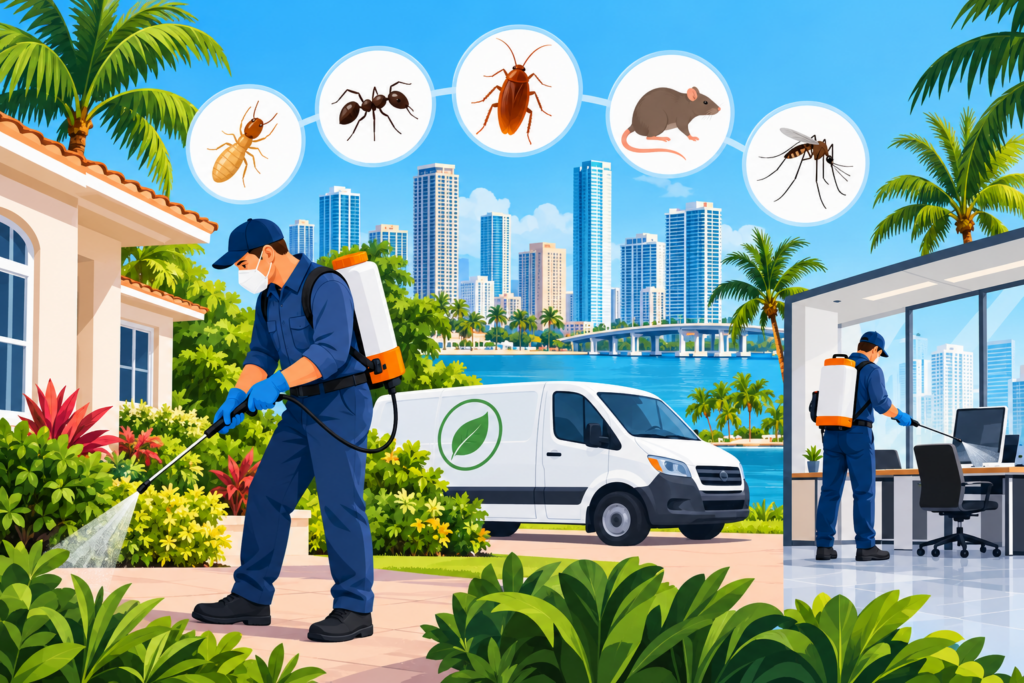
Both groups search by species more than most industries realize. “Bed bug treatment,” “German roach exterminator,” “drywood termite company” each pull different volume and different intent than a generic “pest control West Palm Beach” term, and in a humid coastal market like this one, species-specific calls spike seasonally: roach and ant pressure climbs in the wet summer months, while termite swarmer season brings a surge of “flying termites West Palm Beach” style searches. A single homepage trying to rank for all of it usually ranks for none of it well. We’ve seen this pattern across pest control clients in other South Florida markets: the sites that win build a page per species or service, not one page that mentions everything once, because each page can speak directly to the urgency and vocabulary of that specific searcher.
The competition here
West Palm Beach pest control marketing is not an empty field. The map pack for “pest control West Palm Beach” includes national franchise brands with large ad budgets, regional multi-location operators, and a handful of independent companies that have been optimizing their Google Business Profile for years. Several of these are backed by private equity roll-ups with marketing teams and ad spend that a single-location operator can’t match dollar for dollar. Review counts in this market have been climbing too, so a company sitting at twenty or thirty reviews is now competing against established players with several hundred.
That doesn’t mean you can’t compete. It means you don’t compete on the same terms. A national brand’s site is built to serve forty cities at once, which means its West Palm Beach content is often thin, generic, and interchangeable with its page for Fort Myers or Jacksonville. That’s an opening. A page built specifically for West Palm Beach, naming the neighborhoods, the building types, the species pressure specific to this part of Palm Beach County, can out-rank a thinner, templated competitor even with a smaller ad budget behind it. The same logic applies to service pages: a dedicated page for ghost ants, drywood termites, or rodent exclusion in older coastal homes will usually beat a generic “pest control services” page, because it matches what the searcher actually typed.
Organic and paid both matter here, but they solve different problems. The map pack and organic listings capture people who already know they need pest control and are comparing options over a few days. Google Ads captures the urgent calls, someone who just saw a rat in the office breakroom or German cockroaches in a condo kitchen and is calling whoever answers first, often within minutes of searching. Companies that only invest in one side usually leave the other kind of lead on the table.
A few things tend to separate the operators who actually pull ahead:
- Location and service pages written for specific neighborhoods and pest issues, not one generic city page
- A steady, active review pipeline rather than a stalled profile from two years ago
- Ad campaigns built around same-day and emergency intent, not just brand terms
What we build for Pest Control Companies in this market
Local SEO
Review business details, service categories, service areas, and profile information to help customers find and contact your company.
Species-specific service pages
Create focused pages for services such as termite treatment, ant control, rodent control, cockroach treatment, and mosquito management. Each page should explain the service and provide a clear next step.
Recurring-service content
Explain preventive plans, included services, and how customers can request an assessment. Clear information helps potential customers compare ongoing services with one-time treatments.
Commercial pest control pages
Address the needs of offices, property managers, and other commercial clients by outlining your available services, scheduling options, and relevant documentation.
Paid search campaigns
Target relevant, high-intent searches with suitable geographic settings and landing pages. Review spending alongside enquiry quality and cost.
Conversion improvements
Make phone details, estimate forms, service information, and contact options easy to find. A straightforward website helps visitors take the next step.
We start with the site structure, because this is where most pest control sites fail before a single ad ever runs. A generic “Services” page that lists ants, roaches, termites, rodents, and mosquitoes in one paragraph cannot compete against a page built for each of those, each answering the specific questions a buyer searching that term actually has.
For a West Palm Beach pest control company, that typically means:
- A dedicated page for each major pest or service (termite, rodent, mosquito, bed bug, commercial/quarterly) written for how people in this market actually search, not a copied national template.
- A commercial services page built for the office-tower and professional-services buyer downtown, with service frequency, documentation, and compliance details a facilities manager is looking for.
- A Google Business Profile strategy that reflects your real service area in West Palm Beach and the neighborhoods you actually cover, with photos, posts, and review responses kept current.
- Google Ads campaigns split by intent: emergency/same-day calls in one campaign, scheduled or contract-based commercial service in another, because they convert differently and need different ad copy and landing pages.
- Call tracking on every number, every source, so you know whether a call came from an organic listing, a specific ad, or a Google Business Profile click, not just a total count at the end of the month.
We also build out the seasonal and species-specific content that keeps a pest control site relevant in a subtropical market where there isn’t a true off-season, so your site keeps earning search visibility in what would otherwise be a quiet month for a seasonal-only competitor.

What we measure
Every call and form gets tagged by source. You see which page, which ad, and which search term produced it, through call tracking and attribution reporting, not a monthly PDF of rankings with no connection to revenue.
- Organic search: Search visibility, relevant landing-page traffic, and changes in keyword performance.
- Local search: Google Business Profile interactions and available calls, website visits, or direction requests.
- Paid advertising: Spend, clicks, search terms, conversions, and cost per tracked enquiry.
- Website conversions: Phone calls, form submissions, and the pages that generate them.
- Lead quality: Where customer records are available, compare tracked enquiries with qualified opportunities and booked work.
What it costs
Pest control marketing costs vary by scope: a website rebuild, ongoing SEO, Google Ads management, or a combination.

Get an audit
We’ll look at your current site, your Google Business Profile, and where your West Palm Beach competitors are beating you in search, then tell you specifically what’s missing. We check how you show up for terms like “exterminator West Palm Beach” or “termite inspection Palm Beach County,” how your service area pages compare to pest control companies already ranking in the Map Pack, and whether your review volume and response rate stack up against local competitors. We also look at site speed, mobile usability, and whether your licensing and service guarantees are presented clearly enough to build trust with homeowners comparing providers.
No generic checklist, no guaranteed ranking promises, just a direct read on what’s happening in your market right now, including what your strongest local competitors are doing that you’re not.
Request an audit or call (754) 704-4727 to talk through what we find.
Pest Control Company Marketing questions from West Palm Beach business owners
Owners who’ve been pitched before tend to ask about structure before price: how pages get organized, how commercial and residential leads get separated, and what reporting actually looks like week to week. Most have run an ad campaign that produced calls nobody could trace back to a source.
Below are the questions we hear most often from pest control companies operating around West Palm Beach and downtown Palm Beach County, answered the same way we’d answer them on a call.
How is marketing for pest control different from a general contractor or landscaping company?
Pest control search is species-specific and recurring. Someone searching "termite inspection" and someone searching "rat in attic" are different buyers with different urgency, and your site needs separate pages for each rather than one general services page. The recurring-service model (quarterly or monthly contracts) also changes how commercial pages should be written, since the buyer is evaluating a vendor relationship, not a one-time job.
Does the map pack or organic search matter more in West Palm Beach?
Both matter, but for different reasons. The map pack tends to capture local, bottom-of-funnel searches where someone is comparing two or three nearby options. Organic rankings and content capture research-stage searches, like someone trying to identify a pest or understand treatment options before they call anyone. A strong Google Business Profile and a well-built site work together, not as substitutes for each other.
Should I be running Google Ads if I already rank well organically?
It depends on how much of the market you're capturing. Organic rankings don't appear for every valuable term, and paid search lets you target urgent, high-intent searches like same-day rodent or bed bug calls that organic alone may not catch in time. Many pest control companies run both, with ads filling the gaps where organic visibility is thin or slow to build.
How do you separate residential and commercial leads in reporting?
Through call tracking numbers tied to specific pages and campaigns. A call that came from your commercial pest control page gets tagged differently than one from a residential termite page, so you can see which side of the business is actually generating leads and adjust spend accordingly.
We've worked with a national marketing company before and it didn't work. What's different here?
A lot of national or franchise-style marketing programs use the same template across every city, which produces thin, interchangeable content for a market like West Palm Beach. We build pages specific to this market, your service area, and your actual pest pressure here, and we show you exactly which pages and campaigns produce calls, not just a ranking report.