
- Home
- Services
- Portfolio
- About
- Service AreasFort Lauderdale, FL
- Web Design
- Redesign
- WordPress
- Ecommerce
- Landing Pages
- SEO Services
- Local SEO
- GBP
- Google Ads
- PPC
- Digital Marketing
- Internet Marketing
- Advertising
- Tracking
- Dental Marketing
- Medical Marketing
- HVAC Marketing
- Roofing Marketing
- Pest Control Marketing
- Home Services Marketing
- Plumbing Marketing
- Electrical Marketing
- Landscaping Marketing
- Remodeling Marketing
Pembroke Pines, FL- Web Design
- Redesign
- WordPress
- Ecommerce
- Landing Pages
- SEO Services
- Local SEO
- GBP
- Google Ads
- PPC
- Digital Marketing
- Internet Marketing
- Advertising
- Tracking
- Dental Marketing
- Medical Marketing
- HVAC Marketing
- Roofing Marketing
- Pest Control Marketing
- Home Services Marketing
- Plumbing Marketing
- Electrical Marketing
- Landscaping Marketing
- Remodeling Marketing
Hialeah, FL- Web Design
- Redesign
- WordPress
- Ecommerce
- Landing Pages
- SEO Services
- Local SEO
- GBP
- Google Ads
- PPC
- Digital Marketing
- Internet Marketing
- Advertising
- Tracking
- Dental Marketing
- Medical Marketing
- HVAC Marketing
- Roofing Marketing
- Pest Control Marketing
- Home Services Marketing
- Plumbing Marketing
- Electrical Marketing
- Landscaping Marketing
- Remodeling Marketing
Hollywood, FL- Web Design
- Redesign
- WordPress
- Ecommerce
- Landing Pages
- SEO Services
- Local SEO
- GBP
- Google Ads
- PPC
- Digital Marketing
- Internet Marketing
- Advertising
- Tracking
- Dental Marketing
- Medical Marketing
- HVAC Marketing
- Roofing Marketing
- Pest Control Marketing
- Home Services Marketing
- Plumbing Marketing
- Electrical Marketing
- Landscaping Marketing
- Remodeling Marketing
Miramar, FL- Web Design
- Redesign
- WordPress
- Ecommerce
- Landing Pages
- SEO Services
- Local SEO
- GBP
- Google Ads
- PPC
- Digital Marketing
- Internet Marketing
- Advertising
- Tracking
- Dental Marketing
- Medical Marketing
- HVAC Marketing
- Roofing Marketing
- Pest Control Marketing
- Home Services Marketing
- Plumbing Marketing
- Electrical Marketing
- Landscaping Marketing
- Remodeling Marketing
Coral Springs, FL- Web Design
- Redesign
- WordPress
- Ecommerce
- Landing Pages
- SEO Services
- Local SEO
- GBP
- Google Ads
- PPC
- Digital Marketing
- Internet Marketing
- Advertising
- Tracking
- Dental Marketing
- Medical Marketing
- HVAC Marketing
- Roofing Marketing
- Pest Control Marketing
- Home Services Marketing
- Plumbing Marketing
- Electrical Marketing
- Landscaping Marketing
- Remodeling Marketing
Pompano Beach, FL- Web Design
- Redesign
- WordPress
- Ecommerce
- Landing Pages
- SEO Services
- Local SEO
- GBP
- Google Ads
- PPC
- Digital Marketing
- Internet Marketing
- Advertising
- Tracking
- Dental Marketing
- Medical Marketing
- HVAC Marketing
- Roofing Marketing
- Pest Control Marketing
- Home Services Marketing
- Plumbing Marketing
- Electrical Marketing
- Landscaping Marketing
- Remodeling Marketing
Davie, FL- Web Design
- Redesign
- WordPress
- Ecommerce
- Landing Pages
- SEO Services
- Local SEO
- GBP
- Google Ads
- PPC
- Digital Marketing
- Internet Marketing
- Advertising
- Tracking
- Dental Marketing
- Medical Marketing
- HVAC Marketing
- Roofing Marketing
- Pest Control Marketing
- Home Services Marketing
- Plumbing Marketing
- Electrical Marketing
- Landscaping Marketing
- Remodeling Marketing
Sunrise, FL- Web Design
- Redesign
- WordPress
- Ecommerce
- Landing Pages
- SEO Services
- Local SEO
- GBP
- Google Ads
- PPC
- Digital Marketing
- Internet Marketing
- Advertising
- Tracking
- Dental Marketing
- Medical Marketing
- HVAC Marketing
- Roofing Marketing
- Pest Control Marketing
- Home Services Marketing
- Plumbing Marketing
- Electrical Marketing
- Landscaping Marketing
- Remodeling Marketing
Plantation, FL- Web Design
- Redesign
- WordPress
- Ecommerce
- Landing Pages
- SEO Services
- Local SEO
- GBP
- Google Ads
- PPC
- Digital Marketing
- Internet Marketing
- Advertising
- Tracking
- Dental Marketing
- Medical Marketing
- HVAC Marketing
- Roofing Marketing
- Pest Control Marketing
- Home Services Marketing
- Plumbing Marketing
- Electrical Marketing
- Landscaping Marketing
- Remodeling Marketing
Deerfield Beach, FL- Web Design
- Redesign
- WordPress
- Ecommerce
- Landing Pages
- SEO Services
- Local SEO
- GBP
- Google Ads
- PPC
- Digital Marketing
- Internet Marketing
- Advertising
- Tracking
- Dental Marketing
- Medical Marketing
- HVAC Marketing
- Roofing Marketing
- Pest Control Marketing
- Home Services Marketing
- Plumbing Marketing
- Electrical Marketing
- Landscaping Marketing
- Remodeling Marketing
Miami Gardens, FL- Web Design
- Redesign
- WordPress
- Ecommerce
- Landing Pages
- SEO Services
- Local SEO
- GBP
- Google Ads
- PPC
- Digital Marketing
- Internet Marketing
- Advertising
- Tracking
- Dental Marketing
- Medical Marketing
- HVAC Marketing
- Roofing Marketing
- Pest Control Marketing
- Home Services Marketing
- Plumbing Marketing
- Electrical Marketing
- Landscaping Marketing
- Remodeling Marketing
Lauderhill, FL- Web Design
- Redesign
- WordPress
- Ecommerce
- Landing Pages
- SEO Services
- Local SEO
- GBP
- Google Ads
- PPC
- Digital Marketing
- Internet Marketing
- Advertising
- Tracking
- Dental Marketing
- Medical Marketing
- HVAC Marketing
- Roofing Marketing
- Pest Control Marketing
- Home Services Marketing
- Plumbing Marketing
- Electrical Marketing
- Landscaping Marketing
- Remodeling Marketing
West Palm Beach, FL- Web Design
- Redesign
- WordPress
- Ecommerce
- Landing Pages
- SEO Services
- Local SEO
- GBP
- Google Ads
- PPC
- Digital Marketing
- Internet Marketing
- Advertising
- Tracking
- Dental Marketing
- Medical Marketing
- HVAC Marketing
- Roofing Marketing
- Pest Control Marketing
- Home Services Marketing
- Plumbing Marketing
- Electrical Marketing
- Landscaping Marketing
- Remodeling Marketing
Tamarac, FL- Web Design
- Redesign
- WordPress
- Ecommerce
- Landing Pages
- SEO Services
- Local SEO
- GBP
- Google Ads
- PPC
- Digital Marketing
- Internet Marketing
- Advertising
- Tracking
- Dental Marketing
- Medical Marketing
- HVAC Marketing
- Roofing Marketing
- Pest Control Marketing
- Home Services Marketing
- Plumbing Marketing
- Electrical Marketing
- Landscaping Marketing
- Remodeling Marketing
Weston, FL- Web Design
- Redesign
- WordPress
- Ecommerce
- Landing Pages
- SEO Services
- Local SEO
- GBP
- Google Ads
- PPC
- Digital Marketing
- Internet Marketing
- Advertising
- Tracking
- Dental Marketing
- Medical Marketing
- HVAC Marketing
- Roofing Marketing
- Pest Control Marketing
- Home Services Marketing
- Plumbing Marketing
- Electrical Marketing
- Landscaping Marketing
- Remodeling Marketing
Boca Raton, FLMargate, FLCoconut Creek, FLMiami Beach, FLHomestead, FLKendall, FLDoral, FLBoynton Beach, FLThe Hammocks, FLNorth Lauderdale, FLOakland Park, FLDelray Beach, FLNorth Miami, FLHallandale Beach, FLFontainebleau, FLKendale Lakes, FLWellington, FLJupiter, FLTamiami, FLPalm Beach Gardens, FLLauderdale Lakes, FLCooper City, FLCountry Club, FLParkland, FLCoral Gables, FLDania Beach, FLCutler Bay, FLNorth Miami Beach, FLGreenacres, FLLake Worth Beach, FLPrinceton, FLRoyal Palm Beach, FLSouth Miami Heights, FLRichmond West, FLRiviera Beach, FLWest Little River, FLGolden Glades, FLAventura, FLMiami Lakes, FLWestchester, FLLeisure City, FLCoral Terrace, FLPalm Springs, FLPalmetto Bay, FLHialeah Gardens, FLSunny Isles Beach, FLIves Estates, FLWest Park, FLSweetwater, FLPinecrest, FLSunset, FLPinewood, FLWilton Manors, FLOpa-locka, FLLighthouse Point, FLBelle Glade, FLNaranja, FLPalmetto Estates, FLBrownsville, FLKey Biscayne, FLOlympia Heights, FLMiami Springs, FLFlorida City, FLSouth Miami, FLThree Lakes, FLGladeview, FLNorth Palm Beach, FLMiami Shores, FLSouthwest Ranches, FLKings Point, FLLauderdale-by-the-Sea, FLHillsboro Beach, FLSea Ranch Lakes, FLLazy Lake, FL - Blog
- Contact
Call Tracking and Reporting in Coral Springs, Florida
Call Tracking and Reporting for Coral Springs businesses
Most of Coral Springs was farmland until the Westinghouse Communities Company platted it in the 1960s, and the result is a city built almost entirely from planned subdivisions with HOAs, not a downtown commercial strip with walk-in storefronts. A roofer or AC repair company here lives or dies by the phone ringing from a search or an ad, not foot traffic. If you cannot say which keyword, which ad, or which page caused that phone to ring, you are guessing at your marketing budget.

What the work covers
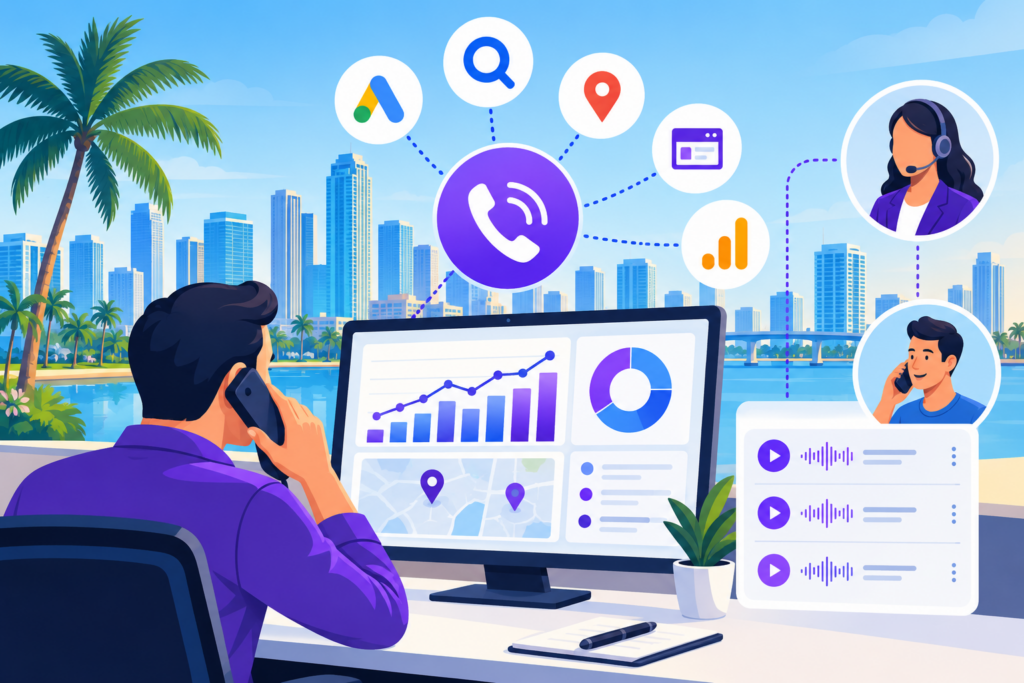
Call tracking starts with dynamic number insertion. Every visitor to your site, or every person who sees a specific ad, gets a unique tracking number swapped in for your main line. When they call, the system logs which source, campaign, keyword, and even which landing page triggered that number before routing the call through to your normal phone, so nothing changes for the caller.
From there we build multi-touchpoint attribution. A homeowner in Coral Springs who needs a new water heater rarely calls on the first visit. They might find you through a Google search, leave, see a retargeting ad three days later, then search your business name directly before calling. Last-click reporting would credit the brand search and ignore the first two touches. Multi-touchpoint reporting keeps the whole chain, so you know the original search term actually earned the lead, not just the one that happened to be last.
We also set up call recording, with consent language handled correctly for Florida’s two-party consent law, so you can listen to how your staff actually handles a call. This is often where we find the real problem. A page can rank well, the ad can be well targeted, and the lead still dies because whoever answers the phone quotes a price too fast or does not ask for the job. You cannot fix that from a dashboard. You have to hear it.
Reporting ties it together: calls, form fills, and texts all get attributed back to channel and campaign in one place, cross-referenced against your Google Business Profile insights and your ad spend, so you can see cost per call by source rather than one blended number that hides which channel is actually paying for itself.
None of this requires touching your existing phone system or number. The tracking layer sits in front of it.
What the Work Covers
Call tracking setup
We review how your business receives calls and identify which marketing sources need to be measured. Depending on the system and agreed scope, tracking numbers or other attribution methods can help distinguish calls associated with different campaigns, pages, or channels.
Multi-touchpoint attribution
Customers may interact with several marketing touchpoints before contacting a business. Reporting can bring together available data from paid ads, organic search, local listings, and website visits to show the paths associated with enquiries. Attribution has limitations, especially when people switch devices or contact a business through untracked channels.
Campaign and source reporting
We review available call data alongside advertising and website metrics. This can help identify which sources generate calls, whether campaigns attract relevant enquiries, and where additional investigation may be needed.
Lead quality and outcomes
Call volume alone does not show whether marketing is generating valuable opportunities. Where the business records outcomes, reporting can distinguish qualified enquiries from irrelevant calls, existing-customer requests, or other calls that do not match the campaign goal.
Tracking quality checks
Incorrect number placement, broken integrations, duplicate conversions, or missing records can distort reports. We review the available setup and identify issues that may affect the reliability of results.
Reporting and recommendations
Findings are organized into a clear view of performance, changes, limitations, and possible next steps. Recommendations should explain the evidence behind them rather than relying on unexplained scores or raw call totals.

What is different about this market
Coral Springs is almost entirely residential, and most service businesses here are service-area operations, not storefronts: landscapers, pool companies, electricians, tutoring centers. That means the map pack and Google Business Profile often carry more call volume than the website, so profile calls need their own tracked number separate from the site’s, or you lose visibility into source.
Buyers here skew trust-led: many moved into planned, HOA communities and research reviews and photos before calling, often over a week or two rather than one session, so reporting needs to catch repeat visits, not just same-day conversions. Search skews heavily mobile, so click-to-call volume should be tracked separately from desktop form fills. Demand also lifts seasonally around spring and after storms, and prior-season data is the most reliable way to plan ahead.

How we start
We start by auditing what you already have. Most businesses we talk to in Coral Springs have Google Ads running, a Google Business Profile with some call volume, and no way to connect the two. We look at your current phone setup, your ad accounts, and your website’s form and chat tools, and map out every point a lead could come in.
Then we install tracking numbers for each channel: one for organic search, one for paid search, one for the Business Profile, one for direct traffic. Setup typically runs over a short window, and we test every number before it goes live so a real caller never hits a dead or mislabeled line.

What it costs
Call tracking pricing depends on call volume and how many channels and numbers you need tracked, since platforms charge per tracked number and per minute of recorded call time. A Coral Springs business running one tracking number for a Google Ads campaign pays far less than one tracking separate numbers across paid search, organic listings, direct mail, and radio. We will give you a specific number for your account after the audit rather than quoting a flat rate that does not match your call volume or your mix of marketing channels.
In general, the cost of the tracking platform is small next to what most Coral Springs businesses already spend on Google Ads, SEO, or local advertising, and it is the only reliable way to know if that spend is actually producing phone calls worth answering.
FAQ's
These are the 5 questions Coral Springs homeowners ask us most about call tracking and reporting, answered plainly so you know what to expect before any work starts. If yours isn't covered here, get in touch and we'll walk you through it.
Does call tracking change our existing phone number?
No. Your main number stays the same. Tracking numbers sit in front of it and route calls through, so customers never see a difference.
Is it legal to record calls in Florida?
Yes, as long as callers are notified, since Florida requires two-party consent for call recording. We build that notice into the call flow before recording starts.
Will this work if most of our leads come from our Google Business Profile instead of our website?
Yes. We assign a separate tracked number to the profile itself so Business Profile calls are counted and attributed independently from website and ad calls.
How long until we have usable data?
Numbers go live within a short setup window, but attribution gets more useful after you have enough call volume and a few weeks of data to compare across channels.
Can you track calls without also managing our ads or website?
Yes. Some Coral Springs businesses want tracking and reporting on an existing setup we did not build. We can install it independently of any other work.
What you get each month
Every month you get a report that shows total calls by source, average call duration, which calls turned into booked jobs based on recordings or your own notes, and cost per lead by channel. If paid search is quietly expensive on a per-call basis compared to organic or your Business Profile, that shows up in plain numbers, not a vague summary paragraph.
You also get access to the call recordings themselves, searchable by date and source, so you or a manager can spot-check how calls are handled without sitting next to the phone. For businesses running Google Ads alongside SEO, we overlay the attribution data against spend so you can see which keywords and which pages are actually producing calls that convert, not just calls that happened. Over a few months this data usually reshapes which pages and campaigns get budget, because it replaces a guess with a number you can check [EXTERNAL LINK: Google’s documentation on call conversion tracking in Google Ads, to show how the underlying mechanism works].