
- Home
- Services
- Portfolio
- About
- Service AreasFort Lauderdale, FL
- Web Design
- Redesign
- WordPress
- Ecommerce
- Landing Pages
- SEO Services
- Local SEO
- GBP
- Google Ads
- PPC
- Digital Marketing
- Internet Marketing
- Advertising
- Tracking
- Dental Marketing
- Medical Marketing
- HVAC Marketing
- Roofing Marketing
- Pest Control Marketing
- Home Services Marketing
- Plumbing Marketing
- Electrical Marketing
- Landscaping Marketing
- Remodeling Marketing
Pembroke Pines, FL- Web Design
- Redesign
- WordPress
- Ecommerce
- Landing Pages
- SEO Services
- Local SEO
- GBP
- Google Ads
- PPC
- Digital Marketing
- Internet Marketing
- Advertising
- Tracking
- Dental Marketing
- Medical Marketing
- HVAC Marketing
- Roofing Marketing
- Pest Control Marketing
- Home Services Marketing
- Plumbing Marketing
- Electrical Marketing
- Landscaping Marketing
- Remodeling Marketing
Hialeah, FL- Web Design
- Redesign
- WordPress
- Ecommerce
- Landing Pages
- SEO Services
- Local SEO
- GBP
- Google Ads
- PPC
- Digital Marketing
- Internet Marketing
- Advertising
- Tracking
- Dental Marketing
- Medical Marketing
- HVAC Marketing
- Roofing Marketing
- Pest Control Marketing
- Home Services Marketing
- Plumbing Marketing
- Electrical Marketing
- Landscaping Marketing
- Remodeling Marketing
Hollywood, FL- Web Design
- Redesign
- WordPress
- Ecommerce
- Landing Pages
- SEO Services
- Local SEO
- GBP
- Google Ads
- PPC
- Digital Marketing
- Internet Marketing
- Advertising
- Tracking
- Dental Marketing
- Medical Marketing
- HVAC Marketing
- Roofing Marketing
- Pest Control Marketing
- Home Services Marketing
- Plumbing Marketing
- Electrical Marketing
- Landscaping Marketing
- Remodeling Marketing
Miramar, FL- Web Design
- Redesign
- WordPress
- Ecommerce
- Landing Pages
- SEO Services
- Local SEO
- GBP
- Google Ads
- PPC
- Digital Marketing
- Internet Marketing
- Advertising
- Tracking
- Dental Marketing
- Medical Marketing
- HVAC Marketing
- Roofing Marketing
- Pest Control Marketing
- Home Services Marketing
- Plumbing Marketing
- Electrical Marketing
- Landscaping Marketing
- Remodeling Marketing
Coral Springs, FL- Web Design
- Redesign
- WordPress
- Ecommerce
- Landing Pages
- SEO Services
- Local SEO
- GBP
- Google Ads
- PPC
- Digital Marketing
- Internet Marketing
- Advertising
- Tracking
- Dental Marketing
- Medical Marketing
- HVAC Marketing
- Roofing Marketing
- Pest Control Marketing
- Home Services Marketing
- Plumbing Marketing
- Electrical Marketing
- Landscaping Marketing
- Remodeling Marketing
Pompano Beach, FL- Web Design
- Redesign
- WordPress
- Ecommerce
- Landing Pages
- SEO Services
- Local SEO
- GBP
- Google Ads
- PPC
- Digital Marketing
- Internet Marketing
- Advertising
- Tracking
- Dental Marketing
- Medical Marketing
- HVAC Marketing
- Roofing Marketing
- Pest Control Marketing
- Home Services Marketing
- Plumbing Marketing
- Electrical Marketing
- Landscaping Marketing
- Remodeling Marketing
Davie, FL- Web Design
- Redesign
- WordPress
- Ecommerce
- Landing Pages
- SEO Services
- Local SEO
- GBP
- Google Ads
- PPC
- Digital Marketing
- Internet Marketing
- Advertising
- Tracking
- Dental Marketing
- Medical Marketing
- HVAC Marketing
- Roofing Marketing
- Pest Control Marketing
- Home Services Marketing
- Plumbing Marketing
- Electrical Marketing
- Landscaping Marketing
- Remodeling Marketing
Sunrise, FL- Web Design
- Redesign
- WordPress
- Ecommerce
- Landing Pages
- SEO Services
- Local SEO
- GBP
- Google Ads
- PPC
- Digital Marketing
- Internet Marketing
- Advertising
- Tracking
- Dental Marketing
- Medical Marketing
- HVAC Marketing
- Roofing Marketing
- Pest Control Marketing
- Home Services Marketing
- Plumbing Marketing
- Electrical Marketing
- Landscaping Marketing
- Remodeling Marketing
Plantation, FL- Web Design
- Redesign
- WordPress
- Ecommerce
- Landing Pages
- SEO Services
- Local SEO
- GBP
- Google Ads
- PPC
- Digital Marketing
- Internet Marketing
- Advertising
- Tracking
- Dental Marketing
- Medical Marketing
- HVAC Marketing
- Roofing Marketing
- Pest Control Marketing
- Home Services Marketing
- Plumbing Marketing
- Electrical Marketing
- Landscaping Marketing
- Remodeling Marketing
Deerfield Beach, FL- Web Design
- Redesign
- WordPress
- Ecommerce
- Landing Pages
- SEO Services
- Local SEO
- GBP
- Google Ads
- PPC
- Digital Marketing
- Internet Marketing
- Advertising
- Tracking
- Dental Marketing
- Medical Marketing
- HVAC Marketing
- Roofing Marketing
- Pest Control Marketing
- Home Services Marketing
- Plumbing Marketing
- Electrical Marketing
- Landscaping Marketing
- Remodeling Marketing
Miami Gardens, FL- Web Design
- Redesign
- WordPress
- Ecommerce
- Landing Pages
- SEO Services
- Local SEO
- GBP
- Google Ads
- PPC
- Digital Marketing
- Internet Marketing
- Advertising
- Tracking
- Dental Marketing
- Medical Marketing
- HVAC Marketing
- Roofing Marketing
- Pest Control Marketing
- Home Services Marketing
- Plumbing Marketing
- Electrical Marketing
- Landscaping Marketing
- Remodeling Marketing
Lauderhill, FL- Web Design
- Redesign
- WordPress
- Ecommerce
- Landing Pages
- SEO Services
- Local SEO
- GBP
- Google Ads
- PPC
- Digital Marketing
- Internet Marketing
- Advertising
- Tracking
- Dental Marketing
- Medical Marketing
- HVAC Marketing
- Roofing Marketing
- Pest Control Marketing
- Home Services Marketing
- Plumbing Marketing
- Electrical Marketing
- Landscaping Marketing
- Remodeling Marketing
West Palm Beach, FL- Web Design
- Redesign
- WordPress
- Ecommerce
- Landing Pages
- SEO Services
- Local SEO
- GBP
- Google Ads
- PPC
- Digital Marketing
- Internet Marketing
- Advertising
- Tracking
- Dental Marketing
- Medical Marketing
- HVAC Marketing
- Roofing Marketing
- Pest Control Marketing
- Home Services Marketing
- Plumbing Marketing
- Electrical Marketing
- Landscaping Marketing
- Remodeling Marketing
Tamarac, FL- Web Design
- Redesign
- WordPress
- Ecommerce
- Landing Pages
- SEO Services
- Local SEO
- GBP
- Google Ads
- PPC
- Digital Marketing
- Internet Marketing
- Advertising
- Tracking
- Dental Marketing
- Medical Marketing
- HVAC Marketing
- Roofing Marketing
- Pest Control Marketing
- Home Services Marketing
- Plumbing Marketing
- Electrical Marketing
- Landscaping Marketing
- Remodeling Marketing
Weston, FL- Web Design
- Redesign
- WordPress
- Ecommerce
- Landing Pages
- SEO Services
- Local SEO
- GBP
- Google Ads
- PPC
- Digital Marketing
- Internet Marketing
- Advertising
- Tracking
- Dental Marketing
- Medical Marketing
- HVAC Marketing
- Roofing Marketing
- Pest Control Marketing
- Home Services Marketing
- Plumbing Marketing
- Electrical Marketing
- Landscaping Marketing
- Remodeling Marketing
Boca Raton, FLMargate, FLCoconut Creek, FLMiami Beach, FLHomestead, FLKendall, FLDoral, FLBoynton Beach, FLThe Hammocks, FLNorth Lauderdale, FLOakland Park, FLDelray Beach, FLNorth Miami, FLHallandale Beach, FLFontainebleau, FLKendale Lakes, FLWellington, FLJupiter, FLTamiami, FLPalm Beach Gardens, FLLauderdale Lakes, FLCooper City, FLCountry Club, FLParkland, FLCoral Gables, FLDania Beach, FLCutler Bay, FLNorth Miami Beach, FLGreenacres, FLLake Worth Beach, FLPrinceton, FLRoyal Palm Beach, FLSouth Miami Heights, FLRichmond West, FLRiviera Beach, FLWest Little River, FLGolden Glades, FLAventura, FLMiami Lakes, FLWestchester, FLLeisure City, FLCoral Terrace, FLPalm Springs, FLPalmetto Bay, FLHialeah Gardens, FLSunny Isles Beach, FLIves Estates, FLWest Park, FLSweetwater, FLPinecrest, FLSunset, FLPinewood, FLWilton Manors, FLOpa-locka, FLLighthouse Point, FLBelle Glade, FLNaranja, FLPalmetto Estates, FLBrownsville, FLKey Biscayne, FLOlympia Heights, FLMiami Springs, FLFlorida City, FLSouth Miami, FLThree Lakes, FLGladeview, FLNorth Palm Beach, FLMiami Shores, FLSouthwest Ranches, FLKings Point, FLLauderdale-by-the-Sea, FLHillsboro Beach, FLSea Ranch Lakes, FLLazy Lake, FL - Blog
- Contact
Marketing for Dental Practices in Hallandale Beach, Florida
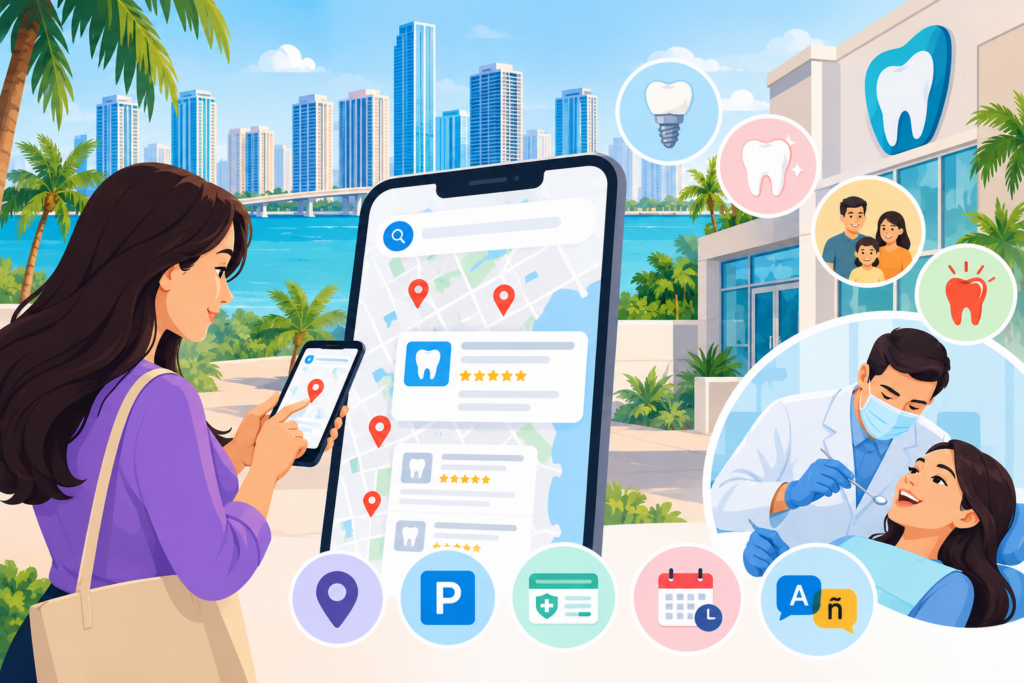
A patient in Hallandale Beach looking for a dentist is not looking citywide. They are searching within a couple of miles of the Village, Three Islands, Golden Isles, or wherever they live or work, and they are usually comparing two or three practices before they ever call. If your website does not answer their insurance question, show recent reviews, and make booking an appointment obvious within the first screen, they move to the next tab without a second thought. That is the whole game here.
Strategic Web Designs builds dental practice websites and local search campaigns around that reality, with:

How Hallandale Beach Dental Practices buyers search
Most searches are short and local: “dentist Hallandale Beach,” “emergency dentist near me,” “dentist that takes [insurance plan].” A smaller but valuable group searches by procedure, like “Invisalign Hallandale Beach,” “dental implants near Aventura,” or “teeth whitening Hallandale.” Both groups check the map pack first, then click through to two or three websites before picking up the phone. If your site is the third click and loads slowly or buries the information they need, the call goes to a competitor instead.
Insurance is the filter that eliminates practices before a call even happens. If a patient cannot tell within seconds whether you take their plan, they assume you do not and they call someone else. We build pages that name specific plans and PPO networks directly, because a vague “we accept most insurances” line does not survive that first scan. The same logic applies to new-patient specials, sedation options, and whether you see children — patients want yes-or-no answers, not a reason to keep searching.
Hallandale Beach also has a mixed population of year-round residents, seasonal condo owners along the beach corridor, and workers commuting in from Aventura, Hollywood, and the rest of Broward’s coastal strip. That mix means search volume is not flat across the year: snowbird season brings a wave of patients looking for a new local dentist, while summer often shifts toward families and emergency visits. A practice that only markets during slow months, or runs the same campaign year-round, is marketing at the wrong time for a meaningful share of its own neighborhood.
- Local, procedure, and insurance-specific searches each need their own landing content
- Seasonal population shifts change both search volume and patient intent
- Commuters from neighboring cities often search by proximity, not just by city name
We are a South Florida agency, so this is not a market we are learning from a dashboard. We build the site structure, the content, and the ad targeting around how people here actually search, not around a generic dental template reused from another state.
The competition here
Hallandale Beach is a small city squeezed between Aventura and Hollywood, and dental competition does not stop at the city line. A patient near Gulfstream Park sees practices in Hallandale Beach, Hollywood, and Aventura all in the same map pack search, which means the real competitive set is larger than the population numbers suggest. The same is true for patients near the Golden Isles or along Hallandale Beach Boulevard, who are just as likely to be shown a practice three or four miles away as one in their own zip code.
Within roughly two miles of most residential pockets in this city, there are typically several general dentists plus specialty practices for orthodontics, implants, and cosmetic work. Some have invested in SEO and run ads. Many have not touched their website in years and rely on walk-in traffic, referrals, or insurance network listings to keep the chairs filled. That split is actually useful: it means the opportunity is not to outspend anyone, it is to be the practice that actually answers the questions patients are typing into Google before they ever pick up the phone.
In our experience, the map pack (the three listings with the pins) wins more clicks than the organic results for “near me” dental searches in markets this size, while procedure-specific searches like “veneers,” “dental implants,” or “emergency dentist” lean more heavily on organic listings and the content sitting behind them. A credible plan has to work both angles at once:
- A Google Business Profile that is fully built out, regularly posted to, and stacked with recent reviews
- Service pages written for the actual procedures patients search, not just a generic “services” list
- A site fast and clear enough that mobile visitors from South Beach to Aventura actually book
We will not tell you this market is easy to dominate. It is not. Snowbird season alone brings a surge of new-patient searches that reward whichever practice already ranks when the traffic shows up. But it is winnable for a practice that treats its website and Google Business Profile as actual infrastructure, maintained month over month, instead of a brochure that was built once and forgotten.

What we build for Dental Practices in this market
Reviews decide dental decisions in coastal South Florida cities more than almost any other factor, because patients here are often transplants or seasonal residents with no existing referral network. A practice with 15 recent reviews and a practice with 150 look like two different businesses to someone who just moved from out of state. We build review generation into the patient workflow, not as an afterthought after the visit, and we respond to the pattern of what reviews say, not just the star count.
We also treat your Google Business Profile as a primary landing page, because for map pack searches, it often gets viewed before your website does. Photos, services listed, Q&A, and posting cadence all affect whether you show up in that three-pack at all.
On the website side, we build a separate page for each procedure you want new patients for: implants, Invisalign, cosmetic, emergency, pediatric, sedation. One general “services” page cannot rank for all of those terms at once, because Google wants a page that matches the specific intent of each search. A patient searching “same day emergency dentist Hallandale Beach” needs to land on a page built for that exact phrase, with your hours and a clear next step, not your homepage.
Insurance pages matter as much as procedure pages. We list the plans and networks you accept by name, because that single piece of content removes the biggest reason a patient bounces to a competitor.
For Google Ads, we run campaigns tied to call tracking, so you see which keyword, which ad, and which landing page produced each phone call, not just a click count that does not tell you anything about whether it became a patient.
Local SEO
Improve relevant website content, location signals, internal links, and service information to support local search visibility.
Google Business Profile
Review profile accuracy, categories, services, contact details, and other eligible information. Changes should follow Google's Business Profile guidelines.
Treatment pages
Build or improve pages for services such as general dentistry, cosmetic treatments, implants, or emergency appointments when those services are offered.
Paid search campaigns
Target relevant searches, refine location settings, and review search terms to reduce spend on enquiries that do not match the practice.
Conversion tracking
Measure available actions such as appointment-form submissions, calls, and clicks on booking links.
Website improvements
Make service information, insurance details, contact options, and booking steps easier to find on desktop and mobile.
What we measure
We report on what you can act on: calls tracked back to the specific keyword and campaign that produced them, map pack position for your core search terms, organic rankings for procedure and insurance pages, and review volume and rating trend over time. We do not report impressions and call it a win. An impression is not a patient.
Multi-touchpoint attribution matters here because a patient might see a Google ad in January, read reviews in February, and call in March once they decide it is time. Judging a campaign on last-click data alone hides most of what actually influenced that decision, so we track the full path where we can.
You get access to this reporting directly. We do not hand you a PDF once a quarter and ask you to trust it.

What it costs
Dental marketing costs in Hallandale Beach depend on how many procedures you compete for, whether paid ads run alongside SEO, and how crowded your zip code is. A single-location general practice targeting a few core services costs less than a multi-location group chasing implants and cosmetic cases across several cities.
We give you a real number once we know your current site, target procedures, and service area — not a blind quote. And we won’t lock you into a contract term before we’ve actually looked at what you’re starting from.
- Organic search visibility and relevant website visits.
- Google Business Profile interactions and available performance data.
- Paid campaign clicks, search terms, and advertising costs.
- Tracked calls, appointment-form submissions, and booking actions.
- Enquiry quality, where the practice can reliably share and categorize that information.
- Changes made, issues identified, and recommended next steps.
Get an audit
If you want a specific read on where your practice stands against the two or three competitors a patient actually compares you to before booking, request an audit from Strategic Web Designs.

Seasonality and the property-manager patient
Hallandale Beach has a seasonal rhythm tied to its condo towers, short-term rentals, and the snowbird population that fills up from late fall through spring. Dental demand follows that pattern too: emergency and cosmetic searches often climb when seasonal residents arrive and want work done before heading back north.
We also see a specific buyer type in this city that general dental marketing ignores: the property manager or hospitality employee booking care for themselves between shifts, often with limited time and a strong preference for same-day or early-morning appointments. Content and ad scheduling that accounts for that calendar, rather than running flat all year, is part of a realistic plan here.
FAQ's
These are the 5 questions Hallandale Beach homeowners ask us most about dental practice marketing, answered plainly so you know what to expect before any work starts. If yours isn't covered here, get in touch and we'll walk you through it.
How is marketing a dental practice in Hallandale Beach different from a general dental marketing package?
A generic package treats every city the same. Hallandale Beach patients compare practices within a tight radius, check insurance before calling, and weigh reviews heavily because many are transplants without a local referral network. The strategy has to reflect that, not a template built for a different kind of market.
Does the map pack or organic search matter more for a dental practice here?
In our experience, the three-listing map pack tends to win most of the clicks on "near me" and emergency-style searches, while procedure searches like implants or veneers lean more on organic results and the content behind them. A realistic plan works on both.
How much does dental marketing cost in Hallandale Beach?
It depends on how many procedures you are targeting, whether paid ads run alongside SEO, and how competitive your specific area is. We quote after reviewing your current site and goals rather than giving a number blind.
Can you guarantee a ranking or a number of new patients?
No. No agency can honestly guarantee a ranking position, a traffic number, or a patient count, and we will not promise one. We can tell you what the work involves and what typically moves the needle, and we report real numbers so you can judge it yourself.
We manage multiple practice locations. Can you handle that?
Yes. Multi-location dental groups need separate local pages per city, coordinated review management across locations, and reporting broken out by office. That is a different build than a single-practice site and we structure it accordingly.
Working across locations
If you manage more than one practice location, or you are a regional group with a Hallandale Beach office among others, the marketing problem changes. You need consistent review and reputation management across every location, separate local pages for each city so one office is not cannibalizing search visibility from another, and reporting that breaks out performance by location instead of lumping it together. We build that structure from the start rather than bolting it on later.