
- Home
- Services
- Portfolio
- About
- Service AreasFort Lauderdale, FL
- Web Design
- Redesign
- WordPress
- Ecommerce
- Landing Pages
- SEO Services
- Local SEO
- GBP
- Google Ads
- PPC
- Digital Marketing
- Internet Marketing
- Advertising
- Tracking
- Dental Marketing
- Medical Marketing
- HVAC Marketing
- Roofing Marketing
- Pest Control Marketing
- Home Services Marketing
- Plumbing Marketing
- Electrical Marketing
- Landscaping Marketing
- Remodeling Marketing
Pembroke Pines, FL- Web Design
- Redesign
- WordPress
- Ecommerce
- Landing Pages
- SEO Services
- Local SEO
- GBP
- Google Ads
- PPC
- Digital Marketing
- Internet Marketing
- Advertising
- Tracking
- Dental Marketing
- Medical Marketing
- HVAC Marketing
- Roofing Marketing
- Pest Control Marketing
- Home Services Marketing
- Plumbing Marketing
- Electrical Marketing
- Landscaping Marketing
- Remodeling Marketing
Hialeah, FL- Web Design
- Redesign
- WordPress
- Ecommerce
- Landing Pages
- SEO Services
- Local SEO
- GBP
- Google Ads
- PPC
- Digital Marketing
- Internet Marketing
- Advertising
- Tracking
- Dental Marketing
- Medical Marketing
- HVAC Marketing
- Roofing Marketing
- Pest Control Marketing
- Home Services Marketing
- Plumbing Marketing
- Electrical Marketing
- Landscaping Marketing
- Remodeling Marketing
Hollywood, FL- Web Design
- Redesign
- WordPress
- Ecommerce
- Landing Pages
- SEO Services
- Local SEO
- GBP
- Google Ads
- PPC
- Digital Marketing
- Internet Marketing
- Advertising
- Tracking
- Dental Marketing
- Medical Marketing
- HVAC Marketing
- Roofing Marketing
- Pest Control Marketing
- Home Services Marketing
- Plumbing Marketing
- Electrical Marketing
- Landscaping Marketing
- Remodeling Marketing
Miramar, FL- Web Design
- Redesign
- WordPress
- Ecommerce
- Landing Pages
- SEO Services
- Local SEO
- GBP
- Google Ads
- PPC
- Digital Marketing
- Internet Marketing
- Advertising
- Tracking
- Dental Marketing
- Medical Marketing
- HVAC Marketing
- Roofing Marketing
- Pest Control Marketing
- Home Services Marketing
- Plumbing Marketing
- Electrical Marketing
- Landscaping Marketing
- Remodeling Marketing
Coral Springs, FL- Web Design
- Redesign
- WordPress
- Ecommerce
- Landing Pages
- SEO Services
- Local SEO
- GBP
- Google Ads
- PPC
- Digital Marketing
- Internet Marketing
- Advertising
- Tracking
- Dental Marketing
- Medical Marketing
- HVAC Marketing
- Roofing Marketing
- Pest Control Marketing
- Home Services Marketing
- Plumbing Marketing
- Electrical Marketing
- Landscaping Marketing
- Remodeling Marketing
Pompano Beach, FL- Web Design
- Redesign
- WordPress
- Ecommerce
- Landing Pages
- SEO Services
- Local SEO
- GBP
- Google Ads
- PPC
- Digital Marketing
- Internet Marketing
- Advertising
- Tracking
- Dental Marketing
- Medical Marketing
- HVAC Marketing
- Roofing Marketing
- Pest Control Marketing
- Home Services Marketing
- Plumbing Marketing
- Electrical Marketing
- Landscaping Marketing
- Remodeling Marketing
Davie, FL- Web Design
- Redesign
- WordPress
- Ecommerce
- Landing Pages
- SEO Services
- Local SEO
- GBP
- Google Ads
- PPC
- Digital Marketing
- Internet Marketing
- Advertising
- Tracking
- Dental Marketing
- Medical Marketing
- HVAC Marketing
- Roofing Marketing
- Pest Control Marketing
- Home Services Marketing
- Plumbing Marketing
- Electrical Marketing
- Landscaping Marketing
- Remodeling Marketing
Sunrise, FL- Web Design
- Redesign
- WordPress
- Ecommerce
- Landing Pages
- SEO Services
- Local SEO
- GBP
- Google Ads
- PPC
- Digital Marketing
- Internet Marketing
- Advertising
- Tracking
- Dental Marketing
- Medical Marketing
- HVAC Marketing
- Roofing Marketing
- Pest Control Marketing
- Home Services Marketing
- Plumbing Marketing
- Electrical Marketing
- Landscaping Marketing
- Remodeling Marketing
Plantation, FL- Web Design
- Redesign
- WordPress
- Ecommerce
- Landing Pages
- SEO Services
- Local SEO
- GBP
- Google Ads
- PPC
- Digital Marketing
- Internet Marketing
- Advertising
- Tracking
- Dental Marketing
- Medical Marketing
- HVAC Marketing
- Roofing Marketing
- Pest Control Marketing
- Home Services Marketing
- Plumbing Marketing
- Electrical Marketing
- Landscaping Marketing
- Remodeling Marketing
Deerfield Beach, FL- Web Design
- Redesign
- WordPress
- Ecommerce
- Landing Pages
- SEO Services
- Local SEO
- GBP
- Google Ads
- PPC
- Digital Marketing
- Internet Marketing
- Advertising
- Tracking
- Dental Marketing
- Medical Marketing
- HVAC Marketing
- Roofing Marketing
- Pest Control Marketing
- Home Services Marketing
- Plumbing Marketing
- Electrical Marketing
- Landscaping Marketing
- Remodeling Marketing
Miami Gardens, FL- Web Design
- Redesign
- WordPress
- Ecommerce
- Landing Pages
- SEO Services
- Local SEO
- GBP
- Google Ads
- PPC
- Digital Marketing
- Internet Marketing
- Advertising
- Tracking
- Dental Marketing
- Medical Marketing
- HVAC Marketing
- Roofing Marketing
- Pest Control Marketing
- Home Services Marketing
- Plumbing Marketing
- Electrical Marketing
- Landscaping Marketing
- Remodeling Marketing
Lauderhill, FL- Web Design
- Redesign
- WordPress
- Ecommerce
- Landing Pages
- SEO Services
- Local SEO
- GBP
- Google Ads
- PPC
- Digital Marketing
- Internet Marketing
- Advertising
- Tracking
- Dental Marketing
- Medical Marketing
- HVAC Marketing
- Roofing Marketing
- Pest Control Marketing
- Home Services Marketing
- Plumbing Marketing
- Electrical Marketing
- Landscaping Marketing
- Remodeling Marketing
West Palm Beach, FL- Web Design
- Redesign
- WordPress
- Ecommerce
- Landing Pages
- SEO Services
- Local SEO
- GBP
- Google Ads
- PPC
- Digital Marketing
- Internet Marketing
- Advertising
- Tracking
- Dental Marketing
- Medical Marketing
- HVAC Marketing
- Roofing Marketing
- Pest Control Marketing
- Home Services Marketing
- Plumbing Marketing
- Electrical Marketing
- Landscaping Marketing
- Remodeling Marketing
Tamarac, FL- Web Design
- Redesign
- WordPress
- Ecommerce
- Landing Pages
- SEO Services
- Local SEO
- GBP
- Google Ads
- PPC
- Digital Marketing
- Internet Marketing
- Advertising
- Tracking
- Dental Marketing
- Medical Marketing
- HVAC Marketing
- Roofing Marketing
- Pest Control Marketing
- Home Services Marketing
- Plumbing Marketing
- Electrical Marketing
- Landscaping Marketing
- Remodeling Marketing
Weston, FL- Web Design
- Redesign
- WordPress
- Ecommerce
- Landing Pages
- SEO Services
- Local SEO
- GBP
- Google Ads
- PPC
- Digital Marketing
- Internet Marketing
- Advertising
- Tracking
- Dental Marketing
- Medical Marketing
- HVAC Marketing
- Roofing Marketing
- Pest Control Marketing
- Home Services Marketing
- Plumbing Marketing
- Electrical Marketing
- Landscaping Marketing
- Remodeling Marketing
Boca Raton, FLMargate, FLCoconut Creek, FLMiami Beach, FLHomestead, FLKendall, FLDoral, FLBoynton Beach, FLThe Hammocks, FLNorth Lauderdale, FLOakland Park, FLDelray Beach, FLNorth Miami, FLHallandale Beach, FLFontainebleau, FLKendale Lakes, FLWellington, FLJupiter, FLTamiami, FLPalm Beach Gardens, FLLauderdale Lakes, FLCooper City, FLCountry Club, FLParkland, FLCoral Gables, FLDania Beach, FLCutler Bay, FLNorth Miami Beach, FLGreenacres, FLLake Worth Beach, FLPrinceton, FLRoyal Palm Beach, FLSouth Miami Heights, FLRichmond West, FLRiviera Beach, FLWest Little River, FLGolden Glades, FLAventura, FLMiami Lakes, FLWestchester, FLLeisure City, FLCoral Terrace, FLPalm Springs, FLPalmetto Bay, FLHialeah Gardens, FLSunny Isles Beach, FLIves Estates, FLWest Park, FLSweetwater, FLPinecrest, FLSunset, FLPinewood, FLWilton Manors, FLOpa-locka, FLLighthouse Point, FLBelle Glade, FLNaranja, FLPalmetto Estates, FLBrownsville, FLKey Biscayne, FLOlympia Heights, FLMiami Springs, FLFlorida City, FLSouth Miami, FLThree Lakes, FLGladeview, FLNorth Palm Beach, FLMiami Shores, FLSouthwest Ranches, FLKings Point, FLLauderdale-by-the-Sea, FLHillsboro Beach, FLSea Ranch Lakes, FLLazy Lake, FL - Blog
- Contact
Marketing for Dental Practices in Lauderdale Lakes, Florida
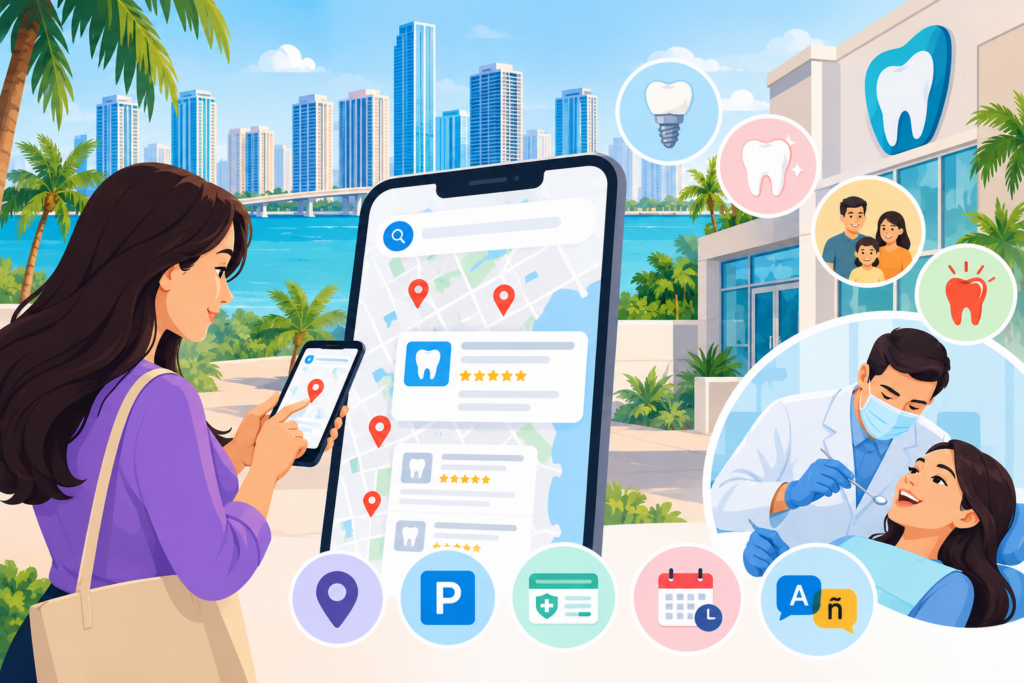
A patient in Lauderdale Lakes looking for a dentist does not search once. They check a practice on Google, open two more in new tabs, and compare office hours, insurance accepted, and reviews before they call anyone. If your site loads slowly on a phone, or does not say plainly which plans you take, you are out of the running before the phone rings.
We build and run marketing for dental practices in Lauderdale Lakes and across Broward County: the website, the local search presence tied to your actual office location, and paid campaigns aimed at high-value services like implants and cosmetic work, with call tracking that shows which keyword, ad, or listing actually produced the booked appointment, not just a click.

How Lauderdale Lakes Dental Practices buyers search
Most of the searches that matter here happen on a phone, often on a lunch break or after a shift. The phrasing is practical: “dentist near me open today,” “dentist that takes [insurance plan],” “emergency tooth pain Lauderdale Lakes.” Few people type a practice name first. They type a need and a location, and they let Google sort out who shows up.
Insurance comes up early in that search, not late. A lot of dental marketing treats insurance as a page buried three clicks deep, something you explain once someone calls. That does not match how people in this city actually shop. They are filtering by plan before they filter by anything else, because a mismatch means a wasted trip or a surprise bill. If your accepted-plans list is not visible and current, you lose people who would have booked with you, not because of price, but because they could not confirm the fit fast enough to bother calling.
Price itself is a live objection here too, more than in wealthier zip codes nearby. Lauderdale Lakes is a dense, working, value-conscious market: trades, auto shops, food service, independent retail. People compare cost before they compare chairside manner. A page that dodges cost entirely and says “call for pricing” reads as evasive to this buyer. It does not need exact fees publicly listed everywhere, but it needs to acknowledge payment plans, financing, and what a typical new-patient visit covers, instead of making someone call just to find out if they can afford to call back.
Mobile speed is the other piece that gets underweighted. A slow site is a bigger loss here than in almost any other part of the tri-county, because so much of this search happens on a phone with a shaky connection, in a parking lot, between errands. A three-second load delay is not a minor inconvenience. It is a closed tab and a call to the next practice on the list.
The competition here
Lauderdale Lakes sits dentist to dentist with Lauderhill, Sunrise, and Plantation, so a patient’s real choice set is not just practices inside city limits. It is whatever shows up within a two-to-three mile radius on their phone, which usually means three to five practices with genuinely comparable distance and hours. That is the real competitive set: not every dentist in Broward County, just the handful close enough to matter for a same-week appointment. Knowing that radius, and auditing exactly who sits inside it, is the first piece of homework most practices skip before they ever touch their website.
In a market this dense, the Google Business Profile map pack tends to carry more of the early-stage search than the organic listings below it, especially for “near me” and “open now” phrasing. That does not mean your website does not matter. It means the map pack is often the first filter, and your website is what decides the call once someone has narrowed it to two or three names. Winning map pack visibility without a site that closes the loop just moves the leak downstream, and it also means review volume, review recency, and category selection inside the profile carry more weight here than in a less saturated suburb.
We are not going to tell you this market is easy to win or that three dentists on the same strip can all rank first. They cannot. What we will say honestly: most practices here have not built separate, specific pages for each thing they want to be found for, insurance types, specific procedures, emergency visits, and most have not fixed basic mobile speed problems. That gap shows up in small, fixable ways:
- No dedicated page for high-value searches like “emergency dentist” or specific insurance plans accepted
- Mobile load times slow enough that visitors bail before the page finishes rendering
- Thin or outdated Google Business Profiles missing current photos, hours, and procedure categories
That gap is where the opening is, not in outranking everyone on every term at once, but in being the one practice nearby that has actually closed these gaps while the others leave them open.

What we build for Dental Practices in this market
We start with the website, because it is the piece that has to hold up once a patient has already found you. For a Lauderdale Lakes dental practice that typically means: a fast, mobile-first build, a clear and current insurance page, a visible new-patient and financing section, and separate pages for the procedures you actually want more of, instead of one general “services” page trying to rank for all of them.
Local search work follows the same logic. We treat your Google Business Profile as a live asset: categories, hours, photos, and the attributes patients filter by, kept accurate and consistent with what is on your site, because a mismatch between the two is one of the more common reasons a listing underperforms. For a market where the map pack carries this much early-stage search, that consistency is not a detail, it is most of the job.
Where it makes sense, we run paid search aimed at high-intent phrases, new patient specials, specific procedures, emergency availability, rather than broad brand terms that cost more and convert less in a market this price-sensitive. Every call from every campaign is tracked back to the keyword and the channel that produced it, so you can see which spend is actually producing booked appointments and which is just producing clicks.
Local SEO
Improve relevant website content, location signals, internal links, and service information to support local search visibility.
Google Business Profile
Review profile accuracy, categories, services, contact details, and other eligible information. Changes should follow Google's Business Profile guidelines.
Treatment pages
Build or improve pages for services such as general dentistry, cosmetic treatments, implants, or emergency appointments when those services are offered.
Paid search campaigns
Target relevant searches, refine location settings, and review search terms to reduce spend on enquiries that do not match the practice.
Conversion tracking
Measure available actions such as appointment-form submissions, calls, and clicks on booking links.
Website improvements
Make service information, insurance details, contact options, and booking steps easier to find on desktop and mobile.
What we measure
We report on calls, form submissions, and new-patient booking requests, tied back to the specific page, keyword, or ad that produced them. That is call tracking and multi-touchpoint attribution, not a vanity traffic number. If a campaign is not producing calls that convert to booked visits, we say so and change it, rather than pointing at a rise in sessions as if that paid your staff.
We are not going to promise a ranking position or a patient count. Anyone who promises that number before seeing your current site and your real competitors is guessing. What we can tell you is what we are tracking and why, and show you the data as it comes in.

What it costs
Cost depends on what your practice needs now: a new website, ongoing local search work, paid ads, or some combination. A single-location practice correcting a slow site and a thin Google Business Profile needs a different scope than one trying to compete for procedure-specific terms across three cities.
We would rather quote you after we have looked at your current site and your actual competitors in Lauderdale Lakes than hand you a number that has nothing to do with your situation. Ask us for that during your audit call.
- Organic search visibility and relevant website visits.
- Google Business Profile interactions and available performance data.
- Paid campaign clicks, search terms, and advertising costs.
- Tracked calls, appointment-form submissions, and booking actions.
- Enquiry quality, where the practice can reliably share and categorize that information.
- Changes made, issues identified, and recommended next steps.
Get an audit
We will look at your current site speed on mobile, your Google Business Profile, review volume and response pattern, and the three or four practices patients are likely comparing you against in Lauderdale Lakes. The audit covers keyword visibility for searches like "dentist near me" and "emergency dentist," how your booking process actually works for a new patient, and where your listings are thin or inconsistent across directories.

FAQ's
These are the 5 questions Lauderdale Lakes homeowners ask us most about dental practice marketing, answered plainly so you know what to expect before any work starts. If yours isn't covered here, get in touch and we'll walk you through it.
Does my practice need a separate page for every procedure?
If you want to be found for that procedure, generally yes. One general services page cannot rank well for implants, whitening, and emergency extractions at the same time, because Google matches a search to the page that answers it most specifically, not the page that mentions it in passing.
Should I list my prices on my website?
You do not need a public fee schedule, but you should address cost directly: financing options, what a new-patient visit typically includes, and which insurance plans you accept. In a value-conscious market, avoiding the topic reads as evasive and costs you calls.
Is the Google Business Profile or the website more important here?
Both, for different parts of the decision. The map pack tends to get the first look for "near me" searches. The website is what a patient checks before they call, once they have narrowed it down to two or three practices.
How fast does my site need to load?
Fast enough that someone on a phone in a parking lot does not give up and tap the next listing. Mobile speed matters more here than in most of the tri-county because so much of the search happens on a phone with an unreliable connection.
Can you guarantee more new patients?
No. We can tell you what we are building, what we are tracking, and show you the call and booking data as it comes in. Any agency guaranteeing a specific patient count or ranking position before reviewing your site is guessing.