
- Home
- Services
- Portfolio
- About
- Service AreasFort Lauderdale, FL
- Web Design
- Redesign
- WordPress
- Ecommerce
- Landing Pages
- SEO Services
- Local SEO
- GBP
- Google Ads
- PPC
- Digital Marketing
- Internet Marketing
- Advertising
- Tracking
- Dental Marketing
- Medical Marketing
- HVAC Marketing
- Roofing Marketing
- Pest Control Marketing
- Home Services Marketing
- Plumbing Marketing
- Electrical Marketing
- Landscaping Marketing
- Remodeling Marketing
Pembroke Pines, FL- Web Design
- Redesign
- WordPress
- Ecommerce
- Landing Pages
- SEO Services
- Local SEO
- GBP
- Google Ads
- PPC
- Digital Marketing
- Internet Marketing
- Advertising
- Tracking
- Dental Marketing
- Medical Marketing
- HVAC Marketing
- Roofing Marketing
- Pest Control Marketing
- Home Services Marketing
- Plumbing Marketing
- Electrical Marketing
- Landscaping Marketing
- Remodeling Marketing
Hialeah, FL- Web Design
- Redesign
- WordPress
- Ecommerce
- Landing Pages
- SEO Services
- Local SEO
- GBP
- Google Ads
- PPC
- Digital Marketing
- Internet Marketing
- Advertising
- Tracking
- Dental Marketing
- Medical Marketing
- HVAC Marketing
- Roofing Marketing
- Pest Control Marketing
- Home Services Marketing
- Plumbing Marketing
- Electrical Marketing
- Landscaping Marketing
- Remodeling Marketing
Hollywood, FL- Web Design
- Redesign
- WordPress
- Ecommerce
- Landing Pages
- SEO Services
- Local SEO
- GBP
- Google Ads
- PPC
- Digital Marketing
- Internet Marketing
- Advertising
- Tracking
- Dental Marketing
- Medical Marketing
- HVAC Marketing
- Roofing Marketing
- Pest Control Marketing
- Home Services Marketing
- Plumbing Marketing
- Electrical Marketing
- Landscaping Marketing
- Remodeling Marketing
Miramar, FL- Web Design
- Redesign
- WordPress
- Ecommerce
- Landing Pages
- SEO Services
- Local SEO
- GBP
- Google Ads
- PPC
- Digital Marketing
- Internet Marketing
- Advertising
- Tracking
- Dental Marketing
- Medical Marketing
- HVAC Marketing
- Roofing Marketing
- Pest Control Marketing
- Home Services Marketing
- Plumbing Marketing
- Electrical Marketing
- Landscaping Marketing
- Remodeling Marketing
Coral Springs, FL- Web Design
- Redesign
- WordPress
- Ecommerce
- Landing Pages
- SEO Services
- Local SEO
- GBP
- Google Ads
- PPC
- Digital Marketing
- Internet Marketing
- Advertising
- Tracking
- Dental Marketing
- Medical Marketing
- HVAC Marketing
- Roofing Marketing
- Pest Control Marketing
- Home Services Marketing
- Plumbing Marketing
- Electrical Marketing
- Landscaping Marketing
- Remodeling Marketing
Pompano Beach, FL- Web Design
- Redesign
- WordPress
- Ecommerce
- Landing Pages
- SEO Services
- Local SEO
- GBP
- Google Ads
- PPC
- Digital Marketing
- Internet Marketing
- Advertising
- Tracking
- Dental Marketing
- Medical Marketing
- HVAC Marketing
- Roofing Marketing
- Pest Control Marketing
- Home Services Marketing
- Plumbing Marketing
- Electrical Marketing
- Landscaping Marketing
- Remodeling Marketing
Davie, FL- Web Design
- Redesign
- WordPress
- Ecommerce
- Landing Pages
- SEO Services
- Local SEO
- GBP
- Google Ads
- PPC
- Digital Marketing
- Internet Marketing
- Advertising
- Tracking
- Dental Marketing
- Medical Marketing
- HVAC Marketing
- Roofing Marketing
- Pest Control Marketing
- Home Services Marketing
- Plumbing Marketing
- Electrical Marketing
- Landscaping Marketing
- Remodeling Marketing
Sunrise, FL- Web Design
- Redesign
- WordPress
- Ecommerce
- Landing Pages
- SEO Services
- Local SEO
- GBP
- Google Ads
- PPC
- Digital Marketing
- Internet Marketing
- Advertising
- Tracking
- Dental Marketing
- Medical Marketing
- HVAC Marketing
- Roofing Marketing
- Pest Control Marketing
- Home Services Marketing
- Plumbing Marketing
- Electrical Marketing
- Landscaping Marketing
- Remodeling Marketing
Plantation, FL- Web Design
- Redesign
- WordPress
- Ecommerce
- Landing Pages
- SEO Services
- Local SEO
- GBP
- Google Ads
- PPC
- Digital Marketing
- Internet Marketing
- Advertising
- Tracking
- Dental Marketing
- Medical Marketing
- HVAC Marketing
- Roofing Marketing
- Pest Control Marketing
- Home Services Marketing
- Plumbing Marketing
- Electrical Marketing
- Landscaping Marketing
- Remodeling Marketing
Deerfield Beach, FL- Web Design
- Redesign
- WordPress
- Ecommerce
- Landing Pages
- SEO Services
- Local SEO
- GBP
- Google Ads
- PPC
- Digital Marketing
- Internet Marketing
- Advertising
- Tracking
- Dental Marketing
- Medical Marketing
- HVAC Marketing
- Roofing Marketing
- Pest Control Marketing
- Home Services Marketing
- Plumbing Marketing
- Electrical Marketing
- Landscaping Marketing
- Remodeling Marketing
Miami Gardens, FL- Web Design
- Redesign
- WordPress
- Ecommerce
- Landing Pages
- SEO Services
- Local SEO
- GBP
- Google Ads
- PPC
- Digital Marketing
- Internet Marketing
- Advertising
- Tracking
- Dental Marketing
- Medical Marketing
- HVAC Marketing
- Roofing Marketing
- Pest Control Marketing
- Home Services Marketing
- Plumbing Marketing
- Electrical Marketing
- Landscaping Marketing
- Remodeling Marketing
Lauderhill, FL- Web Design
- Redesign
- WordPress
- Ecommerce
- Landing Pages
- SEO Services
- Local SEO
- GBP
- Google Ads
- PPC
- Digital Marketing
- Internet Marketing
- Advertising
- Tracking
- Dental Marketing
- Medical Marketing
- HVAC Marketing
- Roofing Marketing
- Pest Control Marketing
- Home Services Marketing
- Plumbing Marketing
- Electrical Marketing
- Landscaping Marketing
- Remodeling Marketing
West Palm Beach, FL- Web Design
- Redesign
- WordPress
- Ecommerce
- Landing Pages
- SEO Services
- Local SEO
- GBP
- Google Ads
- PPC
- Digital Marketing
- Internet Marketing
- Advertising
- Tracking
- Dental Marketing
- Medical Marketing
- HVAC Marketing
- Roofing Marketing
- Pest Control Marketing
- Home Services Marketing
- Plumbing Marketing
- Electrical Marketing
- Landscaping Marketing
- Remodeling Marketing
Tamarac, FL- Web Design
- Redesign
- WordPress
- Ecommerce
- Landing Pages
- SEO Services
- Local SEO
- GBP
- Google Ads
- PPC
- Digital Marketing
- Internet Marketing
- Advertising
- Tracking
- Dental Marketing
- Medical Marketing
- HVAC Marketing
- Roofing Marketing
- Pest Control Marketing
- Home Services Marketing
- Plumbing Marketing
- Electrical Marketing
- Landscaping Marketing
- Remodeling Marketing
Weston, FL- Web Design
- Redesign
- WordPress
- Ecommerce
- Landing Pages
- SEO Services
- Local SEO
- GBP
- Google Ads
- PPC
- Digital Marketing
- Internet Marketing
- Advertising
- Tracking
- Dental Marketing
- Medical Marketing
- HVAC Marketing
- Roofing Marketing
- Pest Control Marketing
- Home Services Marketing
- Plumbing Marketing
- Electrical Marketing
- Landscaping Marketing
- Remodeling Marketing
Boca Raton, FLMargate, FLCoconut Creek, FLMiami Beach, FLHomestead, FLKendall, FLDoral, FLBoynton Beach, FLThe Hammocks, FLNorth Lauderdale, FLOakland Park, FLDelray Beach, FLNorth Miami, FLHallandale Beach, FLFontainebleau, FLKendale Lakes, FLWellington, FLJupiter, FLTamiami, FLPalm Beach Gardens, FLLauderdale Lakes, FLCooper City, FLCountry Club, FLParkland, FLCoral Gables, FLDania Beach, FLCutler Bay, FLNorth Miami Beach, FLGreenacres, FLLake Worth Beach, FLPrinceton, FLRoyal Palm Beach, FLSouth Miami Heights, FLRichmond West, FLRiviera Beach, FLWest Little River, FLGolden Glades, FLAventura, FLMiami Lakes, FLWestchester, FLLeisure City, FLCoral Terrace, FLPalm Springs, FLPalmetto Bay, FLHialeah Gardens, FLSunny Isles Beach, FLIves Estates, FLWest Park, FLSweetwater, FLPinecrest, FLSunset, FLPinewood, FLWilton Manors, FLOpa-locka, FLLighthouse Point, FLBelle Glade, FLNaranja, FLPalmetto Estates, FLBrownsville, FLKey Biscayne, FLOlympia Heights, FLMiami Springs, FLFlorida City, FLSouth Miami, FLThree Lakes, FLGladeview, FLNorth Palm Beach, FLMiami Shores, FLSouthwest Ranches, FLKings Point, FLLauderdale-by-the-Sea, FLHillsboro Beach, FLSea Ranch Lakes, FLLazy Lake, FL - Blog
- Contact
Marketing for Dental Practices in Weston, Florida
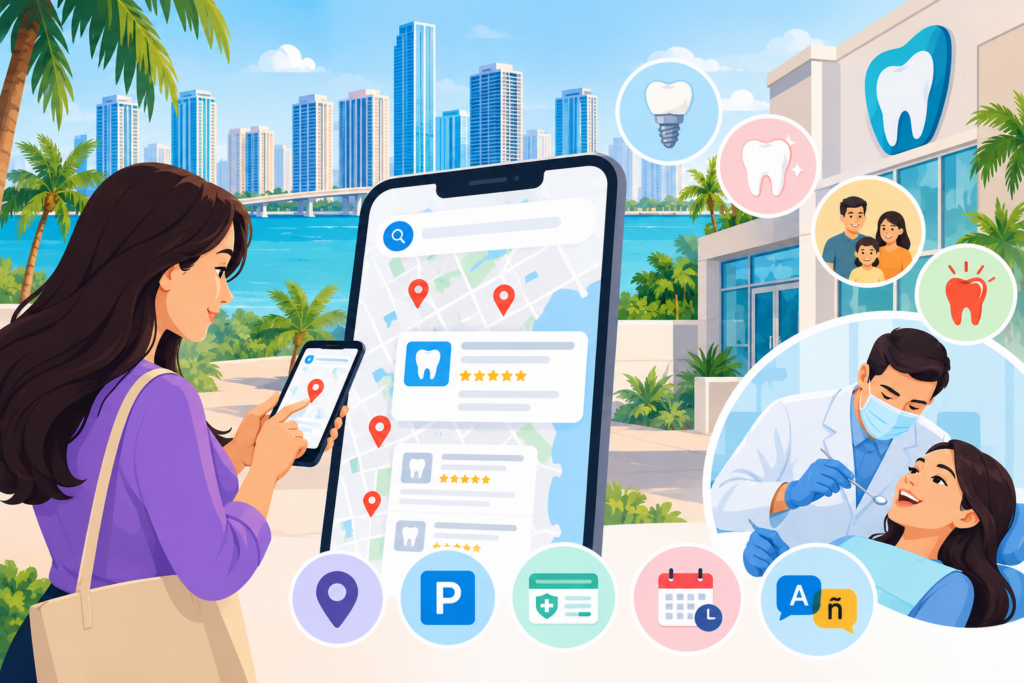
A patient in Weston looking for a dentist is not browsing. They are checking insurance, checking distance, and checking the next two or three practices on the map before they call anyone. That is the entire game here: show up in that short list, answer the insurance question before they ask it, and make the phone easy to find. We build Weston dental marketing around that sequence, not around generic visibility.

How Weston Dental Practices buyers search
Most dental searches in Weston happen on a phone, inside a car, between school pickup and a soccer practice at one of the fields off Bonaventure or Country Isles. The query is short: “dentist near me” or “dentist that takes [insurer] Weston.” Google answers that with the map pack first, three listings, before it ever shows a ranked organic result. If your Google Business Profile is not one of those three, your website quality barely matters for that search, no matter how good the photography or copy is.
Insurance is the filter that happens before anything else. Weston households skew toward employer PPO plans tied to the master-planned communities and corporate parks nearby, and a lot of them will not call a practice at all if the insurance page does not name their plan by name. We see this in call tracking constantly: a caller asks about a specific carrier in the first fifteen seconds, sometimes before they even say why they are calling. If that answer is not already on the page they landed on, you lose the call before your front desk even gets a chance to sell the visit, the exam, or the hygiene plan.
There is also a renewal pattern worth knowing. Weston has a high share of households that moved in within the last two decades as the city’s planned developments filled in, which means a steady wave of people establishing a new dentist for the first time locally rather than switching away from a bad experience elsewhere. That is a different pitch than competing for someone’s second opinion. It is closer to being the obvious, easy, well-reviewed first choice for a family that just needs a dentist close to home.
Second opinions and cosmetic work follow a slower, more researched path: a longer organic session, a look at before-and-after photos, maybe a read of a specific treatment page, perhaps comparing two or three practices across tabs before they ever pick up the phone. Both buyer types exist in Weston at the same time, searching the same week, and a single generic homepage cannot serve both well.
The competition here
Weston is not an underserved dental market. Within a two-mile radius of most residential pockets, a patient can find multiple general practices, several pediatric and orthodontic offices, and at least one or two larger multi-doctor groups with marketing budgets built for scale. That is the honest read: this is a crowded field, and the map pack in particular is competitive because so many of these practices are well-reviewed and well-maintained profiles, not neglected ones. Ranking above them is not about having the most keywords stuffed into a website; it is about consistent, unglamorous profile maintenance over months, not a one-time setup and walk away.
What also shapes this market is that Weston’s commercial mix leans heavily toward service-area businesses rather than storefront retail. Home services companies, contractors, and professional offices that call on residents rather than wait for walk-in traffic dominate the directory landscape. Dental practices are one of the few genuine storefront categories here, which actually works in your favor on the map: a real suite address in a real medical plaza carries more trust signal in Google’s eyes than a service-area profile with a hidden address, provided the profile is complete, categorized correctly, and gets a steady flow of recent reviews. Practices that let their listing go stale for even a few months tend to slide behind newer entrants that are actively asking patients for feedback.
HOA-governed neighborhoods also mean word of mouth still carries weight through community Facebook groups and neighborhood apps, which is not something Google Ads or SEO touches directly. It does mean your online presence needs to hold up when someone searches your practice name after hearing it mentioned in one of those groups. A thin, outdated Google profile undercuts a recommendation you did not pay for.
In practice, standing out in Weston comes down to a short list of fundamentals most competitors only half-execute:
- Recent, varied patient reviews mentioning specific services and staff by name
- Accurate categories and attributes that match how families actually search, not just “dentist”
- Photos and hours kept current enough to survive a skeptical second look
- A website built to convert the referral traffic those neighborhood mentions generate

What we build for Dental Practices in this market
We start with the Google Business Profile because in a map-pack-driven market like Weston, it carries more weight per hour of work than almost anything else. That means correct categories, service area and hours accuracy, photos that actually show your Weston location and staff, and a review request process built into checkout so new patients leave feedback while the visit is still fresh.
On the website side, we build separate pages for the services that actually drive calls here: general and family dentistry, cosmetic work, implants, pediatric if you offer it, and an insurance page that names the specific PPO networks common in this area instead of a vague “we accept most insurance” line. One page per service, because a single page cannot rank for both “emergency dentist Weston” and “veneers Weston” at once, and the patient searching each term wants different proof on the page.
For practices running paid search, we build Google Ads campaigns around the exact-match insurance and procedure terms Weston patients type, with call tracking numbers that are unique to each campaign so you can see which keyword, not just which channel, produced the call.
Local SEO
Improve relevant website content, location signals, internal links, and service information to support local search visibility.
Google Business Profile
Review profile accuracy, categories, services, contact details, and other eligible information. Changes should follow Google's Business Profile guidelines.
Treatment pages
Build or improve pages for services such as general dentistry, cosmetic treatments, implants, or emergency appointments when those services are offered.
Paid search campaigns
Target relevant searches, refine location settings, and review search terms to reduce spend on enquiries that do not match the practice.
Conversion tracking
Measure available actions such as appointment-form submissions, calls, and clicks on booking links.
Website improvements
Make service information, insurance details, contact options, and booking steps easier to find on desktop and mobile.
What we measure
We track Google Business Profile calls, website calls, and form submissions separately, with call tracking numbers that stay attached to the source that generated them so a call from a Google Ads click is never counted as a call from your map listing. We track keyword-level ranking movement for the actual terms a Weston patient uses, including insurance-brand searches, not just your practice name. We track new-patient form conversion rate on the website itself, because a page that gets traffic but no submissions has a different problem than a page that gets no traffic at all. None of this is guesswork after the first reporting cycle. It is a log you can read.

What it costs
Dental marketing cost in Weston depends on how much of the competitive map pack and paid search landscape you're trying to hold, and we'll quote a range based on your current profile strength and ad budget rather than a flat number that ignores your starting point. A practice with a clean, review-rich profile and a decent site needs less rebuilding than one starting from a neglected listing and a five-year-old site.
- Organic search visibility and relevant website visits.
- Google Business Profile interactions and available performance data.
- Paid campaign clicks, search terms, and advertising costs.
- Tracked calls, appointment-form submissions, and booking actions.
- Enquiry quality, where the practice can reliably share and categorize that information.
- Changes made, issues identified, and recommended next steps.
Get an audit
If you want a plain-language read on where your Weston practice stands, we'll look at your Google Business Profile, your current rankings for the insurance and procedure terms patients actually search, and your website's conversion setup, from call tracking to appointment-request forms, and tell you what's working and what's costing you calls. We'll also check how you stack up against other practices competing for the same Weston patients nearby.

Questions
Weston dental practices weigh the same handful of questions before committing to marketing: how long before a call pays for the work, whether SEO or Google Ads matters more in a map-pack-heavy market like this one, and whether a smaller practice can compete against multi-doctor groups with bigger budgets. We answer these directly, without a sales pitch attached, because a practice that understands the mechanism makes a better decision than one that just trusts a promise.
Does Google Ads or SEO matter more for a dental practice in Weston?
Both play a role, but they solve different timing problems. Google Ads gets you into paid placement for insurance and procedure searches immediately, which matters in a market with this many established practices already ranking organically. SEO and Google Business Profile work build the free map-pack and organic position over time and keep paying off after you turn ad spend down. Most Weston practices we talk to need both running at once, at least at the start.
How long does it take to see new patient calls from this kind of work?
It depends on your starting point and we won't put a timeline on it that we can't stand behind. A Google Ads campaign can start generating calls almost as soon as it launches, assuming the targeting and landing page are set up correctly. Organic and map pack movement takes longer and depends heavily on how much competition already holds those positions in your specific zip codes.
Can a smaller, newer practice compete against multi-doctor groups in Weston?
Yes, but not by trying to outspend them everywhere at once. Smaller practices usually win by being specific: naming exact insurance plans, building out individual service pages the bigger groups haven't bothered with, and keeping the Google Business Profile more current with reviews and photos than a practice managed by a larger corporate marketing team.
Do you need a physical storefront address for this to work?
A real, verifiable practice address helps your Google Business Profile in a dental category specifically, since Google treats storefront medical offices differently than service-area businesses. You don't need anything beyond your actual practice location, properly verified and consistently listed across directories.
What does Strategic Web Designs actually report back on each month?
Call volume broken out by source, keyword ranking movement for the specific terms your Weston patients search, and website conversion numbers. You see where calls and form fills came from, not just a combined total.