
- Home
- Services
- Portfolio
- About
- Service AreasFort Lauderdale, FL
- Web Design
- Redesign
- WordPress
- Ecommerce
- Landing Pages
- SEO Services
- Local SEO
- GBP
- Google Ads
- PPC
- Digital Marketing
- Internet Marketing
- Advertising
- Tracking
- Dental Marketing
- Medical Marketing
- HVAC Marketing
- Roofing Marketing
- Pest Control Marketing
- Home Services Marketing
- Plumbing Marketing
- Electrical Marketing
- Landscaping Marketing
- Remodeling Marketing
Pembroke Pines, FL- Web Design
- Redesign
- WordPress
- Ecommerce
- Landing Pages
- SEO Services
- Local SEO
- GBP
- Google Ads
- PPC
- Digital Marketing
- Internet Marketing
- Advertising
- Tracking
- Dental Marketing
- Medical Marketing
- HVAC Marketing
- Roofing Marketing
- Pest Control Marketing
- Home Services Marketing
- Plumbing Marketing
- Electrical Marketing
- Landscaping Marketing
- Remodeling Marketing
Hialeah, FL- Web Design
- Redesign
- WordPress
- Ecommerce
- Landing Pages
- SEO Services
- Local SEO
- GBP
- Google Ads
- PPC
- Digital Marketing
- Internet Marketing
- Advertising
- Tracking
- Dental Marketing
- Medical Marketing
- HVAC Marketing
- Roofing Marketing
- Pest Control Marketing
- Home Services Marketing
- Plumbing Marketing
- Electrical Marketing
- Landscaping Marketing
- Remodeling Marketing
Hollywood, FL- Web Design
- Redesign
- WordPress
- Ecommerce
- Landing Pages
- SEO Services
- Local SEO
- GBP
- Google Ads
- PPC
- Digital Marketing
- Internet Marketing
- Advertising
- Tracking
- Dental Marketing
- Medical Marketing
- HVAC Marketing
- Roofing Marketing
- Pest Control Marketing
- Home Services Marketing
- Plumbing Marketing
- Electrical Marketing
- Landscaping Marketing
- Remodeling Marketing
Miramar, FL- Web Design
- Redesign
- WordPress
- Ecommerce
- Landing Pages
- SEO Services
- Local SEO
- GBP
- Google Ads
- PPC
- Digital Marketing
- Internet Marketing
- Advertising
- Tracking
- Dental Marketing
- Medical Marketing
- HVAC Marketing
- Roofing Marketing
- Pest Control Marketing
- Home Services Marketing
- Plumbing Marketing
- Electrical Marketing
- Landscaping Marketing
- Remodeling Marketing
Coral Springs, FL- Web Design
- Redesign
- WordPress
- Ecommerce
- Landing Pages
- SEO Services
- Local SEO
- GBP
- Google Ads
- PPC
- Digital Marketing
- Internet Marketing
- Advertising
- Tracking
- Dental Marketing
- Medical Marketing
- HVAC Marketing
- Roofing Marketing
- Pest Control Marketing
- Home Services Marketing
- Plumbing Marketing
- Electrical Marketing
- Landscaping Marketing
- Remodeling Marketing
Pompano Beach, FL- Web Design
- Redesign
- WordPress
- Ecommerce
- Landing Pages
- SEO Services
- Local SEO
- GBP
- Google Ads
- PPC
- Digital Marketing
- Internet Marketing
- Advertising
- Tracking
- Dental Marketing
- Medical Marketing
- HVAC Marketing
- Roofing Marketing
- Pest Control Marketing
- Home Services Marketing
- Plumbing Marketing
- Electrical Marketing
- Landscaping Marketing
- Remodeling Marketing
Davie, FL- Web Design
- Redesign
- WordPress
- Ecommerce
- Landing Pages
- SEO Services
- Local SEO
- GBP
- Google Ads
- PPC
- Digital Marketing
- Internet Marketing
- Advertising
- Tracking
- Dental Marketing
- Medical Marketing
- HVAC Marketing
- Roofing Marketing
- Pest Control Marketing
- Home Services Marketing
- Plumbing Marketing
- Electrical Marketing
- Landscaping Marketing
- Remodeling Marketing
Sunrise, FL- Web Design
- Redesign
- WordPress
- Ecommerce
- Landing Pages
- SEO Services
- Local SEO
- GBP
- Google Ads
- PPC
- Digital Marketing
- Internet Marketing
- Advertising
- Tracking
- Dental Marketing
- Medical Marketing
- HVAC Marketing
- Roofing Marketing
- Pest Control Marketing
- Home Services Marketing
- Plumbing Marketing
- Electrical Marketing
- Landscaping Marketing
- Remodeling Marketing
Plantation, FL- Web Design
- Redesign
- WordPress
- Ecommerce
- Landing Pages
- SEO Services
- Local SEO
- GBP
- Google Ads
- PPC
- Digital Marketing
- Internet Marketing
- Advertising
- Tracking
- Dental Marketing
- Medical Marketing
- HVAC Marketing
- Roofing Marketing
- Pest Control Marketing
- Home Services Marketing
- Plumbing Marketing
- Electrical Marketing
- Landscaping Marketing
- Remodeling Marketing
Deerfield Beach, FL- Web Design
- Redesign
- WordPress
- Ecommerce
- Landing Pages
- SEO Services
- Local SEO
- GBP
- Google Ads
- PPC
- Digital Marketing
- Internet Marketing
- Advertising
- Tracking
- Dental Marketing
- Medical Marketing
- HVAC Marketing
- Roofing Marketing
- Pest Control Marketing
- Home Services Marketing
- Plumbing Marketing
- Electrical Marketing
- Landscaping Marketing
- Remodeling Marketing
Miami Gardens, FL- Web Design
- Redesign
- WordPress
- Ecommerce
- Landing Pages
- SEO Services
- Local SEO
- GBP
- Google Ads
- PPC
- Digital Marketing
- Internet Marketing
- Advertising
- Tracking
- Dental Marketing
- Medical Marketing
- HVAC Marketing
- Roofing Marketing
- Pest Control Marketing
- Home Services Marketing
- Plumbing Marketing
- Electrical Marketing
- Landscaping Marketing
- Remodeling Marketing
Lauderhill, FL- Web Design
- Redesign
- WordPress
- Ecommerce
- Landing Pages
- SEO Services
- Local SEO
- GBP
- Google Ads
- PPC
- Digital Marketing
- Internet Marketing
- Advertising
- Tracking
- Dental Marketing
- Medical Marketing
- HVAC Marketing
- Roofing Marketing
- Pest Control Marketing
- Home Services Marketing
- Plumbing Marketing
- Electrical Marketing
- Landscaping Marketing
- Remodeling Marketing
West Palm Beach, FL- Web Design
- Redesign
- WordPress
- Ecommerce
- Landing Pages
- SEO Services
- Local SEO
- GBP
- Google Ads
- PPC
- Digital Marketing
- Internet Marketing
- Advertising
- Tracking
- Dental Marketing
- Medical Marketing
- HVAC Marketing
- Roofing Marketing
- Pest Control Marketing
- Home Services Marketing
- Plumbing Marketing
- Electrical Marketing
- Landscaping Marketing
- Remodeling Marketing
Tamarac, FL- Web Design
- Redesign
- WordPress
- Ecommerce
- Landing Pages
- SEO Services
- Local SEO
- GBP
- Google Ads
- PPC
- Digital Marketing
- Internet Marketing
- Advertising
- Tracking
- Dental Marketing
- Medical Marketing
- HVAC Marketing
- Roofing Marketing
- Pest Control Marketing
- Home Services Marketing
- Plumbing Marketing
- Electrical Marketing
- Landscaping Marketing
- Remodeling Marketing
Weston, FL- Web Design
- Redesign
- WordPress
- Ecommerce
- Landing Pages
- SEO Services
- Local SEO
- GBP
- Google Ads
- PPC
- Digital Marketing
- Internet Marketing
- Advertising
- Tracking
- Dental Marketing
- Medical Marketing
- HVAC Marketing
- Roofing Marketing
- Pest Control Marketing
- Home Services Marketing
- Plumbing Marketing
- Electrical Marketing
- Landscaping Marketing
- Remodeling Marketing
Boca Raton, FLMargate, FLCoconut Creek, FLMiami Beach, FLHomestead, FLKendall, FLDoral, FLBoynton Beach, FLThe Hammocks, FLNorth Lauderdale, FLOakland Park, FLDelray Beach, FLNorth Miami, FLHallandale Beach, FLFontainebleau, FLKendale Lakes, FLWellington, FLJupiter, FLTamiami, FLPalm Beach Gardens, FLLauderdale Lakes, FLCooper City, FLCountry Club, FLParkland, FLCoral Gables, FLDania Beach, FLCutler Bay, FLNorth Miami Beach, FLGreenacres, FLLake Worth Beach, FLPrinceton, FLRoyal Palm Beach, FLSouth Miami Heights, FLRichmond West, FLRiviera Beach, FLWest Little River, FLGolden Glades, FLAventura, FLMiami Lakes, FLWestchester, FLLeisure City, FLCoral Terrace, FLPalm Springs, FLPalmetto Bay, FLHialeah Gardens, FLSunny Isles Beach, FLIves Estates, FLWest Park, FLSweetwater, FLPinecrest, FLSunset, FLPinewood, FLWilton Manors, FLOpa-locka, FLLighthouse Point, FLBelle Glade, FLNaranja, FLPalmetto Estates, FLBrownsville, FLKey Biscayne, FLOlympia Heights, FLMiami Springs, FLFlorida City, FLSouth Miami, FLThree Lakes, FLGladeview, FLNorth Palm Beach, FLMiami Shores, FLSouthwest Ranches, FLKings Point, FLLauderdale-by-the-Sea, FLHillsboro Beach, FLSea Ranch Lakes, FLLazy Lake, FL - Blog
- Contact
Local SEO for Home Service Businesses
Most home service businesses have no shopfront. You have vans, a service area and a phone that has to ring. That changes how Google Ads have to be built.
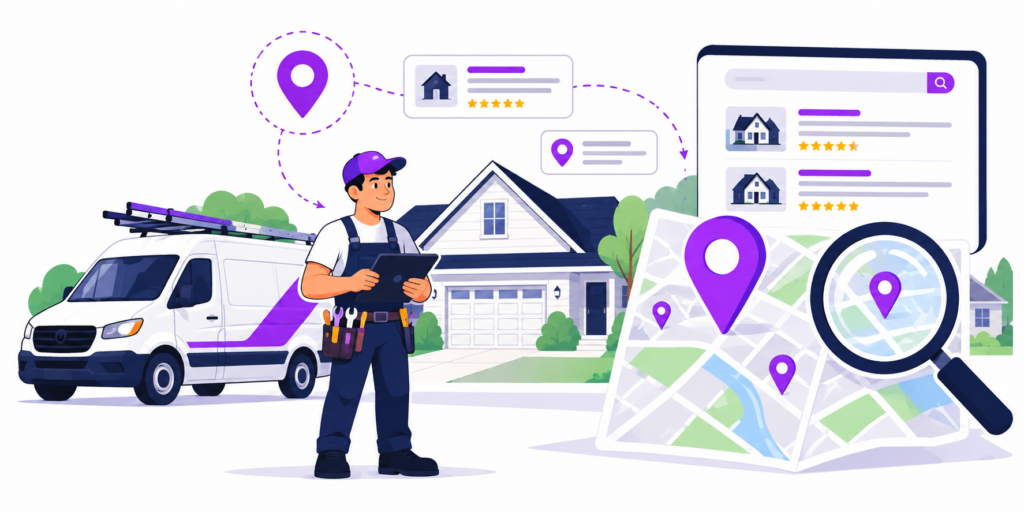
Why Home Service Businesses Need Google Ads Management Handled Differently
- Location settings decide who sees your ad. Google lets you target people physically in an area, people who show interest in an area, or both. For a plumber, the “interest” setting can show your ads to someone searching from another state who once looked up your city. Most accounts need presence-only targeting.
- The map pack works on proximity. Google weighs how close the searcher is to your business location. A storefront has a fixed point. A service-area business often hides its address, so you rank unevenly across your territory. Ads fill the gaps where the map does not reach.
- Most of the value arrives by phone. Many home service enquiries are calls, not form fills. An account measured on clicks or form submissions misses most of what it produces.

What we build
- Campaigns by service and by area. One campaign for drain cleaning, another for water heater replacement, each with its own budget, because an emergency repair and a planned install are different searches with different values.
- Location targeting drawn on your real territory. We use ZIP codes or drive-time areas, not a radius around an office.
- Negative keyword lists. “Plumber salary”, “how to become an electrician” and “DIY” searches cost money and never book a job. We exclude them.
- Call-focused ads. Call extensions and call-only formats where phone enquiries are the main route.
- Landing pages matched to the ad. An ad for “AC repair” lands on a page about AC repair in that area, not your homepage.
- Local Services Ads setup, where your trade and area are eligible. These charge per lead, not per click, and sit above standard search ads.
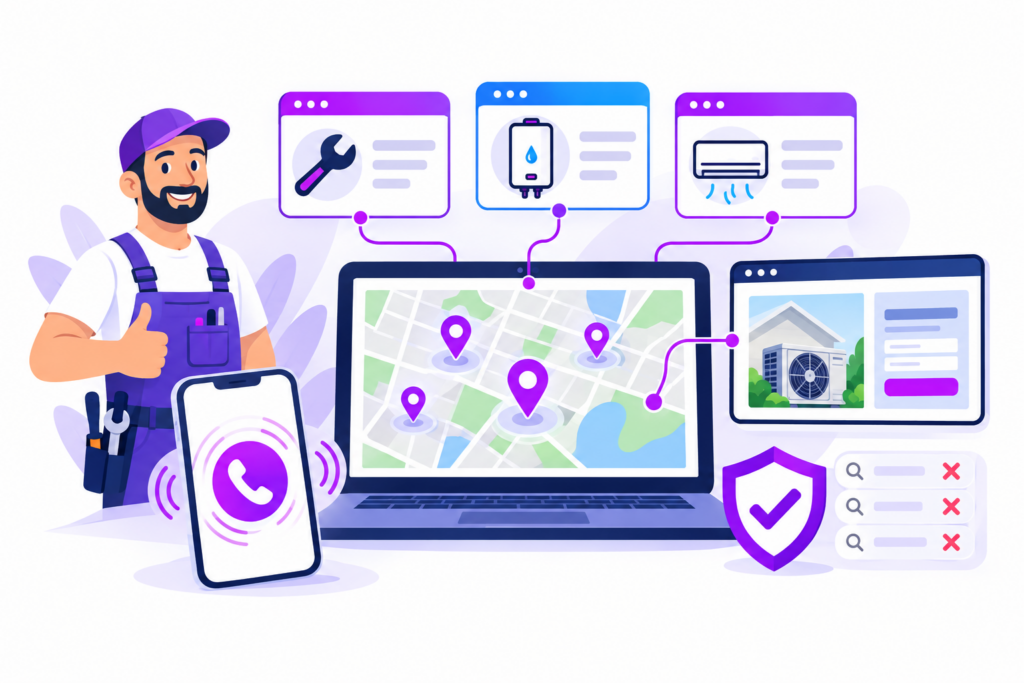
The part Most Agencies skip
Capacity. A van business can only do so many jobs a day. If your ads send 30 calls to a team that can take 12, you pay for 18 calls that go to voicemail and to whoever picks up faster.
So we ask about your crew size, your booking lead time and your busy weeks before we set a budget. Then we use ad scheduling and budget caps to match ad volume to dispatch capacity. We also pause or reduce services you cannot cover that week. Few agencies ask because it makes the setup slower. It also stops you paying for demand you cannot serve.
The second skipped item is call quality. A call from a tenant asking about a rental is not a call from a homeowner asking for a quote. We track calls by campaign and keyword so you can see which searches produce jobs.
How long it takes and what happens first
Setup comes first and has a fixed order.
Access and audit
We get manager access to your Google Ads account, or build a new one, and check conversion tracking before anything is spent.
Tracking
We install call tracking and form tracking so every enquiry is tied to a campaign and keyword.
Build and launch
Campaigns go live once the tracking tests clean. Setup typically take .
Learning period
Google’s system needs conversion data before bidding settles. During this time costs per lead move around. That is normal, not a fault, and we do not judge the account until there is enough data to judge.
We do not promise rankings, lead counts or a date by which the account will perform. Competitor bids, season and your market set those, and anyone who names a date is guessing.

What It Costs
- Ad spend: many local service businesses spend roughly $1,000 to $5,000 a month. A single service in a single city can start lower.
- Cost per click: roughly $5 to $50 or more, depending on trade and city. Emergency and high-ticket work such as HVAC replacement and water damage sit at the top.
- Cost per lead: commonly reported between about $20 and $200 for home services, depending on trade, market, and how well the landing page converts.
- Agency management fees: often quoted at roughly $500 to $1,500 a month for smaller accounts, or around 10% to 20% of ad spend. Larger accounts cost more.
The number to watch is cost per booked job, not cost per click. A $200 lead on a job worth thousands is a different proposition from a $200 lead on a small service call. We will work that out with you before you commit to a budget.

How We Report
Reports show calls, not just clicks. Each call tracking number maps to a campaign, so you see which keywords and areas produced calls and which produced nothing. Multi-touchpoint attribution shows the path a customer took, for example, a map pack view, then an ad click, then a call a day later, so ads are not credited or blamed for the wrong step.

Working with us remotely
- Onboarding by video. A kickoff call covers your services, territory, crew size and what a good job is worth to you.
- Access by invitation. You invite us to your Google Ads account at manager level. You stay the owner and can remove us at any time.
- Communication. Email for day-to-day matters, video for reviews, and {PHONE} for anything urgent.
- What needs no one in the room: account setup, tracking, campaign builds, bid management, reporting, and landing pages. All of it happens in software.
- What we cannot do from here: answer your phones or run your dispatch. If calls go unanswered, no ad setup fixes that.
FAQ's
Should I use Google Ads or Local Services Ads?
Often both. Local Services Ads charge per lead and appear first. Standard search ads give you more control over keywords and areas. Eligibility and pricing vary by trade and city.
Do I need to show my address?
No. Service-area businesses can hide their address on Google. We set ad locations by area served, so ads still work without a public address.
Can you guarantee how many leads I will get?
No. Nobody can. We can describe the work and show you the tracking.
Why not just boost my Google Business Profile?
Profile ranking and ads are separate. The profile earns map pack position over time. Ads buy position now, in the areas the map does not reach.
What if my budget is small?
Start with one service in one area. Spreading a small budget across ten services gives each too little data to learn from.
Get an audit
If you already run Google Ads, we will look at your location settings, search terms, tracking and call handling, and tell you what is wasting money. If you do not, we will say whether ads make sense for your trade and area.