
- Home
- Services
- Portfolio
- About
- Service AreasFort Lauderdale, FL
- Web Design
- Redesign
- WordPress
- Ecommerce
- Landing Pages
- SEO Services
- Local SEO
- GBP
- Google Ads
- PPC
- Digital Marketing
- Internet Marketing
- Advertising
- Tracking
- Dental Marketing
- Medical Marketing
- HVAC Marketing
- Roofing Marketing
- Pest Control Marketing
- Home Services Marketing
- Plumbing Marketing
- Electrical Marketing
- Landscaping Marketing
- Remodeling Marketing
Pembroke Pines, FL- Web Design
- Redesign
- WordPress
- Ecommerce
- Landing Pages
- SEO Services
- Local SEO
- GBP
- Google Ads
- PPC
- Digital Marketing
- Internet Marketing
- Advertising
- Tracking
- Dental Marketing
- Medical Marketing
- HVAC Marketing
- Roofing Marketing
- Pest Control Marketing
- Home Services Marketing
- Plumbing Marketing
- Electrical Marketing
- Landscaping Marketing
- Remodeling Marketing
Hialeah, FL- Web Design
- Redesign
- WordPress
- Ecommerce
- Landing Pages
- SEO Services
- Local SEO
- GBP
- Google Ads
- PPC
- Digital Marketing
- Internet Marketing
- Advertising
- Tracking
- Dental Marketing
- Medical Marketing
- HVAC Marketing
- Roofing Marketing
- Pest Control Marketing
- Home Services Marketing
- Plumbing Marketing
- Electrical Marketing
- Landscaping Marketing
- Remodeling Marketing
Hollywood, FL- Web Design
- Redesign
- WordPress
- Ecommerce
- Landing Pages
- SEO Services
- Local SEO
- GBP
- Google Ads
- PPC
- Digital Marketing
- Internet Marketing
- Advertising
- Tracking
- Dental Marketing
- Medical Marketing
- HVAC Marketing
- Roofing Marketing
- Pest Control Marketing
- Home Services Marketing
- Plumbing Marketing
- Electrical Marketing
- Landscaping Marketing
- Remodeling Marketing
Miramar, FL- Web Design
- Redesign
- WordPress
- Ecommerce
- Landing Pages
- SEO Services
- Local SEO
- GBP
- Google Ads
- PPC
- Digital Marketing
- Internet Marketing
- Advertising
- Tracking
- Dental Marketing
- Medical Marketing
- HVAC Marketing
- Roofing Marketing
- Pest Control Marketing
- Home Services Marketing
- Plumbing Marketing
- Electrical Marketing
- Landscaping Marketing
- Remodeling Marketing
Coral Springs, FL- Web Design
- Redesign
- WordPress
- Ecommerce
- Landing Pages
- SEO Services
- Local SEO
- GBP
- Google Ads
- PPC
- Digital Marketing
- Internet Marketing
- Advertising
- Tracking
- Dental Marketing
- Medical Marketing
- HVAC Marketing
- Roofing Marketing
- Pest Control Marketing
- Home Services Marketing
- Plumbing Marketing
- Electrical Marketing
- Landscaping Marketing
- Remodeling Marketing
Pompano Beach, FL- Web Design
- Redesign
- WordPress
- Ecommerce
- Landing Pages
- SEO Services
- Local SEO
- GBP
- Google Ads
- PPC
- Digital Marketing
- Internet Marketing
- Advertising
- Tracking
- Dental Marketing
- Medical Marketing
- HVAC Marketing
- Roofing Marketing
- Pest Control Marketing
- Home Services Marketing
- Plumbing Marketing
- Electrical Marketing
- Landscaping Marketing
- Remodeling Marketing
Davie, FL- Web Design
- Redesign
- WordPress
- Ecommerce
- Landing Pages
- SEO Services
- Local SEO
- GBP
- Google Ads
- PPC
- Digital Marketing
- Internet Marketing
- Advertising
- Tracking
- Dental Marketing
- Medical Marketing
- HVAC Marketing
- Roofing Marketing
- Pest Control Marketing
- Home Services Marketing
- Plumbing Marketing
- Electrical Marketing
- Landscaping Marketing
- Remodeling Marketing
Sunrise, FL- Web Design
- Redesign
- WordPress
- Ecommerce
- Landing Pages
- SEO Services
- Local SEO
- GBP
- Google Ads
- PPC
- Digital Marketing
- Internet Marketing
- Advertising
- Tracking
- Dental Marketing
- Medical Marketing
- HVAC Marketing
- Roofing Marketing
- Pest Control Marketing
- Home Services Marketing
- Plumbing Marketing
- Electrical Marketing
- Landscaping Marketing
- Remodeling Marketing
Plantation, FL- Web Design
- Redesign
- WordPress
- Ecommerce
- Landing Pages
- SEO Services
- Local SEO
- GBP
- Google Ads
- PPC
- Digital Marketing
- Internet Marketing
- Advertising
- Tracking
- Dental Marketing
- Medical Marketing
- HVAC Marketing
- Roofing Marketing
- Pest Control Marketing
- Home Services Marketing
- Plumbing Marketing
- Electrical Marketing
- Landscaping Marketing
- Remodeling Marketing
Deerfield Beach, FL- Web Design
- Redesign
- WordPress
- Ecommerce
- Landing Pages
- SEO Services
- Local SEO
- GBP
- Google Ads
- PPC
- Digital Marketing
- Internet Marketing
- Advertising
- Tracking
- Dental Marketing
- Medical Marketing
- HVAC Marketing
- Roofing Marketing
- Pest Control Marketing
- Home Services Marketing
- Plumbing Marketing
- Electrical Marketing
- Landscaping Marketing
- Remodeling Marketing
Miami Gardens, FL- Web Design
- Redesign
- WordPress
- Ecommerce
- Landing Pages
- SEO Services
- Local SEO
- GBP
- Google Ads
- PPC
- Digital Marketing
- Internet Marketing
- Advertising
- Tracking
- Dental Marketing
- Medical Marketing
- HVAC Marketing
- Roofing Marketing
- Pest Control Marketing
- Home Services Marketing
- Plumbing Marketing
- Electrical Marketing
- Landscaping Marketing
- Remodeling Marketing
Lauderhill, FL- Web Design
- Redesign
- WordPress
- Ecommerce
- Landing Pages
- SEO Services
- Local SEO
- GBP
- Google Ads
- PPC
- Digital Marketing
- Internet Marketing
- Advertising
- Tracking
- Dental Marketing
- Medical Marketing
- HVAC Marketing
- Roofing Marketing
- Pest Control Marketing
- Home Services Marketing
- Plumbing Marketing
- Electrical Marketing
- Landscaping Marketing
- Remodeling Marketing
West Palm Beach, FL- Web Design
- Redesign
- WordPress
- Ecommerce
- Landing Pages
- SEO Services
- Local SEO
- GBP
- Google Ads
- PPC
- Digital Marketing
- Internet Marketing
- Advertising
- Tracking
- Dental Marketing
- Medical Marketing
- HVAC Marketing
- Roofing Marketing
- Pest Control Marketing
- Home Services Marketing
- Plumbing Marketing
- Electrical Marketing
- Landscaping Marketing
- Remodeling Marketing
Tamarac, FL- Web Design
- Redesign
- WordPress
- Ecommerce
- Landing Pages
- SEO Services
- Local SEO
- GBP
- Google Ads
- PPC
- Digital Marketing
- Internet Marketing
- Advertising
- Tracking
- Dental Marketing
- Medical Marketing
- HVAC Marketing
- Roofing Marketing
- Pest Control Marketing
- Home Services Marketing
- Plumbing Marketing
- Electrical Marketing
- Landscaping Marketing
- Remodeling Marketing
Weston, FL- Web Design
- Redesign
- WordPress
- Ecommerce
- Landing Pages
- SEO Services
- Local SEO
- GBP
- Google Ads
- PPC
- Digital Marketing
- Internet Marketing
- Advertising
- Tracking
- Dental Marketing
- Medical Marketing
- HVAC Marketing
- Roofing Marketing
- Pest Control Marketing
- Home Services Marketing
- Plumbing Marketing
- Electrical Marketing
- Landscaping Marketing
- Remodeling Marketing
Boca Raton, FLMargate, FLCoconut Creek, FLMiami Beach, FLHomestead, FLKendall, FLDoral, FLBoynton Beach, FLThe Hammocks, FLNorth Lauderdale, FLOakland Park, FLDelray Beach, FLNorth Miami, FLHallandale Beach, FLFontainebleau, FLKendale Lakes, FLWellington, FLJupiter, FLTamiami, FLPalm Beach Gardens, FLLauderdale Lakes, FLCooper City, FLCountry Club, FLParkland, FLCoral Gables, FLDania Beach, FLCutler Bay, FLNorth Miami Beach, FLGreenacres, FLLake Worth Beach, FLPrinceton, FLRoyal Palm Beach, FLSouth Miami Heights, FLRichmond West, FLRiviera Beach, FLWest Little River, FLGolden Glades, FLAventura, FLMiami Lakes, FLWestchester, FLLeisure City, FLCoral Terrace, FLPalm Springs, FLPalmetto Bay, FLHialeah Gardens, FLSunny Isles Beach, FLIves Estates, FLWest Park, FLSweetwater, FLPinecrest, FLSunset, FLPinewood, FLWilton Manors, FLOpa-locka, FLLighthouse Point, FLBelle Glade, FLNaranja, FLPalmetto Estates, FLBrownsville, FLKey Biscayne, FLOlympia Heights, FLMiami Springs, FLFlorida City, FLSouth Miami, FLThree Lakes, FLGladeview, FLNorth Palm Beach, FLMiami Shores, FLSouthwest Ranches, FLKings Point, FLLauderdale-by-the-Sea, FLHillsboro Beach, FLSea Ranch Lakes, FLLazy Lake, FL - Blog
- Contact
WordPress Web Design in Homestead, Florida
WordPress Web Design for Homestead businesses
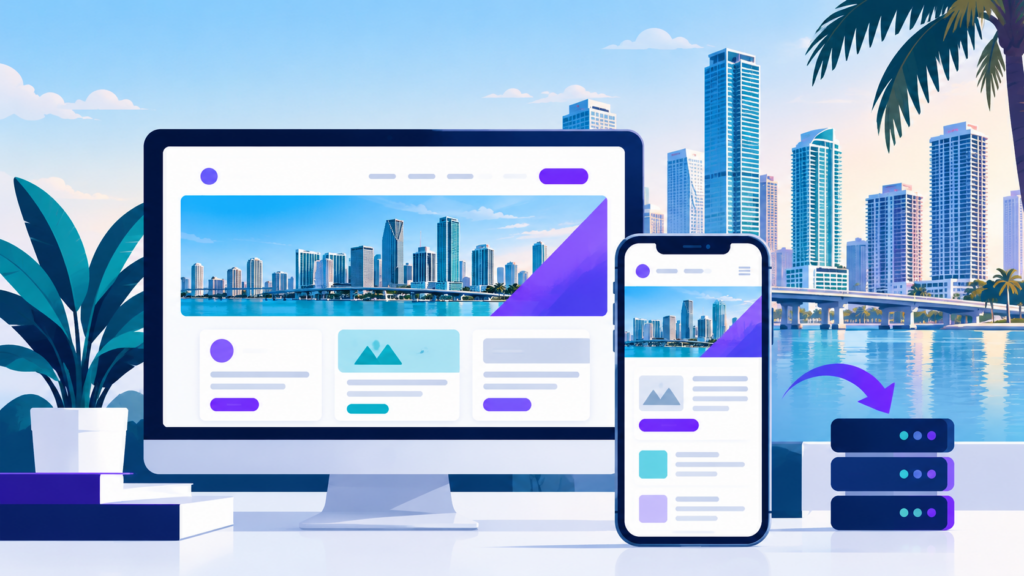
Homestead is adding new subdivisions faster than most of the businesses that will serve them have working websites. A roofer, a daycare, or a landscaper in the Mowry or Palm Drive corridor can still build a search presence from close to zero, but not on a platform that caps how many pages you can create.
What the work covers
A WordPress build from Strategic Web Designs starts with structure, not templates. We map out every service you offer and every area you serve around Homestead, then build a dedicated page for each combination. One page cannot rank for forty search terms. Forty pages, each built around one term, can.
Each page gets its own title tag, meta description, header structure, and internal links back to related services and areas. We write the on-page copy to match how people in Homestead actually search, not generic filler pulled from a template library. Image files are compressed and named correctly, because page speed is a ranking factor and a factor in whether a mobile visitor on a job site or in traffic on US-1 waits for your site to load or bounces to the next result.
Underneath the content, we handle the technical side: clean URL structure, schema markup for your business type and location, SSL, and a hosting setup that does not slow down under traffic spikes. We also set up call tracking and basic attribution so you can see which page, which keyword, or which ad brought in a form fill or a phone call, instead of guessing which part of the marketing budget is actually working.
If you currently have a Wix or Squarespace site, migration is part of the work. We audit your existing pages, preserve what is already ranking, and set up 301 redirects from every old URL to its new WordPress address before anything goes live. This is the step most builder-to-WordPress migrations skip, and it is the step that protects whatever search visibility you have already earned in and around Homestead.
None of this is a one-time task. Search engines re-crawl and re-evaluate sites continuously, and a site that stops changing tends to stop moving. We typically build out:
- Service-specific landing pages matched to real search terms
- Location pages for Homestead and surrounding service areas
- A technical foundation that keeps pages fast, secure, and trackable
Pages get updated as services, pricing structures, or service areas change, and new pages get added as the business expands.

What is different about this market
Homestead is the fastest-growing residential pocket in Homestead-Dade County, and it is still partly agricultural at the same time. That split matters more than it might seem at first glance. You have long-established nursery, produce, equipment, and trucking businesses that have operated for decades without much of a digital footprint, sitting just a few miles from new master-planned communities full of households that found their home, their doctor, and their landscaper through a phone search. A lot of local businesses, especially newer ones opening to serve those new rooftops, have no real site at all yet, just a Facebook page, a Google Business Profile with inconsistent hours, or nothing searchable at all. That is not a knock on those businesses. It is simply a reflection of how fast the area has changed and how little time owners have had to catch their digital presence up to their actual customer base.
That gap is the opportunity, and it is a bigger one here than in most of South Florida. In Homestead, Fort Lauderdale, or Boca Raton, you are often competing against ten or more established competitors who have already spent years and real budget on SEO, paid ads, and content. In Homestead, for a lot of service categories, the competition online is thin, outdated, or built on templated sites that have not been touched since they launched. A new, correctly structured WordPress site with real on-page content, proper local schema, and a sensible site architecture can move into search visibility here faster than in almost any other part of the tri-county area, simply because fewer competitors have done the work. We have seen this play out directly: a service business that would need months to meaningfully outrank entrenched Homestead competitors can often earn first-page placement for Homestead-specific and South Dade-specific searches in a fraction of that time, because the bar is lower and the existing pages are weaker.
Buyers here are a mix of price-led and trust-led, depending heavily on the service category, and that distinction should shape how a site is written and structured. Home service categories like AC repair, roofing, fencing, pest control, and irrigation skew trust-led. People buying into new construction neighborhoods, many of them first-time homebuyers or families relocating from elsewhere in Dade or Broward, want a business that looks established, licensed, and responsive, and they are typically comparing three or four options on their phone before ever placing a call. That means a site needs visible licensing and insurance information, real photos of completed work, and a phone number that is one tap away, not buried in a contact form. Price-led categories, like landscaping maintenance or general handyman work, behave differently, and a site built for those services needs to make pricing expectations and service areas obvious fast, since buyers are often scanning multiple listings in under a minute.
Search behavior here skews heavily mobile, more than in older, more desktop-habituated metro areas, so a site that loads slowly or renders awkwardly on a phone loses the visit before it ever becomes a call or a form submission. Page speed and clean mobile layout are not optional polish in Homestead; they are the difference between being found and being skipped. Spanish-language search also matters in Homestead in a way it may not in other South Florida cities. A meaningful share of local search traffic here happens in Spanish, and a site with genuine Spanish-language pages, not a machine-translated afterthought, reaches a segment of buyers that an English-only version misses entirely. This is particularly true for home services, medical and dental practices, and legal services, where trust and clarity in a customer’s preferred language directly affects whether they call.
Demand for home services also runs somewhat seasonal here, tracking both the South Florida tourist and snowbird calendar and the pace of new home closings in the area’s many active developments. A site and the content strategy behind it should flex with that calendar rather than sit static. That might mean adjusting service pages seasonally, timing content around hurricane preparedness in early summer, or shifting ad emphasis as new phases of nearby communities open for move-in. A WordPress build that was set up once and never revisited will miss those windows every year. One built with an eye toward ongoing, modest content updates captures them. In a market changing as fast as Homestead, a site is less a one-time project and more a living asset that needs to keep pace with the neighborhood growing up around it.

How we start
We start with a short conversation about what you sell, who buys it, and which parts of Homestead and South Dade you actually want work from. Then we look at what you have now, whether that is a Wix site, a Squarespace site, or nothing published at all, and tell you honestly what is worth keeping.
From there we scope the page structure: how many services, how many areas, what the site needs beyond pages, like a booking form or a quote calculator. You get a clear plan before any build work starts.
Website planning and design
Organize service pages, navigation, calls to action, and contact information around visitor needs.
Theme and plugin setup
Select and configure suitable tools while avoiding unnecessary features that add maintenance or performance overhead.
Responsive layouts
Ensure the site works across desktop computers, tablets, and mobile devices.
Speed optimization
Review image sizes, caching, scripts, hosting configuration, and other factors that affect performance.
Conversion features
Set up enquiry forms, phone links, appointment pathways, and other relevant actions.
SEO foundations
Configure page titles, headings, internal links, indexability, and other relevant on-page and technical elements.
Testing and launch
Check forms, navigation, mobile layouts, redirects where needed, and important user journeys.
What it costs
Cost depends on how many pages you need, whether you are migrating existing content, and what functionality the site requires beyond standard pages. A single-location service business with a handful of pages costs less than a multi-area build with a dozen service-and-city combinations. We give you a specific number after the scoping conversation, not before.
What you get each month
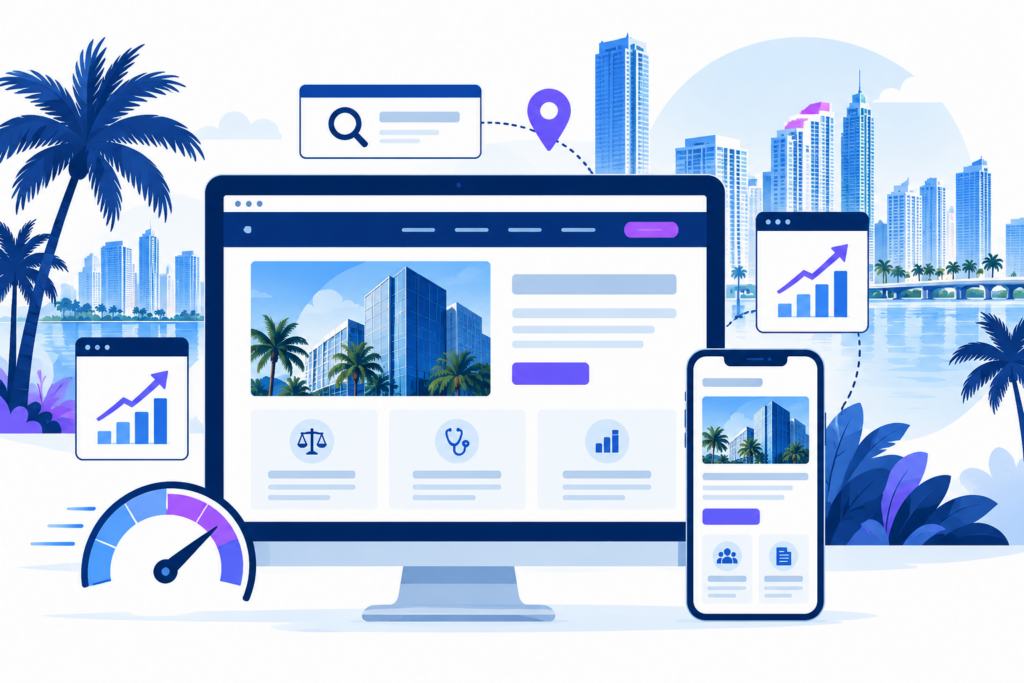
Once your site is live, most Homestead clients move into an ongoing plan rather than treating the build as finished. That plan covers WordPress core and plugin updates, security monitoring, uptime checks, and nightly backups, so a software conflict or hosting hiccup doesn’t take your site down without anyone noticing.
You also get monthly reporting on what the site actually did: traffic by page, calls by source, and form fills tracked back to the keyword, ad, or referral that produced them. That’s paired with a short review of what changed on the site that month, whether it’s content updates, speed fixes, or small design tweaks based on how visitors are actually using it.
If you’re also running SEO or Google Ads with us, that reporting ties together in one view, so you can see the full path from search to call, not just isolated numbers from separate tools.

Get a free audit
Already have a Homestead website? We'll tell you specifically what's holding it back, whether that's the platform, structure, or hidden technical issues. No site yet? We'll outline what it needs to cover.
- Review: Assess the existing site, content, performance, and available analytics.
- Plan: Define the page structure, design requirements, functionality, and SEO priorities.
- Build or migrate: Develop the WordPress site or transfer suitable content and functionality from your current platform.
- Test: Check navigation, forms, responsive layouts, indexing settings, and required redirects before launch.
- Monitor: Review technical health, search visibility, and enquiries after the site goes live.

FAQ's
These are the 5 questions Homestead homeowners ask us most about wordpress web design, answered plainly so you know what to expect before any work starts. If yours isn't covered here, get in touch and we'll walk you through it.
Why build on WordPress instead of keeping a Wix or Squarespace site in Homestead?
WordPress gives you control over page structure, URL format, site speed, and schema markup. Wix and Squarespace limit how many pages you can create per service area and restrict the code-level changes that search engines reward. If you intend to rank for more than a handful of terms around Homestead, you need a page per service and a page per area, and that requires a platform that does not cap you.
Can you move my site from Wix or Squarespace without losing my current rankings?
We map every existing URL, page title, and meta description before migration and set up 301 redirects from the old addresses to the new WordPress ones. Some ranking fluctuation is normal during any platform change, but a planned migration with redirects in place is how you avoid losing what you already have.
How long does a WordPress build take?
It depends on the number of pages and whether you have existing content to migrate. A straightforward rebuild of a small service business site takes less time than a multi-location site with a dozen service-area pages. We give you a specific timeline once we know the scope.
Do you only build the site, or do you also handle SEO and ads?
We build the site as the foundation, then most Homestead clients add SEO, Google Ads, or both. The website, the search work, and the reporting are connected. A site built without SEO in mind usually has to be partly rebuilt later to add it properly.
Is a WordPress site more work for me to maintain?
No more than any website. We handle core and plugin updates, backups, and uptime monitoring as part of ongoing care plans. You do not need to touch the back end unless you want to update content yourself, which WordPress makes easier than most page builders once it is set up correctly.