
- Home
- Services
- Portfolio
- About
- Service AreasFort Lauderdale, FL
- Web Design
- Redesign
- WordPress
- Ecommerce
- Landing Pages
- SEO Services
- Local SEO
- GBP
- Google Ads
- PPC
- Digital Marketing
- Internet Marketing
- Advertising
- Tracking
- Dental Marketing
- Medical Marketing
- HVAC Marketing
- Roofing Marketing
- Pest Control Marketing
- Home Services Marketing
- Plumbing Marketing
- Electrical Marketing
- Landscaping Marketing
- Remodeling Marketing
Pembroke Pines, FL- Web Design
- Redesign
- WordPress
- Ecommerce
- Landing Pages
- SEO Services
- Local SEO
- GBP
- Google Ads
- PPC
- Digital Marketing
- Internet Marketing
- Advertising
- Tracking
- Dental Marketing
- Medical Marketing
- HVAC Marketing
- Roofing Marketing
- Pest Control Marketing
- Home Services Marketing
- Plumbing Marketing
- Electrical Marketing
- Landscaping Marketing
- Remodeling Marketing
Hialeah, FL- Web Design
- Redesign
- WordPress
- Ecommerce
- Landing Pages
- SEO Services
- Local SEO
- GBP
- Google Ads
- PPC
- Digital Marketing
- Internet Marketing
- Advertising
- Tracking
- Dental Marketing
- Medical Marketing
- HVAC Marketing
- Roofing Marketing
- Pest Control Marketing
- Home Services Marketing
- Plumbing Marketing
- Electrical Marketing
- Landscaping Marketing
- Remodeling Marketing
Hollywood, FL- Web Design
- Redesign
- WordPress
- Ecommerce
- Landing Pages
- SEO Services
- Local SEO
- GBP
- Google Ads
- PPC
- Digital Marketing
- Internet Marketing
- Advertising
- Tracking
- Dental Marketing
- Medical Marketing
- HVAC Marketing
- Roofing Marketing
- Pest Control Marketing
- Home Services Marketing
- Plumbing Marketing
- Electrical Marketing
- Landscaping Marketing
- Remodeling Marketing
Miramar, FL- Web Design
- Redesign
- WordPress
- Ecommerce
- Landing Pages
- SEO Services
- Local SEO
- GBP
- Google Ads
- PPC
- Digital Marketing
- Internet Marketing
- Advertising
- Tracking
- Dental Marketing
- Medical Marketing
- HVAC Marketing
- Roofing Marketing
- Pest Control Marketing
- Home Services Marketing
- Plumbing Marketing
- Electrical Marketing
- Landscaping Marketing
- Remodeling Marketing
Coral Springs, FL- Web Design
- Redesign
- WordPress
- Ecommerce
- Landing Pages
- SEO Services
- Local SEO
- GBP
- Google Ads
- PPC
- Digital Marketing
- Internet Marketing
- Advertising
- Tracking
- Dental Marketing
- Medical Marketing
- HVAC Marketing
- Roofing Marketing
- Pest Control Marketing
- Home Services Marketing
- Plumbing Marketing
- Electrical Marketing
- Landscaping Marketing
- Remodeling Marketing
Pompano Beach, FL- Web Design
- Redesign
- WordPress
- Ecommerce
- Landing Pages
- SEO Services
- Local SEO
- GBP
- Google Ads
- PPC
- Digital Marketing
- Internet Marketing
- Advertising
- Tracking
- Dental Marketing
- Medical Marketing
- HVAC Marketing
- Roofing Marketing
- Pest Control Marketing
- Home Services Marketing
- Plumbing Marketing
- Electrical Marketing
- Landscaping Marketing
- Remodeling Marketing
Davie, FL- Web Design
- Redesign
- WordPress
- Ecommerce
- Landing Pages
- SEO Services
- Local SEO
- GBP
- Google Ads
- PPC
- Digital Marketing
- Internet Marketing
- Advertising
- Tracking
- Dental Marketing
- Medical Marketing
- HVAC Marketing
- Roofing Marketing
- Pest Control Marketing
- Home Services Marketing
- Plumbing Marketing
- Electrical Marketing
- Landscaping Marketing
- Remodeling Marketing
Sunrise, FL- Web Design
- Redesign
- WordPress
- Ecommerce
- Landing Pages
- SEO Services
- Local SEO
- GBP
- Google Ads
- PPC
- Digital Marketing
- Internet Marketing
- Advertising
- Tracking
- Dental Marketing
- Medical Marketing
- HVAC Marketing
- Roofing Marketing
- Pest Control Marketing
- Home Services Marketing
- Plumbing Marketing
- Electrical Marketing
- Landscaping Marketing
- Remodeling Marketing
Plantation, FL- Web Design
- Redesign
- WordPress
- Ecommerce
- Landing Pages
- SEO Services
- Local SEO
- GBP
- Google Ads
- PPC
- Digital Marketing
- Internet Marketing
- Advertising
- Tracking
- Dental Marketing
- Medical Marketing
- HVAC Marketing
- Roofing Marketing
- Pest Control Marketing
- Home Services Marketing
- Plumbing Marketing
- Electrical Marketing
- Landscaping Marketing
- Remodeling Marketing
Deerfield Beach, FL- Web Design
- Redesign
- WordPress
- Ecommerce
- Landing Pages
- SEO Services
- Local SEO
- GBP
- Google Ads
- PPC
- Digital Marketing
- Internet Marketing
- Advertising
- Tracking
- Dental Marketing
- Medical Marketing
- HVAC Marketing
- Roofing Marketing
- Pest Control Marketing
- Home Services Marketing
- Plumbing Marketing
- Electrical Marketing
- Landscaping Marketing
- Remodeling Marketing
Miami Gardens, FL- Web Design
- Redesign
- WordPress
- Ecommerce
- Landing Pages
- SEO Services
- Local SEO
- GBP
- Google Ads
- PPC
- Digital Marketing
- Internet Marketing
- Advertising
- Tracking
- Dental Marketing
- Medical Marketing
- HVAC Marketing
- Roofing Marketing
- Pest Control Marketing
- Home Services Marketing
- Plumbing Marketing
- Electrical Marketing
- Landscaping Marketing
- Remodeling Marketing
Lauderhill, FL- Web Design
- Redesign
- WordPress
- Ecommerce
- Landing Pages
- SEO Services
- Local SEO
- GBP
- Google Ads
- PPC
- Digital Marketing
- Internet Marketing
- Advertising
- Tracking
- Dental Marketing
- Medical Marketing
- HVAC Marketing
- Roofing Marketing
- Pest Control Marketing
- Home Services Marketing
- Plumbing Marketing
- Electrical Marketing
- Landscaping Marketing
- Remodeling Marketing
West Palm Beach, FL- Web Design
- Redesign
- WordPress
- Ecommerce
- Landing Pages
- SEO Services
- Local SEO
- GBP
- Google Ads
- PPC
- Digital Marketing
- Internet Marketing
- Advertising
- Tracking
- Dental Marketing
- Medical Marketing
- HVAC Marketing
- Roofing Marketing
- Pest Control Marketing
- Home Services Marketing
- Plumbing Marketing
- Electrical Marketing
- Landscaping Marketing
- Remodeling Marketing
Tamarac, FL- Web Design
- Redesign
- WordPress
- Ecommerce
- Landing Pages
- SEO Services
- Local SEO
- GBP
- Google Ads
- PPC
- Digital Marketing
- Internet Marketing
- Advertising
- Tracking
- Dental Marketing
- Medical Marketing
- HVAC Marketing
- Roofing Marketing
- Pest Control Marketing
- Home Services Marketing
- Plumbing Marketing
- Electrical Marketing
- Landscaping Marketing
- Remodeling Marketing
Weston, FL- Web Design
- Redesign
- WordPress
- Ecommerce
- Landing Pages
- SEO Services
- Local SEO
- GBP
- Google Ads
- PPC
- Digital Marketing
- Internet Marketing
- Advertising
- Tracking
- Dental Marketing
- Medical Marketing
- HVAC Marketing
- Roofing Marketing
- Pest Control Marketing
- Home Services Marketing
- Plumbing Marketing
- Electrical Marketing
- Landscaping Marketing
- Remodeling Marketing
Boca Raton, FLMargate, FLCoconut Creek, FLMiami Beach, FLHomestead, FLKendall, FLDoral, FLBoynton Beach, FLThe Hammocks, FLNorth Lauderdale, FLOakland Park, FLDelray Beach, FLNorth Miami, FLHallandale Beach, FLFontainebleau, FLKendale Lakes, FLWellington, FLJupiter, FLTamiami, FLPalm Beach Gardens, FLLauderdale Lakes, FLCooper City, FLCountry Club, FLParkland, FLCoral Gables, FLDania Beach, FLCutler Bay, FLNorth Miami Beach, FLGreenacres, FLLake Worth Beach, FLPrinceton, FLRoyal Palm Beach, FLSouth Miami Heights, FLRichmond West, FLRiviera Beach, FLWest Little River, FLGolden Glades, FLAventura, FLMiami Lakes, FLWestchester, FLLeisure City, FLCoral Terrace, FLPalm Springs, FLPalmetto Bay, FLHialeah Gardens, FLSunny Isles Beach, FLIves Estates, FLWest Park, FLSweetwater, FLPinecrest, FLSunset, FLPinewood, FLWilton Manors, FLOpa-locka, FLLighthouse Point, FLBelle Glade, FLNaranja, FLPalmetto Estates, FLBrownsville, FLKey Biscayne, FLOlympia Heights, FLMiami Springs, FLFlorida City, FLSouth Miami, FLThree Lakes, FLGladeview, FLNorth Palm Beach, FLMiami Shores, FLSouthwest Ranches, FLKings Point, FLLauderdale-by-the-Sea, FLHillsboro Beach, FLSea Ranch Lakes, FLLazy Lake, FL - Blog
- Contact
Local SEO in Miami Beach, Florida
Local SEO for Miami Beach businesses
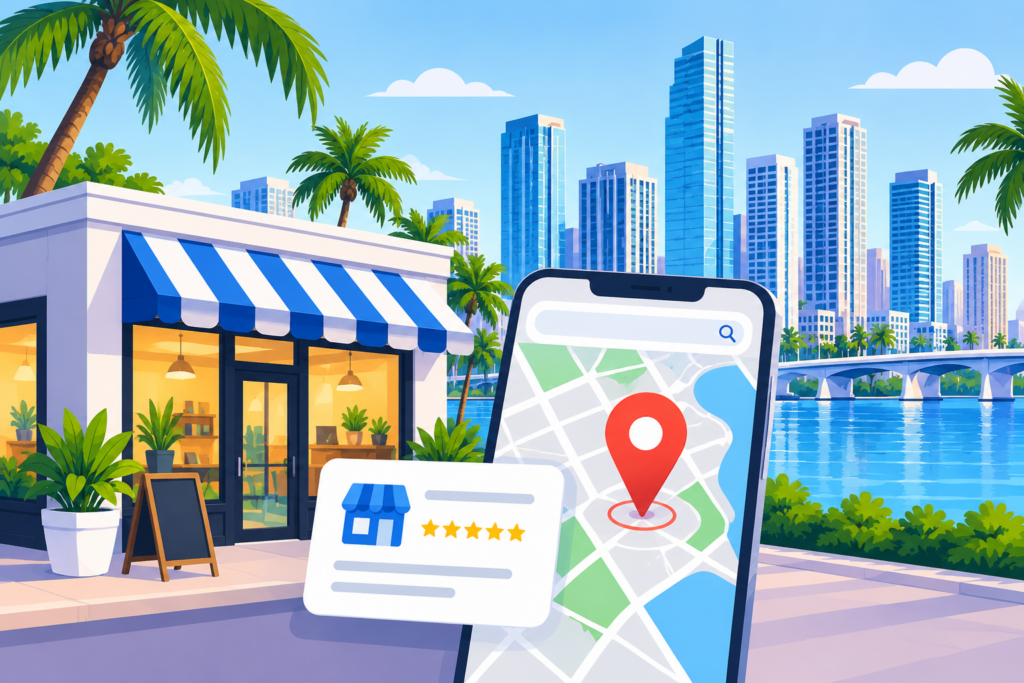
A tourist standing on Ocean Drive with a phone in hand does not type a keyword. They tap a pin on a map and pick from three results. If your restaurant, charter, or rental is not one of those three, you are invisible to them, no matter how good your website is. That is the problem Local SEO solves, and it is a different problem than ranking an organic page.
What the work covers
Local SEO starts with the Google Business Profile, because that is what Google actually shows in the map pack. We audit the category selections, the service area settings, the photos, and the attributes, then fix what is wrong or missing. A seafood restaurant on Collins Avenue listed under a generic “restaurant” category is leaving ranking signal on the table. A boat charter with no service area set is telling Google it only serves one dock, when it actually picks up from marinas across Biscayne Bay.
From there we work on proximity and relevance signals: NAP consistency (name, address, phone) across directories, structured data on your site that confirms what you are and where you operate, and location-specific landing pages when you serve more than one neighborhood or property. A property management company running six short-term rentals across South Beach, North Beach, and Sunny Isles needs a page built around each building’s area, not one page trying to rank for all six at once. The same logic applies to med spas, salons, and contractors working both the beach and the mainland side of the causeway.
Reviews are part of the mechanism, not an afterthought. Google weighs review count, review recency, and review text when it decides which three businesses to show in that coveted map pack spot. We set up a system for requesting reviews after a stay, a charter, or a meal, and we help you respond to what comes in, good and bad, because response patterns are also a signal Google reads, and Miami Beach visitors read responses closely before booking.
We also handle citation cleanup. If your business is listed as three slightly different addresses or phone numbers across the web, Google has to guess which one is correct, and inconsistency is a ranking drag. We find every version, including old listings from previous ownership or rebrands, and fix it.

What is different about this market
Miami Beach runs on tourism, and tourism runs on trust built in seconds. Someone searching “seafood near me” or “boat rental Miami Beach” while standing outside is not comparing ten websites. They are scanning star ratings and photos in the map pack and picking fast. In hospitality, marine, and short-term rental categories, review volume and review recency often matter more here than in almost any other vertical we work in, because the buyer has no prior relationship with you and no time to build one. A listing with 40 recent reviews beats a listing with 200 reviews that stopped a year ago.
The competition is also unusually dense for the geography. Within a few blocks of South Beach you can find dozens of restaurants, boutique hotels, and tour operators all chasing the same handful of map pack slots, which means small technical details, an uncategorized listing, a stale photo set, a missing service area, carry more weight than they would in a market with less overlap. Search here skews heavily mobile, since most of it happens on foot or from a hotel room, and a meaningful share of queries run in Spanish given the visitor and resident mix, which affects both keyword targeting and review response language.
Demand swings hard by season. A charter company or boutique hotel can see search volume triple during peak months and drop off in the off-season. That swing changes how we prioritize the work: during peak season the priority is review velocity and keeping the profile accurate under high call volume, and during the slow months the priority shifts to citation cleanup, new location pages, and content that positions you for the next spike. A static plan that ignores the calendar is a plan built for the wrong market.
Google Business Profile
We review your business categories, services, description, hours, contact details, photos, and other relevant profile information. Accurate, complete details help potential customers understand what you offer and how to contact you.
Local website pages
We review service and location pages to make sure they answer local customers’ questions and explain the services available. Each page should have a clear purpose, useful content, and relevant contact options not repeated city keywords.
Business information consistency
We check key business details across relevant directories and listings. Inaccurate names, phone numbers, or other information can confuse customers and make local visibility harder to assess.
Reviews and reputation
We can review how your business requests and responds to customer feedback. Reviews should be genuine, and responses should be professional. No agency can guarantee a specific rating or review volume.
Local links and relevance
We assess relevant local organizations, directories, and other credible link opportunities. The focus is on useful connections and genuine relevance rather than collecting links from unrelated websites.
Tracking and reporting
We monitor available local search visibility, website traffic, calls, form submissions, and other agreed measures where tracking is configured. Reports should show completed work, observed changes, and the next priorities.

How we start
We start with a map pack audit: who currently ranks for your core Miami Beach terms, what their profiles look like, and where yours falls short on categories, reviews, and citations. If you manage multiple properties or locations across South Beach, North Beach, or the mainland, we map out which need their own listing and which can share a profile. Then we build a prioritized list, highest-impact fixes first, from Google Business Profile corrections to local link opportunities, and tell you what we expect to see, by when, before any work begins.

How We Start
- First, we review the current position. We assess your Google Business Profile, website, key local pages, business listings, and available performance data.
- Next, we set priorities. The plan identifies profile corrections, website improvements, local content needs, and tracking gaps. Work is based on your current situation rather than a fixed checklist applied to every business.
- Then, we implement and measure. We address the agreed priorities, review the data, and refine the plan as new information becomes available. Early work may focus on correcting information and technical issues before longer-term visibility changes can be assessed.

What it costs
Local SEO pricing depends on how many locations or listings you manage, how competitive your category is, and how much cleanup the existing profile needs. A single restaurant with one clean Google Business Profile costs less to manage than a Miami Beach rental operator juggling a dozen properties across different buildings, each with its own listing, reviews, and photo set. Hospitality and real estate categories here are crowded, so ranking near Lincoln Road or Ocean Drive takes more sustained work than a quiet residential-area service business competing for a handful of neighborhood searches. Citation cleanup, duplicate listings, and inconsistent name-address-phone data also add time before any ranking work even starts. We quote after the audit, not before it, because quoting blind means either overcharging the simple case or underselling the complicated one.
FAQ's
These are the 5 questions Miami Beach homeowners ask us most about local seo, answered plainly so you know what to expect before any work starts. If yours isn't covered here, get in touch and we'll walk you through it.
How is Local SEO different from regular SEO for my Miami Beach business?
Regular organic SEO targets ranking web pages in the standard search results. Local SEO targets the map pack, the three businesses with pins shown above those results, and it runs on a different set of signals: your Google Business Profile, reviews, citations, and proximity to the searcher. A hotel can rank well organically and still be invisible in the map pack if the profile is weak.
Can one Google Business Profile cover all my rental properties or locations?
Sometimes, but usually no. If each property or location has its own address and serves a distinct area, Google generally expects a separate listing for each. Lumping them together under one profile tends to confuse the proximity signal and hurts visibility for the locations that aren't listed.
How many reviews do I actually need to compete?
There is no fixed number, and anyone who quotes you one is guessing. What matters more than total count is recency and velocity, a steady stream of new reviews beats a large stockpile that stopped growing. We build a request system around your actual customer flow instead of chasing a target number.
Does the off-season matter if my business is seasonal?
It matters for setup, not for traffic. The slow months are when we fix citations, build out location pages, and clean up the profile without the pressure of peak-season call volume. That work is what positions you to rank better once demand picks back up.
Do you work with Spanish-speaking customers in mind?
Where it's relevant to your customer base, yes. That can mean targeting Spanish-language search terms, writing bilingual profile content, or helping you respond to reviews left in Spanish. We scope this based on your actual customer mix, not a blanket assumption.
What you get each month
Expect a monthly report that shows map pack position for your core search terms, review count and review velocity, new and updated citations, and call tracking data broken out by source. You will see what changed on the profile that month and why. If something stalled, we tell you that too. The goal is a report you can read in five minutes and understand, not a PDF built to look busy.