
- Home
- Services
- Portfolio
- About
- Service AreasFort Lauderdale, FL
- Web Design
- Redesign
- WordPress
- Ecommerce
- Landing Pages
- SEO Services
- Local SEO
- GBP
- Google Ads
- PPC
- Digital Marketing
- Internet Marketing
- Advertising
- Tracking
- Dental Marketing
- Medical Marketing
- HVAC Marketing
- Roofing Marketing
- Pest Control Marketing
- Home Services Marketing
- Plumbing Marketing
- Electrical Marketing
- Landscaping Marketing
- Remodeling Marketing
Pembroke Pines, FL- Web Design
- Redesign
- WordPress
- Ecommerce
- Landing Pages
- SEO Services
- Local SEO
- GBP
- Google Ads
- PPC
- Digital Marketing
- Internet Marketing
- Advertising
- Tracking
- Dental Marketing
- Medical Marketing
- HVAC Marketing
- Roofing Marketing
- Pest Control Marketing
- Home Services Marketing
- Plumbing Marketing
- Electrical Marketing
- Landscaping Marketing
- Remodeling Marketing
Hialeah, FL- Web Design
- Redesign
- WordPress
- Ecommerce
- Landing Pages
- SEO Services
- Local SEO
- GBP
- Google Ads
- PPC
- Digital Marketing
- Internet Marketing
- Advertising
- Tracking
- Dental Marketing
- Medical Marketing
- HVAC Marketing
- Roofing Marketing
- Pest Control Marketing
- Home Services Marketing
- Plumbing Marketing
- Electrical Marketing
- Landscaping Marketing
- Remodeling Marketing
Hollywood, FL- Web Design
- Redesign
- WordPress
- Ecommerce
- Landing Pages
- SEO Services
- Local SEO
- GBP
- Google Ads
- PPC
- Digital Marketing
- Internet Marketing
- Advertising
- Tracking
- Dental Marketing
- Medical Marketing
- HVAC Marketing
- Roofing Marketing
- Pest Control Marketing
- Home Services Marketing
- Plumbing Marketing
- Electrical Marketing
- Landscaping Marketing
- Remodeling Marketing
Miramar, FL- Web Design
- Redesign
- WordPress
- Ecommerce
- Landing Pages
- SEO Services
- Local SEO
- GBP
- Google Ads
- PPC
- Digital Marketing
- Internet Marketing
- Advertising
- Tracking
- Dental Marketing
- Medical Marketing
- HVAC Marketing
- Roofing Marketing
- Pest Control Marketing
- Home Services Marketing
- Plumbing Marketing
- Electrical Marketing
- Landscaping Marketing
- Remodeling Marketing
Coral Springs, FL- Web Design
- Redesign
- WordPress
- Ecommerce
- Landing Pages
- SEO Services
- Local SEO
- GBP
- Google Ads
- PPC
- Digital Marketing
- Internet Marketing
- Advertising
- Tracking
- Dental Marketing
- Medical Marketing
- HVAC Marketing
- Roofing Marketing
- Pest Control Marketing
- Home Services Marketing
- Plumbing Marketing
- Electrical Marketing
- Landscaping Marketing
- Remodeling Marketing
Pompano Beach, FL- Web Design
- Redesign
- WordPress
- Ecommerce
- Landing Pages
- SEO Services
- Local SEO
- GBP
- Google Ads
- PPC
- Digital Marketing
- Internet Marketing
- Advertising
- Tracking
- Dental Marketing
- Medical Marketing
- HVAC Marketing
- Roofing Marketing
- Pest Control Marketing
- Home Services Marketing
- Plumbing Marketing
- Electrical Marketing
- Landscaping Marketing
- Remodeling Marketing
Davie, FL- Web Design
- Redesign
- WordPress
- Ecommerce
- Landing Pages
- SEO Services
- Local SEO
- GBP
- Google Ads
- PPC
- Digital Marketing
- Internet Marketing
- Advertising
- Tracking
- Dental Marketing
- Medical Marketing
- HVAC Marketing
- Roofing Marketing
- Pest Control Marketing
- Home Services Marketing
- Plumbing Marketing
- Electrical Marketing
- Landscaping Marketing
- Remodeling Marketing
Sunrise, FL- Web Design
- Redesign
- WordPress
- Ecommerce
- Landing Pages
- SEO Services
- Local SEO
- GBP
- Google Ads
- PPC
- Digital Marketing
- Internet Marketing
- Advertising
- Tracking
- Dental Marketing
- Medical Marketing
- HVAC Marketing
- Roofing Marketing
- Pest Control Marketing
- Home Services Marketing
- Plumbing Marketing
- Electrical Marketing
- Landscaping Marketing
- Remodeling Marketing
Plantation, FL- Web Design
- Redesign
- WordPress
- Ecommerce
- Landing Pages
- SEO Services
- Local SEO
- GBP
- Google Ads
- PPC
- Digital Marketing
- Internet Marketing
- Advertising
- Tracking
- Dental Marketing
- Medical Marketing
- HVAC Marketing
- Roofing Marketing
- Pest Control Marketing
- Home Services Marketing
- Plumbing Marketing
- Electrical Marketing
- Landscaping Marketing
- Remodeling Marketing
Deerfield Beach, FL- Web Design
- Redesign
- WordPress
- Ecommerce
- Landing Pages
- SEO Services
- Local SEO
- GBP
- Google Ads
- PPC
- Digital Marketing
- Internet Marketing
- Advertising
- Tracking
- Dental Marketing
- Medical Marketing
- HVAC Marketing
- Roofing Marketing
- Pest Control Marketing
- Home Services Marketing
- Plumbing Marketing
- Electrical Marketing
- Landscaping Marketing
- Remodeling Marketing
Miami Gardens, FL- Web Design
- Redesign
- WordPress
- Ecommerce
- Landing Pages
- SEO Services
- Local SEO
- GBP
- Google Ads
- PPC
- Digital Marketing
- Internet Marketing
- Advertising
- Tracking
- Dental Marketing
- Medical Marketing
- HVAC Marketing
- Roofing Marketing
- Pest Control Marketing
- Home Services Marketing
- Plumbing Marketing
- Electrical Marketing
- Landscaping Marketing
- Remodeling Marketing
Lauderhill, FL- Web Design
- Redesign
- WordPress
- Ecommerce
- Landing Pages
- SEO Services
- Local SEO
- GBP
- Google Ads
- PPC
- Digital Marketing
- Internet Marketing
- Advertising
- Tracking
- Dental Marketing
- Medical Marketing
- HVAC Marketing
- Roofing Marketing
- Pest Control Marketing
- Home Services Marketing
- Plumbing Marketing
- Electrical Marketing
- Landscaping Marketing
- Remodeling Marketing
West Palm Beach, FL- Web Design
- Redesign
- WordPress
- Ecommerce
- Landing Pages
- SEO Services
- Local SEO
- GBP
- Google Ads
- PPC
- Digital Marketing
- Internet Marketing
- Advertising
- Tracking
- Dental Marketing
- Medical Marketing
- HVAC Marketing
- Roofing Marketing
- Pest Control Marketing
- Home Services Marketing
- Plumbing Marketing
- Electrical Marketing
- Landscaping Marketing
- Remodeling Marketing
Tamarac, FL- Web Design
- Redesign
- WordPress
- Ecommerce
- Landing Pages
- SEO Services
- Local SEO
- GBP
- Google Ads
- PPC
- Digital Marketing
- Internet Marketing
- Advertising
- Tracking
- Dental Marketing
- Medical Marketing
- HVAC Marketing
- Roofing Marketing
- Pest Control Marketing
- Home Services Marketing
- Plumbing Marketing
- Electrical Marketing
- Landscaping Marketing
- Remodeling Marketing
Weston, FL- Web Design
- Redesign
- WordPress
- Ecommerce
- Landing Pages
- SEO Services
- Local SEO
- GBP
- Google Ads
- PPC
- Digital Marketing
- Internet Marketing
- Advertising
- Tracking
- Dental Marketing
- Medical Marketing
- HVAC Marketing
- Roofing Marketing
- Pest Control Marketing
- Home Services Marketing
- Plumbing Marketing
- Electrical Marketing
- Landscaping Marketing
- Remodeling Marketing
Boca Raton, FLMargate, FLCoconut Creek, FLMiami Beach, FLHomestead, FLKendall, FLDoral, FLBoynton Beach, FLThe Hammocks, FLNorth Lauderdale, FLOakland Park, FLDelray Beach, FLNorth Miami, FLHallandale Beach, FLFontainebleau, FLKendale Lakes, FLWellington, FLJupiter, FLTamiami, FLPalm Beach Gardens, FLLauderdale Lakes, FLCooper City, FLCountry Club, FLParkland, FLCoral Gables, FLDania Beach, FLCutler Bay, FLNorth Miami Beach, FLGreenacres, FLLake Worth Beach, FLPrinceton, FLRoyal Palm Beach, FLSouth Miami Heights, FLRichmond West, FLRiviera Beach, FLWest Little River, FLGolden Glades, FLAventura, FLMiami Lakes, FLWestchester, FLLeisure City, FLCoral Terrace, FLPalm Springs, FLPalmetto Bay, FLHialeah Gardens, FLSunny Isles Beach, FLIves Estates, FLWest Park, FLSweetwater, FLPinecrest, FLSunset, FLPinewood, FLWilton Manors, FLOpa-locka, FLLighthouse Point, FLBelle Glade, FLNaranja, FLPalmetto Estates, FLBrownsville, FLKey Biscayne, FLOlympia Heights, FLMiami Springs, FLFlorida City, FLSouth Miami, FLThree Lakes, FLGladeview, FLNorth Palm Beach, FLMiami Shores, FLSouthwest Ranches, FLKings Point, FLLauderdale-by-the-Sea, FLHillsboro Beach, FLSea Ranch Lakes, FLLazy Lake, FL - Blog
- Contact
Call Tracking and Reporting in Hollywood, Florida
Call Tracking and Reporting for Hollywood businesses
A restaurant on Harrison Street and a boat charter working out of the Intracoastal do not get customers the same way, but they share the same blind spot: they cannot tell which marketing dollar made the phone ring. A guest finds you on Google, reads reviews, checks Instagram, then calls two days later. Without call tracking, that call shows up as “direct” and the work that actually earned it disappears from the report.

What the work covers
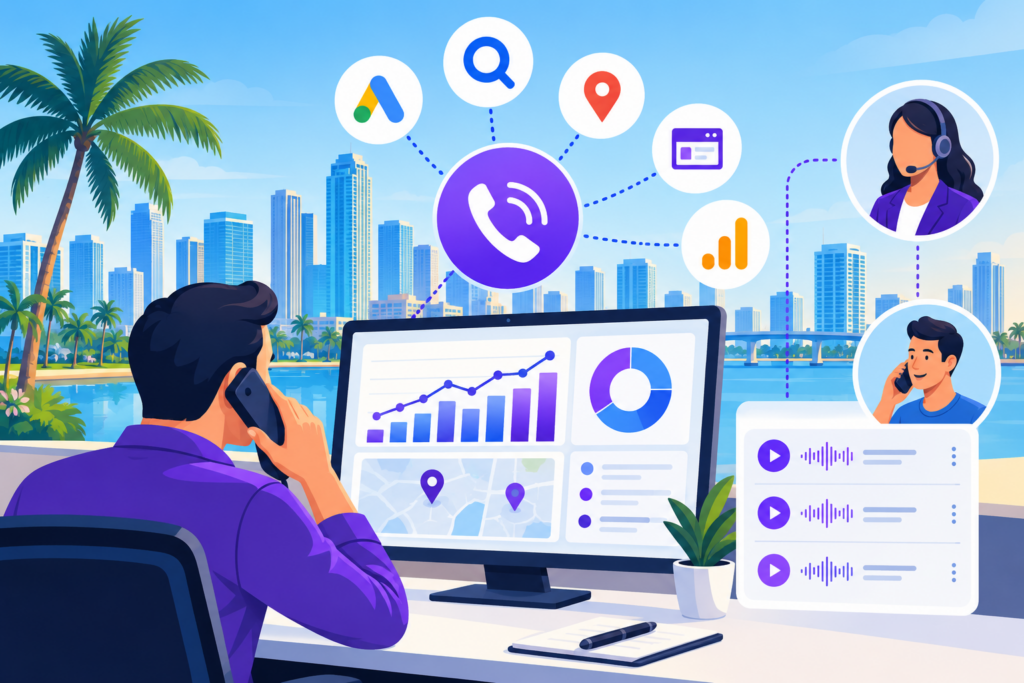
Call tracking means every marketing channel gets its own tracked phone number, swapped in dynamically depending on where the visitor came from. Someone who clicks a Google ad sees one number. Someone who finds you organically sees another. Someone who scans a QR code on a dock sign near the Hollywood boardwalk or a hotel partner flyer sees a third. The call still rings your real line. What changes is that we now know which source generated it, down to the specific ad, page, or listing.
Every call gets recorded (with the required disclosure) and logged with duration, source, and whether it was answered. That recording matters more than most agencies admit: it tells you if staff are mishandling inquiries, quoting the wrong rates, or letting voicemail pick up during a dinner rush when every table in Hollywood is competing for the same walk-in traffic. We have seen businesses lose bookings not because the marketing failed but because the third ring went unanswered while a competitor two blocks away picked up.
Multi-touchpoint attribution goes a layer deeper. Instead of crediting only the last click before a call, we map the full sequence: the Google search, the Instagram click, the retargeting ad, the direct visit three days later, then the call. This is the part most agencies cannot show you, because it requires connecting ad platforms, analytics, and call data into one view rather than reading each in isolation.
For Hollywood businesses juggling more than one location, a vacation rental portfolio, or seasonal promotions tied to the beach crowd, calls get tagged by source property or listing, so you are not guessing which address or page is actually converting and which one is just taking up ad spend. Reporting breaks down by:
- Call source and keyword, down to the exact ad or listing
- Time of day and day of week, so staffing matches real demand
- Answered versus missed calls, with follow-up flags for anything unreturned
That level of detail turns a phone line into a measurable part of the marketing budget instead of a black box.
What the Work Covers
Call tracking setup
We review how your business receives calls and identify which marketing sources need to be measured. Depending on the system and agreed scope, tracking numbers or other attribution methods can help distinguish calls associated with different campaigns, pages, or channels.
Multi-touchpoint attribution
Customers may interact with several marketing touchpoints before contacting a business. Reporting can bring together available data from paid ads, organic search, local listings, and website visits to show the paths associated with enquiries. Attribution has limitations, especially when people switch devices or contact a business through untracked channels.
Campaign and source reporting
We review available call data alongside advertising and website metrics. This can help identify which sources generate calls, whether campaigns attract relevant enquiries, and where additional investigation may be needed.
Lead quality and outcomes
Call volume alone does not show whether marketing is generating valuable opportunities. Where the business records outcomes, reporting can distinguish qualified enquiries from irrelevant calls, existing-customer requests, or other calls that do not match the campaign goal.
Tracking quality checks
Incorrect number placement, broken integrations, duplicate conversions, or missing records can distort reports. We review the available setup and identify issues that may affect the reliability of results.
Reporting and recommendations
Findings are organized into a clear view of performance, changes, limitations, and possible next steps. Recommendations should explain the evidence behind them rather than relying on unexplained scores or raw call totals.

What is different about this market
Hollywood mixes tourism and local repeat business, and the two behave differently. A snowbird booking a Hollywood Beach rental calls two or three listings before deciding; a local calling a Dania Beach Boulevard restaurant already trusts the place and just wants a table. Tracking needs to separate these behaviors, since a channel that works for tourists often does nothing for locals.
Seasonality swings hard here too. Call volume for charters, rentals, and beachfront restaurants shifts between peak winter and summer slowdown, so we report by season rather than flat calendar months, which keeps a quiet August from reading as a failing campaign.
Search skews mobile, meaning more real leads arrive as calls than form fills, and reviews carry outsized weight in tourist-driven decisions, so reputation tracking belongs alongside call tracking.

How we start
We start by looking at what you already have: your current phone setup, your ad accounts if you run them, your booking or reservation system, and your Google Business Profile. Most Hollywood businesses we talk to have some of this live but nothing connected to anything else, so calls and form fills get credited to the wrong source or lost entirely.

What it costs and what you get each month
Setup and monthly cost depend on how many locations or properties you have around Hollywood, how many channels we are tracking, and whether attribution needs to tie into an existing CRM or booking system. We quote this after the initial look at your setup rather than guessing a number that will not apply to your business.
Each month you get a plain-language report: calls by source, calls by time of day, answered versus missed, and which touchpoints appeared before each call. No dashboard full of metrics with no explanation attached. If something is not working, the report says so, and we talk about what to change instead of burying it in a paragraph of jargon.
You also get the recordings themselves, searchable and tied to the source that generated them, so you or your front desk manager can review how calls are actually handled, not just how many came in. That matters in a market like Hollywood, where foot traffic, tourism, and local search overlap, and knowing which of those is actually driving the phone to ring changes where your next dollar goes.
FAQ's
These are the 6 questions Hollywood homeowners ask us most about call tracking and reporting, answered plainly so you know what to expect before any work starts. If yours isn't covered here, get in touch and we'll walk you through it.
Is call recording legal in Florida?
Florida is a two-party consent state, which means both sides of the call need to know it is being recorded. We set up the required disclosure (a brief recorded message before the call connects) so your tracking stays compliant. [EXTERNAL LINK: Florida Statute on security of communications / the Florida Senate's statute page for two-party consent, to confirm the legal requirement]
Will tracked numbers affect my Google Business Profile or local search rankings?
No, when set up correctly. We use call forwarding numbers that display alongside your main number rather than replacing it on your website or listings, so your primary number stays consistent where search engines see it.
Can tracking separate tourist calls from local repeat customers?
Not by identity, but by source and pattern. A call from a vacation rental listing or a tourism-focused ad reads differently in the data than a call from a repeat search for your business name, which lets us report on each group separately.
What happens during the off season when call volume drops?
We report against the season, not a flat monthly average, so a normal seasonal dip does not get misread as a marketing problem. The goal is reporting that reflects how business actually moves here.
Do I need call tracking if I already use Google Ads conversion tracking?
Conversion tracking from Google only sees clicks that happen inside Google's own ecosystem. It cannot tell you that a call came after someone saw your Instagram post, then searched your name directly two days later. Call tracking fills that gap.