
- Home
- Services
- Portfolio
- About
- Service AreasFort Lauderdale, FL
- Web Design
- Redesign
- WordPress
- Ecommerce
- Landing Pages
- SEO Services
- Local SEO
- GBP
- Google Ads
- PPC
- Digital Marketing
- Internet Marketing
- Advertising
- Tracking
- Dental Marketing
- Medical Marketing
- HVAC Marketing
- Roofing Marketing
- Pest Control Marketing
- Home Services Marketing
- Plumbing Marketing
- Electrical Marketing
- Landscaping Marketing
- Remodeling Marketing
Pembroke Pines, FL- Web Design
- Redesign
- WordPress
- Ecommerce
- Landing Pages
- SEO Services
- Local SEO
- GBP
- Google Ads
- PPC
- Digital Marketing
- Internet Marketing
- Advertising
- Tracking
- Dental Marketing
- Medical Marketing
- HVAC Marketing
- Roofing Marketing
- Pest Control Marketing
- Home Services Marketing
- Plumbing Marketing
- Electrical Marketing
- Landscaping Marketing
- Remodeling Marketing
Hialeah, FL- Web Design
- Redesign
- WordPress
- Ecommerce
- Landing Pages
- SEO Services
- Local SEO
- GBP
- Google Ads
- PPC
- Digital Marketing
- Internet Marketing
- Advertising
- Tracking
- Dental Marketing
- Medical Marketing
- HVAC Marketing
- Roofing Marketing
- Pest Control Marketing
- Home Services Marketing
- Plumbing Marketing
- Electrical Marketing
- Landscaping Marketing
- Remodeling Marketing
Hollywood, FL- Web Design
- Redesign
- WordPress
- Ecommerce
- Landing Pages
- SEO Services
- Local SEO
- GBP
- Google Ads
- PPC
- Digital Marketing
- Internet Marketing
- Advertising
- Tracking
- Dental Marketing
- Medical Marketing
- HVAC Marketing
- Roofing Marketing
- Pest Control Marketing
- Home Services Marketing
- Plumbing Marketing
- Electrical Marketing
- Landscaping Marketing
- Remodeling Marketing
Miramar, FL- Web Design
- Redesign
- WordPress
- Ecommerce
- Landing Pages
- SEO Services
- Local SEO
- GBP
- Google Ads
- PPC
- Digital Marketing
- Internet Marketing
- Advertising
- Tracking
- Dental Marketing
- Medical Marketing
- HVAC Marketing
- Roofing Marketing
- Pest Control Marketing
- Home Services Marketing
- Plumbing Marketing
- Electrical Marketing
- Landscaping Marketing
- Remodeling Marketing
Coral Springs, FL- Web Design
- Redesign
- WordPress
- Ecommerce
- Landing Pages
- SEO Services
- Local SEO
- GBP
- Google Ads
- PPC
- Digital Marketing
- Internet Marketing
- Advertising
- Tracking
- Dental Marketing
- Medical Marketing
- HVAC Marketing
- Roofing Marketing
- Pest Control Marketing
- Home Services Marketing
- Plumbing Marketing
- Electrical Marketing
- Landscaping Marketing
- Remodeling Marketing
Pompano Beach, FL- Web Design
- Redesign
- WordPress
- Ecommerce
- Landing Pages
- SEO Services
- Local SEO
- GBP
- Google Ads
- PPC
- Digital Marketing
- Internet Marketing
- Advertising
- Tracking
- Dental Marketing
- Medical Marketing
- HVAC Marketing
- Roofing Marketing
- Pest Control Marketing
- Home Services Marketing
- Plumbing Marketing
- Electrical Marketing
- Landscaping Marketing
- Remodeling Marketing
Davie, FL- Web Design
- Redesign
- WordPress
- Ecommerce
- Landing Pages
- SEO Services
- Local SEO
- GBP
- Google Ads
- PPC
- Digital Marketing
- Internet Marketing
- Advertising
- Tracking
- Dental Marketing
- Medical Marketing
- HVAC Marketing
- Roofing Marketing
- Pest Control Marketing
- Home Services Marketing
- Plumbing Marketing
- Electrical Marketing
- Landscaping Marketing
- Remodeling Marketing
Sunrise, FL- Web Design
- Redesign
- WordPress
- Ecommerce
- Landing Pages
- SEO Services
- Local SEO
- GBP
- Google Ads
- PPC
- Digital Marketing
- Internet Marketing
- Advertising
- Tracking
- Dental Marketing
- Medical Marketing
- HVAC Marketing
- Roofing Marketing
- Pest Control Marketing
- Home Services Marketing
- Plumbing Marketing
- Electrical Marketing
- Landscaping Marketing
- Remodeling Marketing
Plantation, FL- Web Design
- Redesign
- WordPress
- Ecommerce
- Landing Pages
- SEO Services
- Local SEO
- GBP
- Google Ads
- PPC
- Digital Marketing
- Internet Marketing
- Advertising
- Tracking
- Dental Marketing
- Medical Marketing
- HVAC Marketing
- Roofing Marketing
- Pest Control Marketing
- Home Services Marketing
- Plumbing Marketing
- Electrical Marketing
- Landscaping Marketing
- Remodeling Marketing
Deerfield Beach, FL- Web Design
- Redesign
- WordPress
- Ecommerce
- Landing Pages
- SEO Services
- Local SEO
- GBP
- Google Ads
- PPC
- Digital Marketing
- Internet Marketing
- Advertising
- Tracking
- Dental Marketing
- Medical Marketing
- HVAC Marketing
- Roofing Marketing
- Pest Control Marketing
- Home Services Marketing
- Plumbing Marketing
- Electrical Marketing
- Landscaping Marketing
- Remodeling Marketing
Miami Gardens, FL- Web Design
- Redesign
- WordPress
- Ecommerce
- Landing Pages
- SEO Services
- Local SEO
- GBP
- Google Ads
- PPC
- Digital Marketing
- Internet Marketing
- Advertising
- Tracking
- Dental Marketing
- Medical Marketing
- HVAC Marketing
- Roofing Marketing
- Pest Control Marketing
- Home Services Marketing
- Plumbing Marketing
- Electrical Marketing
- Landscaping Marketing
- Remodeling Marketing
Lauderhill, FL- Web Design
- Redesign
- WordPress
- Ecommerce
- Landing Pages
- SEO Services
- Local SEO
- GBP
- Google Ads
- PPC
- Digital Marketing
- Internet Marketing
- Advertising
- Tracking
- Dental Marketing
- Medical Marketing
- HVAC Marketing
- Roofing Marketing
- Pest Control Marketing
- Home Services Marketing
- Plumbing Marketing
- Electrical Marketing
- Landscaping Marketing
- Remodeling Marketing
West Palm Beach, FL- Web Design
- Redesign
- WordPress
- Ecommerce
- Landing Pages
- SEO Services
- Local SEO
- GBP
- Google Ads
- PPC
- Digital Marketing
- Internet Marketing
- Advertising
- Tracking
- Dental Marketing
- Medical Marketing
- HVAC Marketing
- Roofing Marketing
- Pest Control Marketing
- Home Services Marketing
- Plumbing Marketing
- Electrical Marketing
- Landscaping Marketing
- Remodeling Marketing
Tamarac, FL- Web Design
- Redesign
- WordPress
- Ecommerce
- Landing Pages
- SEO Services
- Local SEO
- GBP
- Google Ads
- PPC
- Digital Marketing
- Internet Marketing
- Advertising
- Tracking
- Dental Marketing
- Medical Marketing
- HVAC Marketing
- Roofing Marketing
- Pest Control Marketing
- Home Services Marketing
- Plumbing Marketing
- Electrical Marketing
- Landscaping Marketing
- Remodeling Marketing
Weston, FL- Web Design
- Redesign
- WordPress
- Ecommerce
- Landing Pages
- SEO Services
- Local SEO
- GBP
- Google Ads
- PPC
- Digital Marketing
- Internet Marketing
- Advertising
- Tracking
- Dental Marketing
- Medical Marketing
- HVAC Marketing
- Roofing Marketing
- Pest Control Marketing
- Home Services Marketing
- Plumbing Marketing
- Electrical Marketing
- Landscaping Marketing
- Remodeling Marketing
Boca Raton, FLMargate, FLCoconut Creek, FLMiami Beach, FLHomestead, FLKendall, FLDoral, FLBoynton Beach, FLThe Hammocks, FLNorth Lauderdale, FLOakland Park, FLDelray Beach, FLNorth Miami, FLHallandale Beach, FLFontainebleau, FLKendale Lakes, FLWellington, FLJupiter, FLTamiami, FLPalm Beach Gardens, FLLauderdale Lakes, FLCooper City, FLCountry Club, FLParkland, FLCoral Gables, FLDania Beach, FLCutler Bay, FLNorth Miami Beach, FLGreenacres, FLLake Worth Beach, FLPrinceton, FLRoyal Palm Beach, FLSouth Miami Heights, FLRichmond West, FLRiviera Beach, FLWest Little River, FLGolden Glades, FLAventura, FLMiami Lakes, FLWestchester, FLLeisure City, FLCoral Terrace, FLPalm Springs, FLPalmetto Bay, FLHialeah Gardens, FLSunny Isles Beach, FLIves Estates, FLWest Park, FLSweetwater, FLPinecrest, FLSunset, FLPinewood, FLWilton Manors, FLOpa-locka, FLLighthouse Point, FLBelle Glade, FLNaranja, FLPalmetto Estates, FLBrownsville, FLKey Biscayne, FLOlympia Heights, FLMiami Springs, FLFlorida City, FLSouth Miami, FLThree Lakes, FLGladeview, FLNorth Palm Beach, FLMiami Shores, FLSouthwest Ranches, FLKings Point, FLLauderdale-by-the-Sea, FLHillsboro Beach, FLSea Ranch Lakes, FLLazy Lake, FL - Blog
- Contact
Call Tracking and Reporting in Davie, Florida
Call Tracking and Reporting for Davie businesses
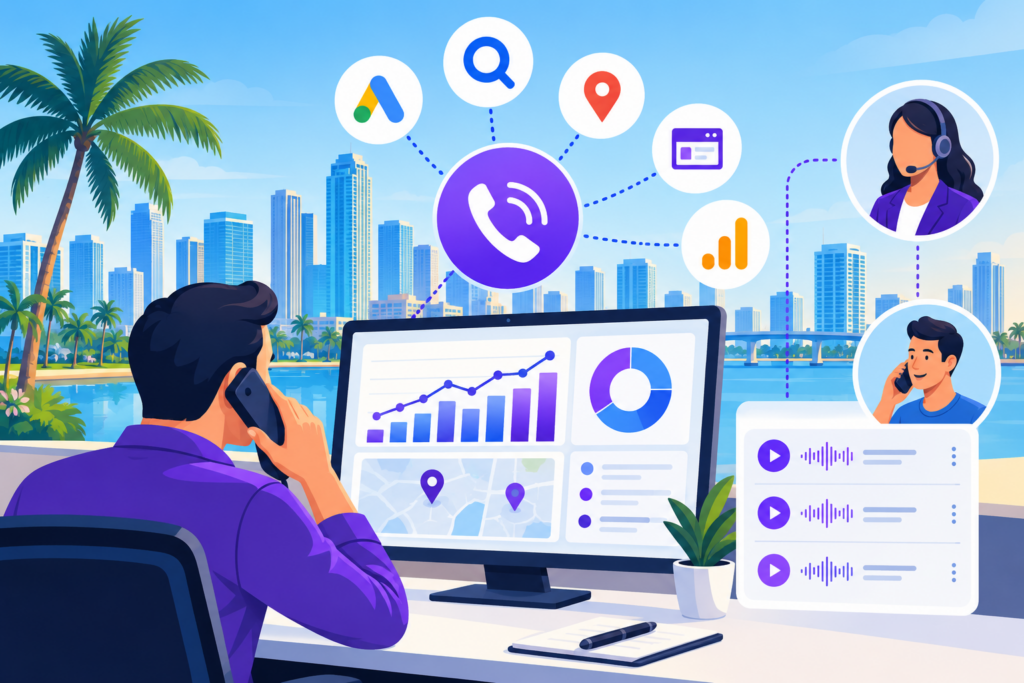
A roofer working Saddle Creek or a plumber covering Pine Island Ridge can run three months of Google Ads and still not know if the new water heater job came from the ad, the Google Business Profile listing, or a referral from the HOA Facebook group. Call tracking solves that. We set up separate tracking numbers for each marketing channel so every inbound call tells you where it came from, and we record calls so you can hear whether your team actually closed the job or lost it on the phone.

What the work covers
We start by auditing where your calls currently originate: Google Ads, organic search, your Google Business Profile listing, your website’s contact form, and any offline sources you still run, like a yard sign, a truck wrap, or a bench ad near Davie Road. Each of those gets its own tracking number. When someone calls one of those numbers, the call forwards to your real phone, is logged, and in most setups is recorded for review later.
The attribution layer is the part that separates this from a basic call log. Multi-touchpoint attribution means we are not just crediting the last click before the call. If a Davie homeowner found you through an organic search result two weeks ago, came back through a Google Ad, and then called after reading three reviews, a single-touch report credits only the ad. A multi-touch report shows you the whole path, so you stop cutting budget from the channel that actually started the relationship and keep funding what’s working across the full customer journey.
Dynamic number insertion handles the technical risk here. Your website can display a different tracking number depending on how the visitor arrived, without ever changing the number listed on your Google Business Profile or in your site’s schema markup. That matters locally because Davie competes in a crowded Broward County search market, and an inconsistent phone number across listings is exactly the kind of signal that confuses Google’s local algorithm and can quietly cost you map-pack visibility.
On the reporting side, you get:
- Call duration and time of day
- Answered vs. missed call status
- A recording tied to the originating source
For a home services or local service business in Davie, the recording is often the most useful part. It tells you whether a lead was lost to price, a scheduling conflict, or your team simply not calling back fast enough, and it gives you concrete coaching material instead of guesswork.
What the Work Covers
Call tracking setup
We review how your business receives calls and identify which marketing sources need to be measured. Depending on the system and agreed scope, tracking numbers or other attribution methods can help distinguish calls associated with different campaigns, pages, or channels.
Multi-touchpoint attribution
Customers may interact with several marketing touchpoints before contacting a business. Reporting can bring together available data from paid ads, organic search, local listings, and website visits to show the paths associated with enquiries. Attribution has limitations, especially when people switch devices or contact a business through untracked channels.
Campaign and source reporting
We review available call data alongside advertising and website metrics. This can help identify which sources generate calls, whether campaigns attract relevant enquiries, and where additional investigation may be needed.
Lead quality and outcomes
Call volume alone does not show whether marketing is generating valuable opportunities. Where the business records outcomes, reporting can distinguish qualified enquiries from irrelevant calls, existing-customer requests, or other calls that do not match the campaign goal.
Tracking quality checks
Incorrect number placement, broken integrations, duplicate conversions, or missing records can distort reports. We review the available setup and identify issues that may affect the reliability of results.
Reporting and recommendations
Findings are organized into a clear view of performance, changes, limitations, and possible next steps. Recommendations should explain the evidence behind them rather than relying on unexplained scores or raw call totals.

What is different about this market
Davie’s business mix leans heavily toward service-area trades rather than retail storefronts, from Pine Island Ridge to the Southwest Ranches border. Most contractors list a service radius, not a shopfront, which changes how Google’s map pack ranks them: profile completeness and the phone number tied to your Google Business Profile matter more than they would for a walk-in location.
Much of Davie’s housing is newer, planned-community construction, so new homeowners often search for contractors from scratch and call two or three in the same afternoon. HOA rules requiring licensed, insured work make buyers trust-led, not price-driven, so a recorded call showing confident, licensed answers closes more jobs than one sent to voicemail. Searches skew mobile, so the click-to-call button matters as much as the page itself.

How we start
We begin with a short audit of your current number setup: how many numbers you already publish, where they appear (Google Business Profile, website header, Facebook, directories), and whether any of them conflict. Inconsistent numbers across listings is one of the more common issues we find in Davie accounts, often left over from a past agency or a DIY directory signup.
From there we assign tracking numbers per channel, connect the dashboard, and confirm the Google Business Profile number stays fixed so your local ranking signal is not disrupted. Most setups are live within the first couple of weeks, depending on how many channels and listings need to be updated.

What it costs
Pricing for Call Tracking and Reporting depends on how many channels you want tracked and whether you want call recording, transcription, and ongoing reporting layered on top of a one-time setup fee. We give you a specific number after the audit, once we know how many tracking lines and integrations your Davie business actually needs. We do not quote a flat rate before that, because a business running Google Ads plus organic search plus a Google Business Profile listing needs a different setup than one running Google Ads alone.
A few things typically shape the final number:
- How many marketing channels and campaigns need their own tracking number
- Whether you want call recording and transcription for staff training or quality control
- Whether reporting integrates with your existing CRM or ad platforms
- How many locations or departments need separate call routing
Once we know these details, you get a clear, itemized quote with no surprise add-ons later, and ongoing reporting costs are laid out separately from the initial setup so you can budget accordingly.
FAQ's
These are the 5 questions Davie homeowners ask us most about call tracking and reporting, answered plainly so you know what to expect before any work starts. If yours isn't covered here, get in touch and we'll walk you through it.
Can you tell which marketing channel actually produced a phone call?
Yes. We assign a unique tracking number to each channel (Google Ads, organic search, your Google Business Profile, social, direct mail if you run it). When a call comes in, the dashboard shows which number it dialed, which tells you which source produced it. That is channel-level attribution, not a guess based on "how did you hear about us."
Does call tracking change my business phone number?
No. Your main number stays the same. Tracking numbers forward to your existing line, so the caller experience does not change. Only the reporting changes.
Will this hurt my local SEO if Google sees a different number on my site than on my Google Business Profile?
This is a real risk if it is set up wrong. We use dynamic number insertion, which swaps the displayed number based on traffic source but keeps your primary, NAP-consistent number on your Google Business Profile and in your site's structured data. The crawled version of your site shows your real number.
Can I listen to the actual calls, not just see that a call happened?
Yes, recordings are part of the standard setup unless you opt out for a privacy reason. You can hear how the call was handled, whether the lead was qualified, and whether your team actually booked the job or let it go cold.
How long before I have enough call data to make a decision?
It depends on your call volume. A business taking a handful of calls a week needs more weeks of data than one taking several a day before a pattern is reliable. We will tell you when the sample is big enough to act on instead of giving you a fixed date.
What you get each month
Every month you get a call log broken down by source, so you can see Google Ads calls separately from organic and Google Business Profile calls. You get call recordings tied to each log entry, missed-call flags so you know when a lead went unanswered, and an attribution summary showing which channels contributed to calls that led to booked work, not just which channel got the last click. If you are also running Google Ads or SEO with us, this data feeds directly into those reports, so budget decisions are based on which channel produced calls that turned into jobs, not just which channel produced the most calls.