
- Home
- Services
- Portfolio
- About
- Service AreasFort Lauderdale, FL
- Web Design
- Redesign
- WordPress
- Ecommerce
- Landing Pages
- SEO Services
- Local SEO
- GBP
- Google Ads
- PPC
- Digital Marketing
- Internet Marketing
- Advertising
- Tracking
- Dental Marketing
- Medical Marketing
- HVAC Marketing
- Roofing Marketing
- Pest Control Marketing
- Home Services Marketing
- Plumbing Marketing
- Electrical Marketing
- Landscaping Marketing
- Remodeling Marketing
Pembroke Pines, FL- Web Design
- Redesign
- WordPress
- Ecommerce
- Landing Pages
- SEO Services
- Local SEO
- GBP
- Google Ads
- PPC
- Digital Marketing
- Internet Marketing
- Advertising
- Tracking
- Dental Marketing
- Medical Marketing
- HVAC Marketing
- Roofing Marketing
- Pest Control Marketing
- Home Services Marketing
- Plumbing Marketing
- Electrical Marketing
- Landscaping Marketing
- Remodeling Marketing
Hialeah, FL- Web Design
- Redesign
- WordPress
- Ecommerce
- Landing Pages
- SEO Services
- Local SEO
- GBP
- Google Ads
- PPC
- Digital Marketing
- Internet Marketing
- Advertising
- Tracking
- Dental Marketing
- Medical Marketing
- HVAC Marketing
- Roofing Marketing
- Pest Control Marketing
- Home Services Marketing
- Plumbing Marketing
- Electrical Marketing
- Landscaping Marketing
- Remodeling Marketing
Hollywood, FL- Web Design
- Redesign
- WordPress
- Ecommerce
- Landing Pages
- SEO Services
- Local SEO
- GBP
- Google Ads
- PPC
- Digital Marketing
- Internet Marketing
- Advertising
- Tracking
- Dental Marketing
- Medical Marketing
- HVAC Marketing
- Roofing Marketing
- Pest Control Marketing
- Home Services Marketing
- Plumbing Marketing
- Electrical Marketing
- Landscaping Marketing
- Remodeling Marketing
Miramar, FL- Web Design
- Redesign
- WordPress
- Ecommerce
- Landing Pages
- SEO Services
- Local SEO
- GBP
- Google Ads
- PPC
- Digital Marketing
- Internet Marketing
- Advertising
- Tracking
- Dental Marketing
- Medical Marketing
- HVAC Marketing
- Roofing Marketing
- Pest Control Marketing
- Home Services Marketing
- Plumbing Marketing
- Electrical Marketing
- Landscaping Marketing
- Remodeling Marketing
Coral Springs, FL- Web Design
- Redesign
- WordPress
- Ecommerce
- Landing Pages
- SEO Services
- Local SEO
- GBP
- Google Ads
- PPC
- Digital Marketing
- Internet Marketing
- Advertising
- Tracking
- Dental Marketing
- Medical Marketing
- HVAC Marketing
- Roofing Marketing
- Pest Control Marketing
- Home Services Marketing
- Plumbing Marketing
- Electrical Marketing
- Landscaping Marketing
- Remodeling Marketing
Pompano Beach, FL- Web Design
- Redesign
- WordPress
- Ecommerce
- Landing Pages
- SEO Services
- Local SEO
- GBP
- Google Ads
- PPC
- Digital Marketing
- Internet Marketing
- Advertising
- Tracking
- Dental Marketing
- Medical Marketing
- HVAC Marketing
- Roofing Marketing
- Pest Control Marketing
- Home Services Marketing
- Plumbing Marketing
- Electrical Marketing
- Landscaping Marketing
- Remodeling Marketing
Davie, FL- Web Design
- Redesign
- WordPress
- Ecommerce
- Landing Pages
- SEO Services
- Local SEO
- GBP
- Google Ads
- PPC
- Digital Marketing
- Internet Marketing
- Advertising
- Tracking
- Dental Marketing
- Medical Marketing
- HVAC Marketing
- Roofing Marketing
- Pest Control Marketing
- Home Services Marketing
- Plumbing Marketing
- Electrical Marketing
- Landscaping Marketing
- Remodeling Marketing
Sunrise, FL- Web Design
- Redesign
- WordPress
- Ecommerce
- Landing Pages
- SEO Services
- Local SEO
- GBP
- Google Ads
- PPC
- Digital Marketing
- Internet Marketing
- Advertising
- Tracking
- Dental Marketing
- Medical Marketing
- HVAC Marketing
- Roofing Marketing
- Pest Control Marketing
- Home Services Marketing
- Plumbing Marketing
- Electrical Marketing
- Landscaping Marketing
- Remodeling Marketing
Plantation, FL- Web Design
- Redesign
- WordPress
- Ecommerce
- Landing Pages
- SEO Services
- Local SEO
- GBP
- Google Ads
- PPC
- Digital Marketing
- Internet Marketing
- Advertising
- Tracking
- Dental Marketing
- Medical Marketing
- HVAC Marketing
- Roofing Marketing
- Pest Control Marketing
- Home Services Marketing
- Plumbing Marketing
- Electrical Marketing
- Landscaping Marketing
- Remodeling Marketing
Deerfield Beach, FL- Web Design
- Redesign
- WordPress
- Ecommerce
- Landing Pages
- SEO Services
- Local SEO
- GBP
- Google Ads
- PPC
- Digital Marketing
- Internet Marketing
- Advertising
- Tracking
- Dental Marketing
- Medical Marketing
- HVAC Marketing
- Roofing Marketing
- Pest Control Marketing
- Home Services Marketing
- Plumbing Marketing
- Electrical Marketing
- Landscaping Marketing
- Remodeling Marketing
Miami Gardens, FL- Web Design
- Redesign
- WordPress
- Ecommerce
- Landing Pages
- SEO Services
- Local SEO
- GBP
- Google Ads
- PPC
- Digital Marketing
- Internet Marketing
- Advertising
- Tracking
- Dental Marketing
- Medical Marketing
- HVAC Marketing
- Roofing Marketing
- Pest Control Marketing
- Home Services Marketing
- Plumbing Marketing
- Electrical Marketing
- Landscaping Marketing
- Remodeling Marketing
Lauderhill, FL- Web Design
- Redesign
- WordPress
- Ecommerce
- Landing Pages
- SEO Services
- Local SEO
- GBP
- Google Ads
- PPC
- Digital Marketing
- Internet Marketing
- Advertising
- Tracking
- Dental Marketing
- Medical Marketing
- HVAC Marketing
- Roofing Marketing
- Pest Control Marketing
- Home Services Marketing
- Plumbing Marketing
- Electrical Marketing
- Landscaping Marketing
- Remodeling Marketing
West Palm Beach, FL- Web Design
- Redesign
- WordPress
- Ecommerce
- Landing Pages
- SEO Services
- Local SEO
- GBP
- Google Ads
- PPC
- Digital Marketing
- Internet Marketing
- Advertising
- Tracking
- Dental Marketing
- Medical Marketing
- HVAC Marketing
- Roofing Marketing
- Pest Control Marketing
- Home Services Marketing
- Plumbing Marketing
- Electrical Marketing
- Landscaping Marketing
- Remodeling Marketing
Tamarac, FL- Web Design
- Redesign
- WordPress
- Ecommerce
- Landing Pages
- SEO Services
- Local SEO
- GBP
- Google Ads
- PPC
- Digital Marketing
- Internet Marketing
- Advertising
- Tracking
- Dental Marketing
- Medical Marketing
- HVAC Marketing
- Roofing Marketing
- Pest Control Marketing
- Home Services Marketing
- Plumbing Marketing
- Electrical Marketing
- Landscaping Marketing
- Remodeling Marketing
Weston, FL- Web Design
- Redesign
- WordPress
- Ecommerce
- Landing Pages
- SEO Services
- Local SEO
- GBP
- Google Ads
- PPC
- Digital Marketing
- Internet Marketing
- Advertising
- Tracking
- Dental Marketing
- Medical Marketing
- HVAC Marketing
- Roofing Marketing
- Pest Control Marketing
- Home Services Marketing
- Plumbing Marketing
- Electrical Marketing
- Landscaping Marketing
- Remodeling Marketing
Boca Raton, FLMargate, FLCoconut Creek, FLMiami Beach, FLHomestead, FLKendall, FLDoral, FLBoynton Beach, FLThe Hammocks, FLNorth Lauderdale, FLOakland Park, FLDelray Beach, FLNorth Miami, FLHallandale Beach, FLFontainebleau, FLKendale Lakes, FLWellington, FLJupiter, FLTamiami, FLPalm Beach Gardens, FLLauderdale Lakes, FLCooper City, FLCountry Club, FLParkland, FLCoral Gables, FLDania Beach, FLCutler Bay, FLNorth Miami Beach, FLGreenacres, FLLake Worth Beach, FLPrinceton, FLRoyal Palm Beach, FLSouth Miami Heights, FLRichmond West, FLRiviera Beach, FLWest Little River, FLGolden Glades, FLAventura, FLMiami Lakes, FLWestchester, FLLeisure City, FLCoral Terrace, FLPalm Springs, FLPalmetto Bay, FLHialeah Gardens, FLSunny Isles Beach, FLIves Estates, FLWest Park, FLSweetwater, FLPinecrest, FLSunset, FLPinewood, FLWilton Manors, FLOpa-locka, FLLighthouse Point, FLBelle Glade, FLNaranja, FLPalmetto Estates, FLBrownsville, FLKey Biscayne, FLOlympia Heights, FLMiami Springs, FLFlorida City, FLSouth Miami, FLThree Lakes, FLGladeview, FLNorth Palm Beach, FLMiami Shores, FLSouthwest Ranches, FLKings Point, FLLauderdale-by-the-Sea, FLHillsboro Beach, FLSea Ranch Lakes, FLLazy Lake, FL - Blog
- Contact
Call Tracking and Reporting in West Palm Beach, Florida
Call Tracking and Reporting for West Palm Beach businesses
A law firm on Clematis Street and a dental practice off Okeechobee Boulevard do not need the same phone data. One needs to know which practice-area keyword turned into a signed retainer. The other needs to know whether a new-patient call came from a Google Business Profile click or a Facebook ad. We set up call tracking so you can tell the difference, by source, by campaign, and by the actual recording of what was said.

What the work covers
We assign a unique tracking number to each marketing channel you run: one for Google Ads, one for organic search, one for your Google Business Profile listing, sometimes separate numbers per landing page if you are testing more than one offer. Every inbound call is logged against the source that produced it, so you know which West Palm Beach campaign actually drove the phone to ring instead of guessing.
Each call record includes caller number, call duration, time of day, and an audio recording. We tag calls as qualified lead, existing client, spam, or missed, so the raw call count does not get mistaken for the lead count. A high call volume with a low qualified-lead rate tells a different story than the same volume with most calls tagged as real inquiries, and that distinction changes what we do with the campaign next, whether that means reallocating budget or rewriting ad copy.
Attribution is multi-touchpoint, not last-click. If someone found you through organic search two weeks ago, came back through a branded Google Ads click, and then called, we show you that path instead of crediting the last click alone. That matters most for higher-consideration purchases, which describes a lot of the legal, medical, and financial services work we see in this market. Nobody hires a securities attorney or books a procedure on the first visit to a website, so the research-to-call window can stretch across days or weeks and multiple sessions.
We also tie call data back to your CRM or intake process where possible, so a call that turned into a signed client or a booked appointment gets marked as such. Without that closing loop, you are optimizing for calls instead of for the calls that turned into revenue, and those are not the same thing, especially when budgets are tight and every dollar needs to justify itself.
Reporting is delivered on a recurring basis and includes:
- Full call logs and recordings for spot-checking quality
- Source and keyword-level breakdowns
- A plain-language summary of what moved and why, with no dashboard full of unexplained metrics
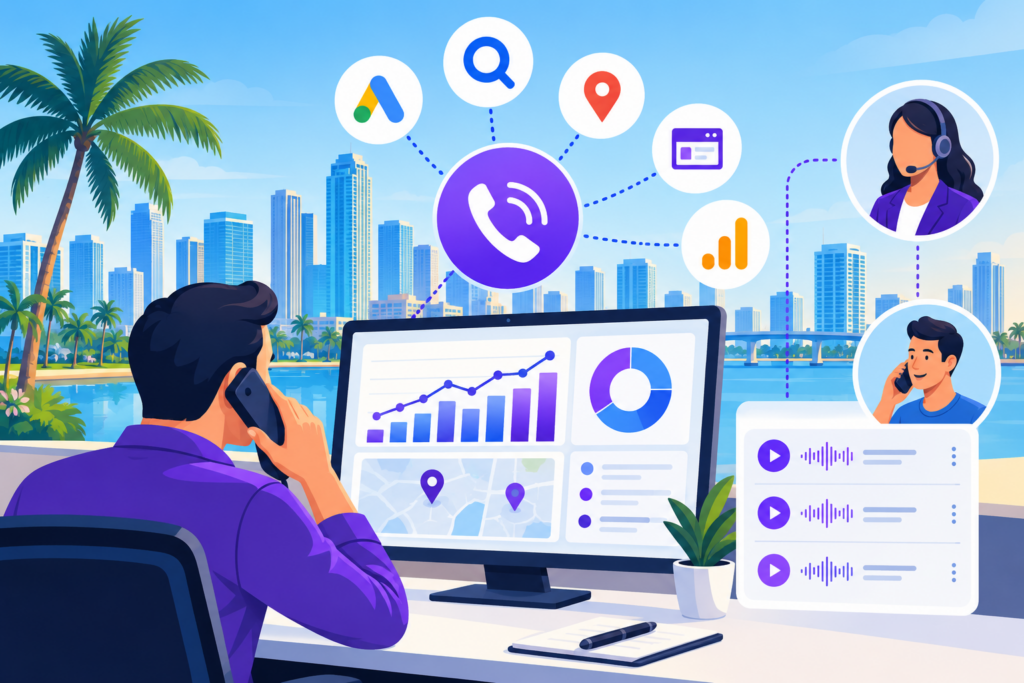
What the Work Covers
Call tracking setup
We review how your business receives calls and identify which marketing sources need to be measured. Depending on the system and agreed scope, tracking numbers or other attribution methods can help distinguish calls associated with different campaigns, pages, or channels.
Multi-touchpoint attribution
Customers may interact with several marketing touchpoints before contacting a business. Reporting can bring together available data from paid ads, organic search, local listings, and website visits to show the paths associated with enquiries. Attribution has limitations, especially when people switch devices or contact a business through untracked channels.
Campaign and source reporting
We review available call data alongside advertising and website metrics. This can help identify which sources generate calls, whether campaigns attract relevant enquiries, and where additional investigation may be needed.
Lead quality and outcomes
Call volume alone does not show whether marketing is generating valuable opportunities. Where the business records outcomes, reporting can distinguish qualified enquiries from irrelevant calls, existing-customer requests, or other calls that do not match the campaign goal.
Tracking quality checks
Incorrect number placement, broken integrations, duplicate conversions, or missing records can distort reports. We review the available setup and identify issues that may affect the reliability of results.
Reporting and recommendations
Findings are organized into a clear view of performance, changes, limitations, and possible next steps. Recommendations should explain the evidence behind them rather than relying on unexplained scores or raw call totals.

What is different about this market
Downtown West Palm Beach is a trust-led market, not a price-led one. Business owners here have usually already sat through a pitch from a national marketing chain or agency rollup, signed something, and gotten a PDF of traffic charts with no tie to real calls or signed business. A lower quote does not win the meeting; proof that the reporting is real does.
The business mix around Clematis, Datura, and the Flagler Drive corridor leans legal, medical, and finance, high-consideration work where people research over several desktop sessions during business hours before ever dialing. Call tracking here needs to show that research path, not just that a call happened.

How we start
We start by auditing what you already have. If a previous agency left you with Google Analytics and nothing else, we check whether any call data exists at all. Most of the time it does not, or it exists but was never tied to a specific campaign.
From there we set up tracking numbers matched to your live channels, confirm call forwarding works cleanly with your office phone or cell line, and run a short test period before we hand over the first real report. We would rather catch a misrouted number in week one than explain a data gap in month three.

What it costs
Call tracking and reporting is typically bundled with the Google Ads or SEO work it supports, since tracking numbers and a reporting dashboard only make sense attached to a live campaign. Pricing depends on how many channels and numbers you need tracked, how many locations across West Palm Beach and the surrounding Palm Beach County area you’re monitoring, and how deep the CRM integration goes. A simple setup tracking one Google Ads account with a handful of dynamic numbers costs far less than a multi-location build tying call data into your sales pipeline, attribution reports, and recorded-call review for staff training.
- Number of tracking numbers and channels (ads, organic, directory listings)
- Dynamic number insertion across your website
- CRM or sales software integration
- Call recording, scoring, and monthly reporting depth
Most West Palm Beach clients add this to an existing Google Ads or SEO engagement rather than purchase it standalone. Call (754) 704-4727 for a quote based on your actual channel mix, not a generic package price.
FAQ's
These are the 5 questions West Palm Beach homeowners ask us most about call tracking and reporting, answered plainly so you know what to expect before any work starts. If yours isn't covered here, get in touch and we'll walk you through it.
Can you track which keyword or ad actually caused a phone call?
Yes. Each call tracking number is tied to a specific source – a Google Ads campaign, an organic landing page, a Google Business Profile listing, or a referral link. When the call comes in, we see which one triggered it, not just that a call happened.
Do you record calls, and can my staff get in trouble for what is on them?
Calls are recorded for quality and attribution review, with the standard disclosure played to callers. We use the recordings to check how your staff handle leads and whether the marketing is sending the right kind of caller, not to audit employees on unrelated matters.
Will this replace my current phone system?
No. Call tracking numbers forward to your existing office line or cell phone. Nothing changes about how your staff answer or transfer calls. The tracking number sits in front of your real number and logs the data before connecting the call.
We get a lot of our business from referrals and walk-ins, not search. Is this still worth it?
If most of your new business already comes from referrals, tracking matters less for you right now. We would want to look at your actual lead mix first rather than sell you reporting for a channel that is not doing much work yet.
How is this different from just looking at Google Ads conversion numbers?
Google Ads conversion data tells you a click happened. It does not tell you if that caller was a qualified lead, a wrong number, a vendor, or an existing client calling back. Call recording and tagging fills that gap.
What you get each month
Every reporting period, you get a call log broken out by source, a set of recordings you can listen to directly, lead-quality tags on each call, and a written summary connecting the call activity back to what changed in your campaigns. If something underperformed, we say so and explain the likely reason, rather than burying a bad month inside an average.
You also get a line of contact for questions about any specific call or number in the report, so you are not left guessing what a spike or a drop actually means.