
- Home
- Services
- Portfolio
- About
- Service AreasFort Lauderdale, FL
- Web Design
- Redesign
- WordPress
- Ecommerce
- Landing Pages
- SEO Services
- Local SEO
- GBP
- Google Ads
- PPC
- Digital Marketing
- Internet Marketing
- Advertising
- Tracking
- Dental Marketing
- Medical Marketing
- HVAC Marketing
- Roofing Marketing
- Pest Control Marketing
- Home Services Marketing
- Plumbing Marketing
- Electrical Marketing
- Landscaping Marketing
- Remodeling Marketing
Pembroke Pines, FL- Web Design
- Redesign
- WordPress
- Ecommerce
- Landing Pages
- SEO Services
- Local SEO
- GBP
- Google Ads
- PPC
- Digital Marketing
- Internet Marketing
- Advertising
- Tracking
- Dental Marketing
- Medical Marketing
- HVAC Marketing
- Roofing Marketing
- Pest Control Marketing
- Home Services Marketing
- Plumbing Marketing
- Electrical Marketing
- Landscaping Marketing
- Remodeling Marketing
Hialeah, FL- Web Design
- Redesign
- WordPress
- Ecommerce
- Landing Pages
- SEO Services
- Local SEO
- GBP
- Google Ads
- PPC
- Digital Marketing
- Internet Marketing
- Advertising
- Tracking
- Dental Marketing
- Medical Marketing
- HVAC Marketing
- Roofing Marketing
- Pest Control Marketing
- Home Services Marketing
- Plumbing Marketing
- Electrical Marketing
- Landscaping Marketing
- Remodeling Marketing
Hollywood, FL- Web Design
- Redesign
- WordPress
- Ecommerce
- Landing Pages
- SEO Services
- Local SEO
- GBP
- Google Ads
- PPC
- Digital Marketing
- Internet Marketing
- Advertising
- Tracking
- Dental Marketing
- Medical Marketing
- HVAC Marketing
- Roofing Marketing
- Pest Control Marketing
- Home Services Marketing
- Plumbing Marketing
- Electrical Marketing
- Landscaping Marketing
- Remodeling Marketing
Miramar, FL- Web Design
- Redesign
- WordPress
- Ecommerce
- Landing Pages
- SEO Services
- Local SEO
- GBP
- Google Ads
- PPC
- Digital Marketing
- Internet Marketing
- Advertising
- Tracking
- Dental Marketing
- Medical Marketing
- HVAC Marketing
- Roofing Marketing
- Pest Control Marketing
- Home Services Marketing
- Plumbing Marketing
- Electrical Marketing
- Landscaping Marketing
- Remodeling Marketing
Coral Springs, FL- Web Design
- Redesign
- WordPress
- Ecommerce
- Landing Pages
- SEO Services
- Local SEO
- GBP
- Google Ads
- PPC
- Digital Marketing
- Internet Marketing
- Advertising
- Tracking
- Dental Marketing
- Medical Marketing
- HVAC Marketing
- Roofing Marketing
- Pest Control Marketing
- Home Services Marketing
- Plumbing Marketing
- Electrical Marketing
- Landscaping Marketing
- Remodeling Marketing
Pompano Beach, FL- Web Design
- Redesign
- WordPress
- Ecommerce
- Landing Pages
- SEO Services
- Local SEO
- GBP
- Google Ads
- PPC
- Digital Marketing
- Internet Marketing
- Advertising
- Tracking
- Dental Marketing
- Medical Marketing
- HVAC Marketing
- Roofing Marketing
- Pest Control Marketing
- Home Services Marketing
- Plumbing Marketing
- Electrical Marketing
- Landscaping Marketing
- Remodeling Marketing
Davie, FL- Web Design
- Redesign
- WordPress
- Ecommerce
- Landing Pages
- SEO Services
- Local SEO
- GBP
- Google Ads
- PPC
- Digital Marketing
- Internet Marketing
- Advertising
- Tracking
- Dental Marketing
- Medical Marketing
- HVAC Marketing
- Roofing Marketing
- Pest Control Marketing
- Home Services Marketing
- Plumbing Marketing
- Electrical Marketing
- Landscaping Marketing
- Remodeling Marketing
Sunrise, FL- Web Design
- Redesign
- WordPress
- Ecommerce
- Landing Pages
- SEO Services
- Local SEO
- GBP
- Google Ads
- PPC
- Digital Marketing
- Internet Marketing
- Advertising
- Tracking
- Dental Marketing
- Medical Marketing
- HVAC Marketing
- Roofing Marketing
- Pest Control Marketing
- Home Services Marketing
- Plumbing Marketing
- Electrical Marketing
- Landscaping Marketing
- Remodeling Marketing
Plantation, FL- Web Design
- Redesign
- WordPress
- Ecommerce
- Landing Pages
- SEO Services
- Local SEO
- GBP
- Google Ads
- PPC
- Digital Marketing
- Internet Marketing
- Advertising
- Tracking
- Dental Marketing
- Medical Marketing
- HVAC Marketing
- Roofing Marketing
- Pest Control Marketing
- Home Services Marketing
- Plumbing Marketing
- Electrical Marketing
- Landscaping Marketing
- Remodeling Marketing
Deerfield Beach, FL- Web Design
- Redesign
- WordPress
- Ecommerce
- Landing Pages
- SEO Services
- Local SEO
- GBP
- Google Ads
- PPC
- Digital Marketing
- Internet Marketing
- Advertising
- Tracking
- Dental Marketing
- Medical Marketing
- HVAC Marketing
- Roofing Marketing
- Pest Control Marketing
- Home Services Marketing
- Plumbing Marketing
- Electrical Marketing
- Landscaping Marketing
- Remodeling Marketing
Miami Gardens, FL- Web Design
- Redesign
- WordPress
- Ecommerce
- Landing Pages
- SEO Services
- Local SEO
- GBP
- Google Ads
- PPC
- Digital Marketing
- Internet Marketing
- Advertising
- Tracking
- Dental Marketing
- Medical Marketing
- HVAC Marketing
- Roofing Marketing
- Pest Control Marketing
- Home Services Marketing
- Plumbing Marketing
- Electrical Marketing
- Landscaping Marketing
- Remodeling Marketing
Lauderhill, FL- Web Design
- Redesign
- WordPress
- Ecommerce
- Landing Pages
- SEO Services
- Local SEO
- GBP
- Google Ads
- PPC
- Digital Marketing
- Internet Marketing
- Advertising
- Tracking
- Dental Marketing
- Medical Marketing
- HVAC Marketing
- Roofing Marketing
- Pest Control Marketing
- Home Services Marketing
- Plumbing Marketing
- Electrical Marketing
- Landscaping Marketing
- Remodeling Marketing
West Palm Beach, FL- Web Design
- Redesign
- WordPress
- Ecommerce
- Landing Pages
- SEO Services
- Local SEO
- GBP
- Google Ads
- PPC
- Digital Marketing
- Internet Marketing
- Advertising
- Tracking
- Dental Marketing
- Medical Marketing
- HVAC Marketing
- Roofing Marketing
- Pest Control Marketing
- Home Services Marketing
- Plumbing Marketing
- Electrical Marketing
- Landscaping Marketing
- Remodeling Marketing
Tamarac, FL- Web Design
- Redesign
- WordPress
- Ecommerce
- Landing Pages
- SEO Services
- Local SEO
- GBP
- Google Ads
- PPC
- Digital Marketing
- Internet Marketing
- Advertising
- Tracking
- Dental Marketing
- Medical Marketing
- HVAC Marketing
- Roofing Marketing
- Pest Control Marketing
- Home Services Marketing
- Plumbing Marketing
- Electrical Marketing
- Landscaping Marketing
- Remodeling Marketing
Weston, FL- Web Design
- Redesign
- WordPress
- Ecommerce
- Landing Pages
- SEO Services
- Local SEO
- GBP
- Google Ads
- PPC
- Digital Marketing
- Internet Marketing
- Advertising
- Tracking
- Dental Marketing
- Medical Marketing
- HVAC Marketing
- Roofing Marketing
- Pest Control Marketing
- Home Services Marketing
- Plumbing Marketing
- Electrical Marketing
- Landscaping Marketing
- Remodeling Marketing
Boca Raton, FLMargate, FLCoconut Creek, FLMiami Beach, FLHomestead, FLKendall, FLDoral, FLBoynton Beach, FLThe Hammocks, FLNorth Lauderdale, FLOakland Park, FLDelray Beach, FLNorth Miami, FLHallandale Beach, FLFontainebleau, FLKendale Lakes, FLWellington, FLJupiter, FLTamiami, FLPalm Beach Gardens, FLLauderdale Lakes, FLCooper City, FLCountry Club, FLParkland, FLCoral Gables, FLDania Beach, FLCutler Bay, FLNorth Miami Beach, FLGreenacres, FLLake Worth Beach, FLPrinceton, FLRoyal Palm Beach, FLSouth Miami Heights, FLRichmond West, FLRiviera Beach, FLWest Little River, FLGolden Glades, FLAventura, FLMiami Lakes, FLWestchester, FLLeisure City, FLCoral Terrace, FLPalm Springs, FLPalmetto Bay, FLHialeah Gardens, FLSunny Isles Beach, FLIves Estates, FLWest Park, FLSweetwater, FLPinecrest, FLSunset, FLPinewood, FLWilton Manors, FLOpa-locka, FLLighthouse Point, FLBelle Glade, FLNaranja, FLPalmetto Estates, FLBrownsville, FLKey Biscayne, FLOlympia Heights, FLMiami Springs, FLFlorida City, FLSouth Miami, FLThree Lakes, FLGladeview, FLNorth Palm Beach, FLMiami Shores, FLSouthwest Ranches, FLKings Point, FLLauderdale-by-the-Sea, FLHillsboro Beach, FLSea Ranch Lakes, FLLazy Lake, FL - Blog
- Contact
Marketing for Dental Practices in Pembroke Pines, Florida
Pembroke Pines added most of its housing stock in the last two decades. That matters for a dental practice because new residents do not have a family dentist yet. They moved from somewhere else, their old dentist is an hour away or in another state, and they are searching cold. That search almost always starts on a phone, usually with “dentist near me” or “dentist Pembroke Pines that takes [insurance name].” The practice that shows up clearly, answers the insurance question fast, and makes booking easy gets the call. The one that looks like every other practice in the map pack does not.

How Pembroke Pines dental buyers search
The search pattern here splits into two groups. The first is the new-resident group: families and retirees who closed on a house in a planned community like Pembroke Falls, Towngate, or Century Village in the last one to three years and need a dentist close to home. They search by neighborhood proximity and they search with insurance in the query, because switching plans or finding a new in-network provider is part of moving. The second group is existing residents shopping on price or a specific procedure, usually Invisalign, implants, whitening, or an emergency visit, and they search with more intent and less loyalty, often comparing three or four practices back to back in the same sitting.
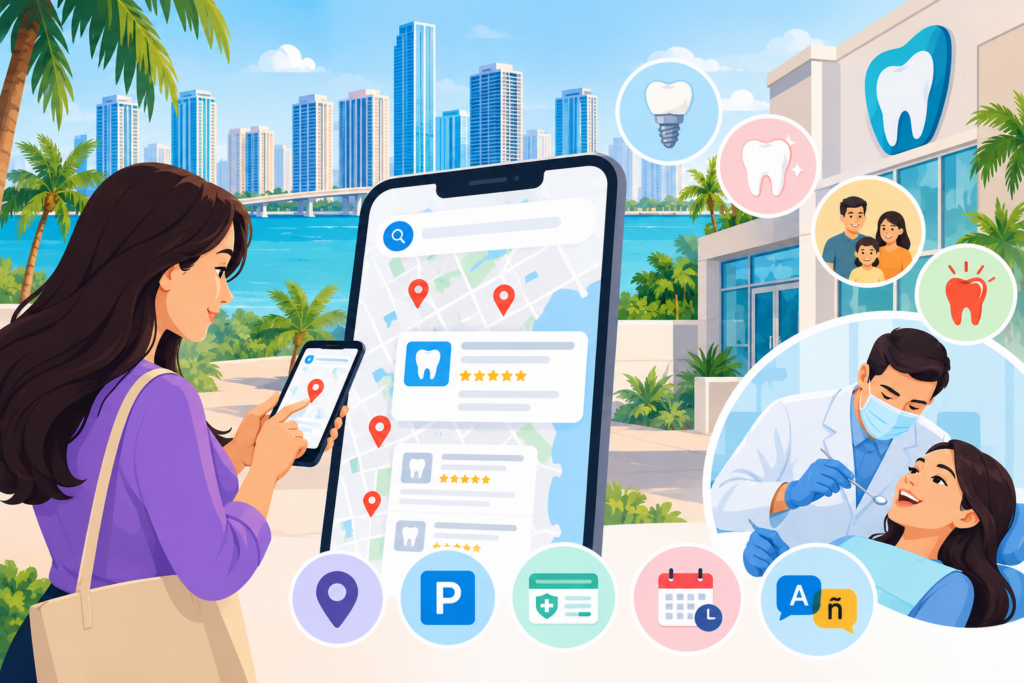
Both groups do the same thing before they call: they pull up three to five practices in Google Maps, check the photos, scan the review count and the most recent review date, and look at whether the website states accepted insurance plans without a phone call. If your Google Business Profile has a six-month-old review and a competitor two exits down Pines Boulevard has one from last week, that is the deciding factor more often than the actual clinical quality of either practice. Pricing pages and “new patient special” offers get compared the same way, side by side in open browser tabs, before a single phone call is placed.
The competition here
Pembroke Pines is not an underserved dental market. Along Pines Boulevard and near the major shopping corridors you will find a cluster of general and pediatric practices within a two-mile radius of almost any residential pocket in the city, plus the orthodontic and specialist practices that advertise separately for Invisalign and implants. That density means the map pack for “dentist Pembroke Pines” is genuinely competitive, and a practice with a thin or outdated Google Business Profile will not break into the top three no matter how good the clinical work is. Several of the longer-established groups have hundreds of reviews, multiple locations feeding their profile strength, and front-desk staff trained to ask for a review at checkout. Catching up on review count alone can take months, which is why review velocity, not just total volume, matters so much in a market this saturated.
Organic search outside the map pack is less crowded, but only for practices willing to build pages that actually separate services. Most dental sites in this market have one page that lists every service, which cannot rank for “pediatric dentist Pembroke Pines,” “Invisalign Pembroke Pines,” and “emergency dentist Pembroke Pines” at the same time. That gap is where a newer practice can realistically compete, because it does not require outranking the established group in the map pack, it requires building the pages nobody else bothered to build. The same applies to neighborhood-level content: pages written for patients near Walmart Supercenter on Pines Boulevard or the Chapel Trail area read as more relevant than a single generic “serving Pembroke Pines” paragraph, and relevance like that is still rare here.
The honest read: expect to compete hard for map pack visibility and expect profile freshness, review velocity, and photo quality to matter as much as anything on your website. Budget time for:
- A Google Business Profile updated with new photos and posts on a regular schedule
- A steady, honest review-request process built into checkout
- Separate, specific service pages instead of one crowded page
Expect organic, service-specific pages to be the more open lane, and expect it to stay open only as long as competitors keep ignoring it.

What we build for dental practices in this market
Most practices here operate as a single location serving a surrounding radius rather than a downtown storefront with walk-in traffic, which is closer to how a service-area business behaves than a retail shop. That shifts weight onto the Google Business Profile and the service pages, more than onto generic city-wide brand pages. We build service pages by procedure (cleanings, Invisalign, implants, emergency, pediatric) because each one targets a different search and a different buyer, and a single combined services page cannot hold rank for all of them. We write the insurance and new-patient information in plain text on the page, set up call tracking so you can see which page or ad produced a call, and build the Google Business Profile out with the categories, service list, and photo cadence that the map pack algorithm actually rewards. For practices running ads, we build dental-specific landing pages instead of sending traffic to the homepage, because a homepage trying to serve every visitor converts worse than a page built for one offer.
Local SEO
Improve relevant website content, location signals, internal links, and service information to support local search visibility.
Google Business Profile
Review profile accuracy, categories, services, contact details, and other eligible information. Changes should follow Google's Business Profile guidelines.
Treatment pages
Build or improve pages for services such as general dentistry, cosmetic treatments, implants, or emergency appointments when those services are offered.
Paid search campaigns
Target relevant searches, refine location settings, and review search terms to reduce spend on enquiries that do not match the practice.
Conversion tracking
Measure available actions such as appointment-form submissions, calls, and clicks on booking links.
Website improvements
Make service information, insurance details, contact options, and booking steps easier to find on desktop and mobile.
What we measure
We track new-patient calls and form submissions back to the specific page, keyword, and campaign that produced them, using call tracking numbers and attribution rather than guessing from a monthly traffic chart. That means you see whether the implants page or the Invisalign page is producing calls, whether a paid campaign on a specific procedure is worth the spend, and whether your Google Business Profile is pulling its share of the calls compared to the website. We report on what happened, not on vanity metrics like impressions that do not turn into a booked patient.
We do not promise a ranking position, a call volume, or a timeline, and any agency that gives you a specific number on a dental market this competitive before seeing your current profile and site is guessing.

What it costs
Cost depends on where your practice starts. A practice with no service pages and a thin Google Business Profile needs more build work up front than one that already has a reasonable site and just needs the profile fixed and ads added. We quote after looking at your current site, your Google Business Profile, and who you are actually competing against in your specific part of Pembroke Pines, because a practice near a newer planned community competes against a different set of practices than one near the older sections of the city.
- Organic search visibility and relevant website visits.
- Google Business Profile interactions and available performance data.
- Paid campaign clicks, search terms, and advertising costs.
- Tracked calls, appointment-form submissions, and booking actions.
- Enquiry quality, where the practice can reliably share and categorize that information.
- Changes made, issues identified, and recommended next steps.
Get an audit
Before we propose any plan, we audit the practice as it stands today: your Google Business Profile, how your site actually performs for patients searching "dentist near me" or specific treatments, and the three to five competing practices outranking you in Pembroke Pines right now.

FAQ's
These are the 5 questions Pembroke Pines homeowners ask us most about dental practice marketing, answered plainly so you know what to expect before any work starts. If yours isn't covered here, get in touch and we'll walk you through it.
Does my dental practice need a page for every procedure, or is one services page enough?
One combined page cannot rank for "Invisalign Pembroke Pines," "emergency dentist Pembroke Pines," and "pediatric dentist Pembroke Pines" at the same time. Each procedure is a different search with a different buyer, so we build separate pages for the ones that bring in new patients.
Is the Google Business Profile or the website more important for a Pembroke Pines dentist?
Both matter, but the profile tends to decide whether you appear in the map pack at all, which is where most "dentist near me" searches get answered. The website matters most once someone clicks through to compare insurance, services, and reviews.
How do you handle insurance information on the website?
We write it in plain text on the page itself, not behind a form. People comparing three practices are not going to call each one just to ask if you take their plan; the practice that answers it upfront gets the call.
Can you guarantee we will rank above the other dentists near us?
No. Nobody honest can guarantee a ranking position in a market this competitive. We can tell you where your profile and site stand against the practices currently ranking and what it would take to close the gap.
Do you work with pediatric dentists and orthodontists too, or just general practices?
We work with general, pediatric, and specialty practices (orthodontics, implants, oral surgery). The approach changes based on who the buyer is and how far they are willing to travel for the specialty.
What this means for your site
Your homepage and insurance page have to answer “do you take my plan” in text, not behind a contact form. If a visitor has to call to find out, they call the next practice instead, because calling three dentists to compare insurance is normal buyer behavior, not an edge case. The same logic applies to new-patient pricing and procedure-specific pages like implants or Invisalign: vague language sends the visitor back to the map to keep comparing. We write insurance, pricing, and new-patient pages so those questions are answered on the page itself, and we structure review and scheduling prompts so your Google Business Profile keeps showing recent activity instead of going stale.