
- Home
- Services
- Portfolio
- About
- Service AreasFort Lauderdale, FL
- Web Design
- Redesign
- WordPress
- Ecommerce
- Landing Pages
- SEO Services
- Local SEO
- GBP
- Google Ads
- PPC
- Digital Marketing
- Internet Marketing
- Advertising
- Tracking
- Dental Marketing
- Medical Marketing
- HVAC Marketing
- Roofing Marketing
- Pest Control Marketing
- Home Services Marketing
- Plumbing Marketing
- Electrical Marketing
- Landscaping Marketing
- Remodeling Marketing
Pembroke Pines, FL- Web Design
- Redesign
- WordPress
- Ecommerce
- Landing Pages
- SEO Services
- Local SEO
- GBP
- Google Ads
- PPC
- Digital Marketing
- Internet Marketing
- Advertising
- Tracking
- Dental Marketing
- Medical Marketing
- HVAC Marketing
- Roofing Marketing
- Pest Control Marketing
- Home Services Marketing
- Plumbing Marketing
- Electrical Marketing
- Landscaping Marketing
- Remodeling Marketing
Hialeah, FL- Web Design
- Redesign
- WordPress
- Ecommerce
- Landing Pages
- SEO Services
- Local SEO
- GBP
- Google Ads
- PPC
- Digital Marketing
- Internet Marketing
- Advertising
- Tracking
- Dental Marketing
- Medical Marketing
- HVAC Marketing
- Roofing Marketing
- Pest Control Marketing
- Home Services Marketing
- Plumbing Marketing
- Electrical Marketing
- Landscaping Marketing
- Remodeling Marketing
Hollywood, FL- Web Design
- Redesign
- WordPress
- Ecommerce
- Landing Pages
- SEO Services
- Local SEO
- GBP
- Google Ads
- PPC
- Digital Marketing
- Internet Marketing
- Advertising
- Tracking
- Dental Marketing
- Medical Marketing
- HVAC Marketing
- Roofing Marketing
- Pest Control Marketing
- Home Services Marketing
- Plumbing Marketing
- Electrical Marketing
- Landscaping Marketing
- Remodeling Marketing
Miramar, FL- Web Design
- Redesign
- WordPress
- Ecommerce
- Landing Pages
- SEO Services
- Local SEO
- GBP
- Google Ads
- PPC
- Digital Marketing
- Internet Marketing
- Advertising
- Tracking
- Dental Marketing
- Medical Marketing
- HVAC Marketing
- Roofing Marketing
- Pest Control Marketing
- Home Services Marketing
- Plumbing Marketing
- Electrical Marketing
- Landscaping Marketing
- Remodeling Marketing
Coral Springs, FL- Web Design
- Redesign
- WordPress
- Ecommerce
- Landing Pages
- SEO Services
- Local SEO
- GBP
- Google Ads
- PPC
- Digital Marketing
- Internet Marketing
- Advertising
- Tracking
- Dental Marketing
- Medical Marketing
- HVAC Marketing
- Roofing Marketing
- Pest Control Marketing
- Home Services Marketing
- Plumbing Marketing
- Electrical Marketing
- Landscaping Marketing
- Remodeling Marketing
Pompano Beach, FL- Web Design
- Redesign
- WordPress
- Ecommerce
- Landing Pages
- SEO Services
- Local SEO
- GBP
- Google Ads
- PPC
- Digital Marketing
- Internet Marketing
- Advertising
- Tracking
- Dental Marketing
- Medical Marketing
- HVAC Marketing
- Roofing Marketing
- Pest Control Marketing
- Home Services Marketing
- Plumbing Marketing
- Electrical Marketing
- Landscaping Marketing
- Remodeling Marketing
Davie, FL- Web Design
- Redesign
- WordPress
- Ecommerce
- Landing Pages
- SEO Services
- Local SEO
- GBP
- Google Ads
- PPC
- Digital Marketing
- Internet Marketing
- Advertising
- Tracking
- Dental Marketing
- Medical Marketing
- HVAC Marketing
- Roofing Marketing
- Pest Control Marketing
- Home Services Marketing
- Plumbing Marketing
- Electrical Marketing
- Landscaping Marketing
- Remodeling Marketing
Sunrise, FL- Web Design
- Redesign
- WordPress
- Ecommerce
- Landing Pages
- SEO Services
- Local SEO
- GBP
- Google Ads
- PPC
- Digital Marketing
- Internet Marketing
- Advertising
- Tracking
- Dental Marketing
- Medical Marketing
- HVAC Marketing
- Roofing Marketing
- Pest Control Marketing
- Home Services Marketing
- Plumbing Marketing
- Electrical Marketing
- Landscaping Marketing
- Remodeling Marketing
Plantation, FL- Web Design
- Redesign
- WordPress
- Ecommerce
- Landing Pages
- SEO Services
- Local SEO
- GBP
- Google Ads
- PPC
- Digital Marketing
- Internet Marketing
- Advertising
- Tracking
- Dental Marketing
- Medical Marketing
- HVAC Marketing
- Roofing Marketing
- Pest Control Marketing
- Home Services Marketing
- Plumbing Marketing
- Electrical Marketing
- Landscaping Marketing
- Remodeling Marketing
Deerfield Beach, FL- Web Design
- Redesign
- WordPress
- Ecommerce
- Landing Pages
- SEO Services
- Local SEO
- GBP
- Google Ads
- PPC
- Digital Marketing
- Internet Marketing
- Advertising
- Tracking
- Dental Marketing
- Medical Marketing
- HVAC Marketing
- Roofing Marketing
- Pest Control Marketing
- Home Services Marketing
- Plumbing Marketing
- Electrical Marketing
- Landscaping Marketing
- Remodeling Marketing
Miami Gardens, FL- Web Design
- Redesign
- WordPress
- Ecommerce
- Landing Pages
- SEO Services
- Local SEO
- GBP
- Google Ads
- PPC
- Digital Marketing
- Internet Marketing
- Advertising
- Tracking
- Dental Marketing
- Medical Marketing
- HVAC Marketing
- Roofing Marketing
- Pest Control Marketing
- Home Services Marketing
- Plumbing Marketing
- Electrical Marketing
- Landscaping Marketing
- Remodeling Marketing
Lauderhill, FL- Web Design
- Redesign
- WordPress
- Ecommerce
- Landing Pages
- SEO Services
- Local SEO
- GBP
- Google Ads
- PPC
- Digital Marketing
- Internet Marketing
- Advertising
- Tracking
- Dental Marketing
- Medical Marketing
- HVAC Marketing
- Roofing Marketing
- Pest Control Marketing
- Home Services Marketing
- Plumbing Marketing
- Electrical Marketing
- Landscaping Marketing
- Remodeling Marketing
West Palm Beach, FL- Web Design
- Redesign
- WordPress
- Ecommerce
- Landing Pages
- SEO Services
- Local SEO
- GBP
- Google Ads
- PPC
- Digital Marketing
- Internet Marketing
- Advertising
- Tracking
- Dental Marketing
- Medical Marketing
- HVAC Marketing
- Roofing Marketing
- Pest Control Marketing
- Home Services Marketing
- Plumbing Marketing
- Electrical Marketing
- Landscaping Marketing
- Remodeling Marketing
Tamarac, FL- Web Design
- Redesign
- WordPress
- Ecommerce
- Landing Pages
- SEO Services
- Local SEO
- GBP
- Google Ads
- PPC
- Digital Marketing
- Internet Marketing
- Advertising
- Tracking
- Dental Marketing
- Medical Marketing
- HVAC Marketing
- Roofing Marketing
- Pest Control Marketing
- Home Services Marketing
- Plumbing Marketing
- Electrical Marketing
- Landscaping Marketing
- Remodeling Marketing
Weston, FL- Web Design
- Redesign
- WordPress
- Ecommerce
- Landing Pages
- SEO Services
- Local SEO
- GBP
- Google Ads
- PPC
- Digital Marketing
- Internet Marketing
- Advertising
- Tracking
- Dental Marketing
- Medical Marketing
- HVAC Marketing
- Roofing Marketing
- Pest Control Marketing
- Home Services Marketing
- Plumbing Marketing
- Electrical Marketing
- Landscaping Marketing
- Remodeling Marketing
Boca Raton, FLMargate, FLCoconut Creek, FLMiami Beach, FLHomestead, FLKendall, FLDoral, FLBoynton Beach, FLThe Hammocks, FLNorth Lauderdale, FLOakland Park, FLDelray Beach, FLNorth Miami, FLHallandale Beach, FLFontainebleau, FLKendale Lakes, FLWellington, FLJupiter, FLTamiami, FLPalm Beach Gardens, FLLauderdale Lakes, FLCooper City, FLCountry Club, FLParkland, FLCoral Gables, FLDania Beach, FLCutler Bay, FLNorth Miami Beach, FLGreenacres, FLLake Worth Beach, FLPrinceton, FLRoyal Palm Beach, FLSouth Miami Heights, FLRichmond West, FLRiviera Beach, FLWest Little River, FLGolden Glades, FLAventura, FLMiami Lakes, FLWestchester, FLLeisure City, FLCoral Terrace, FLPalm Springs, FLPalmetto Bay, FLHialeah Gardens, FLSunny Isles Beach, FLIves Estates, FLWest Park, FLSweetwater, FLPinecrest, FLSunset, FLPinewood, FLWilton Manors, FLOpa-locka, FLLighthouse Point, FLBelle Glade, FLNaranja, FLPalmetto Estates, FLBrownsville, FLKey Biscayne, FLOlympia Heights, FLMiami Springs, FLFlorida City, FLSouth Miami, FLThree Lakes, FLGladeview, FLNorth Palm Beach, FLMiami Shores, FLSouthwest Ranches, FLKings Point, FLLauderdale-by-the-Sea, FLHillsboro Beach, FLSea Ranch Lakes, FLLazy Lake, FL - Blog
- Contact
Marketing for Dental Practices in TaTamiami, Florida
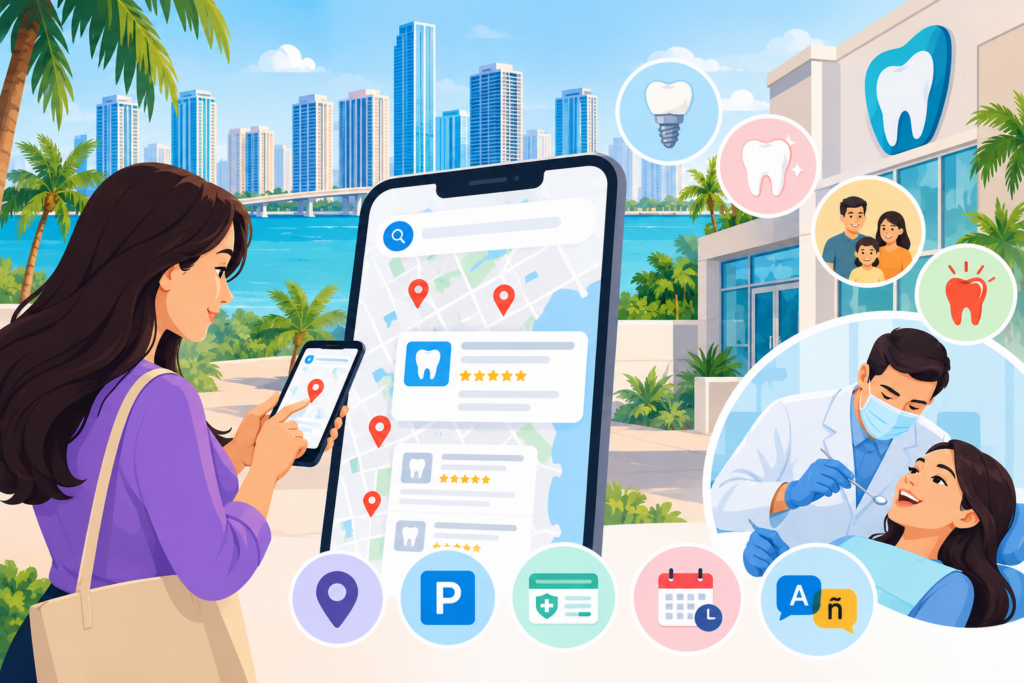
A patient in TaTamiami looking for a dentist does not search once and call. They search, compare three or four practices within two miles, check which ones take their insurance, and then decide. That compressed decision happens almost entirely on a phone screen, usually in a few minutes. If your practice is not visible at that moment, in a way that answers the insurance question before they call, the appointment goes to whichever practice made that easiest.
We build dental marketing in TaTamiami around that specific moment: the search, the comparison, and the insurance filter. Not general visibility. That decision window.

How TaTamiami Dental Practices buyers search
Most dental searches in TaTamiami start narrow. People search “dentist near me,” “dentista en TaTamiami,” or a plan name plus “dentist,” like “dentist that takes Cigna TaTamiami.” Because TaTamiami is a planned, residential area with large Hispanic-majority communities, a meaningful share of that search volume happens in Spanish, and practices that only have an English-language site are invisible to it. Beyond basic translation, the phrasing matters too — “dentista de emergencia” and “dentista para niños” are searched far more often than their literal English equivalents, so a site needs Spanish content written for how people actually search, not a machine-translated mirror of the English pages.
The buyer is almost always a homeowner or renter in the immediate area, not someone driving across the county for dental work. That means hyperlocal relevance matters more than broad brand reach. Google’s local results favor the practice that is physically closest and most clearly relevant to the specific search, which is why a generic “Services” page rarely performs as well as a page built around a specific procedure and a specific insurance plan. Searches naming nearby landmarks or neighboring areas like Westchester and Fontainebleau also show up regularly, since TaTamiami residents don’t think in strict city boundaries when they search for care.
Search volume also moves with insurance cycles. January sees a jump in searches from people who just got new coverage or hit a plan reset, and late in the year you see a rise in “use my benefits before they expire” searches. Summer brings a separate spike tied to school physicals and kids’ checkups before the new school year starts. A practice that is not adjusting ad spend and content around those cycles — in both languages — is leaving predictable, recurring demand on the table to competitors who plan ahead for it.
The competition here
TaTamiami is dense. A high number of households sit inside a tight radius of any given practice, which is good for demand but also means several dental offices are realistically competing for the same patient pool within a two-to-three mile drive. That is the honest shape of this market: not a handful of practices spread thin, but a cluster of options close enough together that proximity alone does not decide the winner. A patient searching “dentist near me” from a TaTamiami zip code is going to see a stacked map pack, and the practices that show up consistently are rarely the ones with the biggest budgets. They are the ones with the most complete, most accurate, most locally specific online presence.
What’s notable in TaTamiami specifically is who you are actually competing against online. It is rarely other local agencies running sharp local SEO for a dental client down the street. The visibility fight here is mostly against national directory sites, insurance-company “find a dentist” tools, and listing aggregators that outrank individual practice websites because they have more pages and more backlinks. That is a different problem than fighting a well-marketed local competitor. It means a well-built, well-structured practice website has a real opening to outrank directories for its own name, its own procedures, and its own neighborhood, because directories cannot write specific, local, insurance-accurate content the way a practice can.
This shows up in practical ways: a directory listing can tell a patient a practice “accepts most PPO plans,” but it cannot explain same-day crown availability, Saturday hours, or which TaTamiami intersection makes parking easy. Those specifics are what convert a search into a booked appointment, and they are exactly what a directory page structurally cannot deliver.
Beating a directory does not take the same budget as beating a competing agency’s campaign. It takes a site built correctly for how Google actually reads local relevance:
- Service pages written for specific procedures rather than one generic “services” page
- Consistent name, address, and phone details across every citation
- Review volume and response patterns that outpace nearby listings
Get those fundamentals right and a TaTamiami practice can out-rank directories carrying far more domain authority, simply because it answers the local question better.

What we build for Dental Practices in this market
We do not build one page that tries to rank for “dentist,” “implants,” “Invisalign,” and “emergency dentist” all at once. One page cannot hold that much intent. We build a separate page for each core service a TaTamiami practice offers, and inside each one we answer the question that actually drives the call: does this practice take my insurance.
That means a dedicated page structure for the plans you accept, written in plain language, not a PDF buried in a patient portal. It means bilingual pages where Spanish-language search volume is real, not a machine-translated afterthought bolted onto the English site. It means the practice’s Google Business Profile is filled out with services, insurance notes, and photos that match what the website says, because inconsistency between the two is one of the most common reasons a strong practice still loses the map pack.
On the paid side, Google Ads campaigns get split by procedure and by insurance, not run as one broad “dental” campaign. Someone searching “emergency tooth extraction TaTamiami” and someone searching “teeth whitening cost” are different buyers with different urgency, and they should land on different pages with different calls to action.
Call tracking sits underneath all of it. Every ad, every page, every listing gets its own tracked number so you can see which search actually produced the phone call, not just which channel got credit for it in a dashboard.
Local SEO
Improve relevant website content, location signals, internal links, and service information to support local search visibility.
Google Business Profile
Review profile accuracy, categories, services, contact details, and other eligible information. Changes should follow Google's Business Profile guidelines.
Treatment pages
Build or improve pages for services such as general dentistry, cosmetic treatments, implants, or emergency appointments when those services are offered.
Paid search campaigns
Target relevant searches, refine location settings, and review search terms to reduce spend on enquiries that do not match the practice.
Conversion tracking
Measure available actions such as appointment-form submissions, calls, and clicks on booking links.
Website improvements
Make service information, insurance details, contact options, and booking steps easier to find on desktop and mobile.
What we measure
We report on calls, not clicks. A click is not a patient. We track which specific page or ad produced a phone call, how long that call lasted, and whether our reporting shows it as a new-patient inquiry versus an existing patient calling about a bill or a reschedule. That distinction matters because a campaign can generate plenty of calls and very few new patients if it is not filtered correctly.
Multi-touchpoint attribution means we also show you when someone found you through organic search two weeks ago, came back through a Google ad, and then called. Single-touch reporting would give all the credit to the ad and tell you to cut the content work that actually started the relationship. We do not report that way.
You get a monthly view of calls, form submissions, and where they came from, with the insurance and procedure patterns broken out so you can see which pages are actually producing patients and which ones need rework.

What it costs
Dental marketing in TaTamiami is typically priced across three pieces: the website build, ongoing SEO, and Google Ads management plus spend. Costs depend on how many procedure and insurance pages you need, how competitive those procedures are to advertise, and whether bilingual content is required.
- Organic search visibility and relevant website visits.
- Google Business Profile interactions and available performance data.
- Paid campaign clicks, search terms, and advertising costs.
- Tracked calls, appointment-form submissions, and booking actions.
- Enquiry quality, where the practice can reliably share and categorize that information.
- Changes made, issues identified, and recommended next steps.
Get an audit
We will look at your current website, your Google Business Profile, and how you show up against the directories and other practices in TaTamiami for the procedures and insurance plans you actually want more of — implants, Invisalign, cosmetic cases, or new-patient exams. You’ll get a plain-language read on page speed, booking friction, review volume, and where competing practices are outranking you for the searches that matter most.

FAQ's
These are the 5 questions TaTamiami homeowners ask us most about dental practice marketing, answered plainly so you know what to expect before any work starts. If yours isn't covered here, get in touch and we'll walk you through it.
How long does dental SEO take to show results in a market like TaTamiami?
It depends on how competitive your specific procedures and insurance pages are against the directories currently ranking, and on how much work your existing site needs. We won't put a timeline on it before seeing your site, because practices starting from a weak site take longer than ones that just need insurance and procedure pages built out correctly.
Do you build Spanish-language pages for TaTamiami practices?
Yes, where the search volume supports it. We look at actual search data for your procedures in Spanish before deciding which pages get a bilingual build, rather than translating every page by default.
Should I run Google Ads or focus on SEO first?
Most TaTamiami practices need both, run differently. Ads get you visible immediately while SEO work builds, and in a market where directories currently outrank many individual practice sites, that visibility gap matters in the short term.
Can you work with practices that only take certain insurance plans?
Yes. We build the insurance pages to match exactly what you accept, and we use that to filter ad traffic too, so you are not paying for calls from people on a plan you don't take.
How do you handle call tracking for an existing phone system?
We assign tracked numbers to your website, your ads, and your Google Business Profile listing, and those forward to your existing office line. Your staff answers the same way; we just see which source produced the call.