
- Home
- Services
- Portfolio
- About
- Service AreasFort Lauderdale, FL
- Web Design
- Redesign
- WordPress
- Ecommerce
- Landing Pages
- SEO Services
- Local SEO
- GBP
- Google Ads
- PPC
- Digital Marketing
- Internet Marketing
- Advertising
- Tracking
- Dental Marketing
- Medical Marketing
- HVAC Marketing
- Roofing Marketing
- Pest Control Marketing
- Home Services Marketing
- Plumbing Marketing
- Electrical Marketing
- Landscaping Marketing
- Remodeling Marketing
Pembroke Pines, FL- Web Design
- Redesign
- WordPress
- Ecommerce
- Landing Pages
- SEO Services
- Local SEO
- GBP
- Google Ads
- PPC
- Digital Marketing
- Internet Marketing
- Advertising
- Tracking
- Dental Marketing
- Medical Marketing
- HVAC Marketing
- Roofing Marketing
- Pest Control Marketing
- Home Services Marketing
- Plumbing Marketing
- Electrical Marketing
- Landscaping Marketing
- Remodeling Marketing
Hialeah, FL- Web Design
- Redesign
- WordPress
- Ecommerce
- Landing Pages
- SEO Services
- Local SEO
- GBP
- Google Ads
- PPC
- Digital Marketing
- Internet Marketing
- Advertising
- Tracking
- Dental Marketing
- Medical Marketing
- HVAC Marketing
- Roofing Marketing
- Pest Control Marketing
- Home Services Marketing
- Plumbing Marketing
- Electrical Marketing
- Landscaping Marketing
- Remodeling Marketing
Hollywood, FL- Web Design
- Redesign
- WordPress
- Ecommerce
- Landing Pages
- SEO Services
- Local SEO
- GBP
- Google Ads
- PPC
- Digital Marketing
- Internet Marketing
- Advertising
- Tracking
- Dental Marketing
- Medical Marketing
- HVAC Marketing
- Roofing Marketing
- Pest Control Marketing
- Home Services Marketing
- Plumbing Marketing
- Electrical Marketing
- Landscaping Marketing
- Remodeling Marketing
Miramar, FL- Web Design
- Redesign
- WordPress
- Ecommerce
- Landing Pages
- SEO Services
- Local SEO
- GBP
- Google Ads
- PPC
- Digital Marketing
- Internet Marketing
- Advertising
- Tracking
- Dental Marketing
- Medical Marketing
- HVAC Marketing
- Roofing Marketing
- Pest Control Marketing
- Home Services Marketing
- Plumbing Marketing
- Electrical Marketing
- Landscaping Marketing
- Remodeling Marketing
Coral Springs, FL- Web Design
- Redesign
- WordPress
- Ecommerce
- Landing Pages
- SEO Services
- Local SEO
- GBP
- Google Ads
- PPC
- Digital Marketing
- Internet Marketing
- Advertising
- Tracking
- Dental Marketing
- Medical Marketing
- HVAC Marketing
- Roofing Marketing
- Pest Control Marketing
- Home Services Marketing
- Plumbing Marketing
- Electrical Marketing
- Landscaping Marketing
- Remodeling Marketing
Pompano Beach, FL- Web Design
- Redesign
- WordPress
- Ecommerce
- Landing Pages
- SEO Services
- Local SEO
- GBP
- Google Ads
- PPC
- Digital Marketing
- Internet Marketing
- Advertising
- Tracking
- Dental Marketing
- Medical Marketing
- HVAC Marketing
- Roofing Marketing
- Pest Control Marketing
- Home Services Marketing
- Plumbing Marketing
- Electrical Marketing
- Landscaping Marketing
- Remodeling Marketing
Davie, FL- Web Design
- Redesign
- WordPress
- Ecommerce
- Landing Pages
- SEO Services
- Local SEO
- GBP
- Google Ads
- PPC
- Digital Marketing
- Internet Marketing
- Advertising
- Tracking
- Dental Marketing
- Medical Marketing
- HVAC Marketing
- Roofing Marketing
- Pest Control Marketing
- Home Services Marketing
- Plumbing Marketing
- Electrical Marketing
- Landscaping Marketing
- Remodeling Marketing
Sunrise, FL- Web Design
- Redesign
- WordPress
- Ecommerce
- Landing Pages
- SEO Services
- Local SEO
- GBP
- Google Ads
- PPC
- Digital Marketing
- Internet Marketing
- Advertising
- Tracking
- Dental Marketing
- Medical Marketing
- HVAC Marketing
- Roofing Marketing
- Pest Control Marketing
- Home Services Marketing
- Plumbing Marketing
- Electrical Marketing
- Landscaping Marketing
- Remodeling Marketing
Plantation, FL- Web Design
- Redesign
- WordPress
- Ecommerce
- Landing Pages
- SEO Services
- Local SEO
- GBP
- Google Ads
- PPC
- Digital Marketing
- Internet Marketing
- Advertising
- Tracking
- Dental Marketing
- Medical Marketing
- HVAC Marketing
- Roofing Marketing
- Pest Control Marketing
- Home Services Marketing
- Plumbing Marketing
- Electrical Marketing
- Landscaping Marketing
- Remodeling Marketing
Deerfield Beach, FL- Web Design
- Redesign
- WordPress
- Ecommerce
- Landing Pages
- SEO Services
- Local SEO
- GBP
- Google Ads
- PPC
- Digital Marketing
- Internet Marketing
- Advertising
- Tracking
- Dental Marketing
- Medical Marketing
- HVAC Marketing
- Roofing Marketing
- Pest Control Marketing
- Home Services Marketing
- Plumbing Marketing
- Electrical Marketing
- Landscaping Marketing
- Remodeling Marketing
Miami Gardens, FL- Web Design
- Redesign
- WordPress
- Ecommerce
- Landing Pages
- SEO Services
- Local SEO
- GBP
- Google Ads
- PPC
- Digital Marketing
- Internet Marketing
- Advertising
- Tracking
- Dental Marketing
- Medical Marketing
- HVAC Marketing
- Roofing Marketing
- Pest Control Marketing
- Home Services Marketing
- Plumbing Marketing
- Electrical Marketing
- Landscaping Marketing
- Remodeling Marketing
Lauderhill, FL- Web Design
- Redesign
- WordPress
- Ecommerce
- Landing Pages
- SEO Services
- Local SEO
- GBP
- Google Ads
- PPC
- Digital Marketing
- Internet Marketing
- Advertising
- Tracking
- Dental Marketing
- Medical Marketing
- HVAC Marketing
- Roofing Marketing
- Pest Control Marketing
- Home Services Marketing
- Plumbing Marketing
- Electrical Marketing
- Landscaping Marketing
- Remodeling Marketing
West Palm Beach, FL- Web Design
- Redesign
- WordPress
- Ecommerce
- Landing Pages
- SEO Services
- Local SEO
- GBP
- Google Ads
- PPC
- Digital Marketing
- Internet Marketing
- Advertising
- Tracking
- Dental Marketing
- Medical Marketing
- HVAC Marketing
- Roofing Marketing
- Pest Control Marketing
- Home Services Marketing
- Plumbing Marketing
- Electrical Marketing
- Landscaping Marketing
- Remodeling Marketing
Tamarac, FL- Web Design
- Redesign
- WordPress
- Ecommerce
- Landing Pages
- SEO Services
- Local SEO
- GBP
- Google Ads
- PPC
- Digital Marketing
- Internet Marketing
- Advertising
- Tracking
- Dental Marketing
- Medical Marketing
- HVAC Marketing
- Roofing Marketing
- Pest Control Marketing
- Home Services Marketing
- Plumbing Marketing
- Electrical Marketing
- Landscaping Marketing
- Remodeling Marketing
Weston, FL- Web Design
- Redesign
- WordPress
- Ecommerce
- Landing Pages
- SEO Services
- Local SEO
- GBP
- Google Ads
- PPC
- Digital Marketing
- Internet Marketing
- Advertising
- Tracking
- Dental Marketing
- Medical Marketing
- HVAC Marketing
- Roofing Marketing
- Pest Control Marketing
- Home Services Marketing
- Plumbing Marketing
- Electrical Marketing
- Landscaping Marketing
- Remodeling Marketing
Boca Raton, FLMargate, FLCoconut Creek, FLMiami Beach, FLHomestead, FLKendall, FLDoral, FLBoynton Beach, FLThe Hammocks, FLNorth Lauderdale, FLOakland Park, FLDelray Beach, FLNorth Miami, FLHallandale Beach, FLFontainebleau, FLKendale Lakes, FLWellington, FLJupiter, FLTamiami, FLPalm Beach Gardens, FLLauderdale Lakes, FLCooper City, FLCountry Club, FLParkland, FLCoral Gables, FLDania Beach, FLCutler Bay, FLNorth Miami Beach, FLGreenacres, FLLake Worth Beach, FLPrinceton, FLRoyal Palm Beach, FLSouth Miami Heights, FLRichmond West, FLRiviera Beach, FLWest Little River, FLGolden Glades, FLAventura, FLMiami Lakes, FLWestchester, FLLeisure City, FLCoral Terrace, FLPalm Springs, FLPalmetto Bay, FLHialeah Gardens, FLSunny Isles Beach, FLIves Estates, FLWest Park, FLSweetwater, FLPinecrest, FLSunset, FLPinewood, FLWilton Manors, FLOpa-locka, FLLighthouse Point, FLBelle Glade, FLNaranja, FLPalmetto Estates, FLBrownsville, FLKey Biscayne, FLOlympia Heights, FLMiami Springs, FLFlorida City, FLSouth Miami, FLThree Lakes, FLGladeview, FLNorth Palm Beach, FLMiami Shores, FLSouthwest Ranches, FLKings Point, FLLauderdale-by-the-Sea, FLHillsboro Beach, FLSea Ranch Lakes, FLLazy Lake, FL - Blog
- Contact
Marketing for Medical Practices in Pompano Beach, Florida
A patient searching for a doctor in Pompano Beach is not browsing. They have a symptom, a referral, or an insurance deadline, and they want an answer fast. That search behavior is different from most local businesses, and Google treats it differently too.
Medical pages fall under what Google calls Your Money or Your Life content. Google’s own guidance holds health-related pages to a higher bar for accuracy, authorship, and trustworthiness than it does a restaurant menu or a plumbing quote page. [EXTERNAL LINK: Google Search Quality Rater Guidelines section on YMYL content, as the authority source on how medical pages are evaluated]
That means a generic template built for a landscaper will not hold up for a dermatology practice or an urgent care clinic in this city. The provider’s name, credentials, and the way your intake forms handle protected health information all become part of whether the page performs at all.

How Pompano Beach medical practices buyers search
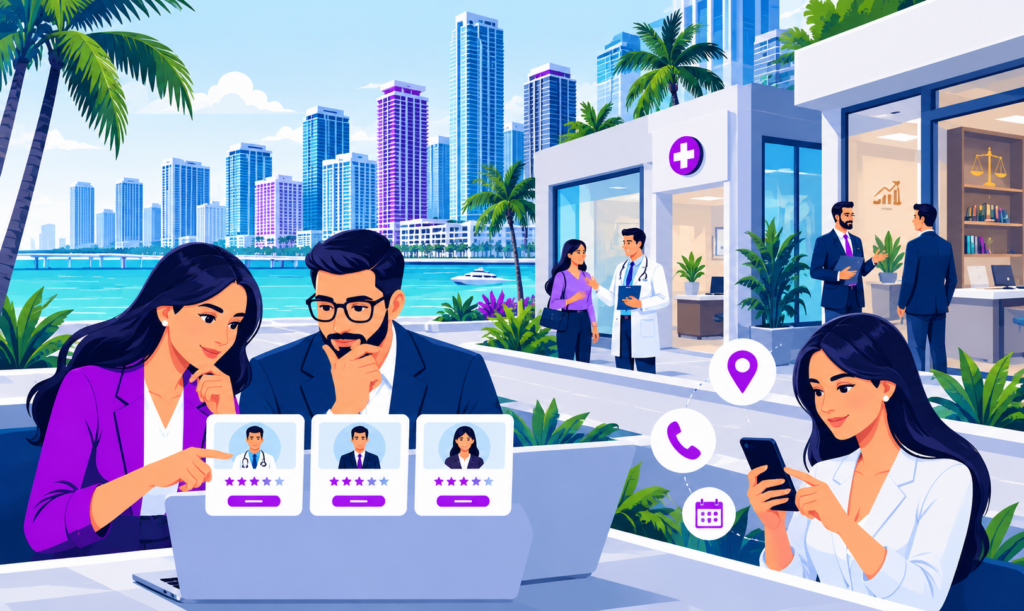
Patients in Pompano Beach search in a handful of predictable patterns, and each one requires a different kind of visibility. Some type the condition first: “knee pain doctor Pompano Beach” or “urgent care near me open now.” Others search by insurance: “dermatologist that takes [plan] Pompano Beach.” Still others search by symptom urgency, typing things like “same day appointment” or “doctor open Saturday near me,” phrases that signal they want care now, not a browsing session. Snowbirds and seasonal residents search differently again, often typing “walk-in clinic Pompano Beach” or “new patients welcome Pompano Beach” because they do not have an established primary care provider here yet.
That seasonal resident pattern matters more in this city than in most. Pompano Beach’s population swings with winter residents, short-term renters, and visitors tied to the marina and beach corridor. A practice that only optimizes for “best [specialty] Pompano Beach” misses the much larger volume of people who just arrived and need care this week, not a long-term relationship with a provider. Content built around accepting new patients, same-week scheduling, and insurance verification speaks directly to that transient segment, while a site that only talks about long-term care philosophy speaks past them entirely.
Search behavior also splits by intent and channel:
- Map pack results tend to win the first click for anything urgent or symptom-based, where proximity and hours decide the choice.
- Organic results win the research-heavy searches, like choosing a specialist for an ongoing condition or comparing treatment approaches.
- Insurance- and condition-specific phrases often convert better than generic “best doctor” terms, since the searcher has already narrowed their own criteria.
A practice that only built a Google Business Profile and skipped the website content is leaving that second, research-driven group to competitors who published real answers. Understanding which pattern a given patient falls into, urgent, insurance-driven, seasonal, or research-oriented, shapes everything from page titles to the questions answered on a service page, and it is usually the difference between a listing that gets found and one that gets chosen.
The competition here
Pompano Beach sits between Fort Lauderdale and Boca Raton, and medical searches here pull results from both directions. That means the real competitive set for most specialties is not just other Pompano Beach practices, it is every practice within a reasonable drive that has a stronger Google Business Profile and more reviews.
Primary care and urgent care are the most contested categories, with a high volume of multi-location groups and hospital-affiliated clinics competing for the same map pack spots. Specialty practices (dermatology, orthopedics, dental, physical therapy) face less raw competitor count but more pressure on review volume, since patients comparing specialists lean harder on star ratings and read actual review text before booking.
Reviews carry more weight in this market than they do in a lot of inland cities. Pompano Beach patients are used to judging hospitality, marine, and rental businesses by reviews first, and they apply the same habit to medical providers. A practice with 40 reviews and a 4.9 average is competing against one with 400 reviews and a 4.6 average, and the review count often wins the click even when the average is lower. We will tell you honestly if your specialty here is a volume fight or a trust fight, because the plan is different depending on which one you are in.

What we build for Medical Practices in this market
Multi-location practices need a location page for each site, not one page listing every address. Each page carries its own provider list, hours, and map embed, because Google ranks the page that answers “do you have a location near me,” not the page that makes you scroll to find out.
Provider bio pages are built around credentials: board certification, school, years in practice, languages spoken. Specific, verifiable facts, not adjectives. A bio that says “compassionate, experienced care” tells Google and the patient nothing. A bio that lists the medical school, residency, and board certification gives both something to trust.
Intake and contact forms are built to avoid collecting protected health information before it is needed. A general contact form should ask for name, phone, and reason for inquiry in broad terms, not symptoms or diagnosis, and it should route to a secure, access-controlled inbox rather than a marketing platform’s default notification email. If your current site asks patients to describe their condition in an open text box that emails straight to a shared inbox, that is a gap worth closing before it is a gap worth explaining.
Review generation is built into the patient workflow for every location, not run as a one-time campaign. Given how much weight reviews carry here, a practice with multiple Pompano Beach-area locations needs each one accumulating reviews on its own, because a single corporate review page dilutes the signal Google uses for each individual map listing.
Google Ads for medical practices runs on tighter rules than most verticals. Google restricts certain health claims and requires advertiser identity verification for healthcare-related ad categories in some cases, and campaigns that ignore this get disapproved or suspended. We build campaigns around services and conditions that are compliant to advertise, with location targeting set to the realistic drive radius for Pompano Beach rather than a blanket statewide campaign that burns budget on clicks from patients who will never show up for an appointment.
Call tracking matters more for medical practices than almost any other vertical, because so many patients still call to book rather than filling out a form, especially older patients and urgent-care seekers. We set up tracking numbers by location and by campaign so you can see which page, which ad, and which location generated the call, not just a generic “phone calls” line item.
Seasonal messaging gets built into the content calendar rather than left as an afterthought. A Pompano Beach urgent care sees different search volume in February than in August, and a practice page that acknowledges “now accepting new patients, including seasonal residents” during peak season converts differently than one that reads the same year-round.
Legal and professional services
Explain practice areas, relevant experience, service locations, and consultation options. Organize pages around the specific services potential clients search for.
Medical and healthcare practices
Make treatment information, provider details, location information, and appointment options easy to find. Review health-related claims carefully.
Financial services
Present services, qualifications, and contact pathways clearly while respecting applicable advertising and compliance requirements.
Technology and business services
Explain complex offerings in plain language, demonstrate practical value, and create landing pages for distinct solutions.
Local service businesses
Build relevant service and location pages, improve Google Business Profile information, and make calls and enquiry forms easy to use.
What we measure
We report on calls by location and by source, form submissions handled through a HIPAA-conscious intake path, map pack position for the specific terms patients use (not vanity keywords nobody searches), and review count and rating trend by location. If a location’s ranking drops, we tell you which page dropped and what changed, not a vague summary.

What it costs
Cost depends on how many locations you run, whether you need new provider bio pages built or existing ones rewritten, and whether you are starting Google Ads from nothing or fixing an account that already has disapproved ads sitting in it. A single-location practice with one specialty costs less to set up than a group with several Pompano Beach-area locations and a mixed roster of specialists, each needing its own landing page and review strategy.
We quote after looking at your current site, your Google Business Profiles for each location, and how reviews are spread across them, because a practice with a clean technical setup and weak reviews needs a different budget allocation than one with strong reviews and a slow, outdated site. HIPAA-aware forms, scheduling integrations, and insurance-page content also factor into the number. Call (754) 704-4727 and we will walk through what your specific setup needs before quoting anything.

Get an audit
We will look at your Google Business Profile for each Pompano Beach location, your current site’s handling of patient data on contact forms, and where your specialty actually stands against the competitive set pulling from Fort Lauderdale and Boca Raton. We check page speed and mobile usability for patients searching from a phone in the parking lot, whether your schema markup actually tells Google what you treat, and if your HIPAA-adjacent intake forms are collecting information in a way your compliance officer would approve of. You get a straight read on whether your gap is reviews, rankings, ad compliance, or a form that is quietly a liability.
Request the audit online and tell us your specialty and your biggest Pompano Beach competitor. We will tell you exactly what we find, good or bad, including if the honest answer is that your biggest problem has nothing to do with your website at all.
Working across Pompano Beach's medical and specialty providers
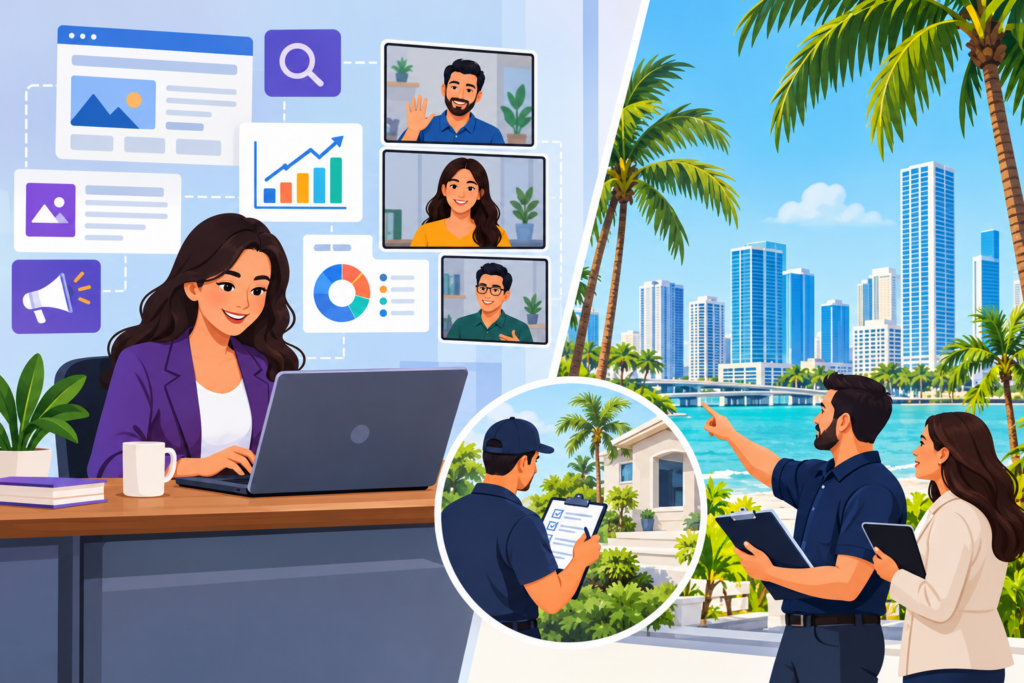
We work with practices across Pompano Beach, from solo specialists near the beach corridor to multi-location groups spanning the city and neighboring Broward communities like Lighthouse Point and Deerfield Beach. The work changes by specialty and by how many locations you run, but the underlying approach stays the same: credentials over adjectives, location pages over one catch-all page, and forms that treat patient data like the liability it is.
Dermatology, orthopedics, dental, and urgent care each search and convert differently, so we build out the service pages, provider bios, and review workflows that fit how your specialty actually gets chosen. If you serve a mix of year-round residents and seasonal patients, which is common this close to the water, your content and ad calendar should reflect that shift rather than run flat all year. We also keep an eye on HIPAA-aware forms and analytics, so growth doesn’t outrun compliance.
FAQ's
These are the 5 questions Pompano Beach homeowners ask us most about medical practice marketing, answered plainly so you know what to expect before any work starts. If yours isn't covered here, get in touch and we'll walk you through it.
Does a HIPAA-compliant website mean the same thing as a secure contact form?
No. A secure form is one part of a larger set of administrative, physical, and technical safeguards. We build forms and intake flows to avoid collecting unnecessary protected health information and to route what you do collect through access-controlled channels, but your practice is still responsible for its full compliance program.
Can you run Google Ads for a medical practice without running into ad disapprovals?
We build campaigns around services and claims that fall within Google's healthcare advertising policies and set location targeting to a realistic radius around Pompano Beach. Some healthcare ad categories require additional advertiser verification with Google directly, which we help you work through.
We have three locations across Broward County. Do you build one website or several?
One website, with a distinct page for each location carrying its own address, hours, provider list, and reviews. A single page trying to represent three locations usually ranks for none of them well in the map pack.
How much do reviews actually matter for a medical practice compared to a restaurant?
In Pompano Beach specifically, close to the same amount. Patients comparing specialists read reviews the same way diners compare restaurants here, and review count often outweighs a slightly higher average rating when patients are choosing who to call first.
Do you write the provider bios yourselves?
We structure and draft them from the credentials, education, and experience you provide, then your practice reviews for accuracy before anything publishes. We do not invent credentials or claims.
Where this fits with the rest of your marketing
Medical marketing in Pompano Beach does not happen in isolation from the rest of what a South Florida practice needs. If you are comparing this against broader options, our medical practice marketing hub covers the industry approach across every market we serve. For the city-wide picture of how we work with Pompano Beach businesses generally, see the Pompano Beach marketing page. And if SEO specifically, rather than the full marketing picture, is what you need first, our Pompano Beach SEO page covers that in more depth.