
- Home
- Services
- Portfolio
- About
- Service AreasFort Lauderdale, FL
- Web Design
- Redesign
- WordPress
- Ecommerce
- Landing Pages
- SEO Services
- Local SEO
- GBP
- Google Ads
- PPC
- Digital Marketing
- Internet Marketing
- Advertising
- Tracking
- Dental Marketing
- Medical Marketing
- HVAC Marketing
- Roofing Marketing
- Pest Control Marketing
- Home Services Marketing
- Plumbing Marketing
- Electrical Marketing
- Landscaping Marketing
- Remodeling Marketing
Pembroke Pines, FL- Web Design
- Redesign
- WordPress
- Ecommerce
- Landing Pages
- SEO Services
- Local SEO
- GBP
- Google Ads
- PPC
- Digital Marketing
- Internet Marketing
- Advertising
- Tracking
- Dental Marketing
- Medical Marketing
- HVAC Marketing
- Roofing Marketing
- Pest Control Marketing
- Home Services Marketing
- Plumbing Marketing
- Electrical Marketing
- Landscaping Marketing
- Remodeling Marketing
Hialeah, FL- Web Design
- Redesign
- WordPress
- Ecommerce
- Landing Pages
- SEO Services
- Local SEO
- GBP
- Google Ads
- PPC
- Digital Marketing
- Internet Marketing
- Advertising
- Tracking
- Dental Marketing
- Medical Marketing
- HVAC Marketing
- Roofing Marketing
- Pest Control Marketing
- Home Services Marketing
- Plumbing Marketing
- Electrical Marketing
- Landscaping Marketing
- Remodeling Marketing
Hollywood, FL- Web Design
- Redesign
- WordPress
- Ecommerce
- Landing Pages
- SEO Services
- Local SEO
- GBP
- Google Ads
- PPC
- Digital Marketing
- Internet Marketing
- Advertising
- Tracking
- Dental Marketing
- Medical Marketing
- HVAC Marketing
- Roofing Marketing
- Pest Control Marketing
- Home Services Marketing
- Plumbing Marketing
- Electrical Marketing
- Landscaping Marketing
- Remodeling Marketing
Miramar, FL- Web Design
- Redesign
- WordPress
- Ecommerce
- Landing Pages
- SEO Services
- Local SEO
- GBP
- Google Ads
- PPC
- Digital Marketing
- Internet Marketing
- Advertising
- Tracking
- Dental Marketing
- Medical Marketing
- HVAC Marketing
- Roofing Marketing
- Pest Control Marketing
- Home Services Marketing
- Plumbing Marketing
- Electrical Marketing
- Landscaping Marketing
- Remodeling Marketing
Coral Springs, FL- Web Design
- Redesign
- WordPress
- Ecommerce
- Landing Pages
- SEO Services
- Local SEO
- GBP
- Google Ads
- PPC
- Digital Marketing
- Internet Marketing
- Advertising
- Tracking
- Dental Marketing
- Medical Marketing
- HVAC Marketing
- Roofing Marketing
- Pest Control Marketing
- Home Services Marketing
- Plumbing Marketing
- Electrical Marketing
- Landscaping Marketing
- Remodeling Marketing
Pompano Beach, FL- Web Design
- Redesign
- WordPress
- Ecommerce
- Landing Pages
- SEO Services
- Local SEO
- GBP
- Google Ads
- PPC
- Digital Marketing
- Internet Marketing
- Advertising
- Tracking
- Dental Marketing
- Medical Marketing
- HVAC Marketing
- Roofing Marketing
- Pest Control Marketing
- Home Services Marketing
- Plumbing Marketing
- Electrical Marketing
- Landscaping Marketing
- Remodeling Marketing
Davie, FL- Web Design
- Redesign
- WordPress
- Ecommerce
- Landing Pages
- SEO Services
- Local SEO
- GBP
- Google Ads
- PPC
- Digital Marketing
- Internet Marketing
- Advertising
- Tracking
- Dental Marketing
- Medical Marketing
- HVAC Marketing
- Roofing Marketing
- Pest Control Marketing
- Home Services Marketing
- Plumbing Marketing
- Electrical Marketing
- Landscaping Marketing
- Remodeling Marketing
Sunrise, FL- Web Design
- Redesign
- WordPress
- Ecommerce
- Landing Pages
- SEO Services
- Local SEO
- GBP
- Google Ads
- PPC
- Digital Marketing
- Internet Marketing
- Advertising
- Tracking
- Dental Marketing
- Medical Marketing
- HVAC Marketing
- Roofing Marketing
- Pest Control Marketing
- Home Services Marketing
- Plumbing Marketing
- Electrical Marketing
- Landscaping Marketing
- Remodeling Marketing
Plantation, FL- Web Design
- Redesign
- WordPress
- Ecommerce
- Landing Pages
- SEO Services
- Local SEO
- GBP
- Google Ads
- PPC
- Digital Marketing
- Internet Marketing
- Advertising
- Tracking
- Dental Marketing
- Medical Marketing
- HVAC Marketing
- Roofing Marketing
- Pest Control Marketing
- Home Services Marketing
- Plumbing Marketing
- Electrical Marketing
- Landscaping Marketing
- Remodeling Marketing
Deerfield Beach, FL- Web Design
- Redesign
- WordPress
- Ecommerce
- Landing Pages
- SEO Services
- Local SEO
- GBP
- Google Ads
- PPC
- Digital Marketing
- Internet Marketing
- Advertising
- Tracking
- Dental Marketing
- Medical Marketing
- HVAC Marketing
- Roofing Marketing
- Pest Control Marketing
- Home Services Marketing
- Plumbing Marketing
- Electrical Marketing
- Landscaping Marketing
- Remodeling Marketing
Miami Gardens, FL- Web Design
- Redesign
- WordPress
- Ecommerce
- Landing Pages
- SEO Services
- Local SEO
- GBP
- Google Ads
- PPC
- Digital Marketing
- Internet Marketing
- Advertising
- Tracking
- Dental Marketing
- Medical Marketing
- HVAC Marketing
- Roofing Marketing
- Pest Control Marketing
- Home Services Marketing
- Plumbing Marketing
- Electrical Marketing
- Landscaping Marketing
- Remodeling Marketing
Lauderhill, FL- Web Design
- Redesign
- WordPress
- Ecommerce
- Landing Pages
- SEO Services
- Local SEO
- GBP
- Google Ads
- PPC
- Digital Marketing
- Internet Marketing
- Advertising
- Tracking
- Dental Marketing
- Medical Marketing
- HVAC Marketing
- Roofing Marketing
- Pest Control Marketing
- Home Services Marketing
- Plumbing Marketing
- Electrical Marketing
- Landscaping Marketing
- Remodeling Marketing
West Palm Beach, FL- Web Design
- Redesign
- WordPress
- Ecommerce
- Landing Pages
- SEO Services
- Local SEO
- GBP
- Google Ads
- PPC
- Digital Marketing
- Internet Marketing
- Advertising
- Tracking
- Dental Marketing
- Medical Marketing
- HVAC Marketing
- Roofing Marketing
- Pest Control Marketing
- Home Services Marketing
- Plumbing Marketing
- Electrical Marketing
- Landscaping Marketing
- Remodeling Marketing
Tamarac, FL- Web Design
- Redesign
- WordPress
- Ecommerce
- Landing Pages
- SEO Services
- Local SEO
- GBP
- Google Ads
- PPC
- Digital Marketing
- Internet Marketing
- Advertising
- Tracking
- Dental Marketing
- Medical Marketing
- HVAC Marketing
- Roofing Marketing
- Pest Control Marketing
- Home Services Marketing
- Plumbing Marketing
- Electrical Marketing
- Landscaping Marketing
- Remodeling Marketing
Weston, FL- Web Design
- Redesign
- WordPress
- Ecommerce
- Landing Pages
- SEO Services
- Local SEO
- GBP
- Google Ads
- PPC
- Digital Marketing
- Internet Marketing
- Advertising
- Tracking
- Dental Marketing
- Medical Marketing
- HVAC Marketing
- Roofing Marketing
- Pest Control Marketing
- Home Services Marketing
- Plumbing Marketing
- Electrical Marketing
- Landscaping Marketing
- Remodeling Marketing
Boca Raton, FLMargate, FLCoconut Creek, FLMiami Beach, FLHomestead, FLKendall, FLDoral, FLBoynton Beach, FLThe Hammocks, FLNorth Lauderdale, FLOakland Park, FLDelray Beach, FLNorth Miami, FLHallandale Beach, FLFontainebleau, FLKendale Lakes, FLWellington, FLJupiter, FLTamiami, FLPalm Beach Gardens, FLLauderdale Lakes, FLCooper City, FLCountry Club, FLParkland, FLCoral Gables, FLDania Beach, FLCutler Bay, FLNorth Miami Beach, FLGreenacres, FLLake Worth Beach, FLPrinceton, FLRoyal Palm Beach, FLSouth Miami Heights, FLRichmond West, FLRiviera Beach, FLWest Little River, FLGolden Glades, FLAventura, FLMiami Lakes, FLWestchester, FLLeisure City, FLCoral Terrace, FLPalm Springs, FLPalmetto Bay, FLHialeah Gardens, FLSunny Isles Beach, FLIves Estates, FLWest Park, FLSweetwater, FLPinecrest, FLSunset, FLPinewood, FLWilton Manors, FLOpa-locka, FLLighthouse Point, FLBelle Glade, FLNaranja, FLPalmetto Estates, FLBrownsville, FLKey Biscayne, FLOlympia Heights, FLMiami Springs, FLFlorida City, FLSouth Miami, FLThree Lakes, FLGladeview, FLNorth Palm Beach, FLMiami Shores, FLSouthwest Ranches, FLKings Point, FLLauderdale-by-the-Sea, FLHillsboro Beach, FLSea Ranch Lakes, FLLazy Lake, FL - Blog
- Contact
Marketing for Medical Practices in Miami Beach, Florida
Miami Beach medical practices do not compete like practices in a typical suburb. The patient pool shifts by season, a large share of searchers are visitors or seasonal residents looking for an in-network option fast, and your competitors include not just the practice three blocks away but every concierge and med-spa-adjacent clinic marketing itself as a destination provider. Search marketing for a medical practice here has to account for all of that, plus the baseline rules that apply to any healthcare marketing: accurate credentials, honest claims, and forms that do not leak patient data to a marketing pixel.
We build and run that kind of marketing:
- Websites built around the services and insurance panels that actually drive calls, not generic stock-photo templates
- Local search work tuned for neighborhoods like South Beach, North Beach, and the Art Deco District, where seasonal demand spikes hard
- Google Ads campaigns that separate visitor searches from local, repeat-patient searches so budget is not wasted
- Reporting that shows which channel actually produced booked appointments, not just clicks

How Miami Beach Medical Practices buyers search
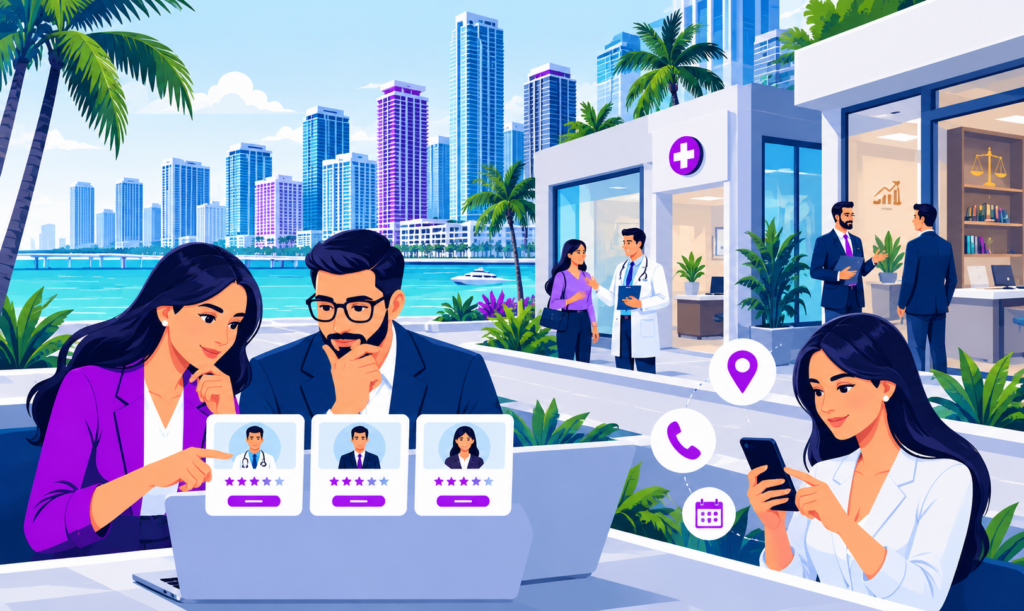
Patients searching for care in Miami Beach type differently depending on who they are, and recognizing those patterns is the foundation of any marketing plan that actually produces appointments. A full-time resident searches by condition and insurance: “dermatologist that takes [plan] Miami Beach” or “pediatrician near Flamingo Park accepting new patients.” A seasonal resident, tourist, or business traveler searches by urgency and proximity instead: “urgent care near South Beach open now,” “walk-in doctor Miami Beach,” or simply “doctor near me” from a phone while standing on Collins Avenue. Both groups lean hard on Google’s map pack before they ever click through to a website, which means your Google Business Profile completeness, your review count, and how recent those reviews are often decide who gets the call before your site design, your branding, or your bedside manner gets a chance to matter at all.
Insurance filtering matters more in Miami Beach than in most markets, because a meaningful share of search volume comes from people outside their home network, snowbirds on out-of-state plans, visitors from Latin America paying cash or using travel insurance, and locals who just switched carriers and are starting their provider search from scratch. These searchers are often filtering by plan name in the query itself or abandoning a practice’s website within seconds if accepted insurance isn’t stated plainly above the fold. If your site, your Google Business Profile, and your directory listings do not spell out accepted plans, cash-pay options, and whether you’re taking new patients, you lose that click to the next practice in the map pack that does.
- Bilingual search behavior is common: many searchers toggle between English and Spanish queries, so practices that rank for both capture a wider pool.
- Seasonal spikes around winter months and spring break shift search intent toward urgency and walk-in availability rather than long-term relationship-building language.
Understanding these distinct search patterns, and building your website, listings, and content to answer each one directly, is what separates practices that convert local search traffic into booked patients from those that simply show up in results without ever getting the call.
The competition here
Miami Beach has a high density of providers relative to its year-round population, because tourism and seasonal residents inflate demand well above what the local population alone would support. Dermatology, cosmetic and aesthetic medicine, urgent care, dentistry, and concierge primary care are especially crowded here, with practices clustered along Alton Road, Lincoln Road, and the Collins Avenue corridor all competing for the same searches. That density means more practices chasing the same map pack slots, and it means review volume escalates fast: a new practice with twelve reviews is not competitive against established ones sitting at a few hundred. Patients searching on their phone rarely scroll past the first three listings, so if your profile isn’t in that cluster, the review count and recency of competitors above you matter more than almost anything else you can control week to week.
Organic blog content ranks here, but for most medical specialties the map pack and the three-pack of local listings get the clicks that turn into appointments. Ranking an informational article about a condition brings traffic; ranking the Google Business Profile and the service page for that condition brings patients. We weight the work toward whichever one actually produces calls and form fills for your specialty, instead of defaulting to a content calendar because that is the easiest thing to sell. For a practice treating a mix of local residents and visitors, that often means prioritizing review generation, photo freshness, and service-area accuracy on the Business Profile over publishing another article that ranks for a question nobody books an appointment from. For specialties where patients do research before choosing a provider, such as cosmetic procedures or specialty surgical consults, a handful of genuinely useful pages that answer the specific questions a prospective patient is weighing can outperform a generic blog that never gets linked to or shared.
Seasonality is real here too. Patient volume for some specialties climbs in winter months when the population swells, and Google Ads spend needs to flex with it rather than running flat all year and overpaying in slow months or under-serving demand in peak ones. A practice that sets its budget once in January and leaves it untouched is either wasting money chasing low-intent clicks in the slow season or losing winnable appointments in December and February because the budget ran out before the day did. We adjust bids and daily caps around the calendar instead of treating every month the same, and we watch cost-per-lead closely enough to catch the shift before it shows up as a wasted quarter of spend.
Competing here also means contending with out-of-town and multi-location groups that have bigger ad budgets but weaker local relevance. A dermatology group with locations across three states can outspend a solo Miami Beach practice on broad keywords, but they usually cannot match a locally optimized profile, locally written service pages, and a review base built from actual neighborhood patients. That gap is winnable. It is also where most of the measurable return sits, because outranking a generic multi-location competitor on a “near me” search is a matter of local signal strength, not ad spend. The practices that win these searches consistently are the ones that treat their Google Business Profile as a living asset, updated with new photos, accurate hours around holidays and hurricane season closures, and prompt responses to reviews, rather than something set up once at launch and left alone.
Paid and organic search need to work together rather than duplicating effort. If a practice is already ranking organically for its core service terms, paid budget is often better spent on the specific procedures or conditions where organic visibility is weak, or on remarketing to the visitors who looked at a service page but didn’t call. Running ads against a term you already own organically just raises your own cost per click without adding net new visibility, and in a market as competitive as Miami Beach, that budget is usually better redirected toward the gaps.
- Review velocity and recency matter more than total count once a competitor passes a few hundred reviews
- Map pack and service-page visibility typically convert better than general blog traffic for most specialties
- Ad budgets should flex with seasonal population and patient volume shifts
- Local profile strength is the most winnable edge against larger, multi-location competitors
None of this means outspending every competitor on every channel. It means being specific about where your specialty’s patients actually search, how long their decision cycle is, and which channel reflects that behavior, then putting the budget and the content effort there instead of spreading both thin across tactics that look good in a report but don’t move the phone.
What we build for Medical Practices in this market
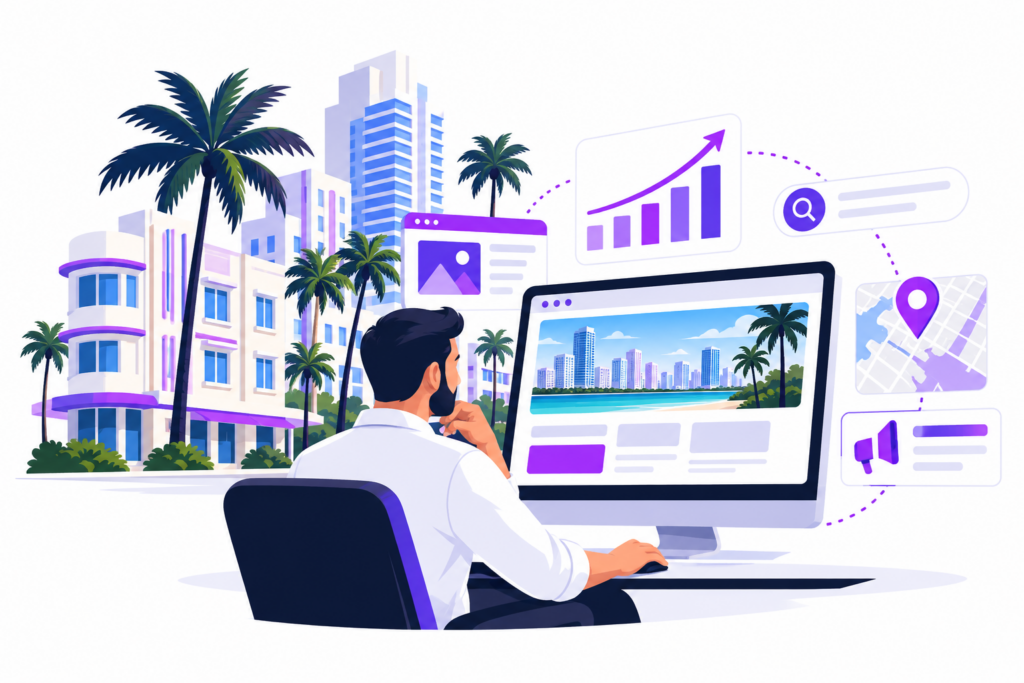
Medical marketing is YMYL territory as far as Google is concerned: Your Money or Your Life content gets more scrutiny than almost any other category, because bad medical information or a misleading claim has real consequences. That changes what we build.
Provider pages that establish expertise
Each provider gets a dedicated page with real credentials: license type, board certification, school, years in practice, specialties treated. Not a one-line bio buried on a team page. Google’s own guidance on helpful, people-first content treats author expertise as a ranking signal for YMYL topics, and patients read these pages before they book, especially for anything elective or specialist.
[EXTERNAL LINK: Google Search Central’s guidance on E-E-A-T and YMYL content, because it is the primary source for why provider credential pages matter for medical SEO]
Service pages built around how patients actually search
A dermatology practice does not rank for “dermatologist” with one homepage. It ranks for “Mohs surgery Miami Beach,” “acne treatment Miami Beach,” “skin cancer screening Miami Beach,” each on its own page, because one page cannot hold the on-page relevance signals for a dozen different procedures at once. If you have multiple locations across Miami Beach and the broader county, each location gets its own page with its own address, hours, and provider list, not a single “locations” page that lists them all in a table.
HIPAA-safe forms, built correctly from the start
A contact form that emails patient-submitted symptoms or insurance details in plain text, or that feeds form data into a marketing pixel for ad retargeting, creates compliance exposure. We build intake forms that separate marketing analytics from protected health information: tracking the fact that a form was submitted, not what was typed into it. Call tracking numbers are configured the same way, logging that a call happened and roughly where the lead came from without recording clinical conversation content against a marketing dashboard.
Reputation management that matches how this market actually decides
In hospitality-heavy markets like Miami Beach, reviews carry more weight than almost anywhere else, because the whole local economy runs on short-term, review-driven trust: restaurants, boutique hotels, short-term rentals, charter boats, event venues. Patients import that same decision pattern into healthcare. A practice with a thin or stale review profile looks exactly like a restaurant with bad Yelp numbers to a Miami Beach searcher: skipped, regardless of how good the care actually is.
We set up a review request system that fires automatically after an appointment, in compliance with platform rules against incentivized reviews, and we monitor for responses so a bad experience gets addressed before it sits unanswered for a year. We also track review velocity against the specific competitors you lose patients to, so you know whether you are gaining ground or losing it.
Multi-location and multi-property logic
If you run more than one location, or you are a group practice with providers splitting time across sites, the site architecture has to reflect that honestly. Each location needs its own Google Business Profile, its own landing page, and its own local citations; consolidating everything into one profile confuses Google about where the practice actually operates and can suppress all locations in the map pack instead of helping them.
Google Ads built around insurance and urgency
For practices running paid search, ad copy that states accepted insurance plans up front converts better here than generic brand messaging, because so much of the search volume is insurance-driven. For urgent or walk-in care, we build campaigns around time-of-day and day-of-week bidding, since a Saturday afternoon search for “urgent care near me” behaves completely differently from a Tuesday morning one, and the ad budget should follow the demand curve, not run flat.
Legal and professional services
Explain practice areas, relevant experience, service locations, and consultation options. Organize pages around the specific services potential clients search for.
Medical and healthcare practices
Make treatment information, provider details, location information, and appointment options easy to find. Review health-related claims carefully.
Financial services
Present services, qualifications, and contact pathways clearly while respecting applicable advertising and compliance requirements.
Technology and business services
Explain complex offerings in plain language, demonstrate practical value, and create landing pages for distinct solutions.
Local service businesses
Build relevant service and location pages, improve Google Business Profile information, and make calls and enquiry forms easy to use.
What we measure
We report on what actually moved: new patient form submissions, tracked phone calls, map pack position for your core specialty terms, review count and average rating trend, and cost per new patient lead from paid campaigns, broken out by location if you have more than one. We do not report rankings for keywords nobody searches or traffic that never turns into a call. If a channel is not producing, we say so and change it.

What it costs
Cost depends on how many locations you run across Miami Beach and the surrounding areas, how many providers need individual credential pages, whether you need ongoing Google Ads management layered on top of SEO, and how much of your review and reputation system needs to be built from scratch versus repaired after years of neglect. A single-provider dermatology or dental practice with a clean existing site costs far less to market than a multi-location urgent care group competing against hospital-backed systems for the same Miami Beach search terms.
We quote after a short, honest look at your current site, your Google Business Profile standing, your HIPAA-compliant intake forms, and your competitive set in this market, not off a flat rate card pulled from a generic agency template. That review tells us whether you need a full rebuild or targeted fixes. Ask about current pricing when you request an audit.


FAQ's
These are the 5 questions Miami Beach homeowners ask us most about medical practice marketing, answered plainly so you know what to expect before any work starts. If yours isn't covered here, get in touch and we'll walk you through it.
Do you understand HIPAA requirements for marketing forms and call tracking?
We build forms and call tracking that separate marketing analytics from protected health information, logging that a submission or call happened without capturing clinical content in a marketing dashboard. We are not your compliance attorney and recommend your practice confirm any vendor setup against your own HIPAA policies, but the systems are built with that separation from the start, not added after the fact.
Will you write medical content for us or should our providers review it?
Provider review matters for YMYL content. We draft service and condition pages, but we build in a review step with your clinical staff before anything about treatment, risk, or outcomes goes live, since accuracy and provider sign-off are part of what Google and patients both expect from medical content.
We have multiple locations in Miami Beach and elsewhere in Miami-Dade. Can you handle that?
Yes. Each location gets its own page, its own Google Business Profile, and its own local citations and review tracking. Lumping locations into one profile or one page tends to hurt visibility for all of them, so we build the architecture around each site separately.
How fast can you fix a thin or damaged review profile?
There is no fixed timeline we can promise, since it depends on patient volume and how responsive your front desk is to the request system. We set up automatic, compliant review requests and monitor incoming reviews so response time to any negative feedback shortens, but review growth happens at the pace your actual patient visits allow.
Do seasonal patient swings change how you manage our ad budget?
Yes. Miami Beach sees real seasonal population shifts, and we adjust Google Ads budgets and bid schedules to follow that demand rather than spending flat across months where search volume for your specialty is clearly higher or lower.