
- Home
- Services
- Portfolio
- About
- Service AreasFort Lauderdale, FL
- Web Design
- Redesign
- WordPress
- Ecommerce
- Landing Pages
- SEO Services
- Local SEO
- GBP
- Google Ads
- PPC
- Digital Marketing
- Internet Marketing
- Advertising
- Tracking
- Dental Marketing
- Medical Marketing
- HVAC Marketing
- Roofing Marketing
- Pest Control Marketing
- Home Services Marketing
- Plumbing Marketing
- Electrical Marketing
- Landscaping Marketing
- Remodeling Marketing
Pembroke Pines, FL- Web Design
- Redesign
- WordPress
- Ecommerce
- Landing Pages
- SEO Services
- Local SEO
- GBP
- Google Ads
- PPC
- Digital Marketing
- Internet Marketing
- Advertising
- Tracking
- Dental Marketing
- Medical Marketing
- HVAC Marketing
- Roofing Marketing
- Pest Control Marketing
- Home Services Marketing
- Plumbing Marketing
- Electrical Marketing
- Landscaping Marketing
- Remodeling Marketing
Hialeah, FL- Web Design
- Redesign
- WordPress
- Ecommerce
- Landing Pages
- SEO Services
- Local SEO
- GBP
- Google Ads
- PPC
- Digital Marketing
- Internet Marketing
- Advertising
- Tracking
- Dental Marketing
- Medical Marketing
- HVAC Marketing
- Roofing Marketing
- Pest Control Marketing
- Home Services Marketing
- Plumbing Marketing
- Electrical Marketing
- Landscaping Marketing
- Remodeling Marketing
Hollywood, FL- Web Design
- Redesign
- WordPress
- Ecommerce
- Landing Pages
- SEO Services
- Local SEO
- GBP
- Google Ads
- PPC
- Digital Marketing
- Internet Marketing
- Advertising
- Tracking
- Dental Marketing
- Medical Marketing
- HVAC Marketing
- Roofing Marketing
- Pest Control Marketing
- Home Services Marketing
- Plumbing Marketing
- Electrical Marketing
- Landscaping Marketing
- Remodeling Marketing
Miramar, FL- Web Design
- Redesign
- WordPress
- Ecommerce
- Landing Pages
- SEO Services
- Local SEO
- GBP
- Google Ads
- PPC
- Digital Marketing
- Internet Marketing
- Advertising
- Tracking
- Dental Marketing
- Medical Marketing
- HVAC Marketing
- Roofing Marketing
- Pest Control Marketing
- Home Services Marketing
- Plumbing Marketing
- Electrical Marketing
- Landscaping Marketing
- Remodeling Marketing
Coral Springs, FL- Web Design
- Redesign
- WordPress
- Ecommerce
- Landing Pages
- SEO Services
- Local SEO
- GBP
- Google Ads
- PPC
- Digital Marketing
- Internet Marketing
- Advertising
- Tracking
- Dental Marketing
- Medical Marketing
- HVAC Marketing
- Roofing Marketing
- Pest Control Marketing
- Home Services Marketing
- Plumbing Marketing
- Electrical Marketing
- Landscaping Marketing
- Remodeling Marketing
Pompano Beach, FL- Web Design
- Redesign
- WordPress
- Ecommerce
- Landing Pages
- SEO Services
- Local SEO
- GBP
- Google Ads
- PPC
- Digital Marketing
- Internet Marketing
- Advertising
- Tracking
- Dental Marketing
- Medical Marketing
- HVAC Marketing
- Roofing Marketing
- Pest Control Marketing
- Home Services Marketing
- Plumbing Marketing
- Electrical Marketing
- Landscaping Marketing
- Remodeling Marketing
Davie, FL- Web Design
- Redesign
- WordPress
- Ecommerce
- Landing Pages
- SEO Services
- Local SEO
- GBP
- Google Ads
- PPC
- Digital Marketing
- Internet Marketing
- Advertising
- Tracking
- Dental Marketing
- Medical Marketing
- HVAC Marketing
- Roofing Marketing
- Pest Control Marketing
- Home Services Marketing
- Plumbing Marketing
- Electrical Marketing
- Landscaping Marketing
- Remodeling Marketing
Sunrise, FL- Web Design
- Redesign
- WordPress
- Ecommerce
- Landing Pages
- SEO Services
- Local SEO
- GBP
- Google Ads
- PPC
- Digital Marketing
- Internet Marketing
- Advertising
- Tracking
- Dental Marketing
- Medical Marketing
- HVAC Marketing
- Roofing Marketing
- Pest Control Marketing
- Home Services Marketing
- Plumbing Marketing
- Electrical Marketing
- Landscaping Marketing
- Remodeling Marketing
Plantation, FL- Web Design
- Redesign
- WordPress
- Ecommerce
- Landing Pages
- SEO Services
- Local SEO
- GBP
- Google Ads
- PPC
- Digital Marketing
- Internet Marketing
- Advertising
- Tracking
- Dental Marketing
- Medical Marketing
- HVAC Marketing
- Roofing Marketing
- Pest Control Marketing
- Home Services Marketing
- Plumbing Marketing
- Electrical Marketing
- Landscaping Marketing
- Remodeling Marketing
Deerfield Beach, FL- Web Design
- Redesign
- WordPress
- Ecommerce
- Landing Pages
- SEO Services
- Local SEO
- GBP
- Google Ads
- PPC
- Digital Marketing
- Internet Marketing
- Advertising
- Tracking
- Dental Marketing
- Medical Marketing
- HVAC Marketing
- Roofing Marketing
- Pest Control Marketing
- Home Services Marketing
- Plumbing Marketing
- Electrical Marketing
- Landscaping Marketing
- Remodeling Marketing
Miami Gardens, FL- Web Design
- Redesign
- WordPress
- Ecommerce
- Landing Pages
- SEO Services
- Local SEO
- GBP
- Google Ads
- PPC
- Digital Marketing
- Internet Marketing
- Advertising
- Tracking
- Dental Marketing
- Medical Marketing
- HVAC Marketing
- Roofing Marketing
- Pest Control Marketing
- Home Services Marketing
- Plumbing Marketing
- Electrical Marketing
- Landscaping Marketing
- Remodeling Marketing
Lauderhill, FL- Web Design
- Redesign
- WordPress
- Ecommerce
- Landing Pages
- SEO Services
- Local SEO
- GBP
- Google Ads
- PPC
- Digital Marketing
- Internet Marketing
- Advertising
- Tracking
- Dental Marketing
- Medical Marketing
- HVAC Marketing
- Roofing Marketing
- Pest Control Marketing
- Home Services Marketing
- Plumbing Marketing
- Electrical Marketing
- Landscaping Marketing
- Remodeling Marketing
West Palm Beach, FL- Web Design
- Redesign
- WordPress
- Ecommerce
- Landing Pages
- SEO Services
- Local SEO
- GBP
- Google Ads
- PPC
- Digital Marketing
- Internet Marketing
- Advertising
- Tracking
- Dental Marketing
- Medical Marketing
- HVAC Marketing
- Roofing Marketing
- Pest Control Marketing
- Home Services Marketing
- Plumbing Marketing
- Electrical Marketing
- Landscaping Marketing
- Remodeling Marketing
Tamarac, FL- Web Design
- Redesign
- WordPress
- Ecommerce
- Landing Pages
- SEO Services
- Local SEO
- GBP
- Google Ads
- PPC
- Digital Marketing
- Internet Marketing
- Advertising
- Tracking
- Dental Marketing
- Medical Marketing
- HVAC Marketing
- Roofing Marketing
- Pest Control Marketing
- Home Services Marketing
- Plumbing Marketing
- Electrical Marketing
- Landscaping Marketing
- Remodeling Marketing
Weston, FL- Web Design
- Redesign
- WordPress
- Ecommerce
- Landing Pages
- SEO Services
- Local SEO
- GBP
- Google Ads
- PPC
- Digital Marketing
- Internet Marketing
- Advertising
- Tracking
- Dental Marketing
- Medical Marketing
- HVAC Marketing
- Roofing Marketing
- Pest Control Marketing
- Home Services Marketing
- Plumbing Marketing
- Electrical Marketing
- Landscaping Marketing
- Remodeling Marketing
Boca Raton, FLMargate, FLCoconut Creek, FLMiami Beach, FLHomestead, FLKendall, FLDoral, FLBoynton Beach, FLThe Hammocks, FLNorth Lauderdale, FLOakland Park, FLDelray Beach, FLNorth Miami, FLHallandale Beach, FLFontainebleau, FLKendale Lakes, FLWellington, FLJupiter, FLTamiami, FLPalm Beach Gardens, FLLauderdale Lakes, FLCooper City, FLCountry Club, FLParkland, FLCoral Gables, FLDania Beach, FLCutler Bay, FLNorth Miami Beach, FLGreenacres, FLLake Worth Beach, FLPrinceton, FLRoyal Palm Beach, FLSouth Miami Heights, FLRichmond West, FLRiviera Beach, FLWest Little River, FLGolden Glades, FLAventura, FLMiami Lakes, FLWestchester, FLLeisure City, FLCoral Terrace, FLPalm Springs, FLPalmetto Bay, FLHialeah Gardens, FLSunny Isles Beach, FLIves Estates, FLWest Park, FLSweetwater, FLPinecrest, FLSunset, FLPinewood, FLWilton Manors, FLOpa-locka, FLLighthouse Point, FLBelle Glade, FLNaranja, FLPalmetto Estates, FLBrownsville, FLKey Biscayne, FLOlympia Heights, FLMiami Springs, FLFlorida City, FLSouth Miami, FLThree Lakes, FLGladeview, FLNorth Palm Beach, FLMiami Shores, FLSouthwest Ranches, FLKings Point, FLLauderdale-by-the-Sea, FLHillsboro Beach, FLSea Ranch Lakes, FLLazy Lake, FL - Blog
- Contact
Marketing for Medical Practices in Boynton Beach, Florida
Boynton Beach has two patient populations living in the same zip codes. You have retirees on Medicare who found their last three doctors through a friend or a printed directory, and you have young families off Boynton Beach Boulevard and in the new developments west of 95 who search on a phone while a kid is running a fever. Marketing a medical practice here means writing for both, not splitting the difference into vague copy that speaks to neither.
We build and run marketing for practices in this city: websites, Google Ads, and local SEO, with provider bios that meet YMYL content standards and forms that do not create HIPAA exposure. A 68-year-old searching “ENT doctor near me” needs a different landing page than a 34-year-old searching “pediatrician accepting new patients Boynton Beach” — different proof, different tone, different call to action.

How Boynton Beach Medical Practices buyers search
Search behavior here splits by age more than it does in most cities, and that is not a guess, it is how the two search terms look side by side. Retirees tend to search by condition and by insurance: “Medicare doctor Boynton Beach,” “cardiologist that takes Humana,” “podiatrist near Venetian Isles.” They are patient with a longer page, they read credentials and physician bios closely, and they often call instead of filling out a form, which means a phone number that is easy to find matters as much as the copy itself.
Younger parents and working adults search by symptom and by urgency: “urgent care open now Boynton Beach,” “pediatric dentist Sunday hours,” “dermatologist same day appointment.” They are on a phone, they want the next available slot visible in under five seconds, and they will book online rather than call if the option exists. A page that buries hours or makes someone hunt for a booking link loses this group almost immediately.
Both groups search by neighborhood more than you would expect for a city this size. “Doctor near Hunters Run,” “pediatrician near Quantum Park,” “dentist downtown Boynton Beach” all show real, regular search volume. A practice with one generic “Contact Us” page is invisible to that kind of query. A practice with a page that actually names the neighborhood and the condition has something to rank, and something a prospective patient recognizes as local rather than templated.
Seasonality matters too. Boynton Beach’s population swells from roughly November through April as part-time residents and snowbirds arrive, and search volume for primary care, dermatology, and orthopedics rises with them. A campaign that runs flat all year is either overspending in July or underspending in January. We build budget pacing, ad copy, and even landing page messaging around that curve instead of ignoring it, shifting emphasis toward new-patient intake language right as the season turns.
Insurance and language searches round out the pattern. “Doctor that speaks Spanish Boynton Beach” and “se habla espanol pediatrician” both appear with consistent frequency given the city’s demographics, and a practice that does not mention language capability or accepted insurance plans on the page is leaving that search, and that patient, to a competitor who did.
The competition here
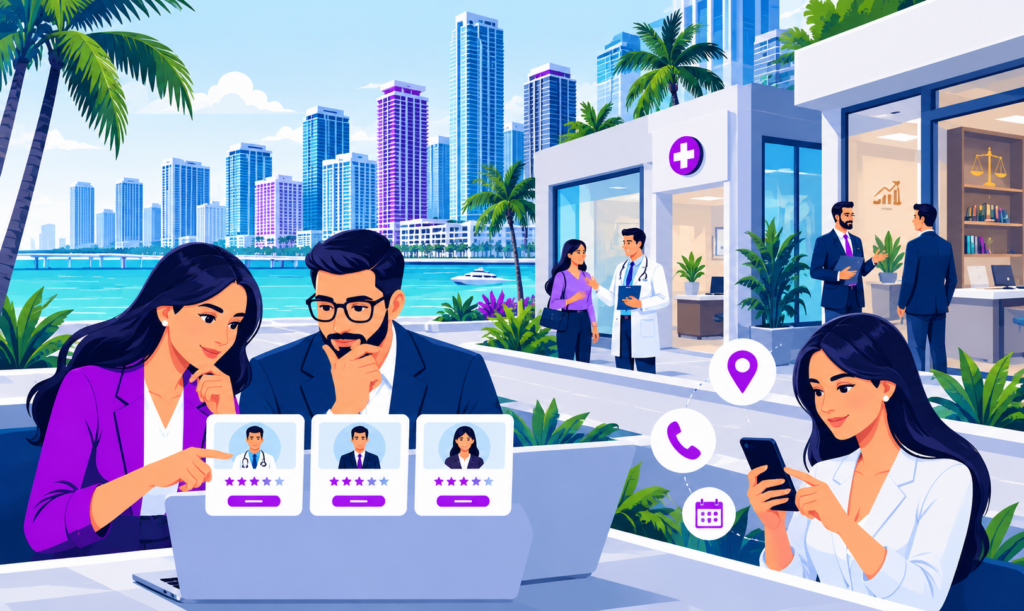
Boynton Beach sits between Delray Beach and Lake Worth, both of which have more dense, more established medical marketing than Boynton itself. That cuts two ways. For specialties like dermatology and cosmetic medicine, the competitive set is really the whole central Palm Beach County corridor, because patients will drive fifteen minutes for the right provider. For primary care, pediatrics, dental, and urgent care, competition is tighter to the city and even to the specific corridor along Woolbright, Congress, or Boynton Beach Boulevard, because patients want something close.
The map pack decides more of this market than organic rankings do, at least for the first click. Searches with “near me” or a neighborhood name trigger the three-pack before anything else, and most patients click one of those three listings or the directions button without scrolling further. That means your Google Business Profile, your review volume, and your category selection carry more weight here than they would for a national ecommerce keyword. Organic rankings still matter, mainly for the research phase: the patient who clicks into your site from the map pack, then reads your provider bio and your conditions-treated page before deciding to call.
Multi-location practices add another layer. If you have a location in Boynton Beach and another in Delray Beach or Lake Worth, Google needs to understand those as two distinct, locally relevant entities, not one page with a city name swapped in a header tag. Practices that use one generic “Locations” page with an embedded map tend to rank for neither city well. Practices that build a real page per location, with that location’s hours, provider, and parking details, tend to show up for both.
Review volume in this specific city is moderate, not saturated, for most specialties outside of dermatology and dentistry, which means a practice that runs a consistent, compliant review-request process after each visit can move up the map pack without an unusual amount of spend. That is a mechanical opportunity, not a promise of a specific ranking.
What we build for Medical Practices in this market
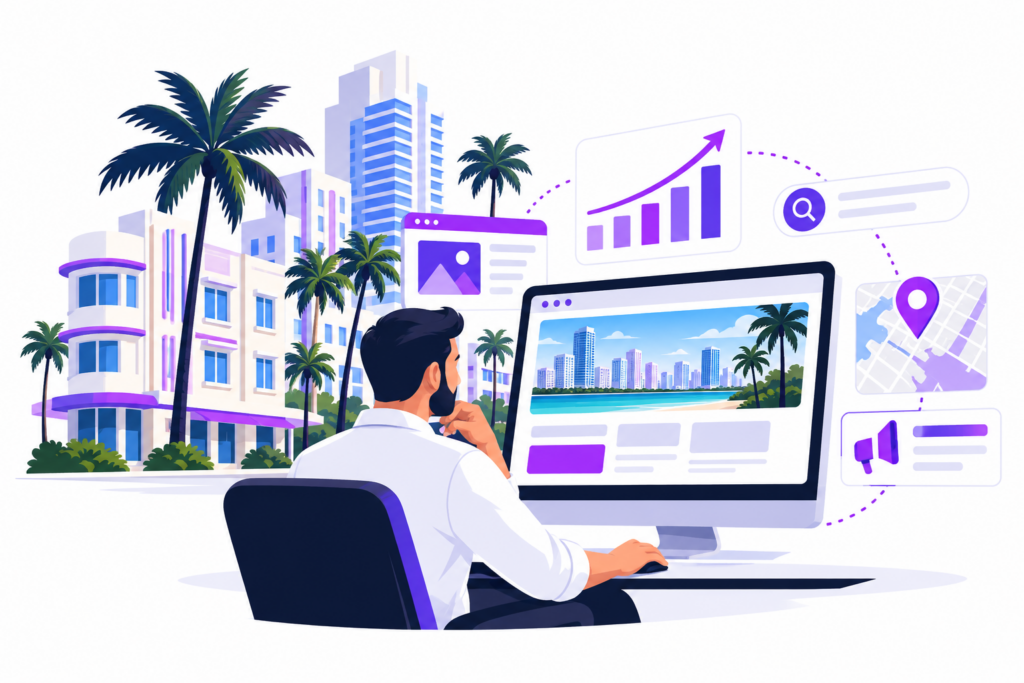
We do not use one medical template for every practice. A solo family practice and a four-provider multi-specialty group need different site structures, and we scope accordingly.
- Provider bio pages written to YMYL standards: real credentials, board certifications, education, and a photo, because Google and patients both weigh expertise signals on medical content more heavily than on almost any other category.
- Condition and service pages built per specialty and, where it applies, per location, so a page about knee pain in Boynton Beach is not the same page republished with a city name changed.
- HIPAA-safe intake and contact forms, meaning no patient health information routes through a non-compliant email or a third-party form tool that was not built for medical data.
- Google Business Profile management for single and multi-location practices, including category accuracy, photo cadence, and a review-request workflow that stays within platform and medical advertising rules.
- Search campaigns built around the condition-and-insurance search pattern described above, with separate messaging tracks for the retiree searcher and the parent searcher rather than one generic ad group.
Legal and professional services
Explain practice areas, relevant experience, service locations, and consultation options. Organize pages around the specific services potential clients search for.
Medical and healthcare practices
Make treatment information, provider details, location information, and appointment options easy to find. Review health-related claims carefully.
Financial services
Present services, qualifications, and contact pathways clearly while respecting applicable advertising and compliance requirements.
Technology and business services
Explain complex offerings in plain language, demonstrate practical value, and create landing pages for distinct solutions.
Local service businesses
Build relevant service and location pages, improve Google Business Profile information, and make calls and enquiry forms easy to use.
What we measure
Numbers that aren’t tied to a tracked source aren’t numbers, they’re guesses. We put call tracking on every campaign and every key page, so a call from a Google ad, a call from an organic search result, and a call from a review click are each attributed to the source that produced it, not lumped into one “phone rang” total.
For medical clients specifically, that means we can show you, by location if you have more than one, which pages produce appointment requests and which produce only page views. We report on booked-call volume, form submissions, and cost per tracked call where paid spend is involved. We do not report vanity traffic numbers as a substitute for patient volume, because a spike in visits from an unrelated keyword does not fill a chair.

What it costs
Medical marketing in Boynton Beach costs more to do properly than a generic local business site, mainly because of the compliance work on forms and the volume of content needed per provider and per condition. Pricing depends on how many providers and locations you have, whether you need new provider bio pages written from scratch or just restructured, and whether paid search is part of the scope. We quote a range after a short audit of what you already have, not before.

Get an audit
If you run a medical practice in Boynton Beach, whether it’s a single-provider office near downtown, a specialty clinic off Congress Avenue, or a multi-location group spanning Boynton and a neighboring city, we start every engagement with a free audit rather than a sales pitch. We look at your current site, your Google Business Profile, your review volume and recency, and the practices currently sitting in the map pack for your core procedures. That review tells us whether your gap is thin content, a weak review strategy, technical structure that’s hurting your rankings, or simply a lack of paid visibility where patients are actually searching.
You’ll get a plain-language rundown of what we found, what we’d prioritize first, and roughly what effort that would take, before you commit to anything. No generic template, no guesswork, just a clear picture of where your practice stands against competitors nearby.

Boynton Beach’s downtown corridor has its own small cluster of independent practices, similar to what you see in Delray Beach but smaller: a handful of dental offices, a few concierge-style primary care practices, and specialty clinics mixed in among the retail on and near Ocean Avenue. Those practices compete less on price and more on reputation and walkability, which changes what the website needs to do. A downtown practice benefits from content about parking, walk-in availability, and proximity to the retail district, details that a practice in a strip plaza off Congress Avenue does not need.
FAQ's
These are the 5 questions Boynton Beach homeowners ask us most about medical practice marketing, answered plainly so you know what to expect before any work starts. If yours isn't covered here, get in touch and we'll walk you through it.
Can you work with our EHR or patient portal without touching patient data?
Yes. Our forms and tracking sit outside your EHR and patient portal. We collect only what's needed to schedule a call or appointment request, and we route it through tools built for that, not general-purpose email forms.
Do you write the provider bios or do we?
We write them from an interview or questionnaire with each provider, then send them for your review and sign-off before publishing. You control the final wording on anything tied to credentials or scope of practice.
We have locations in Boynton Beach and another city. Do we need two websites?
Not necessarily two sites, but you need two real location pages, each with its own content, hours, and Google Business Profile. One shared page with a city name swapped rarely performs for either location.
How do you handle reviews without violating patient privacy rules?
We set up a request workflow that asks for a general review, never references a diagnosis or visit detail, and complies with platform and medical advertising guidelines. Patients write what they want; we don't script clinical content into it.
Is Google Ads worth it for a primary care or pediatric practice here?
It depends on how full your schedule already is and whether you have open capacity for new patients. We'll tell you honestly in the audit if paid search makes sense before we propose a budget.
Multi-location groups that serve both Boynton Beach and a neighboring city need their Boynton location to read as a real, separate place to Google, not a satellite mention on a Delray-focused homepage. That means its own page, its own hours, its own staff listing, and its own set of reviews tied to that specific Google Business Profile.
We also build with Florida’s advertising rules for medical and dental practices in mind, including how credentials and before-and-after content can be presented, so your marketing stays usable rather than something your compliance officer flags after launch.