
- Home
- Services
- Portfolio
- About
- Service AreasFort Lauderdale, FL
- Web Design
- Redesign
- WordPress
- Ecommerce
- Landing Pages
- SEO Services
- Local SEO
- GBP
- Google Ads
- PPC
- Digital Marketing
- Internet Marketing
- Advertising
- Tracking
- Dental Marketing
- Medical Marketing
- HVAC Marketing
- Roofing Marketing
- Pest Control Marketing
- Home Services Marketing
- Plumbing Marketing
- Electrical Marketing
- Landscaping Marketing
- Remodeling Marketing
Pembroke Pines, FL- Web Design
- Redesign
- WordPress
- Ecommerce
- Landing Pages
- SEO Services
- Local SEO
- GBP
- Google Ads
- PPC
- Digital Marketing
- Internet Marketing
- Advertising
- Tracking
- Dental Marketing
- Medical Marketing
- HVAC Marketing
- Roofing Marketing
- Pest Control Marketing
- Home Services Marketing
- Plumbing Marketing
- Electrical Marketing
- Landscaping Marketing
- Remodeling Marketing
Hialeah, FL- Web Design
- Redesign
- WordPress
- Ecommerce
- Landing Pages
- SEO Services
- Local SEO
- GBP
- Google Ads
- PPC
- Digital Marketing
- Internet Marketing
- Advertising
- Tracking
- Dental Marketing
- Medical Marketing
- HVAC Marketing
- Roofing Marketing
- Pest Control Marketing
- Home Services Marketing
- Plumbing Marketing
- Electrical Marketing
- Landscaping Marketing
- Remodeling Marketing
Hollywood, FL- Web Design
- Redesign
- WordPress
- Ecommerce
- Landing Pages
- SEO Services
- Local SEO
- GBP
- Google Ads
- PPC
- Digital Marketing
- Internet Marketing
- Advertising
- Tracking
- Dental Marketing
- Medical Marketing
- HVAC Marketing
- Roofing Marketing
- Pest Control Marketing
- Home Services Marketing
- Plumbing Marketing
- Electrical Marketing
- Landscaping Marketing
- Remodeling Marketing
Miramar, FL- Web Design
- Redesign
- WordPress
- Ecommerce
- Landing Pages
- SEO Services
- Local SEO
- GBP
- Google Ads
- PPC
- Digital Marketing
- Internet Marketing
- Advertising
- Tracking
- Dental Marketing
- Medical Marketing
- HVAC Marketing
- Roofing Marketing
- Pest Control Marketing
- Home Services Marketing
- Plumbing Marketing
- Electrical Marketing
- Landscaping Marketing
- Remodeling Marketing
Coral Springs, FL- Web Design
- Redesign
- WordPress
- Ecommerce
- Landing Pages
- SEO Services
- Local SEO
- GBP
- Google Ads
- PPC
- Digital Marketing
- Internet Marketing
- Advertising
- Tracking
- Dental Marketing
- Medical Marketing
- HVAC Marketing
- Roofing Marketing
- Pest Control Marketing
- Home Services Marketing
- Plumbing Marketing
- Electrical Marketing
- Landscaping Marketing
- Remodeling Marketing
Pompano Beach, FL- Web Design
- Redesign
- WordPress
- Ecommerce
- Landing Pages
- SEO Services
- Local SEO
- GBP
- Google Ads
- PPC
- Digital Marketing
- Internet Marketing
- Advertising
- Tracking
- Dental Marketing
- Medical Marketing
- HVAC Marketing
- Roofing Marketing
- Pest Control Marketing
- Home Services Marketing
- Plumbing Marketing
- Electrical Marketing
- Landscaping Marketing
- Remodeling Marketing
Davie, FL- Web Design
- Redesign
- WordPress
- Ecommerce
- Landing Pages
- SEO Services
- Local SEO
- GBP
- Google Ads
- PPC
- Digital Marketing
- Internet Marketing
- Advertising
- Tracking
- Dental Marketing
- Medical Marketing
- HVAC Marketing
- Roofing Marketing
- Pest Control Marketing
- Home Services Marketing
- Plumbing Marketing
- Electrical Marketing
- Landscaping Marketing
- Remodeling Marketing
Sunrise, FL- Web Design
- Redesign
- WordPress
- Ecommerce
- Landing Pages
- SEO Services
- Local SEO
- GBP
- Google Ads
- PPC
- Digital Marketing
- Internet Marketing
- Advertising
- Tracking
- Dental Marketing
- Medical Marketing
- HVAC Marketing
- Roofing Marketing
- Pest Control Marketing
- Home Services Marketing
- Plumbing Marketing
- Electrical Marketing
- Landscaping Marketing
- Remodeling Marketing
Plantation, FL- Web Design
- Redesign
- WordPress
- Ecommerce
- Landing Pages
- SEO Services
- Local SEO
- GBP
- Google Ads
- PPC
- Digital Marketing
- Internet Marketing
- Advertising
- Tracking
- Dental Marketing
- Medical Marketing
- HVAC Marketing
- Roofing Marketing
- Pest Control Marketing
- Home Services Marketing
- Plumbing Marketing
- Electrical Marketing
- Landscaping Marketing
- Remodeling Marketing
Deerfield Beach, FL- Web Design
- Redesign
- WordPress
- Ecommerce
- Landing Pages
- SEO Services
- Local SEO
- GBP
- Google Ads
- PPC
- Digital Marketing
- Internet Marketing
- Advertising
- Tracking
- Dental Marketing
- Medical Marketing
- HVAC Marketing
- Roofing Marketing
- Pest Control Marketing
- Home Services Marketing
- Plumbing Marketing
- Electrical Marketing
- Landscaping Marketing
- Remodeling Marketing
Miami Gardens, FL- Web Design
- Redesign
- WordPress
- Ecommerce
- Landing Pages
- SEO Services
- Local SEO
- GBP
- Google Ads
- PPC
- Digital Marketing
- Internet Marketing
- Advertising
- Tracking
- Dental Marketing
- Medical Marketing
- HVAC Marketing
- Roofing Marketing
- Pest Control Marketing
- Home Services Marketing
- Plumbing Marketing
- Electrical Marketing
- Landscaping Marketing
- Remodeling Marketing
Lauderhill, FL- Web Design
- Redesign
- WordPress
- Ecommerce
- Landing Pages
- SEO Services
- Local SEO
- GBP
- Google Ads
- PPC
- Digital Marketing
- Internet Marketing
- Advertising
- Tracking
- Dental Marketing
- Medical Marketing
- HVAC Marketing
- Roofing Marketing
- Pest Control Marketing
- Home Services Marketing
- Plumbing Marketing
- Electrical Marketing
- Landscaping Marketing
- Remodeling Marketing
West Palm Beach, FL- Web Design
- Redesign
- WordPress
- Ecommerce
- Landing Pages
- SEO Services
- Local SEO
- GBP
- Google Ads
- PPC
- Digital Marketing
- Internet Marketing
- Advertising
- Tracking
- Dental Marketing
- Medical Marketing
- HVAC Marketing
- Roofing Marketing
- Pest Control Marketing
- Home Services Marketing
- Plumbing Marketing
- Electrical Marketing
- Landscaping Marketing
- Remodeling Marketing
Tamarac, FL- Web Design
- Redesign
- WordPress
- Ecommerce
- Landing Pages
- SEO Services
- Local SEO
- GBP
- Google Ads
- PPC
- Digital Marketing
- Internet Marketing
- Advertising
- Tracking
- Dental Marketing
- Medical Marketing
- HVAC Marketing
- Roofing Marketing
- Pest Control Marketing
- Home Services Marketing
- Plumbing Marketing
- Electrical Marketing
- Landscaping Marketing
- Remodeling Marketing
Weston, FL- Web Design
- Redesign
- WordPress
- Ecommerce
- Landing Pages
- SEO Services
- Local SEO
- GBP
- Google Ads
- PPC
- Digital Marketing
- Internet Marketing
- Advertising
- Tracking
- Dental Marketing
- Medical Marketing
- HVAC Marketing
- Roofing Marketing
- Pest Control Marketing
- Home Services Marketing
- Plumbing Marketing
- Electrical Marketing
- Landscaping Marketing
- Remodeling Marketing
Boca Raton, FLMargate, FLCoconut Creek, FLMiami Beach, FLHomestead, FLKendall, FLDoral, FLBoynton Beach, FLThe Hammocks, FLNorth Lauderdale, FLOakland Park, FLDelray Beach, FLNorth Miami, FLHallandale Beach, FLFontainebleau, FLKendale Lakes, FLWellington, FLJupiter, FLTamiami, FLPalm Beach Gardens, FLLauderdale Lakes, FLCooper City, FLCountry Club, FLParkland, FLCoral Gables, FLDania Beach, FLCutler Bay, FLNorth Miami Beach, FLGreenacres, FLLake Worth Beach, FLPrinceton, FLRoyal Palm Beach, FLSouth Miami Heights, FLRichmond West, FLRiviera Beach, FLWest Little River, FLGolden Glades, FLAventura, FLMiami Lakes, FLWestchester, FLLeisure City, FLCoral Terrace, FLPalm Springs, FLPalmetto Bay, FLHialeah Gardens, FLSunny Isles Beach, FLIves Estates, FLWest Park, FLSweetwater, FLPinecrest, FLSunset, FLPinewood, FLWilton Manors, FLOpa-locka, FLLighthouse Point, FLBelle Glade, FLNaranja, FLPalmetto Estates, FLBrownsville, FLKey Biscayne, FLOlympia Heights, FLMiami Springs, FLFlorida City, FLSouth Miami, FLThree Lakes, FLGladeview, FLNorth Palm Beach, FLMiami Shores, FLSouthwest Ranches, FLKings Point, FLLauderdale-by-the-Sea, FLHillsboro Beach, FLSea Ranch Lakes, FLLazy Lake, FL - Blog
- Contact
Marketing for Pest Control Companies in Miami Beach, Florida
A pest control company in Miami Beach does not sell one service. It sells rodent exclusion to a hotel, mosquito reduction to a rooftop bar, white-footed ant treatment to a Collins Avenue condo board, and recurring termite monitoring to a homeowner inland near the bay, each worried about what a bad review from a guest in a short-term rental can do to bookings. Generic marketing treats all of that as "pest control services near me." We don't. We build search and ad campaigns around the species, the property type, and the contract value, because a one-time roach call, a seasonal mosquito contract, and a year-round commercial account are not the same sale and should not be marketed like they are.
How Miami Beach Pest Control Companies buyers search
Searches here split into two clear groups. Residents and condo managers search by pest name and urgency: “rat exclusion Miami Beach,” “bed bug treatment South Beach,” “get rid of ghost ants,” “wasp nest removal near me.” Hospitality and property buyers search by relationship instead: “commercial pest control contract Miami Beach,” “restaurant pest inspection,” “pest control for vacation rental,” “HOA pest vendor.” Both groups check Google’s map pack first, but the second group also reads your website closely and compares two or three vendors side by side, because a hotel GM or a property manager with twelve units is vetting a long-term vendor, not booking a single visit. That buyer wants to see licensing, proof of insurance, discreet service vehicles, and documented treatment logs before they’ll even request a quote.
Demand is not flat through the year, either. Mosquito and rodent searches climb with the wet season, and the snowbird population swings that bring more short-term rentals online each winter push up turnover-related pest calls between guest bookings. Roach and ant calls run steady year-round because this is a subtropical coastline with dense multi-family housing, but termite swarm searches spike hard in spring. A campaign that doesn’t shift budget, ad copy, and keyword emphasis by month is leaving part of the year underserved, and competitors who do adjust seasonally will simply outbid you when it matters most.
Spanish-language search volume is meaningful here too, and often overlooked. Condo boards, property managers, and residents searching in Spanish for terms like “control de plagas Miami Beach” or “exterminador de cucarachas” are a real, separate segment with their own search behavior, not a subset of English traffic. Most local pest control sites have no Spanish page at all, which means:
- Bilingual listings and a Spanish landing page can capture demand competitors ignore entirely.
Getting found by both language groups, both buyer types, and across every season is what separates a pest control marketing plan from a list of keywords.
The competition here
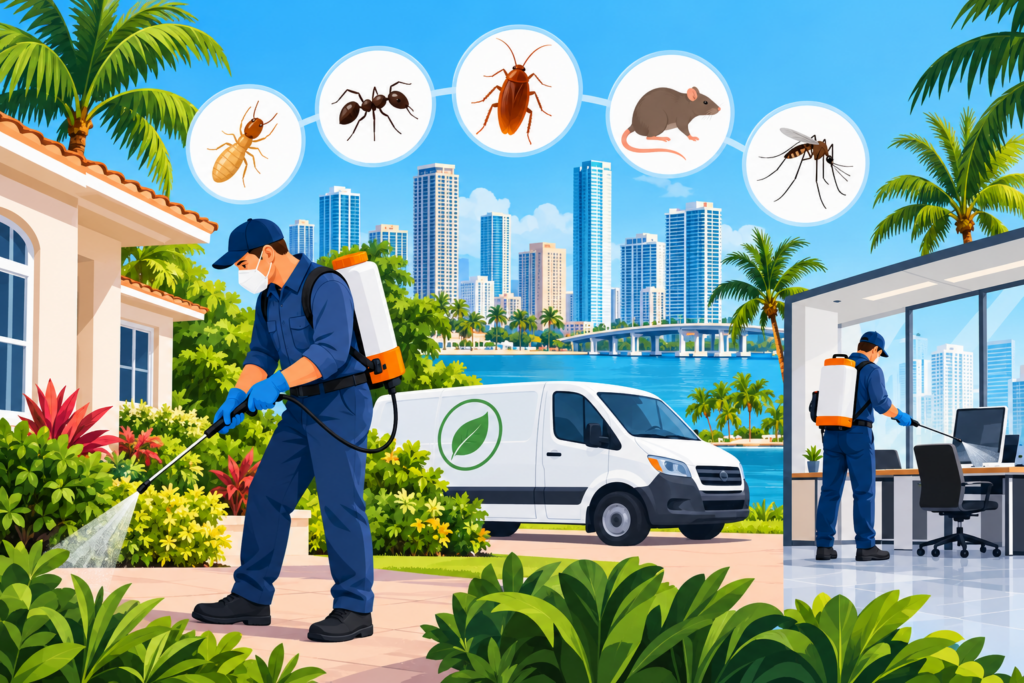
Miami Beach itself has a modest number of pest control companies physically based on the island, but the map pack results you compete against pull in every Miami-Dade operator willing to drive over the causeway, which is most of them. That means the map pack for a term like “pest control Miami Beach” is crowded with businesses based in Miami, Hialeah, and North Miami Beach, not just local ones. Ranking in the 3-pack takes a Google Business Profile with the right category, service areas set correctly, and review volume, since this is a review-driven market the way restaurants and hotels are. Photos, response times to reviews, and consistent posting activity all factor in, and most competitors treat their profile as a one-time setup rather than something to maintain.
Organic results below the map pack are less contested, but thin. Most pest control websites here are built from the same template: a homepage, a services page listing six pests, and a contact form. There is rarely a dedicated page for bed bugs, for rodent exclusion, for commercial accounts, or for marine-adjacent pests like no-see-ums that matter specifically to beachfront and outdoor hospitality venues. That gap is the opening. A searcher who types “no-see-um treatment for outdoor restaurant patio Miami Beach” finds almost nothing built to answer that exact question, and whoever builds the page usually gets the click. The same is true for condo associations searching for recurring treatment contracts, and for short-term rental hosts dealing with roach or rodent complaints between guest turnovers.
Paid search here is expensive relative to population because hospitality and property management budgets compete for the same terms as residential pest control, and high-value commercial keywords like “commercial pest control contract” draw bids from larger regional and national operators. A campaign aimed at this market needs tight negative keyword lists and landing pages matched to intent, or budget gets burned on clicks that were never going to convert. Worth noting too: seasonal spikes around rainy season and snowbird arrivals shift search volume and competitor bidding dramatically, so a strategy built on static keyword lists and flat budgets tends to underperform compared to one that adjusts with the calendar.
What we build for Pest Control Companies in this market
Local SEO
Review business details, service categories, service areas, and profile information to help customers find and contact your company.
Species-specific service pages
Create focused pages for services such as termite treatment, ant control, rodent control, cockroach treatment, and mosquito management. Each page should explain the service and provide a clear next step.
Recurring-service content
Explain preventive plans, included services, and how customers can request an assessment. Clear information helps potential customers compare ongoing services with one-time treatments.
Commercial pest control pages
Address the needs of offices, property managers, and other commercial clients by outlining your available services, scheduling options, and relevant documentation.
Paid search campaigns
Target relevant, high-intent searches with suitable geographic settings and landing pages. Review spending alongside enquiry quality and cost.
Conversion improvements
Make phone details, estimate forms, service information, and contact options easy to find. A straightforward website helps visitors take the next step.
We start with a site structure built around how the buyer actually searches: separate pages for residential pest types, for commercial and hospitality contracts, for rodent and bird exclusion, and for recurring quarterly service plans, each written for the property type it targets rather than one page trying to cover all of it. For Miami Beach specifically, we build pages addressing mosquito and no-see-um control for outdoor dining and event venues, marine pest issues tied to waterfront properties, and rodent exclusion for hotels and multi-unit buildings, because those are the searches generic pest control sites ignore.
Google Business Profile work matters as much as the website here, given how much weight the map pack carries. We set service area boundaries correctly so you’re not showing up for cities you don’t cover, pick categories that match commercial as well as residential work, and build a process for collecting reviews after every job, because review count and recency are a visible ranking factor in this market and a trust factor for hospitality buyers checking you out before a contract call.
Google Ads campaigns are split by intent: residential emergency terms, commercial contract terms, and seasonal terms like mosquito or termite swarm season, each with its own landing page and its own call tracking number so you can see which keyword group is actually producing jobs worth keeping versus jobs worth dropping. For a buyer managing several properties or locations, we also build out location-specific landing pages so a hotel group with beachfront and inland properties sees relevant copy for each.

We also build review-request workflows into your existing job completion process for Miami Beach pest control calls, triggered by text or email right after a technician finishes a visit, since manual review asks get forgotten and ratings stall.
- Organic search: Search visibility, relevant landing-page traffic, and changes in keyword performance.
- Local search: Google Business Profile interactions and available calls, website visits, or direction requests.
- Paid advertising: Spend, clicks, search terms, conversions, and cost per tracked enquiry.
- Website conversions: Phone calls, form submissions, and the pages that generate them.
- Lead quality: Where customer records are available, compare tracked enquiries with qualified opportunities and booked work.
Call tracking numbers are assigned per channel and per campaign, so a call from organic search is never mixed into the same bucket as a call from a paid ad, giving your Miami Beach pest control company clear, dependable ROI data for every marketing dollar spent.

What we measure
We track calls, form submissions, and the source of each, down to keyword or landing page. Since one lead’s value varies between a one-time job and a quarterly contract, we tag lead types where possible instead of reporting raw counts as if they’re interchangeable.
Each report ties together map pack position, organic rankings for priority pages, Google Business Profile metrics like calls and direction requests, and review volume and rating trend, so you can judge whether the work actually produced business, not just traffic.
We won’t promise a ranking position or lead volume. Miami Beach’s pest control market is too competitive for anyone honest to guarantee that. What we can show you is what moved: which pages rank, which campaigns produce calls, and what those calls cost.
FAQ's
These are the 5 questions Miami Beach homeowners ask us most about pest control company marketing, answered plainly so you know what to expect before any work starts. If yours isn't covered here, get in touch and we'll walk you through it.
Do you only work with pest control companies based in Miami Beach?
No. We work with pest control companies that serve Miami Beach, whether they're based on the island or in another part of Miami-Dade County and drive in for jobs. What matters for marketing is your Google Business Profile service area and how your site is structured for the neighborhoods and property types you actually cover.
How do you handle a business that covers both residential and commercial pest control?
We build separate pages and often separate campaigns for each, since a condo owner searching for ant treatment and a hotel GM searching for a commercial pest contract are different buyers with different timelines and decision processes. Mixing them on one page under-serves both.
Why does review volume matter so much for pest control marketing here?
Miami Beach is a hospitality and tourism market where reputation carries extra weight, and Google's map pack visibly displays rating and review count. A property manager vetting a vendor, or Google ranking you against competitors, both weigh reviews heavily, so review generation is part of the marketing work, not separate from it.
Can you guarantee we'll rank in the map pack?
No, and any agency that promises that is not being straight with you. We can tell you what factors affect map pack ranking, what we're changing, and we'll show you the movement in your reporting, but a guaranteed position isn't something anyone can honestly offer.
Do you build Spanish-language pages for pest control sites in this market?
We can, and for Miami Beach it's often worth it. A meaningful share of commercial and residential searches in this market happen in Spanish, and most competitors don't have a Spanish page at all, which leaves that traffic easier to capture.
What it costs
Cost depends on how many service pages and locations you need covered, whether you’re running paid search alongside SEO, and how much Google Business Profile and review work your current profile needs. A single-location residential-focused company needs less than a company managing commercial accounts across Miami Beach and the broader county. We’ll give you a specific number after looking at your current site, your service area, and your competitors in the map pack, not before. [EXTERNAL LINK: Google Business Profile help documentation on setting service areas and categories, to ground the recommendation in Google’s own guidance]