
- Home
- Services
- Portfolio
- About
- Service AreasFort Lauderdale, FL
- Web Design
- Redesign
- WordPress
- Ecommerce
- Landing Pages
- SEO Services
- Local SEO
- GBP
- Google Ads
- PPC
- Digital Marketing
- Internet Marketing
- Advertising
- Tracking
- Dental Marketing
- Medical Marketing
- HVAC Marketing
- Roofing Marketing
- Pest Control Marketing
- Home Services Marketing
- Plumbing Marketing
- Electrical Marketing
- Landscaping Marketing
- Remodeling Marketing
Pembroke Pines, FL- Web Design
- Redesign
- WordPress
- Ecommerce
- Landing Pages
- SEO Services
- Local SEO
- GBP
- Google Ads
- PPC
- Digital Marketing
- Internet Marketing
- Advertising
- Tracking
- Dental Marketing
- Medical Marketing
- HVAC Marketing
- Roofing Marketing
- Pest Control Marketing
- Home Services Marketing
- Plumbing Marketing
- Electrical Marketing
- Landscaping Marketing
- Remodeling Marketing
Hialeah, FL- Web Design
- Redesign
- WordPress
- Ecommerce
- Landing Pages
- SEO Services
- Local SEO
- GBP
- Google Ads
- PPC
- Digital Marketing
- Internet Marketing
- Advertising
- Tracking
- Dental Marketing
- Medical Marketing
- HVAC Marketing
- Roofing Marketing
- Pest Control Marketing
- Home Services Marketing
- Plumbing Marketing
- Electrical Marketing
- Landscaping Marketing
- Remodeling Marketing
Hollywood, FL- Web Design
- Redesign
- WordPress
- Ecommerce
- Landing Pages
- SEO Services
- Local SEO
- GBP
- Google Ads
- PPC
- Digital Marketing
- Internet Marketing
- Advertising
- Tracking
- Dental Marketing
- Medical Marketing
- HVAC Marketing
- Roofing Marketing
- Pest Control Marketing
- Home Services Marketing
- Plumbing Marketing
- Electrical Marketing
- Landscaping Marketing
- Remodeling Marketing
Miramar, FL- Web Design
- Redesign
- WordPress
- Ecommerce
- Landing Pages
- SEO Services
- Local SEO
- GBP
- Google Ads
- PPC
- Digital Marketing
- Internet Marketing
- Advertising
- Tracking
- Dental Marketing
- Medical Marketing
- HVAC Marketing
- Roofing Marketing
- Pest Control Marketing
- Home Services Marketing
- Plumbing Marketing
- Electrical Marketing
- Landscaping Marketing
- Remodeling Marketing
Coral Springs, FL- Web Design
- Redesign
- WordPress
- Ecommerce
- Landing Pages
- SEO Services
- Local SEO
- GBP
- Google Ads
- PPC
- Digital Marketing
- Internet Marketing
- Advertising
- Tracking
- Dental Marketing
- Medical Marketing
- HVAC Marketing
- Roofing Marketing
- Pest Control Marketing
- Home Services Marketing
- Plumbing Marketing
- Electrical Marketing
- Landscaping Marketing
- Remodeling Marketing
Pompano Beach, FL- Web Design
- Redesign
- WordPress
- Ecommerce
- Landing Pages
- SEO Services
- Local SEO
- GBP
- Google Ads
- PPC
- Digital Marketing
- Internet Marketing
- Advertising
- Tracking
- Dental Marketing
- Medical Marketing
- HVAC Marketing
- Roofing Marketing
- Pest Control Marketing
- Home Services Marketing
- Plumbing Marketing
- Electrical Marketing
- Landscaping Marketing
- Remodeling Marketing
Davie, FL- Web Design
- Redesign
- WordPress
- Ecommerce
- Landing Pages
- SEO Services
- Local SEO
- GBP
- Google Ads
- PPC
- Digital Marketing
- Internet Marketing
- Advertising
- Tracking
- Dental Marketing
- Medical Marketing
- HVAC Marketing
- Roofing Marketing
- Pest Control Marketing
- Home Services Marketing
- Plumbing Marketing
- Electrical Marketing
- Landscaping Marketing
- Remodeling Marketing
Sunrise, FL- Web Design
- Redesign
- WordPress
- Ecommerce
- Landing Pages
- SEO Services
- Local SEO
- GBP
- Google Ads
- PPC
- Digital Marketing
- Internet Marketing
- Advertising
- Tracking
- Dental Marketing
- Medical Marketing
- HVAC Marketing
- Roofing Marketing
- Pest Control Marketing
- Home Services Marketing
- Plumbing Marketing
- Electrical Marketing
- Landscaping Marketing
- Remodeling Marketing
Plantation, FL- Web Design
- Redesign
- WordPress
- Ecommerce
- Landing Pages
- SEO Services
- Local SEO
- GBP
- Google Ads
- PPC
- Digital Marketing
- Internet Marketing
- Advertising
- Tracking
- Dental Marketing
- Medical Marketing
- HVAC Marketing
- Roofing Marketing
- Pest Control Marketing
- Home Services Marketing
- Plumbing Marketing
- Electrical Marketing
- Landscaping Marketing
- Remodeling Marketing
Deerfield Beach, FL- Web Design
- Redesign
- WordPress
- Ecommerce
- Landing Pages
- SEO Services
- Local SEO
- GBP
- Google Ads
- PPC
- Digital Marketing
- Internet Marketing
- Advertising
- Tracking
- Dental Marketing
- Medical Marketing
- HVAC Marketing
- Roofing Marketing
- Pest Control Marketing
- Home Services Marketing
- Plumbing Marketing
- Electrical Marketing
- Landscaping Marketing
- Remodeling Marketing
Miami Gardens, FL- Web Design
- Redesign
- WordPress
- Ecommerce
- Landing Pages
- SEO Services
- Local SEO
- GBP
- Google Ads
- PPC
- Digital Marketing
- Internet Marketing
- Advertising
- Tracking
- Dental Marketing
- Medical Marketing
- HVAC Marketing
- Roofing Marketing
- Pest Control Marketing
- Home Services Marketing
- Plumbing Marketing
- Electrical Marketing
- Landscaping Marketing
- Remodeling Marketing
Lauderhill, FL- Web Design
- Redesign
- WordPress
- Ecommerce
- Landing Pages
- SEO Services
- Local SEO
- GBP
- Google Ads
- PPC
- Digital Marketing
- Internet Marketing
- Advertising
- Tracking
- Dental Marketing
- Medical Marketing
- HVAC Marketing
- Roofing Marketing
- Pest Control Marketing
- Home Services Marketing
- Plumbing Marketing
- Electrical Marketing
- Landscaping Marketing
- Remodeling Marketing
West Palm Beach, FL- Web Design
- Redesign
- WordPress
- Ecommerce
- Landing Pages
- SEO Services
- Local SEO
- GBP
- Google Ads
- PPC
- Digital Marketing
- Internet Marketing
- Advertising
- Tracking
- Dental Marketing
- Medical Marketing
- HVAC Marketing
- Roofing Marketing
- Pest Control Marketing
- Home Services Marketing
- Plumbing Marketing
- Electrical Marketing
- Landscaping Marketing
- Remodeling Marketing
Tamarac, FL- Web Design
- Redesign
- WordPress
- Ecommerce
- Landing Pages
- SEO Services
- Local SEO
- GBP
- Google Ads
- PPC
- Digital Marketing
- Internet Marketing
- Advertising
- Tracking
- Dental Marketing
- Medical Marketing
- HVAC Marketing
- Roofing Marketing
- Pest Control Marketing
- Home Services Marketing
- Plumbing Marketing
- Electrical Marketing
- Landscaping Marketing
- Remodeling Marketing
Weston, FL- Web Design
- Redesign
- WordPress
- Ecommerce
- Landing Pages
- SEO Services
- Local SEO
- GBP
- Google Ads
- PPC
- Digital Marketing
- Internet Marketing
- Advertising
- Tracking
- Dental Marketing
- Medical Marketing
- HVAC Marketing
- Roofing Marketing
- Pest Control Marketing
- Home Services Marketing
- Plumbing Marketing
- Electrical Marketing
- Landscaping Marketing
- Remodeling Marketing
Boca Raton, FLMargate, FLCoconut Creek, FLMiami Beach, FLHomestead, FLKendall, FLDoral, FLBoynton Beach, FLThe Hammocks, FLNorth Lauderdale, FLOakland Park, FLDelray Beach, FLNorth Miami, FLHallandale Beach, FLFontainebleau, FLKendale Lakes, FLWellington, FLJupiter, FLTamiami, FLPalm Beach Gardens, FLLauderdale Lakes, FLCooper City, FLCountry Club, FLParkland, FLCoral Gables, FLDania Beach, FLCutler Bay, FLNorth Miami Beach, FLGreenacres, FLLake Worth Beach, FLPrinceton, FLRoyal Palm Beach, FLSouth Miami Heights, FLRichmond West, FLRiviera Beach, FLWest Little River, FLGolden Glades, FLAventura, FLMiami Lakes, FLWestchester, FLLeisure City, FLCoral Terrace, FLPalm Springs, FLPalmetto Bay, FLHialeah Gardens, FLSunny Isles Beach, FLIves Estates, FLWest Park, FLSweetwater, FLPinecrest, FLSunset, FLPinewood, FLWilton Manors, FLOpa-locka, FLLighthouse Point, FLBelle Glade, FLNaranja, FLPalmetto Estates, FLBrownsville, FLKey Biscayne, FLOlympia Heights, FLMiami Springs, FLFlorida City, FLSouth Miami, FLThree Lakes, FLGladeview, FLNorth Palm Beach, FLMiami Shores, FLSouthwest Ranches, FLKings Point, FLLauderdale-by-the-Sea, FLHillsboro Beach, FLSea Ranch Lakes, FLLazy Lake, FL - Blog
- Contact
Marketing for Plumbing Companies in Fort Lauderdale, Florida
How Fort Lauderdale Plumbing Companies buyers search
A burst pipe does not wait for business hours. Someone searching “plumber near me Fort Lauderdale” at 11 PM on a Tuesday is not comparing five websites. They are calling the first number that looks legitimate and answers quickly. That search pattern defines this entire category, and it rewards speed over polish.

The competition here
Fort Lauderdale is not an easy market to rank in. Broward County has a dense cluster of plumbing companies, several with fleets large enough to run always-on paid ads, and a handful backed by private equity roll-ups with marketing budgets that a single-location shop cannot match dollar for dollar. If you search “emergency plumber Fort Lauderdale” right now, expect to see three or four paid ads above the map pack, then a map pack dominated by companies with hundreds of reviews collected over years across neighborhoods from Victoria Park to Wilton Manors to the Harbor Beach corridor.
That is the honest picture. We are not going to tell you that you can outspend a rolled-up company with a regional ad budget. You usually cannot, and anyone who promises that is selling you something. What you can do is compete on the terms the bigger players often neglect: speed to answer the phone or the form, tightly matched service pages for the specific job someone needs done, and review volume that catches up over time because you ask every satisfied customer, not just the ones who happen to leave one unprompted.
The map pack tends to win the emergency click, especially after a summer storm knocks out a water heater or a slab leak shows up under old terrazzo flooring common in Fort Lauderdale’s older homes. Organic and service-page rankings tend to win the planned job instead: a water heater replacement, a full repipe, a backflow test for a commercial property, or a tenant improvement near the airport business district. Both matter, but they need different pages, different calls to action, and often different ad strategies, which is exactly where most single-page plumber websites fall apart.
Where we tend to find real traction for plumbing clients here:
- Hyper-specific service pages instead of one generic “plumbing services” page
- Review generation built into the dispatch workflow, not left to chance
- Separate messaging and landing pages for emergency versus scheduled work
None of this is instant. It is the compounding work that slowly closes the gap with the bigger budgets.

What we build for Plumbing Companies in this market
We do not build one page and hope it ranks for forty different searches. A page optimized for “drain cleaning Fort Lauderdale” cannot also carry “water heater installation Fort Lauderdale” and “commercial plumbing Fort Lauderdale” without diluting all three. Search engines match specific pages to specific intent, so we build a page per service, and where your service area justifies it, a page per service per neighborhood or nearby city.
For a Fort Lauderdale plumbing company that usually means separate pages for emergency plumbing, drain and sewer work, water heater service, repiping, and commercial plumbing, each written around the actual questions a customer in that situation is typing into Google, not generic copy swapped with a city name. A homeowner in Victoria Park searching for a slab leak is thinking about different things than a property manager near Las Olas searching for a commercial backflow test, and the page needs to speak to that specific situation, not a generalized version of “plumbing services.”
On the technical side, every page is built to load fast on a phone on a cellular connection, because someone standing over a flooding water heater is not waiting ten seconds for a page to render. We check Core Web Vitals and mobile usability against Google’s published standards, not guesswork. [EXTERNAL LINK: Google Search Central documentation on Core Web Vitals and page experience, because it is the actual standard search ranking and mobile usability are measured against]
Call tracking runs on every number we publish, so you can see which page, which ad, and which keyword produced a phone call, not just a form fill. For a business where the phone is the primary conversion point, a contact form alone tells you almost nothing useful, and knowing whether your emergency page or your repiping page is actually driving calls changes where you put your budget.
Google Business Profile management matters as much as the website here, since the map pack is often the first thing an emergency searcher sees, particularly after hours or on weekends when people are searching from their phones. That means:
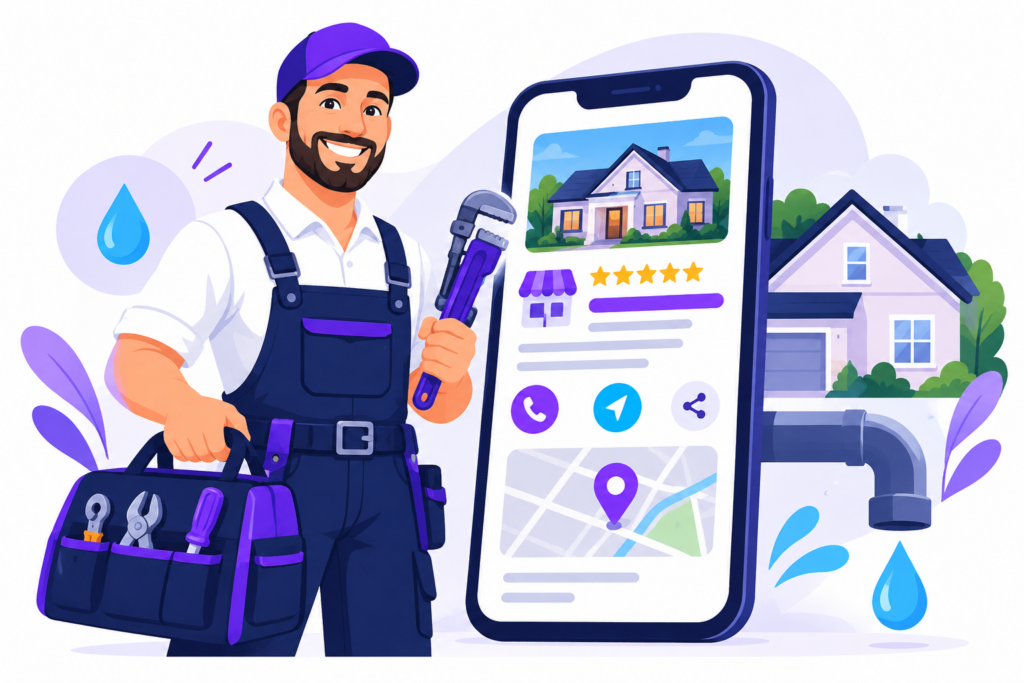
What We Build for Plumbing Companies in This Market
Local SEO and Google Business Profile
We review business information, categories, service coverage, and profile content to support relevant local discovery. Accurate information helps customers understand where your company operates and which services it provides.
Service-specific landing pages
Emergency plumbing, drain cleaning, leak repair, water heater services, and commercial plumbing address different customer needs. Where relevant, dedicated pages can explain the service, common problems, coverage, and how to request assistance.
Emergency-intent campaigns
Paid search can target customers looking for urgent plumbing help. Campaigns should use appropriate geographic targeting, relevant keywords, and landing pages that match the advertised service. Emergency messaging should reflect your actual operating hours and availability.
After-hours enquiry planning
Marketing should account for what happens after a customer clicks or calls. Businesses can review call routing, voicemail instructions, answering arrangements, and the process for returning missed calls. Any advertised response or emergency service should match the company's real capacity.
Website conversion improvements
Make the phone number, service details, and estimate-request options easy to find. Forms should be straightforward, and pages should work well on mobile devices as well as desktop. Commercial plumbing pages can provide relevant information for property managers and facility teams.
Campaign and service-area structure
We can review whether campaigns and landing pages distinguish priority services and the locations you genuinely serve. This makes it easier to assess which parts of the marketing plan are attracting relevant enquiries.
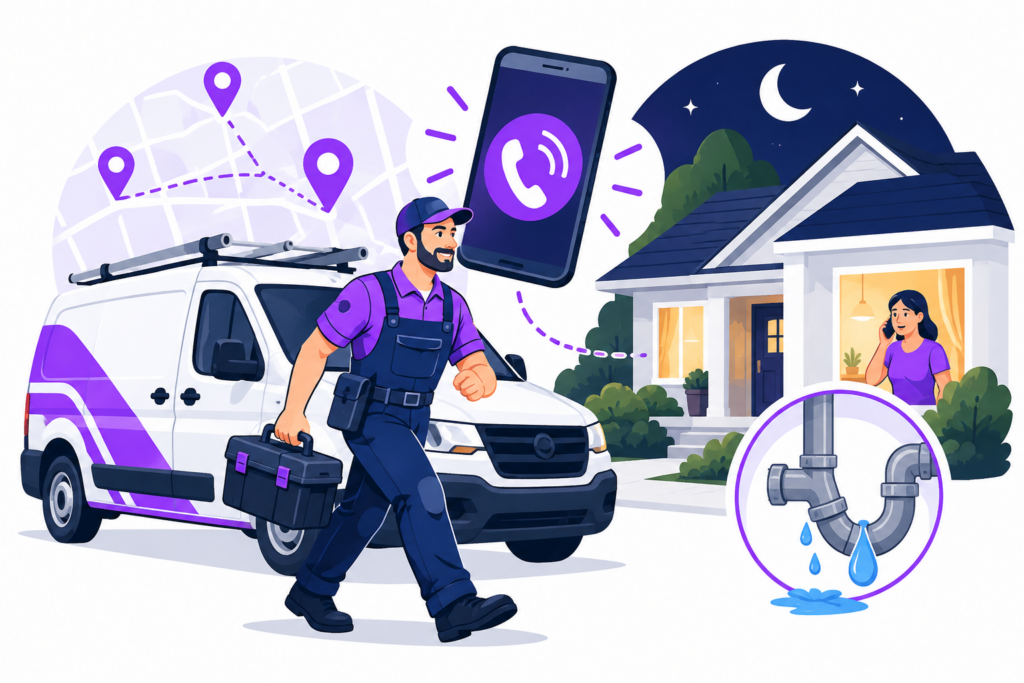
Google Ads for emergency plumbing works differently than most industries. Dayparting matters. Call-only ad formats matter.
- Organic search: Search visibility, relevant website traffic, and service-page performance.
- Local search: Available Google Business Profile interactions, including calls and website visits.
- Paid advertising: Spend, clicks, search terms, conversions, and cost per tracked enquiry.
- Call activity: Tracked calls, answered and missed calls where the system supports this, and enquiry timing.
- Lead quality: Where business records are available, compare enquiries with qualified jobs, estimates, and booked work.
We build landing pages matching each ad's exact offer, not your homepage.
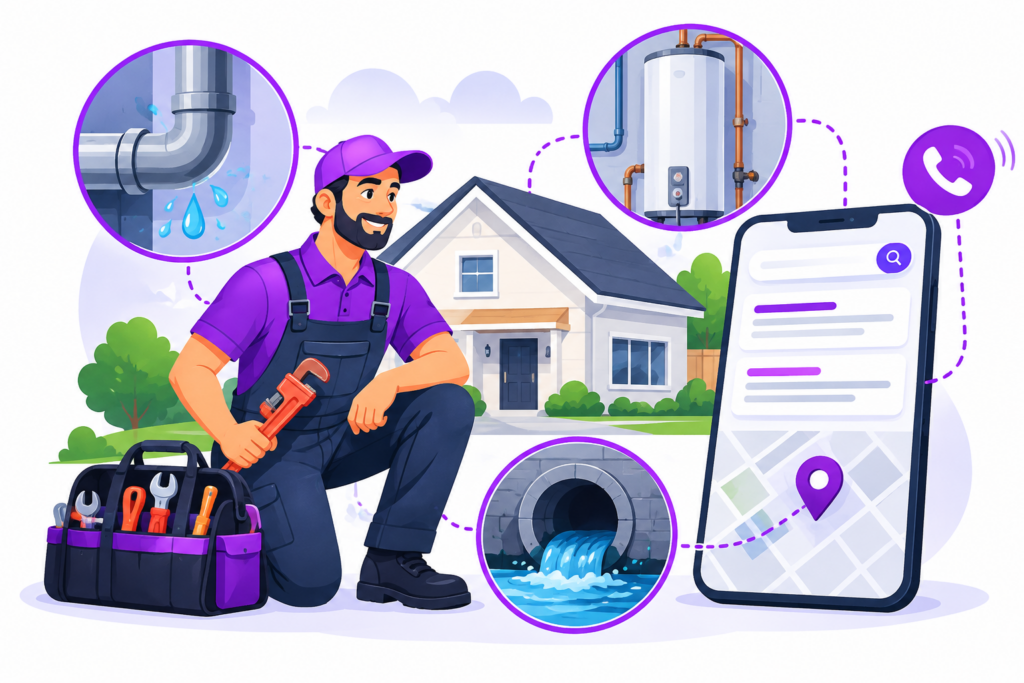
What we measure
We report on what actually moved, not a vanity dashboard. That means call volume by source, call duration (a 12-second call is not a lead, a 4-minute call usually is), which keywords and which pages produced booked jobs where that data is available, and cost per call by campaign, broken out separately for emergency terms versus planned work like water heater replacement.
Multi-touchpoint attribution matters for Fort Lauderdale plumbers because the path to a call is rarely one click. Someone might see your ad on their phone during the emergency at 11pm, search your name an hour later to confirm you’re legitimate and check reviews, then call in the morning. Last-click tracking would credit the branded search and miss the ad that actually started the job. We track the full path, across devices where possible, so you know which spend to keep and which to cut.
We do not report rankings as the headline metric. A number one ranking for a term nobody in Broward searches is worthless. We report:
- Calls and form submissions by source and zip code
- Which of those turned into booked work, where trackable
- Cost per booked job, not just cost per click
FAQ's
These are the 5 questions Fort Lauderdale homeowners ask us most about plumbing company marketing, answered plainly so you know what to expect before any work starts. If yours isn't covered here, get in touch and we'll walk you through it.
How fast can a plumbing company start showing up for emergency searches in Fort Lauderdale?
Paid ads can start generating calls almost as soon as they're live, assuming the landing page and tracking are set up correctly. Organic rankings move slower and depend heavily on how competitive your specific service terms are in this market. We don't promise a timeline because we don't control the algorithm or your competitors' next move.
Is the map pack or organic search more important for a Fort Lauderdale plumber?
Both, for different jobs. Emergency searches tend to convert heavily through the map pack and paid ads. Planned work like repiping or water heater replacement sees more organic and comparison-based searching. A full strategy covers both rather than betting everything on one.
Do you only work with residential plumbers, or commercial too?
We work with both. Commercial plumbing marketing in a market like Fort Lauderdale, with its office towers and professional services tenants, looks different from residential emergency marketing. It needs its own pages, its own keywords, and often a different sales process since commercial decisions involve quotes and relationships, not a single phone call.
Can you guarantee a ranking or a number of calls?
No, and any agency that tells you otherwise is not being straight with you. We can tell you what we're doing, why we're doing it, and show you the data as it comes in. Nobody controls Google's algorithm or a competitor's ad budget.
We've been burned by an agency before. What's different here?
We can't speak for what another agency did. What we can do is show you exactly what gets built, give you access to your own call tracking and analytics, and explain the reasoning behind every page and campaign in plain terms. If something isn't working, the data will show it, and we'll change it.
What it costs
Plumbing marketing budgets vary by how many service lines you run, how many cities you cover beyond Fort Lauderdale, and whether you’re starting from an existing site or rebuilding. Website work is typically a project cost, SEO is typically a monthly retainer because it is ongoing work, and Google Ads spend is separate from management fees and goes directly to the ad platform.
We would rather walk through your current numbers on a call and tell you honestly what’s realistic for your market position than publish a flat rate that fits nobody. Call (754) 704-4727 and ask directly.