
- Home
- Services
- Portfolio
- About
- Service AreasFort Lauderdale, FL
- Web Design
- Redesign
- WordPress
- Ecommerce
- Landing Pages
- SEO Services
- Local SEO
- GBP
- Google Ads
- PPC
- Digital Marketing
- Internet Marketing
- Advertising
- Tracking
- Dental Marketing
- Medical Marketing
- HVAC Marketing
- Roofing Marketing
- Pest Control Marketing
- Home Services Marketing
- Plumbing Marketing
- Electrical Marketing
- Landscaping Marketing
- Remodeling Marketing
Pembroke Pines, FL- Web Design
- Redesign
- WordPress
- Ecommerce
- Landing Pages
- SEO Services
- Local SEO
- GBP
- Google Ads
- PPC
- Digital Marketing
- Internet Marketing
- Advertising
- Tracking
- Dental Marketing
- Medical Marketing
- HVAC Marketing
- Roofing Marketing
- Pest Control Marketing
- Home Services Marketing
- Plumbing Marketing
- Electrical Marketing
- Landscaping Marketing
- Remodeling Marketing
Hialeah, FL- Web Design
- Redesign
- WordPress
- Ecommerce
- Landing Pages
- SEO Services
- Local SEO
- GBP
- Google Ads
- PPC
- Digital Marketing
- Internet Marketing
- Advertising
- Tracking
- Dental Marketing
- Medical Marketing
- HVAC Marketing
- Roofing Marketing
- Pest Control Marketing
- Home Services Marketing
- Plumbing Marketing
- Electrical Marketing
- Landscaping Marketing
- Remodeling Marketing
Hollywood, FL- Web Design
- Redesign
- WordPress
- Ecommerce
- Landing Pages
- SEO Services
- Local SEO
- GBP
- Google Ads
- PPC
- Digital Marketing
- Internet Marketing
- Advertising
- Tracking
- Dental Marketing
- Medical Marketing
- HVAC Marketing
- Roofing Marketing
- Pest Control Marketing
- Home Services Marketing
- Plumbing Marketing
- Electrical Marketing
- Landscaping Marketing
- Remodeling Marketing
Miramar, FL- Web Design
- Redesign
- WordPress
- Ecommerce
- Landing Pages
- SEO Services
- Local SEO
- GBP
- Google Ads
- PPC
- Digital Marketing
- Internet Marketing
- Advertising
- Tracking
- Dental Marketing
- Medical Marketing
- HVAC Marketing
- Roofing Marketing
- Pest Control Marketing
- Home Services Marketing
- Plumbing Marketing
- Electrical Marketing
- Landscaping Marketing
- Remodeling Marketing
Coral Springs, FL- Web Design
- Redesign
- WordPress
- Ecommerce
- Landing Pages
- SEO Services
- Local SEO
- GBP
- Google Ads
- PPC
- Digital Marketing
- Internet Marketing
- Advertising
- Tracking
- Dental Marketing
- Medical Marketing
- HVAC Marketing
- Roofing Marketing
- Pest Control Marketing
- Home Services Marketing
- Plumbing Marketing
- Electrical Marketing
- Landscaping Marketing
- Remodeling Marketing
Pompano Beach, FL- Web Design
- Redesign
- WordPress
- Ecommerce
- Landing Pages
- SEO Services
- Local SEO
- GBP
- Google Ads
- PPC
- Digital Marketing
- Internet Marketing
- Advertising
- Tracking
- Dental Marketing
- Medical Marketing
- HVAC Marketing
- Roofing Marketing
- Pest Control Marketing
- Home Services Marketing
- Plumbing Marketing
- Electrical Marketing
- Landscaping Marketing
- Remodeling Marketing
Davie, FL- Web Design
- Redesign
- WordPress
- Ecommerce
- Landing Pages
- SEO Services
- Local SEO
- GBP
- Google Ads
- PPC
- Digital Marketing
- Internet Marketing
- Advertising
- Tracking
- Dental Marketing
- Medical Marketing
- HVAC Marketing
- Roofing Marketing
- Pest Control Marketing
- Home Services Marketing
- Plumbing Marketing
- Electrical Marketing
- Landscaping Marketing
- Remodeling Marketing
Sunrise, FL- Web Design
- Redesign
- WordPress
- Ecommerce
- Landing Pages
- SEO Services
- Local SEO
- GBP
- Google Ads
- PPC
- Digital Marketing
- Internet Marketing
- Advertising
- Tracking
- Dental Marketing
- Medical Marketing
- HVAC Marketing
- Roofing Marketing
- Pest Control Marketing
- Home Services Marketing
- Plumbing Marketing
- Electrical Marketing
- Landscaping Marketing
- Remodeling Marketing
Plantation, FL- Web Design
- Redesign
- WordPress
- Ecommerce
- Landing Pages
- SEO Services
- Local SEO
- GBP
- Google Ads
- PPC
- Digital Marketing
- Internet Marketing
- Advertising
- Tracking
- Dental Marketing
- Medical Marketing
- HVAC Marketing
- Roofing Marketing
- Pest Control Marketing
- Home Services Marketing
- Plumbing Marketing
- Electrical Marketing
- Landscaping Marketing
- Remodeling Marketing
Deerfield Beach, FL- Web Design
- Redesign
- WordPress
- Ecommerce
- Landing Pages
- SEO Services
- Local SEO
- GBP
- Google Ads
- PPC
- Digital Marketing
- Internet Marketing
- Advertising
- Tracking
- Dental Marketing
- Medical Marketing
- HVAC Marketing
- Roofing Marketing
- Pest Control Marketing
- Home Services Marketing
- Plumbing Marketing
- Electrical Marketing
- Landscaping Marketing
- Remodeling Marketing
Miami Gardens, FL- Web Design
- Redesign
- WordPress
- Ecommerce
- Landing Pages
- SEO Services
- Local SEO
- GBP
- Google Ads
- PPC
- Digital Marketing
- Internet Marketing
- Advertising
- Tracking
- Dental Marketing
- Medical Marketing
- HVAC Marketing
- Roofing Marketing
- Pest Control Marketing
- Home Services Marketing
- Plumbing Marketing
- Electrical Marketing
- Landscaping Marketing
- Remodeling Marketing
Lauderhill, FL- Web Design
- Redesign
- WordPress
- Ecommerce
- Landing Pages
- SEO Services
- Local SEO
- GBP
- Google Ads
- PPC
- Digital Marketing
- Internet Marketing
- Advertising
- Tracking
- Dental Marketing
- Medical Marketing
- HVAC Marketing
- Roofing Marketing
- Pest Control Marketing
- Home Services Marketing
- Plumbing Marketing
- Electrical Marketing
- Landscaping Marketing
- Remodeling Marketing
West Palm Beach, FL- Web Design
- Redesign
- WordPress
- Ecommerce
- Landing Pages
- SEO Services
- Local SEO
- GBP
- Google Ads
- PPC
- Digital Marketing
- Internet Marketing
- Advertising
- Tracking
- Dental Marketing
- Medical Marketing
- HVAC Marketing
- Roofing Marketing
- Pest Control Marketing
- Home Services Marketing
- Plumbing Marketing
- Electrical Marketing
- Landscaping Marketing
- Remodeling Marketing
Tamarac, FL- Web Design
- Redesign
- WordPress
- Ecommerce
- Landing Pages
- SEO Services
- Local SEO
- GBP
- Google Ads
- PPC
- Digital Marketing
- Internet Marketing
- Advertising
- Tracking
- Dental Marketing
- Medical Marketing
- HVAC Marketing
- Roofing Marketing
- Pest Control Marketing
- Home Services Marketing
- Plumbing Marketing
- Electrical Marketing
- Landscaping Marketing
- Remodeling Marketing
Weston, FL- Web Design
- Redesign
- WordPress
- Ecommerce
- Landing Pages
- SEO Services
- Local SEO
- GBP
- Google Ads
- PPC
- Digital Marketing
- Internet Marketing
- Advertising
- Tracking
- Dental Marketing
- Medical Marketing
- HVAC Marketing
- Roofing Marketing
- Pest Control Marketing
- Home Services Marketing
- Plumbing Marketing
- Electrical Marketing
- Landscaping Marketing
- Remodeling Marketing
Boca Raton, FLMargate, FLCoconut Creek, FLMiami Beach, FLHomestead, FLKendall, FLDoral, FLBoynton Beach, FLThe Hammocks, FLNorth Lauderdale, FLOakland Park, FLDelray Beach, FLNorth Miami, FLHallandale Beach, FLFontainebleau, FLKendale Lakes, FLWellington, FLJupiter, FLTamiami, FLPalm Beach Gardens, FLLauderdale Lakes, FLCooper City, FLCountry Club, FLParkland, FLCoral Gables, FLDania Beach, FLCutler Bay, FLNorth Miami Beach, FLGreenacres, FLLake Worth Beach, FLPrinceton, FLRoyal Palm Beach, FLSouth Miami Heights, FLRichmond West, FLRiviera Beach, FLWest Little River, FLGolden Glades, FLAventura, FLMiami Lakes, FLWestchester, FLLeisure City, FLCoral Terrace, FLPalm Springs, FLPalmetto Bay, FLHialeah Gardens, FLSunny Isles Beach, FLIves Estates, FLWest Park, FLSweetwater, FLPinecrest, FLSunset, FLPinewood, FLWilton Manors, FLOpa-locka, FLLighthouse Point, FLBelle Glade, FLNaranja, FLPalmetto Estates, FLBrownsville, FLKey Biscayne, FLOlympia Heights, FLMiami Springs, FLFlorida City, FLSouth Miami, FLThree Lakes, FLGladeview, FLNorth Palm Beach, FLMiami Shores, FLSouthwest Ranches, FLKings Point, FLLauderdale-by-the-Sea, FLHillsboro Beach, FLSea Ranch Lakes, FLLazy Lake, FL - Blog
- Contact
Marketing for Landscaping Companies in Miami Gardens, Florida
Miami Gardens homeowners and property managers search for lawn and landscape help on a phone, usually after a problem shows up: brown patches, an overgrown hedge line before a HOA inspection, storm debris after a summer squall. Few people sit down at a desktop and research landscaping companies for a week. They search, they scroll three or four results, and they call or tap through.
That changes how a landscaping company’s marketing needs to work here. The site has to load fast on a cracked phone screen over LTE, the phone number has to be tappable above the fold, and the page has to answer the one question in the searcher’s head: can you come this week, and roughly what does this cost. We build for that behavior specifically, not for a desktop visitor who has time to browse.

How Miami Gardens Landscaping Companies buyers search
Search behavior in Miami Gardens splits into two clear groups, and most landscaping companies only market to one of them.
The first group is recurring maintenance: weekly or biweekly mowing, edging, hedge trimming, irrigation checks. These searches tend to be short and local – “lawn service Miami Gardens,” “landscaping near me” – and they happen year-round. South Florida does not have a winter dormancy period the way a landscaping business in Ohio or Pennsylvania does. Grass and hedges keep growing in December. That means the search volume for maintenance work does not collapse in the cooler months the way it would up north, and a marketing plan built around a “spring rush” model is built for the wrong climate. If anything, demand ticks up after the summer rainy season, when overgrowth and storm-related cleanup push homeowners to search for help they can start immediately.
The second group is project-based: sod replacement, drainage correction, landscape design and installation, hardscape and paver work. These searches are less frequent, often tied to a specific event – a new roof, a sale of the property, storm damage, standing water after a heavy rain – and the buyer is comparing two or three quotes before committing. This is where price gets researched hardest, and where a weak set of before/after photos or a vague service page loses the job before the phone even rings. These buyers also search by problem, not service name – “yard floods after rain” or “grass won’t grow in shade” – so a site built only around category keywords misses them entirely.
A third segment worth naming: a meaningful share of the landscaping search volume in Miami Gardens comes from property managers and small commercial accounts, not just single-family homeowners. Strip retail, auto lots, HOAs, and light industrial sites along the major corridors all need landscaping maintenance contracts, and that buyer searches differently – fewer reviews checked, more weight on whether you can handle a standing contract, show proof of insurance, and respond fast when a property needs emergency cleanup after a storm.

The competition here
Miami Gardens is a dense, value-conscious market. The business mix along the city’s commercial corridors leans heavily on trades, auto repair, food service, and independent retail, and landscaping competes in that same crowded, price-aware environment. Residents and small business owners here compare quotes. They ask neighbors. A number on a yard sign gets remembered, and so does a company that shows up late or ghosts a quote request. HOA-governed communities and commercial property managers along NW 27th Avenue and the Carol City corridor add another layer: they want a vendor who is licensed, insured, and consistent, not necessarily the cheapest bid.
In the Google map pack, the three-pack for “landscaping Miami Gardens” and similar searches is usually a mix of companies with a verified Google Business Profile, a cluster of reviews, and consistent service-area listings – not necessarily the biggest operation, just the one that has kept its profile current. Organic search below the map pack tends to be thinner here than it is in wealthier tri-county suburbs. That is not good news by default – it often means the pages ranking are outdated, generic, or built on a template with no local detail – but it does mean a company with one genuinely useful, locally specific page can move up faster than in a saturated market like parts of Broward. Photos of actual local jobs, neighborhood names in the copy, and current reviews mentioning response time all carry real weight against thin competitor pages.
Paid search (Google Ads) in this category is moderately contested, mostly by larger regional lawn care franchises with bigger ad budgets. That is a real constraint worth naming honestly: a small or mid-size Miami Gardens landscaping company is unlikely to outspend a franchise on broad maintenance keywords. The more realistic path is tighter geographic targeting, dayparting around when quote requests actually convert, and bidding harder on the higher-intent project work – sod, drainage, design-build – where the franchise ad spend is thinner. A few tactics tend to matter more here than elsewhere:
- Keeping the Google Business Profile active with fresh photos and prompt review responses
- Targeting zip-level neighborhoods instead of the whole metro in paid campaigns
- Building one strong page per service rather than one thin page covering everything

What We Build for Landscaping Companies in This Market
Service pages built around customer intent
Separate pages can explain recurring landscape maintenance, lawn care, landscape design, planting, cleanups, and commercial landscaping when those services are genuinely offered. Each page should describe the work, intended customer, service area, and next step. This helps visitors find relevant information without forcing every enquiry through a generic homepage.
Local SEO and Google Business Profile improvements
We review business information, service categories, service areas, photos, and profile content for accuracy and consistency. The profile should reflect the services actually provided and follow Google’s eligibility and representation guidelines. Learn more in Google’s guidelines for representing your business.
Location and commercial-intent content
Pages should name the areas and property types a company can realistically serve. For businesses targeting office buildings, condominium associations, retail properties, or other commercial sites, dedicated content can explain relevant maintenance capabilities and how property managers can request information. Avoid creating thin location pages that simply swap neighbourhood names.
Clear evidence and useful website content
Explain your process, service options, and what customers should prepare before requesting an estimate. Use genuine project photos and accurate descriptions where available. Do not publish fabricated testimonials, certifications, client logos, or guarantees. If Spanish-language enquiries are accepted, make the relevant information accessible and ensure the business can respond appropriately.
Paid campaigns and enquiry paths
Google Ads may be worth testing for selected services when the budget, targeting, and follow-up process are in place. Separate campaigns or landing pages can help distinguish recurring maintenance enquiries from design projects or commercial requests. The page should make the next step clear, whether that is calling, submitting a form, or requesting an estimate.
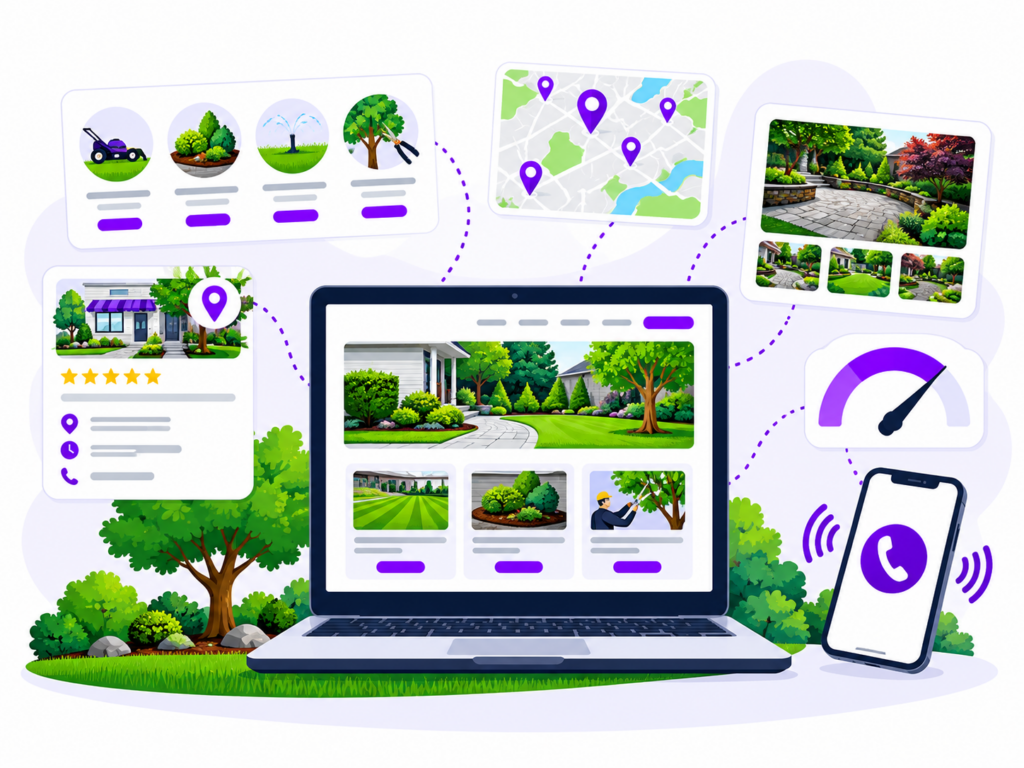
What we build for Landscaping Companies in this market
We build a separate page for recurring maintenance and another for design or installation, since each answers different questions and attracts different buyers — one page trying to rank for both stays vague on everything. Sites load fast on mobile first, matching how most Miami Gardens searches happen, with your phone number and a quote-request form visible without scrolling.
- Organic search impressions, clicks, and landing-page activity.
- Google Business Profile visibility and available interaction data.
- Paid campaign spend, search terms, calls, and form submissions.
- Enquiry type, such as recurring maintenance, design work, or commercial service.
- Whether enquiries match the company’s service area and capacity.
For landscaping companies running paid search in Miami Gardens, we set up call tracking on every ad group so you can see which keyword – lawn maintenance, irrigation repair, or landscape design – actually produced the call, not just a click.

What we measure
We track calls, form submissions, and where each one came from: organic search, Google Business Profile, Nextdoor mentions, or a specific paid ad group targeting Miami Gardens and surrounding zip codes. Call tracking assigns a tracked number to each channel so a call from your maintenance page is counted separately from a call off a sod-installation or hurricane cleanup ad. Multi-touchpoint attribution matters in this category because a project-work lead often searches more than once – sees an ad before a storm, researches reviews, then searches your business name directly a few days later before calling to book irrigation or landscape design work. Crediting that lead only to the last click undercounts what actually worked. We also watch seasonal patterns specific to South Florida: spikes in mulch and fertilization inquiries after rainy season, spring sod demand, and fall cleanup requests. We report on what we can verify: calls received, forms submitted, and the channel each one traces back to. We do not report estimated impressions as if they were leads, and we do not forecast a ranking position or a lead volume, because neither can be guaranteed and anyone who tells you otherwise is selling, not measuring.
FAQ's
These are the 5 questions Miami Gardens homeowners ask us most about landscaping company marketing, answered plainly so you know what to expect before any work starts. If yours isn't covered here, get in touch and we'll walk you through it.
We already get most of our work from referrals and yard signs. Do we need a website at all?
Referrals bring in the first call, but most people check your Google Business Profile and site before they commit, especially for project work like sod or design. A thin or outdated site can quietly lose a referral you already earned. For pure maintenance route-fill, the website matters less than the Google Business Profile does.
How long before a Miami Gardens landscaping company sees movement in search rankings?
We will not give you a specific timeline, because it depends on how competitive your specific service and zip code are right now and what your current site looks like. What we can tell you is what the work involves and what we measure along the way: calls, form fills, and where they came from.
Is Google Ads worth it against bigger lawn care franchises with bigger budgets?
Broad terms like "lawn service near me" are expensive to compete on against franchise budgets. Tighter geographic targeting and bidding on project-specific terms, like drainage or sod installation in Miami Gardens specifically, is usually the more realistic path for a smaller operation.
Do you only build maintenance-focused sites, or also sites for design-build work?
Both, and usually as separate pages even on the same site, since a homeowner looking for weekly mowing and a homeowner planning a full landscape redesign are searching for different things and expect to see different proof – a service list versus a project portfolio.
Can you manage our Google Business Profile if we already have one set up?
Yes. Most of the map pack competition in Miami Gardens comes down to keeping the profile current – photos, hours, service areas, and review responses – rather than starting from zero.
What it costs
Price is usually the first objection a Miami Gardens landscaping owner raises, and it deserves a straight answer instead of “it depends” on a sales call. A landscaping website build, a local SEO program, and a Google Ads budget are three separate line items, and they scale differently. A simple mobile-first site with service pages for maintenance and for project work costs less than a multi-location site with online booking and a job-photo gallery. Local SEO work is typically priced as an ongoing monthly engagement, since Google Business Profile management, review response, and page updates are recurring tasks, not a one-time build. Google Ads has two separate costs: our management fee, and your ad spend paid directly to Google, which you control and can adjust month to month based on how many jobs you can actually staff. We can walk through actual numbers for your situation on a call – we are not going to publish a one-size price here, because a five-truck maintenance company and a two-person design-build outfit need different scopes.