
- Home
- Services
- Portfolio
- About
- Service AreasFort Lauderdale, FL
- Web Design
- Redesign
- WordPress
- Ecommerce
- Landing Pages
- SEO Services
- Local SEO
- GBP
- Google Ads
- PPC
- Digital Marketing
- Internet Marketing
- Advertising
- Tracking
- Dental Marketing
- Medical Marketing
- HVAC Marketing
- Roofing Marketing
- Pest Control Marketing
- Home Services Marketing
- Plumbing Marketing
- Electrical Marketing
- Landscaping Marketing
- Remodeling Marketing
Pembroke Pines, FL- Web Design
- Redesign
- WordPress
- Ecommerce
- Landing Pages
- SEO Services
- Local SEO
- GBP
- Google Ads
- PPC
- Digital Marketing
- Internet Marketing
- Advertising
- Tracking
- Dental Marketing
- Medical Marketing
- HVAC Marketing
- Roofing Marketing
- Pest Control Marketing
- Home Services Marketing
- Plumbing Marketing
- Electrical Marketing
- Landscaping Marketing
- Remodeling Marketing
Hialeah, FL- Web Design
- Redesign
- WordPress
- Ecommerce
- Landing Pages
- SEO Services
- Local SEO
- GBP
- Google Ads
- PPC
- Digital Marketing
- Internet Marketing
- Advertising
- Tracking
- Dental Marketing
- Medical Marketing
- HVAC Marketing
- Roofing Marketing
- Pest Control Marketing
- Home Services Marketing
- Plumbing Marketing
- Electrical Marketing
- Landscaping Marketing
- Remodeling Marketing
Hollywood, FL- Web Design
- Redesign
- WordPress
- Ecommerce
- Landing Pages
- SEO Services
- Local SEO
- GBP
- Google Ads
- PPC
- Digital Marketing
- Internet Marketing
- Advertising
- Tracking
- Dental Marketing
- Medical Marketing
- HVAC Marketing
- Roofing Marketing
- Pest Control Marketing
- Home Services Marketing
- Plumbing Marketing
- Electrical Marketing
- Landscaping Marketing
- Remodeling Marketing
Miramar, FL- Web Design
- Redesign
- WordPress
- Ecommerce
- Landing Pages
- SEO Services
- Local SEO
- GBP
- Google Ads
- PPC
- Digital Marketing
- Internet Marketing
- Advertising
- Tracking
- Dental Marketing
- Medical Marketing
- HVAC Marketing
- Roofing Marketing
- Pest Control Marketing
- Home Services Marketing
- Plumbing Marketing
- Electrical Marketing
- Landscaping Marketing
- Remodeling Marketing
Coral Springs, FL- Web Design
- Redesign
- WordPress
- Ecommerce
- Landing Pages
- SEO Services
- Local SEO
- GBP
- Google Ads
- PPC
- Digital Marketing
- Internet Marketing
- Advertising
- Tracking
- Dental Marketing
- Medical Marketing
- HVAC Marketing
- Roofing Marketing
- Pest Control Marketing
- Home Services Marketing
- Plumbing Marketing
- Electrical Marketing
- Landscaping Marketing
- Remodeling Marketing
Pompano Beach, FL- Web Design
- Redesign
- WordPress
- Ecommerce
- Landing Pages
- SEO Services
- Local SEO
- GBP
- Google Ads
- PPC
- Digital Marketing
- Internet Marketing
- Advertising
- Tracking
- Dental Marketing
- Medical Marketing
- HVAC Marketing
- Roofing Marketing
- Pest Control Marketing
- Home Services Marketing
- Plumbing Marketing
- Electrical Marketing
- Landscaping Marketing
- Remodeling Marketing
Davie, FL- Web Design
- Redesign
- WordPress
- Ecommerce
- Landing Pages
- SEO Services
- Local SEO
- GBP
- Google Ads
- PPC
- Digital Marketing
- Internet Marketing
- Advertising
- Tracking
- Dental Marketing
- Medical Marketing
- HVAC Marketing
- Roofing Marketing
- Pest Control Marketing
- Home Services Marketing
- Plumbing Marketing
- Electrical Marketing
- Landscaping Marketing
- Remodeling Marketing
Sunrise, FL- Web Design
- Redesign
- WordPress
- Ecommerce
- Landing Pages
- SEO Services
- Local SEO
- GBP
- Google Ads
- PPC
- Digital Marketing
- Internet Marketing
- Advertising
- Tracking
- Dental Marketing
- Medical Marketing
- HVAC Marketing
- Roofing Marketing
- Pest Control Marketing
- Home Services Marketing
- Plumbing Marketing
- Electrical Marketing
- Landscaping Marketing
- Remodeling Marketing
Plantation, FL- Web Design
- Redesign
- WordPress
- Ecommerce
- Landing Pages
- SEO Services
- Local SEO
- GBP
- Google Ads
- PPC
- Digital Marketing
- Internet Marketing
- Advertising
- Tracking
- Dental Marketing
- Medical Marketing
- HVAC Marketing
- Roofing Marketing
- Pest Control Marketing
- Home Services Marketing
- Plumbing Marketing
- Electrical Marketing
- Landscaping Marketing
- Remodeling Marketing
Deerfield Beach, FL- Web Design
- Redesign
- WordPress
- Ecommerce
- Landing Pages
- SEO Services
- Local SEO
- GBP
- Google Ads
- PPC
- Digital Marketing
- Internet Marketing
- Advertising
- Tracking
- Dental Marketing
- Medical Marketing
- HVAC Marketing
- Roofing Marketing
- Pest Control Marketing
- Home Services Marketing
- Plumbing Marketing
- Electrical Marketing
- Landscaping Marketing
- Remodeling Marketing
Miami Gardens, FL- Web Design
- Redesign
- WordPress
- Ecommerce
- Landing Pages
- SEO Services
- Local SEO
- GBP
- Google Ads
- PPC
- Digital Marketing
- Internet Marketing
- Advertising
- Tracking
- Dental Marketing
- Medical Marketing
- HVAC Marketing
- Roofing Marketing
- Pest Control Marketing
- Home Services Marketing
- Plumbing Marketing
- Electrical Marketing
- Landscaping Marketing
- Remodeling Marketing
Lauderhill, FL- Web Design
- Redesign
- WordPress
- Ecommerce
- Landing Pages
- SEO Services
- Local SEO
- GBP
- Google Ads
- PPC
- Digital Marketing
- Internet Marketing
- Advertising
- Tracking
- Dental Marketing
- Medical Marketing
- HVAC Marketing
- Roofing Marketing
- Pest Control Marketing
- Home Services Marketing
- Plumbing Marketing
- Electrical Marketing
- Landscaping Marketing
- Remodeling Marketing
West Palm Beach, FL- Web Design
- Redesign
- WordPress
- Ecommerce
- Landing Pages
- SEO Services
- Local SEO
- GBP
- Google Ads
- PPC
- Digital Marketing
- Internet Marketing
- Advertising
- Tracking
- Dental Marketing
- Medical Marketing
- HVAC Marketing
- Roofing Marketing
- Pest Control Marketing
- Home Services Marketing
- Plumbing Marketing
- Electrical Marketing
- Landscaping Marketing
- Remodeling Marketing
Tamarac, FL- Web Design
- Redesign
- WordPress
- Ecommerce
- Landing Pages
- SEO Services
- Local SEO
- GBP
- Google Ads
- PPC
- Digital Marketing
- Internet Marketing
- Advertising
- Tracking
- Dental Marketing
- Medical Marketing
- HVAC Marketing
- Roofing Marketing
- Pest Control Marketing
- Home Services Marketing
- Plumbing Marketing
- Electrical Marketing
- Landscaping Marketing
- Remodeling Marketing
Weston, FL- Web Design
- Redesign
- WordPress
- Ecommerce
- Landing Pages
- SEO Services
- Local SEO
- GBP
- Google Ads
- PPC
- Digital Marketing
- Internet Marketing
- Advertising
- Tracking
- Dental Marketing
- Medical Marketing
- HVAC Marketing
- Roofing Marketing
- Pest Control Marketing
- Home Services Marketing
- Plumbing Marketing
- Electrical Marketing
- Landscaping Marketing
- Remodeling Marketing
Boca Raton, FLMargate, FLCoconut Creek, FLMiami Beach, FLHomestead, FLKendall, FLDoral, FLBoynton Beach, FLThe Hammocks, FLNorth Lauderdale, FLOakland Park, FLDelray Beach, FLNorth Miami, FLHallandale Beach, FLFontainebleau, FLKendale Lakes, FLWellington, FLJupiter, FLTamiami, FLPalm Beach Gardens, FLLauderdale Lakes, FLCooper City, FLCountry Club, FLParkland, FLCoral Gables, FLDania Beach, FLCutler Bay, FLNorth Miami Beach, FLGreenacres, FLLake Worth Beach, FLPrinceton, FLRoyal Palm Beach, FLSouth Miami Heights, FLRichmond West, FLRiviera Beach, FLWest Little River, FLGolden Glades, FLAventura, FLMiami Lakes, FLWestchester, FLLeisure City, FLCoral Terrace, FLPalm Springs, FLPalmetto Bay, FLHialeah Gardens, FLSunny Isles Beach, FLIves Estates, FLWest Park, FLSweetwater, FLPinecrest, FLSunset, FLPinewood, FLWilton Manors, FLOpa-locka, FLLighthouse Point, FLBelle Glade, FLNaranja, FLPalmetto Estates, FLBrownsville, FLKey Biscayne, FLOlympia Heights, FLMiami Springs, FLFlorida City, FLSouth Miami, FLThree Lakes, FLGladeview, FLNorth Palm Beach, FLMiami Shores, FLSouthwest Ranches, FLKings Point, FLLauderdale-by-the-Sea, FLHillsboro Beach, FLSea Ranch Lakes, FLLazy Lake, FL - Blog
- Contact
Marketing for Medical Practices in The Hammocks, Florida
The Hammocks is one of the most densely populated unincorporated communities in The Hammocks-Dade County, built out in planned phases with a majority Hispanic population and a steady base of households that need primary care, pediatrics, dermatology, dental, urgent care, and specialty medicine close to home. A medical practice here is not competing for attention the way a boutique retailer is. You are competing for a search that someone types five minutes after a symptom starts, often in Spanish, often on a phone, often looking for same-week availability.
That changes the marketing math. Review volume, bilingual intake, and appointment friction matter more than brand awareness. We build websites and campaigns for medical practices around that reality instead of a generic healthcare template, with attention to:
- Bilingual pages and calls-to-action that match how residents actually search
- Google Business Profile and review strategy tuned for “near me” and urgent symptom searches
- Fast, mobile-first booking with minimal steps between search and scheduled visit
- Local SEO targeting Hammocks, Kendall, and surrounding zip codes
- Insurance and provider information surfaced clearly, since that often decides the click

How The Hammocks Medical Practices buyers search
Search behavior for medical care in The Hammocks splits into two distinct patterns, and a practice’s marketing has to serve both at once. The first is symptom-driven and urgent: “pediatrician near me,” “dermatologist Hammocks FL,” “urgent care open now,” “walk-in clinic Kendall.” These searches happen overwhelmingly on mobile, usually within a tight radius of the searcher’s exact location, and they favor the Google Map Pack over organic listings because the person wants the nearest option with current hours and same-day availability, not the most authoritative article on their condition. If your Google Business Profile has outdated hours, a disconnected phone number, or no recent reviews, you lose this search before the person ever sees your website.
The second pattern is plan-driven and considerably slower. Someone is comparing providers who accept their insurance, reading physician bios and credentials, checking whether a doctor speaks Spanish, and often weighing two or three practices before placing a single call. This search typically happens on desktop or tablet, often in the evening after work, and it rewards a site with clear provider credentials, named specialties, and a straightforward way to confirm insurance acceptance without having to call and ask. Practices that bury this information behind a generic “Contact Us” page lose patients to competitors who make it visible on the service page itself.
A large share of this searching happens in Spanish or in a mix of English and Spanish, reflecting the demographics of The Hammocks and greater West Kendall. A practice that only has English-language metadata, English-only Google Business Profile posts, and no bilingual call handling is effectively invisible to a meaningful part of its own service area, no matter how well the site is built technically. Marketing for this market means:
- Bilingual Google Business Profile content, posts, and review responses
- Spanish-language landing pages mirrored to their English counterparts, not just translated metadata
- Visible insurance and specialty information on every service page
- Fast-loading mobile pages built for someone searching from a parking lot or waiting room
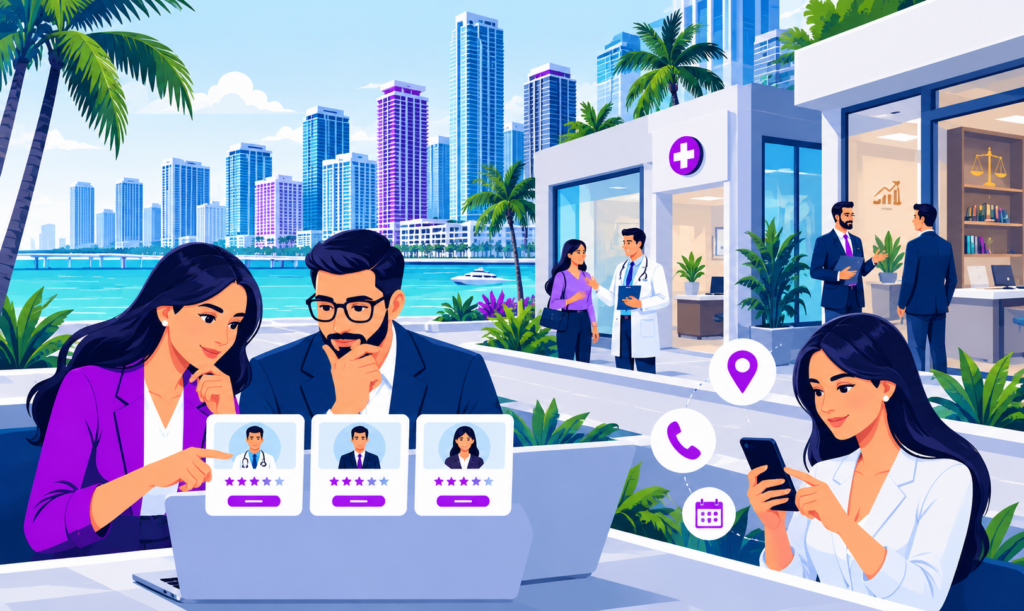
The competition here
The honest read: competition in The Hammocks is moderate, and it is not mostly local agencies doing sophisticated SEO. It is national healthcare directories (think large listing and review aggregator sites), insurance network pages, and a handful of multi-location practice groups with marketing budgets built for Doral, Kendall, or The Hammocks proper that happen to include a Hammocks location as one line item.
That means the map pack is winnable with consistent, correct, locally-specific signals, because the bar set by directory sites is often a generic listing with no real local content behind it. It also means organic content has room, because very few individual practices in this ZIP code are publishing provider-specific, condition-specific pages built for how people here actually search. The practices that lose visibility are usually losing it to directories with more domain authority, not to a better local competitor. The fix is a Google Business Profile that is fully built out and a website with enough real local pages to out-rank a directory listing on specificity, not just to exist.
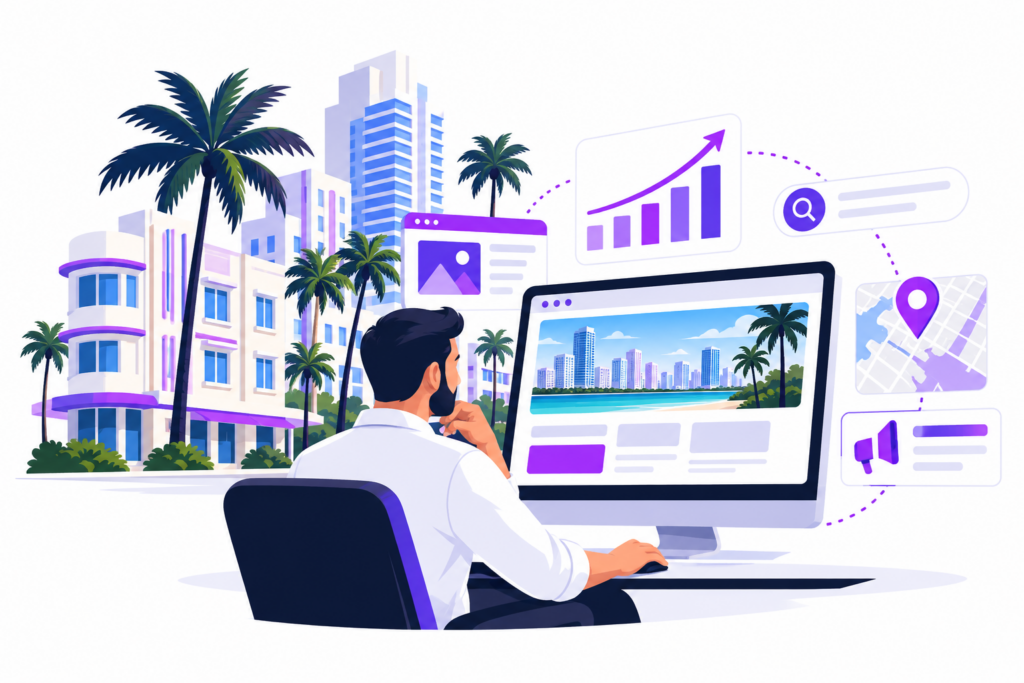
What we build for Medical Practices in this market
Medical marketing sits in YMYL territory (Your Money or Your Life), which means Google holds health content to a higher bar than a plumber’s site or a boutique’s blog. We build with that in mind from the first page.
- Provider bio pages with real credentials. Each provider gets a dedicated page: license type, board certification, school, years in practice, languages spoken, and the specific conditions they treat. Generic one-paragraph bios do not satisfy either patients comparing providers or Google’s expectation of expertise and trustworthiness for medical content.
- Condition and service pages, not one catch-all page. A practice offering pediatric care, vaccinations, and sports physicals needs a page for each, because one page cannot rank for three different searches with three different intents. The same logic applies to any practice offering multiple specialties under one roof.
- Bilingual pages built properly, not auto-translated. We write Spanish-language pages with correct medical terminology and local phrasing, not a machine translation plugin bolted onto the English site. Google treats a thin auto-translated page as duplicate-adjacent content, and patients notice the difference in the first sentence.
- HIPAA-aware form handling. Contact and intake forms on the site are built to avoid collecting or transmitting protected health information in ways that create compliance exposure. That means no open-text symptom fields feeding into a marketing CRM without a signed business associate agreement in place, and no appointment request form that doubles as an unsecured medical history intake. We build the form to capture what marketing needs (name, phone, reason for visit category, preferred time) and route anything clinical to a secure, compliant channel the practice already uses.
- Multi-location structure. If the practice has a second location in Kendall, Westchester, or elsewhere in The Hammocks-Dade, each location gets its own page with its own address, hours, staff, and Google Business Profile, not one page with two addresses stacked at the bottom. Google ranks location pages separately, and a shared page dilutes both.
- Google Business Profile management for medical categories. Healthcare listings have specific category options, attribute fields (telehealth, wheelchair accessible entrance, accepts new patients), and review-response requirements that differ from a retail listing. We set the profile up to match the actual services offered instead of a default category.
- Google Ads with HIPAA-conscious conversion tracking. Paid search for medical practices needs conversion tracking that confirms a call or form submission happened without logging the content of that call or form in violation of HIPAA. We set up call tracking and attribution at the event level only.
Every piece above is built because a specific search behavior or a specific compliance requirement demands it, not because it is standard on a template.
Legal and professional services
Explain practice areas, relevant experience, service locations, and consultation options. Organize pages around the specific services potential clients search for.
Medical and healthcare practices
Make treatment information, provider details, location information, and appointment options easy to find. Review health-related claims carefully.
Financial services
Present services, qualifications, and contact pathways clearly while respecting applicable advertising and compliance requirements.
Technology and business services
Explain complex offerings in plain language, demonstrate practical value, and create landing pages for distinct solutions.
Local service businesses
Build relevant service and location pages, improve Google Business Profile information, and make calls and enquiry forms easy to use.
What we measure
We track what a practice administrator actually needs to see: calls by source, form submissions by source and by page, map pack position for the core service terms, organic ranking movement for condition and provider pages, and new patient inquiries tied back to the campaign or page that generated them. Call tracking numbers are swapped by channel so a call from a Google Business Profile listing is distinguishable from a call from a paid ad or an organic visit.
We do not report vanity traffic numbers with no connection to new patient volume. If a page gets visits but no calls, that is a page that needs work, and we say so.

What it costs
Cost for a medical practice marketing program in The Hammocks depends on how many providers, locations, and specialties need individual pages, whether Spanish-language content is built from scratch or already exists in some form, and whether paid search runs alongside SEO. A single-provider practice with one location needs far less build-out than a three-location group with six providers and two languages. Reputation management across multiple review platforms, HIPAA-conscious contact forms, and insurance-plan pages for a Hammocks patient base that often searches by accepted coverage all add scope beyond a basic brochure site. Ongoing work like monthly content, local citation cleanup, and paid search management is priced separately from the initial build, since a practice chasing new patient volume right away needs a different plan than one simply modernizing its online presence.

Most practices in The Hammocks start with a free audit of their current site and Google Business Profile. That audit checks what is missing against the items above: provider pages, condition pages, bilingual coverage, form compliance, and location structure built around the ZIP codes and neighborhoods your patients actually search from, like Kendall and West Kendall. You get a specific list, not a sales pitch.
We also look at how your practice compares to nearby competitors already ranking for local searches, and flag quick wins versus longer-term fixes so you can prioritize spend. If your scheduling, intake, or referral forms are not HIPAA-conscious or mobile-friendly, that gets called out too, since it affects both compliance and conversion.
Request the audit through the form on this page. We will tell you plainly what we find, including if the answer is that your site is already in better shape than you think.

Medicare and private insurance verification pages are another area where specificity pays off. A page that lists the actual plans a practice accepts, updated whenever that list changes, answers the exact question a lot of Hammocks searchers are typing into Google before they ever pick up the phone. A vague “we accept most insurance plans” line does not rank and does not convert, because it never actually answers the question a worried patient is asking.
We build those pages to be easy for front-office staff to update directly, so the list stays accurate without a developer ticket every time a plan is added, dropped, or changes name. We also structure the page with clear headers for Medicare, Medicare Advantage, and major private carriers common in the Hammocks and greater Kendall area, so both patients and search engines can scan it quickly and find exactly what they need without digging.
FAQ's
These are the 5 questions The Hammocks homeowners ask us most about medical practice marketing, answered plainly so you know what to expect before any work starts. If yours isn't covered here, get in touch and we'll walk you through it.
Does my practice need a page for each provider, or is one team page enough?
Each provider should have a dedicated page if they see patients independently. A single combined team page works for very small practices with one or two providers, but once you have three or more, separate pages let each provider's credentials and search terms stand on their own.
Can you build Spanish-language pages for my practice?
Yes. We write them with correct medical terminology and local phrasing rather than running the English site through a translation tool, which matters both for patient trust and for how Google evaluates the content.
Will my intake forms stay HIPAA-compliant?
We design marketing forms to collect only what is needed to schedule or follow up, not clinical detail, and route anything medical to the secure system your practice already uses for patient records.
Do you handle multi-location practices?
Yes. Each location gets its own page, its own Google Business Profile, and its own tracking, since Google ranks locations individually rather than crediting one shared page for all of them.
How is marketing for medical practices different from marketing a regular local business?
Medical content falls under Google's YMYL (Your Money or Your Life) standards, which means provider credentials, accuracy, and trustworthiness carry more weight in ranking than they would for a retail or home services page.
For background on how search engines evaluate medical and health content specifically, see [EXTERNAL LINK: Google’s Search Quality Rater Guidelines section on YMYL and E-E-A-T, as an authoritative, non-competing technical reference].