
- Home
- Services
- Portfolio
- About
- Service AreasFort Lauderdale, FL
- Web Design
- Redesign
- WordPress
- Ecommerce
- Landing Pages
- SEO Services
- Local SEO
- GBP
- Google Ads
- PPC
- Digital Marketing
- Internet Marketing
- Advertising
- Tracking
- Dental Marketing
- Medical Marketing
- HVAC Marketing
- Roofing Marketing
- Pest Control Marketing
- Home Services Marketing
- Plumbing Marketing
- Electrical Marketing
- Landscaping Marketing
- Remodeling Marketing
Pembroke Pines, FL- Web Design
- Redesign
- WordPress
- Ecommerce
- Landing Pages
- SEO Services
- Local SEO
- GBP
- Google Ads
- PPC
- Digital Marketing
- Internet Marketing
- Advertising
- Tracking
- Dental Marketing
- Medical Marketing
- HVAC Marketing
- Roofing Marketing
- Pest Control Marketing
- Home Services Marketing
- Plumbing Marketing
- Electrical Marketing
- Landscaping Marketing
- Remodeling Marketing
Hialeah, FL- Web Design
- Redesign
- WordPress
- Ecommerce
- Landing Pages
- SEO Services
- Local SEO
- GBP
- Google Ads
- PPC
- Digital Marketing
- Internet Marketing
- Advertising
- Tracking
- Dental Marketing
- Medical Marketing
- HVAC Marketing
- Roofing Marketing
- Pest Control Marketing
- Home Services Marketing
- Plumbing Marketing
- Electrical Marketing
- Landscaping Marketing
- Remodeling Marketing
Hollywood, FL- Web Design
- Redesign
- WordPress
- Ecommerce
- Landing Pages
- SEO Services
- Local SEO
- GBP
- Google Ads
- PPC
- Digital Marketing
- Internet Marketing
- Advertising
- Tracking
- Dental Marketing
- Medical Marketing
- HVAC Marketing
- Roofing Marketing
- Pest Control Marketing
- Home Services Marketing
- Plumbing Marketing
- Electrical Marketing
- Landscaping Marketing
- Remodeling Marketing
Miramar, FL- Web Design
- Redesign
- WordPress
- Ecommerce
- Landing Pages
- SEO Services
- Local SEO
- GBP
- Google Ads
- PPC
- Digital Marketing
- Internet Marketing
- Advertising
- Tracking
- Dental Marketing
- Medical Marketing
- HVAC Marketing
- Roofing Marketing
- Pest Control Marketing
- Home Services Marketing
- Plumbing Marketing
- Electrical Marketing
- Landscaping Marketing
- Remodeling Marketing
Coral Springs, FL- Web Design
- Redesign
- WordPress
- Ecommerce
- Landing Pages
- SEO Services
- Local SEO
- GBP
- Google Ads
- PPC
- Digital Marketing
- Internet Marketing
- Advertising
- Tracking
- Dental Marketing
- Medical Marketing
- HVAC Marketing
- Roofing Marketing
- Pest Control Marketing
- Home Services Marketing
- Plumbing Marketing
- Electrical Marketing
- Landscaping Marketing
- Remodeling Marketing
Pompano Beach, FL- Web Design
- Redesign
- WordPress
- Ecommerce
- Landing Pages
- SEO Services
- Local SEO
- GBP
- Google Ads
- PPC
- Digital Marketing
- Internet Marketing
- Advertising
- Tracking
- Dental Marketing
- Medical Marketing
- HVAC Marketing
- Roofing Marketing
- Pest Control Marketing
- Home Services Marketing
- Plumbing Marketing
- Electrical Marketing
- Landscaping Marketing
- Remodeling Marketing
Davie, FL- Web Design
- Redesign
- WordPress
- Ecommerce
- Landing Pages
- SEO Services
- Local SEO
- GBP
- Google Ads
- PPC
- Digital Marketing
- Internet Marketing
- Advertising
- Tracking
- Dental Marketing
- Medical Marketing
- HVAC Marketing
- Roofing Marketing
- Pest Control Marketing
- Home Services Marketing
- Plumbing Marketing
- Electrical Marketing
- Landscaping Marketing
- Remodeling Marketing
Sunrise, FL- Web Design
- Redesign
- WordPress
- Ecommerce
- Landing Pages
- SEO Services
- Local SEO
- GBP
- Google Ads
- PPC
- Digital Marketing
- Internet Marketing
- Advertising
- Tracking
- Dental Marketing
- Medical Marketing
- HVAC Marketing
- Roofing Marketing
- Pest Control Marketing
- Home Services Marketing
- Plumbing Marketing
- Electrical Marketing
- Landscaping Marketing
- Remodeling Marketing
Plantation, FL- Web Design
- Redesign
- WordPress
- Ecommerce
- Landing Pages
- SEO Services
- Local SEO
- GBP
- Google Ads
- PPC
- Digital Marketing
- Internet Marketing
- Advertising
- Tracking
- Dental Marketing
- Medical Marketing
- HVAC Marketing
- Roofing Marketing
- Pest Control Marketing
- Home Services Marketing
- Plumbing Marketing
- Electrical Marketing
- Landscaping Marketing
- Remodeling Marketing
Deerfield Beach, FL- Web Design
- Redesign
- WordPress
- Ecommerce
- Landing Pages
- SEO Services
- Local SEO
- GBP
- Google Ads
- PPC
- Digital Marketing
- Internet Marketing
- Advertising
- Tracking
- Dental Marketing
- Medical Marketing
- HVAC Marketing
- Roofing Marketing
- Pest Control Marketing
- Home Services Marketing
- Plumbing Marketing
- Electrical Marketing
- Landscaping Marketing
- Remodeling Marketing
Miami Gardens, FL- Web Design
- Redesign
- WordPress
- Ecommerce
- Landing Pages
- SEO Services
- Local SEO
- GBP
- Google Ads
- PPC
- Digital Marketing
- Internet Marketing
- Advertising
- Tracking
- Dental Marketing
- Medical Marketing
- HVAC Marketing
- Roofing Marketing
- Pest Control Marketing
- Home Services Marketing
- Plumbing Marketing
- Electrical Marketing
- Landscaping Marketing
- Remodeling Marketing
Lauderhill, FL- Web Design
- Redesign
- WordPress
- Ecommerce
- Landing Pages
- SEO Services
- Local SEO
- GBP
- Google Ads
- PPC
- Digital Marketing
- Internet Marketing
- Advertising
- Tracking
- Dental Marketing
- Medical Marketing
- HVAC Marketing
- Roofing Marketing
- Pest Control Marketing
- Home Services Marketing
- Plumbing Marketing
- Electrical Marketing
- Landscaping Marketing
- Remodeling Marketing
West Palm Beach, FL- Web Design
- Redesign
- WordPress
- Ecommerce
- Landing Pages
- SEO Services
- Local SEO
- GBP
- Google Ads
- PPC
- Digital Marketing
- Internet Marketing
- Advertising
- Tracking
- Dental Marketing
- Medical Marketing
- HVAC Marketing
- Roofing Marketing
- Pest Control Marketing
- Home Services Marketing
- Plumbing Marketing
- Electrical Marketing
- Landscaping Marketing
- Remodeling Marketing
Tamarac, FL- Web Design
- Redesign
- WordPress
- Ecommerce
- Landing Pages
- SEO Services
- Local SEO
- GBP
- Google Ads
- PPC
- Digital Marketing
- Internet Marketing
- Advertising
- Tracking
- Dental Marketing
- Medical Marketing
- HVAC Marketing
- Roofing Marketing
- Pest Control Marketing
- Home Services Marketing
- Plumbing Marketing
- Electrical Marketing
- Landscaping Marketing
- Remodeling Marketing
Weston, FL- Web Design
- Redesign
- WordPress
- Ecommerce
- Landing Pages
- SEO Services
- Local SEO
- GBP
- Google Ads
- PPC
- Digital Marketing
- Internet Marketing
- Advertising
- Tracking
- Dental Marketing
- Medical Marketing
- HVAC Marketing
- Roofing Marketing
- Pest Control Marketing
- Home Services Marketing
- Plumbing Marketing
- Electrical Marketing
- Landscaping Marketing
- Remodeling Marketing
Boca Raton, FLMargate, FLCoconut Creek, FLMiami Beach, FLHomestead, FLKendall, FLDoral, FLBoynton Beach, FLThe Hammocks, FLNorth Lauderdale, FLOakland Park, FLDelray Beach, FLNorth Miami, FLHallandale Beach, FLFontainebleau, FLKendale Lakes, FLWellington, FLJupiter, FLTamiami, FLPalm Beach Gardens, FLLauderdale Lakes, FLCooper City, FLCountry Club, FLParkland, FLCoral Gables, FLDania Beach, FLCutler Bay, FLNorth Miami Beach, FLGreenacres, FLLake Worth Beach, FLPrinceton, FLRoyal Palm Beach, FLSouth Miami Heights, FLRichmond West, FLRiviera Beach, FLWest Little River, FLGolden Glades, FLAventura, FLMiami Lakes, FLWestchester, FLLeisure City, FLCoral Terrace, FLPalm Springs, FLPalmetto Bay, FLHialeah Gardens, FLSunny Isles Beach, FLIves Estates, FLWest Park, FLSweetwater, FLPinecrest, FLSunset, FLPinewood, FLWilton Manors, FLOpa-locka, FLLighthouse Point, FLBelle Glade, FLNaranja, FLPalmetto Estates, FLBrownsville, FLKey Biscayne, FLOlympia Heights, FLMiami Springs, FLFlorida City, FLSouth Miami, FLThree Lakes, FLGladeview, FLNorth Palm Beach, FLMiami Shores, FLSouthwest Ranches, FLKings Point, FLLauderdale-by-the-Sea, FLHillsboro Beach, FLSea Ranch Lakes, FLLazy Lake, FL - Blog
- Contact
Dental Practices: what the work produced
This page covers one engagement with a dental practice. We have not named the client. The figures come from call tracking and the practice’s own booking records, and where we do not have a figure, the page says so instead of estimating one.

The situation
A dental search works like this. Someone types a procedure or a problem into Google, such as an emergency dentist, a crown or clear aligners. They look at the map results and the first few listings, and they call one or two practices. A practice that is not in that short list does not get the call, and it never learns that it missed one.
That was the problem the owner needed solved. The question was never where the practice ranked for its own name. Patients who already know the name will find it anyway. The question was how many new patients were finding it through the words people use when they do not yet know which practice to choose, and whether anyone could measure that.

What we found
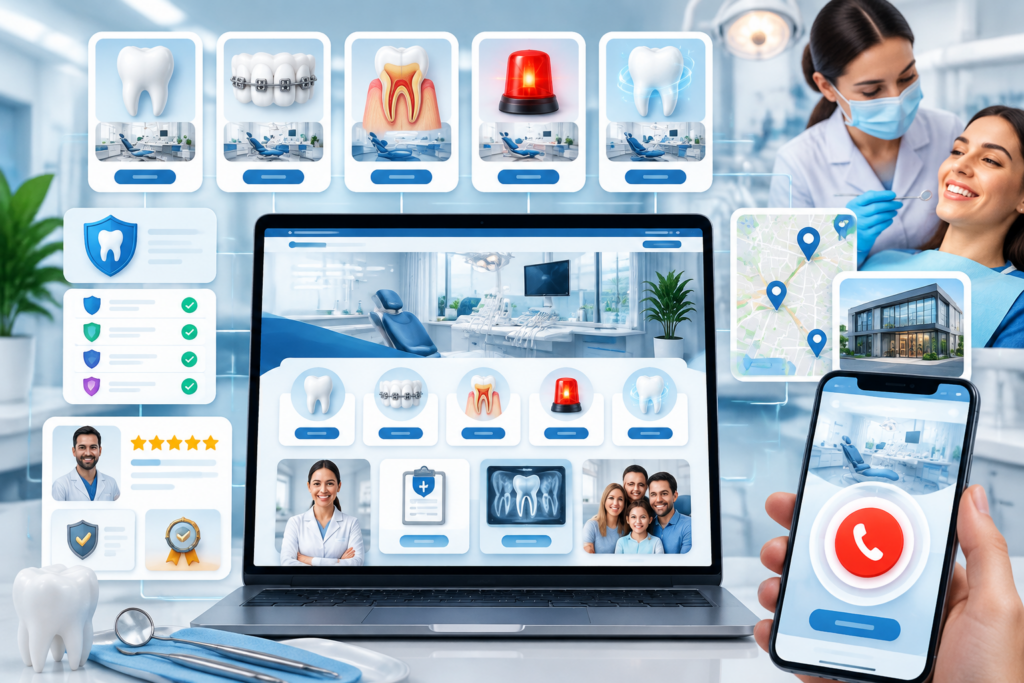
Before we change anything on a dental account, we check four things. Each one fails in a different way, and each one needs a different fix.
Service pages
A practice with a single page called Services cannot rank for implants, sedation, children's visits and emergency care at the same time. A search engine matches a query to a page, and one page can answer one question well.
The local listing
The Google Business Profile needs the right primary category, each service entered on its own, and the same name, phone number and hours that appear on the website. When those disagree, Google is less certain which version is correct.
Call records
Without call tracking, the front desk cannot say which calls came from an ad, which came from the map and which came from existing patients. We separate new-patient calls from everything else, because only those can be traced back to the work.
Ad spend
In a Google Ads account, the search terms report shows what people actually typed before they clicked. Money spent on queries that cannot become patients, such as job searches or dental school courses, shows up there.
What we did
Work of this kind on a dental account usually has three parts. The mechanism behind each is below, so you can judge whether it applies to your practice.
- Pages built around services and places. We build one page for each service, and where a practice draws patients from more than one city, one page for each service in each city. A page about implants for one city is a different page from a page about implants for the next city over, because the person searching in each place wants a practice near them. Each page names the procedure, who it is for, what a visit involves and how to book.
- Campaigns split by procedure. We do not put every service into one Google Ads campaign. Separate campaigns let the budget follow the procedures the practice wants more of, and let us write ads that match what was typed. We add negative keywords from the search terms report so the budget stops going to searches that cannot book.
- Tracking that follows the patient. Each traffic source gets its own tracking number, and calls are tagged as new patient, existing patient or other. Attribution is multi-touchpoint. That matters because a patient often clicks an ad, returns days later through the map listing and then calls. Last-click reporting gives all the credit to the final step. Multi-touchpoint reporting shows the whole path, so you can see which step started it.
Recent Work
Dental professionals of coral springs
- Brand Identity
- Website Design & Development
- SEO & Analytics
- Google Ads


What happened
How the numbers were counted matters more than the numbers. A call is counted as a new-patient call only when it has been logged as one, and calls that were spam, wrong numbers or existing patients are left out. Booked appointments are counted from the practice’s own schedule, not from our dashboard. If an agency cannot tell you how it counts a call, its call numbers cannot be compared with anyone else’s.
Google publishes how it counts phone calls as conversions, including the minimum call length that qualifies. That setting changes the totals, and it is worth reading before you compare any two reports.
These results belong to one practice, in one market, over one period. Competition, location, the practice’s starting condition and how many new patients it has room to see all change what is possible. This page describes what happened here. It does not predict what will happen for you.

Is your situation similar
This case study fits best if you take new patients, you have chair time to fill, and at least one of the following is true.
- Your website has one page for all services, or one page for all locations.
- Your calls are not tracked by source, so you cannot say which marketing produced which patient.
- You run Google Ads and nobody has read the search terms report in the last quarter.
If that describes you, send us your current call records and, if you run ads, your search terms report. We will tell you what we see, including when the answer is that your current setup is sound. Call us today.